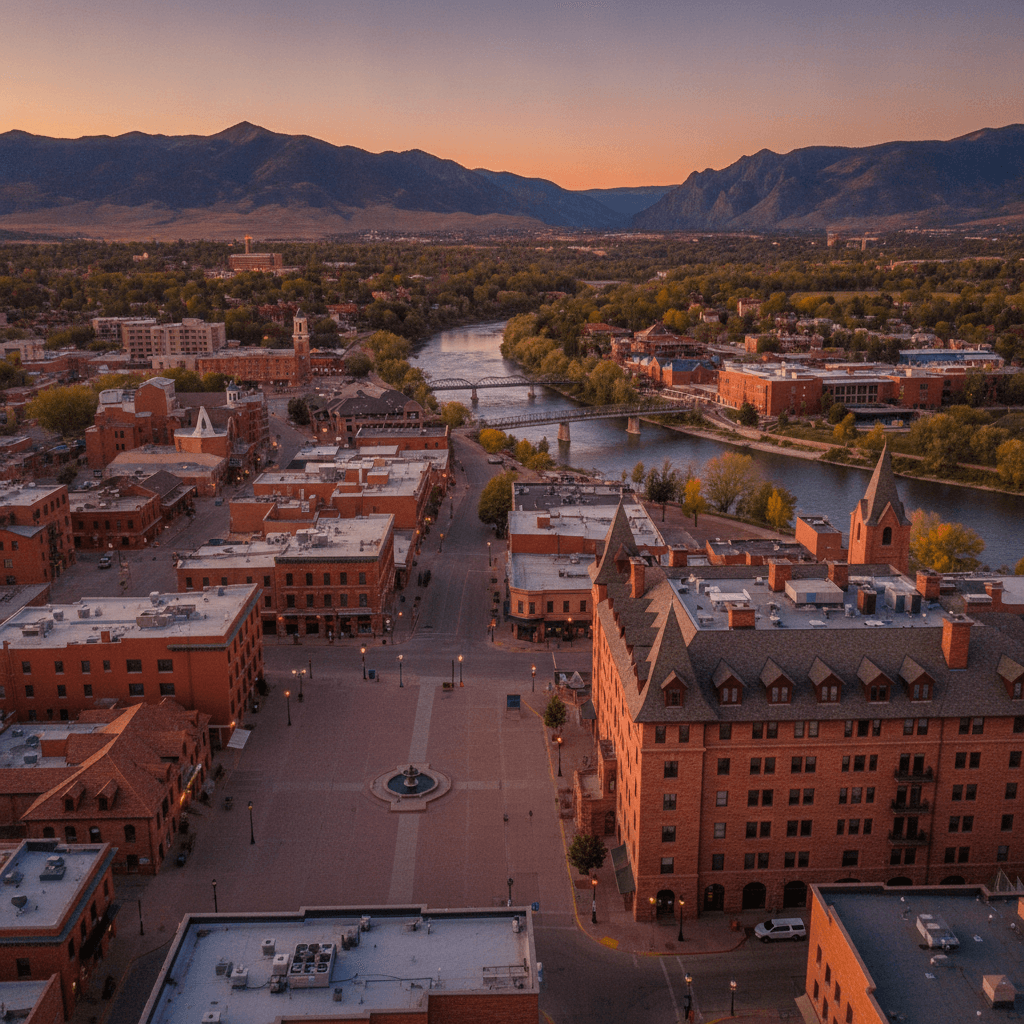
As a German urbanist, I often seek cities where the human scale is prioritized, where one can truly experience a place by the simple act of walking. Colorado’s Glenwood Springs, known for its thermal waters and mountain setting, presented an intriguing case study. Could a city in such a dramatic landscape offer a genuinely walkable urban fabric? I am pleased to report: ja, absolutely.
To properly dissect and appreciate Glenwood Springs’ pedestrian design, a self-guided audio tour is ideal. It allows for spontaneous detours, lingering moments, and a deep immersion into the city’s rhythm, all while an informed narrative guides your observations. This is not merely about reaching a destination; it is about understanding the journey, the connections, and the deliberate planning (or organic evolution) that makes a city a joy to traverse on foot.
The Compact Core: Downtown’s Thoughtful Layout
My first impression of Glenwood Springs’ core was its surprising compactness and the efficient way its primary functions are arranged. Grand Avenue, the main arterial, is lively, yet the sidewalks are generous, inviting a leisurely pace. Intersecting streets like Cooper Avenue and 7th Street reveal a collection of well-preserved late 19th and early 20th-century buildings, many housing independent businesses. This density creates a vibrant street life, a critical component of any walkable city.
What truly elevates the downtown experience here are the subtle elements of pedestrian prioritization:
- Visual Cues: The consistent building lines and varied architectural details provide constant visual interest, drawing the eye and encouraging exploration down side streets.
- Public Spaces: Small pocket parks and inviting benches offer places for pause, vital for extending the comfortable walking distance.
- Connectivity: The grid-like street pattern, while not exhaustive, provides multiple routes through the commercial district, preventing bottlenecks and offering varied perspectives.
Exploring these initial blocks with a Glenwood Springs self-guided audio tour provides rich context, drawing attention to details often missed when rushing through. It’s an ideal way to begin understanding the subtle nuances of its urban design.
Bridging Waters: The Pedestrian Experience Along the Rivers
One of Glenwood Springs’ most defining features is its confluence of the Colorado River and the Roaring Fork River. A truly walkable city embraces its natural assets, and here, Glenwood Springs excels. The Historic Pedestrian Bridge, which gracefully spans the Colorado River, is a masterpiece of urban connectivity. It’s not just a crossing; it’s an experience in itself, offering panoramic views of the river and the surrounding mountains, connecting the downtown area directly to the Glenwood Hot Springs Resort.
Further west, Two Rivers Park provides expansive green space along the riverbanks, accessible via well-maintained pathways. This integration of nature into the urban fabric is commendable. It means that things to do in Glenwood Springs on foot extend beyond just commercial streets; one can seamlessly transition from shopping to a riverside stroll, observing the confluence of the two powerful rivers.
Thermal Immersion: Integrating Hot Springs into the Pedestrian Flow
Of course, no exploration of Glenwood Springs is complete without acknowledging its famed hot springs. What is remarkable from an urbanist perspective is how accessible these thermal attractions are on foot. The Glenwood Hot Springs Resort, with its iconic pool, is a mere few minutes' walk across the Pedestrian Bridge from the heart of downtown. Even the Iron Mountain Hot Springs, situated on the western bank of the Colorado River, is reachable via a pleasant stroll along a paved pathway, demonstrating a commitment to non-vehicular access.
This deliberate placement, or perhaps fortunate natural positioning, means that visitors can easily move from cultural exploration to relaxation without ever needing a car. A gps audio tour Glenwood Springs would highlight these seamless transitions, perhaps pointing out the subtle grade changes or the history of how these thermal waters shaped the town’s development.
Elevated Perspectives: Sayre Park and Beyond
For those who appreciate a slightly elevated perspective – both literally and figuratively – a walk up to Sayre Park on the hill above downtown offers a rewarding detour. The climb, while modest, grants expansive views over the city, the rivers, and the surrounding peaks. From this vantage point, one can truly appreciate the layout of Glenwood Springs: the linear nature of Grand Avenue, the expansive river valleys, and how the city’s built environment harmonizes with its dramatic natural setting.
This sort of physical engagement, the gentle exertion followed by a visual payoff, is another marker of a city that respects and encourages walking as a primary mode of discovery. It demonstrates that a Glenwood Springs walking tour can offer diverse experiences, from flat urban exploration to mild elevation challenges.
To truly understand a city's pulse, its planning, and its spirit, one must walk its streets. Glenwood Springs, with its thoughtful pedestrian infrastructure, historic charm, and magnificent natural integration, offers a genuinely rewarding experience for the urban explorer. A self-guided audio tour allows you to savor every step, uncovering layers of history and design at your own pace.