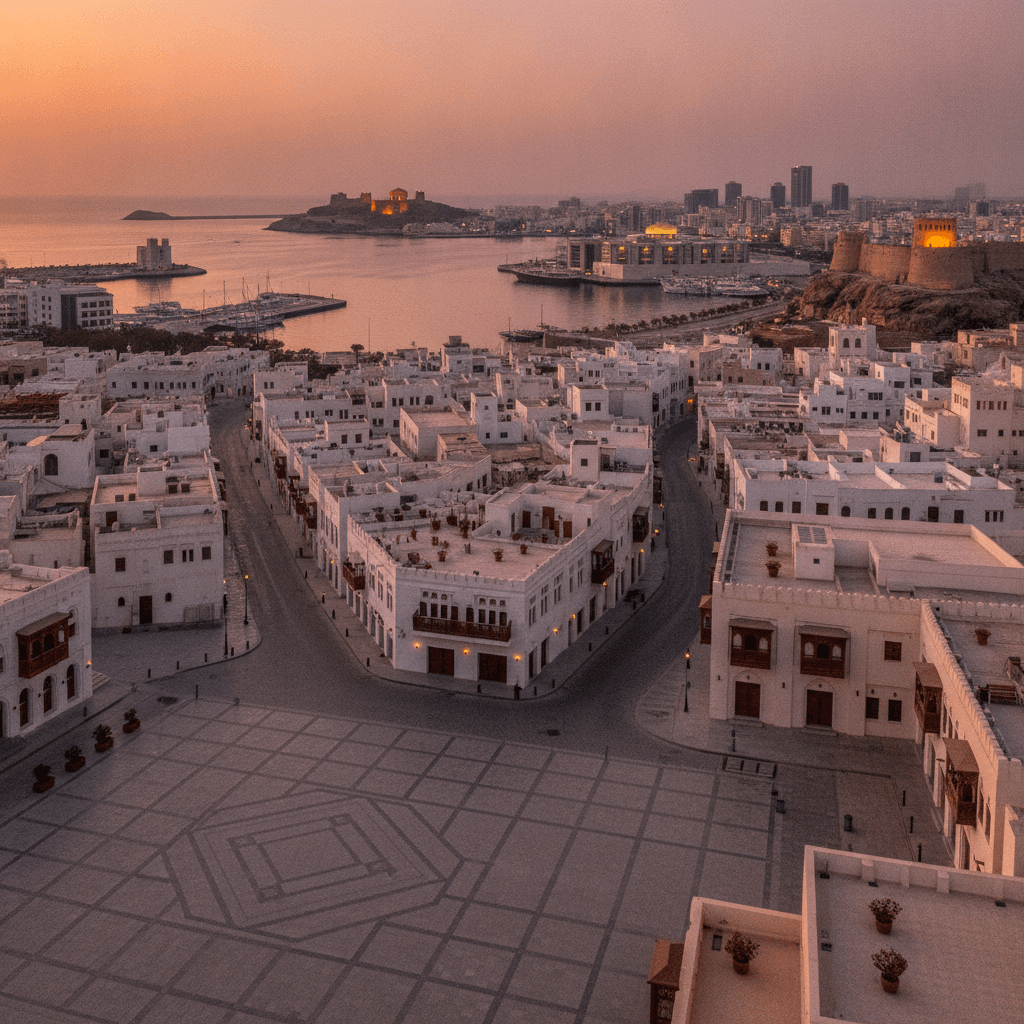
Muscat isn't a city that rushes you. Its beauty unfolds in layers, best appreciated when you slow down, allowing the scent of frankincense and the murmur of conversation to guide you. For those drawn to the labyrinthine alleys of ancient bazaars, the quiet dignity of historic courtyards, and the enduring artistry of craft traditions, a self-guided exploration of Old Muscat offers a profound connection. Forget the hurried bus tours; this city whispers its stories, and the only way to truly hear them is by putting one foot in front of the other.
The Heartbeat of Muttrah: Souq and Shores
Our journey begins in Muttrah, the historic port district and undeniably the vibrant core of traditional Muscat. The Muttrah Souq, often called the Al Dhalam Souq or ‘Dark Souq’ for its shaded, lamp-lit alleys, is a sensory feast. As you step inside, the air is thick with competing aromas: the sweet, earthy spice of Omani frankincense, the sharp tang of exotic perfumes, and the comforting scent of roasted nuts. This is where your Muscat self-guided tour truly comes alive, allowing you to pause, observe, and engage on your own terms.
- Frankincense and Myrrh: Seek out the small, gnarled resins in various grades. A small censer and some charcoal make for an authentic Omani souvenir and a delightful aroma for your home.
- Omani Halwa: Don't miss sampling this rich, gelatinous sweet, often flavoured with rosewater, saffron, and cardamom. Many vendors offer small tastes.
- Silver and Textiles: Admire intricately crafted Omani silver, from the iconic khanjar (dagger) to delicate jewelry. Alongside, find pashminas, embroidered textiles, and vibrant scarves.
Weaving through the souq's main thoroughfares and its quieter side passages, you'll witness daily life unfolding. Merchants call out their wares, locals haggle good-naturedly, and the sheer variety of goods, from practical household items to glittering gold, is astounding. This is an experience designed to be savoured, and a walking tour app Muscat provides the perfect narrative thread, pointing out details you might otherwise miss while navigating the maze.
Courtyards, Craft, and Coastal Views
Emerging from the intoxicating depths of the souq, the Muttrah Corniche stretches before you – a sweeping promenade bordering the tranquil waters of the Gulf of Oman. This path, ideal for Muscat on foot, offers a refreshing contrast. On one side, the endless blue, dotted with fishing dhows and modern yachts. On the other, a row of beautifully preserved merchant houses, their ornate balconies and arched windows hinting at centuries of trade and domestic life.
While public access to most private courtyards is limited, the exterior architecture itself speaks volumes about Omani design and craftsmanship. Look closely at the carved wooden doors, the latticework mashrabiyas, and the plasterwork details. These are not merely decorative but functional elements, designed for privacy and to mitigate the desert heat. The narratives of a best audio guide Muscat will often illuminate these architectural nuances, explaining their history and cultural significance as you stroll.
Further along the Corniche, you'll pass the bustling fish market, a vibrant morning spectacle, though still interesting later in the day for its local flavour. The scent of the sea here is invigorating, and the sight of fishermen mending nets or offloading their catches offers a glimpse into Muscat's enduring relationship with the ocean.
Royal Grandeur and Fortified History
Continuing your deliberate pace, the Corniche eventually leads you towards the heart of Old Muscat, home to some of the city's most iconic landmarks. The landscape shifts, becoming grander, more official.
- Al Alam Palace: While not open to the public, the ceremonial palace of His Majesty Sultan Haitham bin Tarik is a stunning piece of modern Islamic architecture, flanked by two Portuguese forts, Al Jalali and Al Mirani. Its vibrant blue and gold facade, set against the dramatic backdrop of rugged mountains and the sea, is a magnificent sight.
- Al Jalali and Al Mirani Forts: These imposing 16th-century forts, perched atop rocky outcrops, guarded Muscat's harbour for centuries. While also not accessible inside, their formidable presence and historical significance are undeniable. An audio guide can transport you back to their storied past, recounting tales of sieges and strategic importance.
This segment of the walk provides a powerful sense of Muscat's strategic past and its present-day elegance. The contrast between the intimate, bustling souq and the grand, fortified bay is striking, illustrating the city's diverse character.
To truly appreciate Muscat, one must walk its streets, breathe its air, and listen to its stories. By embracing a Muscat self-guided tour with a robust audio companion, you gain not just navigation, but rich, context-driven narration that brings every alleyway, every craft, and every historic view to life. It’s a journey of personal discovery, allowing you to absorb the city’s unique charm at your very own, unhurried pace.