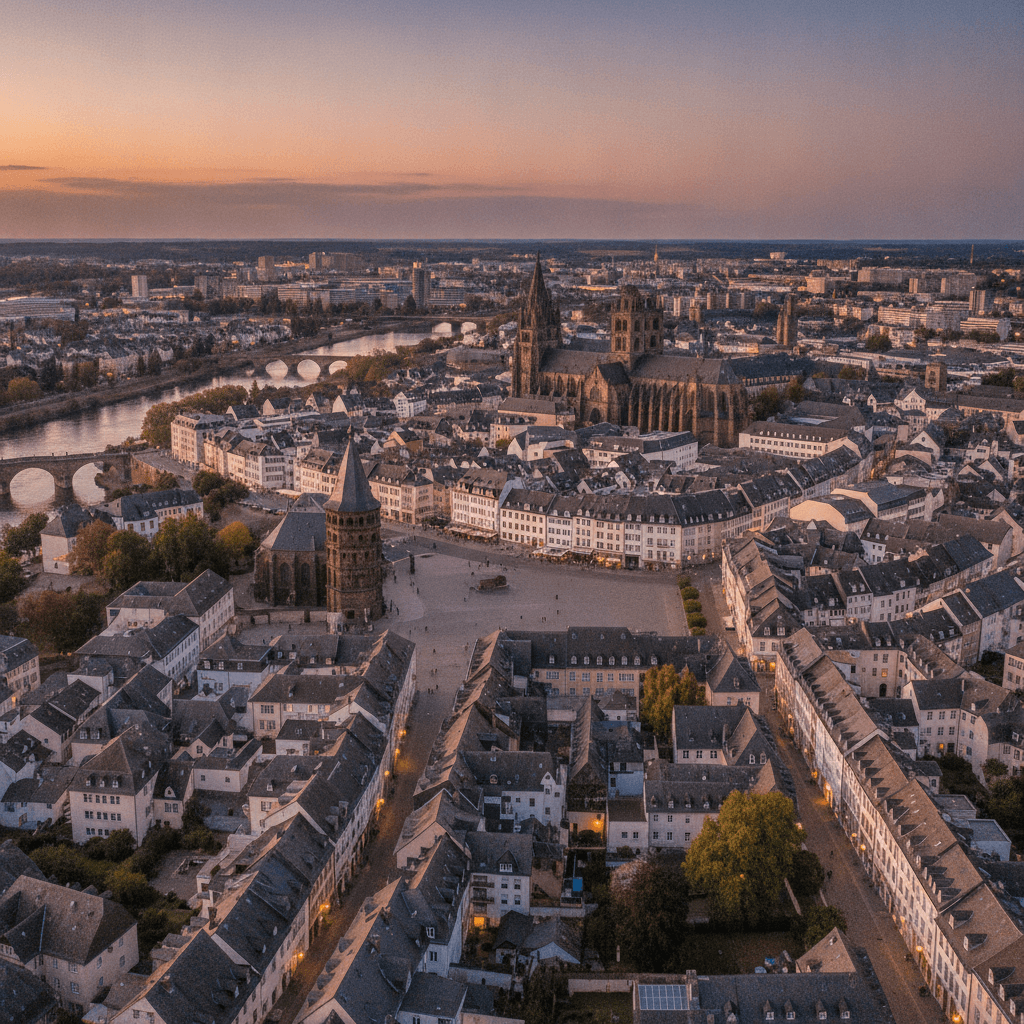
Right then, chaps and chapettes, gather 'round, but not too close – we're not running a marathon, are we? We're off to Trier, Germany's oldest city, a place so steeped in history it practically oozes antiquity from its very cobblestones. And like a good single malt, Trier isn't meant to be rushed. You need to savour it, let the nuances unfold. That's precisely why a self-guided audio tour is your ticket to true appreciation here.
Why Trier Demands Your Leisurely Pace
Trier, you see, isn't one of those cities where the main attractions are conveniently clustered within a tight little ring road. Oh no, the Romans built big, and they built spread out. You've got the Porta Nigra towering over one end of town, the Kaiserthermen (Imperial Baths) a good stroll away, and then the Amphitheatre even further out. Trying to 'do' it all in a breathless dash would be like attempting to read War and Peace during a 5-minute coffee break – utterly pointless and you'd miss all the good bits.
This isn't just any old German city; it’s a UNESCO World Heritage site, several times over. Emperor Constantine trod these very streets. Karl Marx was born here, bless his cotton socks. It’s a place where Roman foundations meet Gothic spires, where every turn reveals another layer of history. Walking Trier on foot isn't merely an option; it's practically a civic duty. It's the only way to truly absorb the layers, from the Roman foundations to the Baroque façades.
Plotting Your Roman Ramble with Lume
Now, a traditional tour might whisk you from point A to B with the rigid discipline of a German train schedule. But with a walking tour app Trier like Lume, you’re the master of your own temporal domain. My preferred approach? Start at the imposing Porta Nigra, naturally. Marvel at its sheer scale – it’s really quite something, isn't it? – then let your audio guide lead you down Simeonstraße. Don't forget to look up; there are delightful architectural quirks often overlooked by those glued to their phones (ironic, I know, but Lume talks, you listen!).
From there, it's a pleasant amble through the Hauptmarkt, a bustling square that's been the heart of Trier for centuries. Perhaps a quick detour into the adjacent alleys – you never know what ancient little courtyard you might stumble upon. That’s my kind of shortcut, a bonus discovery rather than just shaving off a few metres. If you fancy a bit of Roman indulgence, a visit to the Imperial Baths (Kaiserthermen) is a must, but remember it's a proper constitutional walk to get there, rather than a hop-skip-and-a-jump.
Next, the magnificent Dom St. Peter and the Liebfrauenkirche, two cathedrals practically fused together. They demand time. One simply must spend a good fifteen minutes just staring at the high altar in the Dom, imagining the millennia of prayers offered there. And with a Trier self-guided tour, you can.
Beyond the Postcard – The Little Details
This is where the 'slowly' truly comes into its own. Once you've paid your respects at the grand Roman and ecclesiastical monuments, allow yourself to wander. Head towards the Roman Bridge (Römerbrücke) for a quieter perspective on the Mosel. Or perhaps seek out the Dreikönigenhaus, a medieval tower house with its doorway on the first floor – a defensive measure from days gone by. These aren’t always on the primary tourist circuit, but with the best audio guide Trier in your ear, you'll be pointed in the right direction, ensuring you don't miss these fascinating footnotes of history.
- Pop into a local bakery for a 'Streuselkuchen' – crumb cake, for the uninitiated – and just sit on a bench. Watch the world go by. Imagine the legionaries marching, the merchants bartering, the bishops praying. It’s all still there, beneath the modern veneer.
- Look for the Roman-era wine taverns, often tucked away in cellars. A glass of Mosel Riesling is a splendid way to conclude an afternoon of exploration.
- Even a quick stroll through the Palace Garden (Palastgarten) in front of the Electoral Palace offers a moment of tranquility and a glimpse of Baroque opulence.
The Art of the Amble: Practicalities
A word of advice, as your honorary British walking companion: wear comfortable shoes. This isn't a stroll through a manicured garden; it's an exploration of ancient history on genuine cobblestones. Carry water, especially on warmer days. And don't feel obligated to 'finish' Trier in one go. That's the beauty of a self-guided experience. You can break it up, revisit spots, or simply find a café, sit down, and process what you’ve seen.
The beauty of exploring Trier on foot with an audio guide is that your pace dictates the experience, not a schedule. If a charming little antique shop catches your eye, go in! If a particular Roman mosaic fascinates you for an extra ten minutes, so be it. This isn’t a race, it’s an opportunity for genuine discovery, at your own speed.
Trier is a city that rewards patience and curiosity. It offers a story on every corner, a whisper from the past in every stone. And when you’re ready to let those stories unfold, to truly immerse yourself in Germany’s grandest old dame, remember that a self-guided experience, particularly with Lume as your best audio guide Trier, allows you to do it your way. No rush, no fuss, just pure, unadulterated historical discovery.