Bogor Presidential Palace
Der prächtige Bogor-Palast hat einen unerwarteten Bewohner, der seine menschlichen Bewohner übertrifft.
Die ganze Geschichte wird in der Tour freigeschaltet
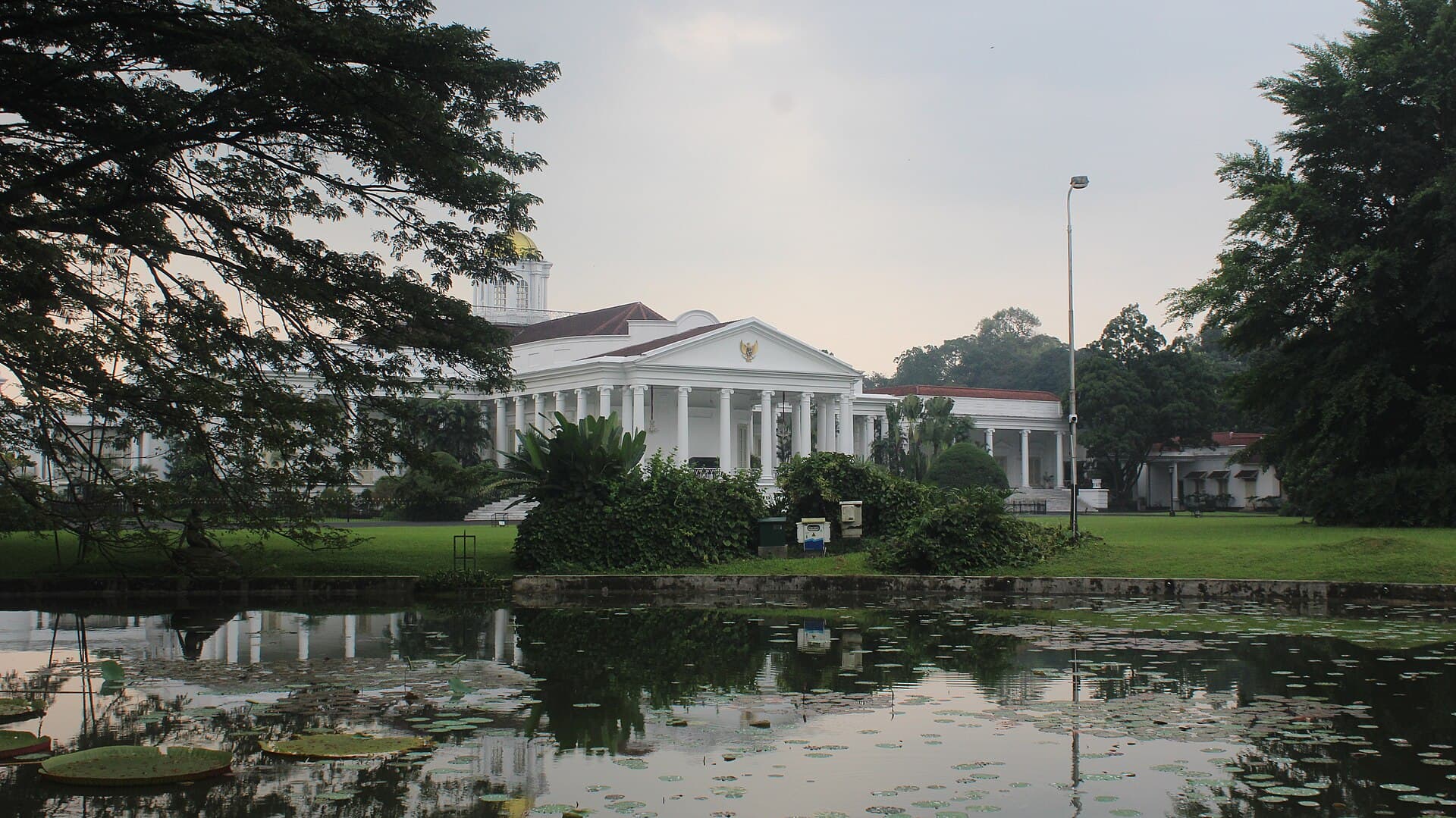 Nafisathallah / CC BY 4.0, via Wikimedia Commons
Selbstgeführte Audio-Walking-Tour durch Bogor — GPS-Route, Offline-Wiedergabe, erzählerische Narration in 32 Sprachen.
“Wo Regen den Rhythmus des täglichen Lebens prägt und Geschichte blüht.”
Nicht die Postkarten. Die Geschichten, die selbst Einheimische nicht kennen – dir ins Ohr geflüstert, genau dort, wo sie geschahen.
Der prächtige Bogor-Palast hat einen unerwarteten Bewohner, der seine menschlichen Bewohner übertrifft.
Unter den Tausenden von Pflanzenarten birgt ein bestimmter Palmbaum ein überraschendes Geheimnis über eine globale Industrie.
Dieser aktive Vulkan in der Nähe von Bogor hat jenseits seiner natürlichen Eruptionen eine düstere moderne Geschichte.
Entdecke jedes Geheimnis von Bogor
Jede Adresse, jede Enthüllung vollständig – in deinem Ohr, genau dort, wo es geschah.
Du wählst deine Stationen. Du gehst. Die Stimme enthüllt, was andere übersehen.


Deine selbstgeführte Audio-Tour durch Bogor ist bereit – wähle deine Sehenswürdigkeiten, deine Sprache und starte, sobald du ankommst.
KaufenLume enthält einen integrierten Augmented-Reality-Guide. Halten Sie Ihr Handy hoch: Die Kamera zeigt die Straße vor Ihnen, mit einem leuchtenden Pfeil über dem echten Bild, der immer auf Ihren nächsten Stopp zeigt — keine Karte zum Rätseln, keine falschen Abzweigungen. Wie alles bei Lume funktioniert es komplett offline.
Bogor, oft als "Regenstadt" (Kota Hujan) bezeichnet, bietet eine erfrischende Abwechslung zur unaufhörlichen Bewegung Jakartas, nur 60 Kilometer südlich gelegen. In West-Java, auf einer Höhe von 190 bis 330 Metern über dem Meeresspiegel, genießt die Stadt ein kühleres, feuchteres Klima als ein Großteil Indonesiens, ein Geschenk seiner Lage am Fuße des Mount Salak und Mount Gede. Dieses einzigartige Mikroklima, das stark von den Monsunwinden beeinflusst wird, die von den umliegenden Bergen gehalten werden, trägt zu seinem häufigen Niederschlag bei, der fast das ganze Jahr über auftreten kann.
Über sein besonderes Wetter hinaus ist Bogor ein bedeutendes urbanes Zentrum, das für seine üppigen Landschaften, seine vielschichtige Vergangenheit und seine lebendige Kultur bekannt ist. Es fungiert als wichtiger Wirtschafts-, Wissenschafts-, Kultur- und Tourismus-Hub, der in- und ausländische Besucher anzieht, die eine Mischung aus natürlicher Pracht und historischen Stätten suchen. Die Stadt ist besonders bekannt für ihre botanischen Gärten und den Präsidentenpalast, die als bleibende Wahrzeichen ihrer vergangenen und gegenwärtigen Bedeutung gelten.
## Vom alten Königreich zum kolonialen Rückzugsort Bogors Geschichte reicht bis ins 5. Jahrhundert zurück, als die Region Teil des Tarumanagara-Königreichs war, eines der frühesten Staaten Indonesiens. Nach einer Reihe von Niederlagen entwickelte sich Tarumanagara zum Sunda-Königreich, dessen Hauptstadt Pakuan Pajajaran 669 n. Chr. zwischen den Flüssen Ciliwung und Cisadane gegründet wurde. Der Name "Pakuan Pajajaran" bedeutet "ein Ort zwischen den parallelen Flüssen" und legte den Grundstein für das moderne Bogor.
Während der niederländischen Kolonialzeit gewann die Stadt an Bedeutung und wurde in Buitenzorg umbenannt, was auf Niederländisch "sorgenfrei" oder "friedlich" bedeutet. 1745 ordnete Generalgouverneur Gustaaf Willem van Imhoff den Bau eines Landsitzes an, der schließlich zum Bogor Presidential Palace werden sollte. Dieser kühle, bergige Ort bot eine willkommene Zuflucht vor der Hitze und den Krankheiten von Batavia (dem heutigen Jakarta) und machte ihn zu einer bevorzugten Residenz für niederländische Generalgouverneure. Sir Stamford Raffles machte Bogor während der kurzen britischen Herrschaft über Java von 1811 bis 1816 ebenfalls zu seinem Landsitz und versuchte sogar, die Palastanlagen in einem englischen Garten anzulegen.
1817 wurden die Botanischen Gärten von Bogor, bekannt als 's Lands Plantentuin te Buitenzorg, offiziell von Casper Georg Carl Reinwardt, einem deutschen Botaniker, gegründet. Ursprünglich 47 Hektar groß, waren die Gärten als Pflanzenforschungszentrum gedacht und entwickelten sich schnell zu einem internationalen Zentrum für die Erforschung tropischer Pflanzen, insbesondere solcher mit wirtschaftlichem Potenzial wie Kaffee, Kautschuk und Chinarinde. Die Gärten wurden im Laufe der Zeit erweitert, mit bedeutenden Beiträgen von Kuratoren wie Johannes Elias Teijsmann, der über 50 Jahre lang die Sammlung entwickelte.
Nach der indonesischen Unabhängigkeit wurde Buitenzorg zu Bogor, und der Palast wurde zu einer der offiziellen Residenzen des Präsidenten von Indonesien. Heute ist Bogor weiterhin ein wichtiges Zentrum für landwirtschaftliche Forschung und Bildung und beherbergt die Landwirtschaftliche Universität Bogor und verschiedene Forschungsinstitute. Das architektonische Erbe der Stadt umfasst Gebäude aus der kolonialen, modernen, postmodernen und zeitgenössischen Periode, die seine vielschichtige Vergangenheit widerspiegeln.
Bogor bietet eine Vielzahl von Attraktionen, die Natur, Geschichte und lokale Kultur verbinden. Die Botanischen Gärten von Bogor (Kebun Raya Bogor) sind eine weitläufige grüne Oase von 87 Hektar, Heimat von über 15.000 Pflanzenarten, darunter seltene Flora wie die riesige Rafflesia arnoldii und eine große Orchideensammlung. Innerhalb der Gärten finden Sie den Bogor Presidential Palace (Istana Bogor), ein historisches Gebäude, das als Rückzugsort für niederländische Generalgouverneure diente und heute eine offizielle Residenz des indonesischen Präsidenten ist. Obwohl der Palast innen für einzelne Touristen im Allgemeinen nicht zugänglich ist, können seine eleganten Anlagen, auf denen oft gefleckte Hirsche grasen, bewundert werden.
Über die zentralen Attraktionen hinaus sollten Sie einen Ausflug zum Puncak Pass in Betracht ziehen, einem Bergresortgebiet, das für sein kühles Klima, seine Teeplantagen und seine malerischen Ausblicke bekannt ist und sich ideal zum Wandern und für Picknicks eignet. Die Gegend um den Mount Salak bietet auch mehrere Wasserfälle, wie den Curug Nangka, die Möglichkeiten für Naturliebhaber und Wanderer bieten. Für ein einzigartiges kulturelles Erlebnis erkunden Sie die Jalan Suryakencana, eine Straße, die für ihre alten Gebäude, ihren kolonialen Charme und ihre lokalen kulinarischen Köstlichkeiten bekannt ist. Das Kujang-Monument, ein hoch aufragender Obelisk in Form einer traditionellen Sunda-Waffe, ist ein weiteres bemerkenswertes kulturelles Wahrzeichen.
Bogor hat ein tropisches Regenwaldklima mit hoher Luftfeuchtigkeit und erheblichen Niederschlägen während des ganzen Jahres. Die Trockenzeit von Mai bis Oktober gilt im Allgemeinen als die beste Zeit für Outdoor-Aktivitäten, mit relativ trockenerem und sonnigerem Wetter und angenehmen Temperaturen zwischen 22°C und 30°C. Die Monate Juli und August verzeichnen typischerweise die geringsten Niederschläge. Während die Regenzeit von November bis April starke Regenschauer bringt, verstärkt sie auch die üppige Grünheit der Stadt. Bogor ist für häufigen Regen bekannt, auch außerhalb der ausgewiesenen Regenzeit, daher ist es ratsam, jederzeit auf Schauer vorbereitet zu sein.
Bogor ist von Jakarta aus leicht erreichbar und liegt etwa 60 km südlich der Hauptstadt. Die bequemsten Reisemöglichkeiten von Jakarta sind die Fahrt mit einem Pendlerzug (KRL) vom Bahnhof Jakarta Kota, was etwa 1,5 Stunden dauert, oder mit dem Auto über den Jagorawi Expressway, was je nach Verkehr etwa 1 bis 2 Stunden dauert. In Bogor angekommen, sind Fahrdienst-Apps wie Gojek oder Grab erschwingliche und sichere Optionen für die Fortbewegung. Öffentliche Verkehrsmittel, darunter lokale Busse und Angkots (Minibusse), sind ebenfalls verfügbar. Planen Sie einen Aufenthalt von mindestens zwei vollen Tagen ein, um die Stadt und ihre umliegenden Attraktionen angemessen zu erkunden. Für Besuche des Bogor Presidential Palace beachten Sie bitte, dass der öffentliche Zugang in der Regel auf Gruppentouren mit vorheriger Genehmigung des Präsidialamtes beschränkt ist.
Bogor — Koreanisch, Chinesisch, Hebräisch und 29 weitere Sprachen, jede Station von einer muttersprachlichen Stimme erzählt. Die größte Sprachauswahl aller selbstgeführten Audiotouren.
Verfügbar auf: