Barrio Chapinero
El nombre de este animado barrio de Bogotá es un tributo a un tipo de calzado histórico específico.
La historia completa se desbloquea en el tour
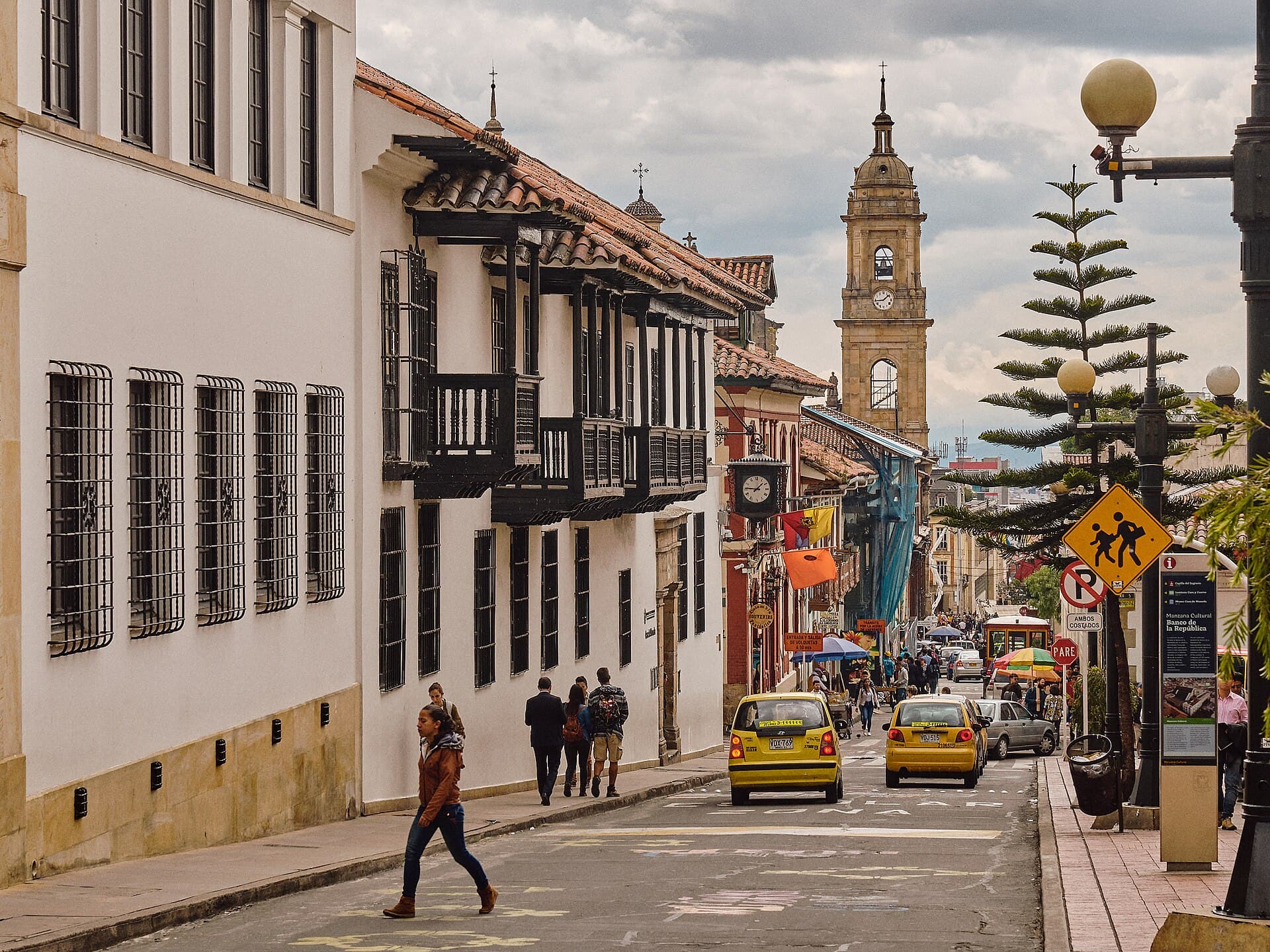 Pedro Szekely from Los Angeles, USA / CC BY-SA 2.0, via Wikimedia Commons
Tour de audio autoguiado de Bogotá — ruta GPS a pie, reproducción offline, narración en 32 idiomas.
“Donde los picos andinos se encuentran con vibrante arte callejero y leyendas doradas.”
No las postales. Las historias que ni los locales conocen — al oído, justo donde ocurrieron.
El nombre de este animado barrio de Bogotá es un tributo a un tipo de calzado histórico específico.
La fecha oficial de fundación de Bogotá se celebra el 6 de agosto de 1538, pero la ciudad fue fundada en realidad más de una vez.
Debajo de las bulliciosas calles de Bogotá, fluye una red natural, invisible para la mayoría.
Descubre todos los secretos de Bogotá
Cada dirección, cada revelación al completo — a tu oído, justo donde ocurrió.
Eliges tus paradas. Caminas. La voz te revela lo que los demás ignoran.


Tu tour de audioguía por Bogotá te espera — elige tus lugares, tu idioma y empieza al llegar.
ComprarLume incluye una guía de realidad aumentada. Levanta el móvil y su cámara muestra la calle que tienes delante, con una flecha luminosa sobre la imagen real que siempre apunta a tu próxima parada — sin mapas que descifrar, sin giros equivocados. Como todo en Lume, funciona completamente sin conexión.
Bogotá, la extensa capital de Colombia, se eleva en lo alto de la Cordillera de los Andes a una altitud de aproximadamente 2.640 metros (8.660 pies) sobre el nivel del mar, lo que la convierte en una de las ciudades capitales más altas del mundo. Esta posición elevada contribuye a su clima consistentemente fresco y primaveral durante todo el año, con temperaturas promedio alrededor de los 14°C (57°F). La ciudad es una convincente mezcla de herencia indígena, historia colonial y cultura urbana moderna, ofreciendo una experiencia dinámica para los visitantes.
Dividida en 20 localidades, Bogotá es la ciudad más grande y poblada de Colombia, sirviendo como un centro económico, político y cultural vital. Es una metrópolis que ha experimentado una transformación significativa, evolucionando de un asentamiento precolombino Muisca a un centro de comercio, arte y vida intelectual. Desde sus museos de clase mundial hasta su extensa red de ciclovías y su próspera escena de arte callejero, Bogotá invita a la exploración y promete un viaje memorable a través de sus diversas ofertas.
## De Bacatá a Santa Fe de Bogotá Mucho antes de la llegada de los españoles, la sabana de Bogotá fue el hogar del pueblo Muisca, una civilización precolombina avanzada conocida por sus sistemas agrícolas y su orfebrería. Su líder, el zipa, gobernaba desde un asentamiento llamado Bacatá, un nombre que más tarde evolucionaría a Bogotá. Los Muiscas también dieron origen a la leyenda de El Dorado, un mito de un rey dorado y ofrendas rituales en la Laguna de Guatavita, que cautivó a los conquistadores españoles.
El conquistador español Gonzalo Jiménez de Quesada fundó la ciudad moderna el 6 de agosto de 1538, estableciendo un asentamiento en tierras Muiscas. La llamó Santa Fe de Bogotá, honrando tanto su lugar de nacimiento español como el nombre indígena. La ciudad se convirtió rápidamente en un importante centro administrativo y religioso colonial, y en 1717, fue nombrada capital del Virreinato de Nueva Granada, que abarcaba las actuales Colombia, Ecuador, Panamá y Venezuela.
## Independencia y Crecimiento Moderno Bogotá jugó un papel crucial en la lucha de Colombia por la independencia de España. Un levantamiento pivotal el 20 de julio de 1810, ahora celebrado como el Día de la Independencia de Colombia, marcó el comienzo de los movimientos revolucionarios. Simón Bolívar capturó la ciudad en 1819 después de la Batalla de Boyacá, y Bogotá se convirtió en la capital de la nación independiente de Gran Colombia. Incluso después de la disolución de Gran Colombia, Bogotá siguió siendo la capital, primero de Nueva Granada y luego de la República de Colombia.
El siglo XX trajo una rápida urbanización y crecimiento demográfico. En 1954, varios municipios circundantes fueron anexados, lo que llevó a la creación del Distrito Especial de Bogotá, diseñado para acomodar el crecimiento futuro. En 1991, bajo una nueva constitución, Bogotá se convirtió oficialmente en el Distrito Capital. Hoy, Bogotá es reconocida por su mezcla de arquitectura colonial española histórica y modernos rascacielos, lo que refleja su profunda herencia cultural y su rápido desarrollo urbano.
Comience su exploración en La Candelaria, el distrito histórico de Bogotá, caracterizado por sus calles sinuosas y coloridos edificios coloniales. Aquí encontrará la Plaza de Bolívar, la plaza principal de la ciudad, flanqueada por la grandiosa Catedral Primada. A pocos pasos se encuentra el Museo del Oro, que alberga la colección más grande del mundo de artefactos de oro prehispánicos, con más de 55.000 piezas que ofrecen una visión de la historia indígena de Colombia.
Para los entusiastas del arte, el Museo Botero exhibe obras del reconocido artista colombiano Fernando Botero, y la entrada es gratuita. Ascienda al Cerro de Monserrate en teleférico o funicular para disfrutar de vistas panorámicas de la extensa ciudad. El cerro, que se eleva a 3.152 metros (10.341 pies), ofrece una amplia perspectiva, especialmente al atardecer. Bogotá también es celebrada por su animada escena de arte callejero, con murales que adornan edificios por toda la ciudad, reflejando un gobierno local que apoya el graffiti como forma de arte. Los domingos, experimente la Ciclovía, donde las principales carreteras se cierran a los automóviles, abriéndose para ciclistas y peatones, destacando la extensa red de ciclovías de Bogotá.
Bogotá experimenta un clima consistentemente fresco y primaveral durante todo el año debido a su gran altitud cerca del ecuador, con temperaturas promedio alrededor de los 14°C (57°F). La ciudad tiene dos estaciones relativamente secas: de diciembre a marzo y nuevamente de julio a agosto. Estos períodos son generalmente considerados los mejores momentos para visitar para disfrutar de un clima agradable, con cielos más despejados y menos precipitaciones. Si bien estas estaciones secas pueden coincidir con las épocas de mayor afluencia turística, ofreciendo festivales y eventos animados, visitar durante los períodos más tranquilos de mayo u octubre aún puede ser delicioso, con menos multitudes y a menudo buen clima.
La elevación de Bogotá de 2.640 metros (8.660 pies) significa que los visitantes podrían experimentar mal de altura; es aconsejable tomárselo con calma y mantenerse hidratado el primer día. El clima puede ser impredecible, a menudo experimentando "cuatro estaciones en un día", por lo que se recomienda vestirse en capas. El Aeropuerto Internacional El Dorado (BOG) es un importante centro, manejando volúmenes significativos de carga y pasajeros en América Latina, lo que facilita los vuelos a Bogotá. La ciudad cuenta con un sistema de transporte público bien desarrollado, incluido el sistema de tránsito rápido de autobuses TransMilenio. Para explorar, considere usar aplicaciones de transporte compartido, taxis o la extensa red de ciclovías. Aunque generalmente es segura, es prudente evitar caminar solo por la noche en áreas vacías o poco iluminadas.
Bogotá en coreano, en chino o en hebreo — y 29 idiomas más, cada parada narrada por una voz nativa. La mayor variedad de idiomas de cualquier audioguía autoguiada.
Disponible en: