Via Piella
La plupart des guides parlent des portiques et des tours de Bologne, mais rares sont ceux qui mentionnent ses artères fluides.
L'histoire complète se débloque dans le tour
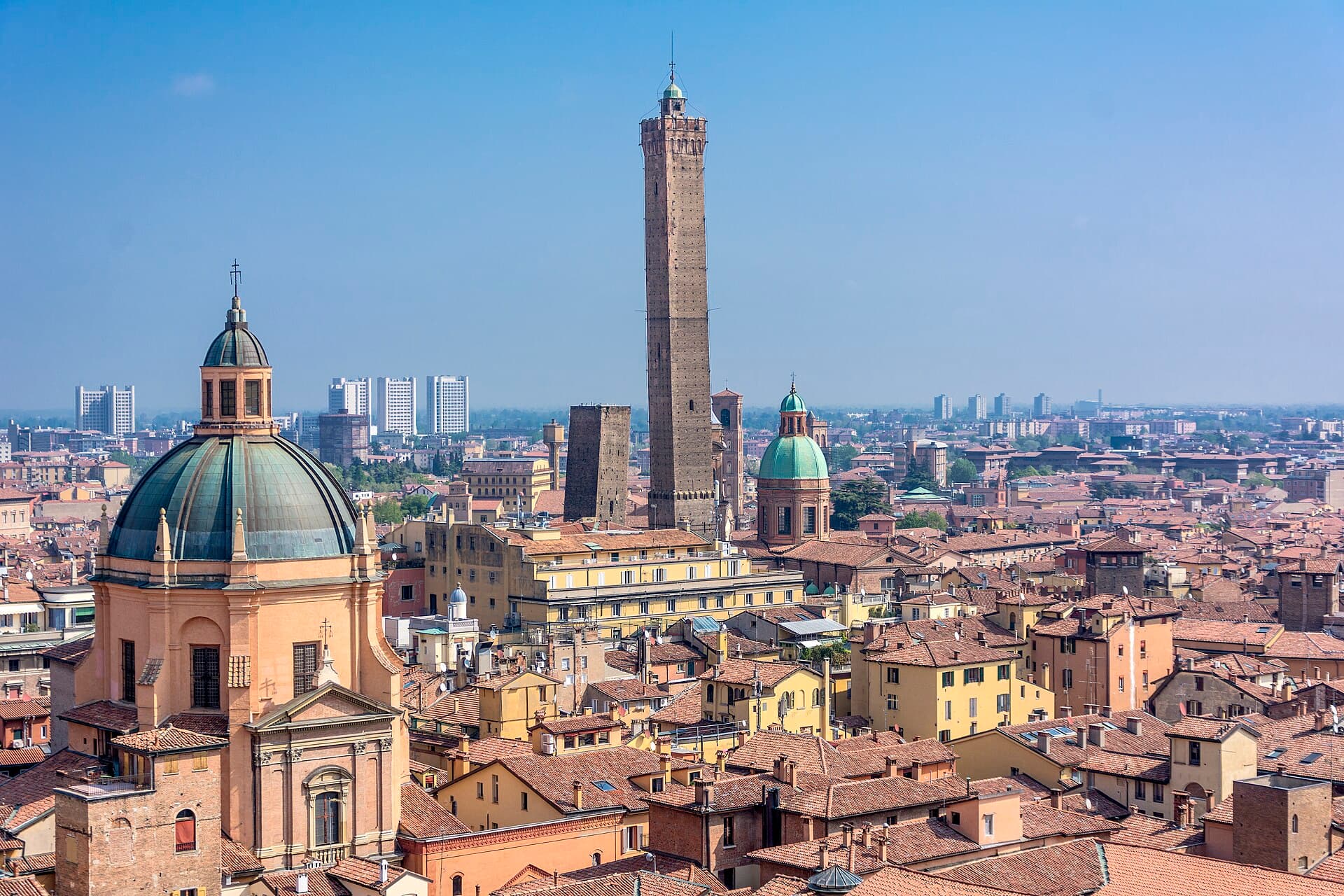 Fabio Ciminelli / CC BY-SA 4.0, via Wikimedia Commons
Visite audio autoguidée de Bologne — parcours GPS à pied, lecture hors ligne, narration en 32 langues.
“Bologne : Là où les portiques ancestraux abritent voyages et saveurs inoubliables.”
Pas les cartes postales. Les histoires que même les habitants ignorent — soufflées à l'oreille, là où elles se sont passées.
La plupart des guides parlent des portiques et des tours de Bologne, mais rares sont ceux qui mentionnent ses artères fluides.
La fontaine de Neptune offre un spectacle grandiose, mais son créateur, Giambologna, a joué un tour subtil à un cardinal.
Les étudiants de l'Université de Bologne reportent souvent l'ascension de la Tour Asinelli après l'obtention de leur diplôme.
Découvrez tous les secrets de Bologne
Chaque adresse, chaque révélation en entier — dans ton oreille, là où elle s'est passée.
Tu choisis tes lieux. Tu marches. La voix te révèle ce que les autres ignorent.


Votre visite audioguidée de Bologne vous attend — choisissez vos lieux, votre langue, et lancez-vous dès votre arrivée.
AcheterLume intègre un guide en réalité augmentée. Levez votre téléphone : sa caméra montre la rue devant vous, avec une flèche lumineuse posée sur l'image réelle qui pointe toujours vers votre prochain arrêt — aucune carte à déchiffrer, aucun mauvais virage. Comme tout dans Lume, ça fonctionne entièrement hors-ligne.
Bologne, capitale de la région italienne d'Émilie-Romagne, est une ville souvent désignée par trois noms affectueux : « La Dotta » (La Savante), « La Grassa » (La Grasse) et « La Rossa » (La Rouge). « La Savante » fait référence à l'Université de Bologne, la plus ancienne université en activité continue du monde occidental, fondée en 1088. Son héritage académique a façonné le paysage intellectuel et culturel de la ville pendant des siècles. « La Grasse » célèbre la tradition culinaire inégalée de Bologne, reconnue pour ses plats riches et savoureux qui lui ont valu le titre de capitale gastronomique de l'Italie. « La Rouge » fait référence aux teintes terre cuite de ses constructions médiévales et à ses orientations politiques historiques.
Au-delà de ses noms évocateurs, Bologne est définie par son vaste réseau de portiques, ou passages couverts, qui s'étendent sur plus de 62 kilomètres à travers la ville, dont 12 sections ont été reconnues comme site du patrimoine mondial de l'UNESCO en 2021. Ces merveilles architecturales offrent non seulement un abri contre le soleil et la pluie, mais favorisent également un sentiment unique de communauté et de vie urbaine. Le centre historique bien préservé de la ville, résultat d'efforts de restauration minutieux depuis la fin des années 1970, invite à l'exploration, révélant des couches d'histoire depuis ses origines étrusques jusqu'à sa proéminence médiévale.
## De la Felsina étrusque à la Bononia romaine L'histoire de Bologne commence à l'âge du bronze, avec les premières colonies datant du 3e millénaire avant notre ère. Au 6e siècle avant notre ère, c'était une importante ville étrusque connue sous le nom de Felsina, l'une des colonies les plus importantes de la vallée du Pô. La ville fut ensuite occupée par les Boïens gaulois au 4e siècle avant notre ère avant de devenir une colonie romaine et un municipium appelé Bononia vers 190 avant notre ère. Sous la domination romaine, Bononia a prospéré, soutenant une population de vingt mille habitants, des bâtiments impressionnants et un grand théâtre.
## Croissance médiévale et naissance d'une université Après le déclin de l'Empire romain d'Occident, Bologne a connu une période d'incursions barbares, tombant sous le contrôle de divers groupes, notamment les Wisigoths, les Huns, les Goths et les Lombards. Au 8e siècle, elle est devenue une partie du royaume lombard, puis de l'Empire carolingien, prospérant en tant que marque frontalière. Le Moyen Âge a marqué une ère de croissance significative pour Bologne. Elle est devenue une commune libre, connaissant à la fois l'autonomie et les conflits. Cette période a vu l'essor de ses emblématiques maisons-tours, construites par de riches familles comme symboles de statut et à des fins défensives. À un moment donné, l'horizon de Bologne était ponctué de plus de 100 à 180 de ces tours, bien qu'il n'en reste qu'une vingtaine aujourd'hui, les tours Asinelli et Garisenda étant les plus célèbres.
Le 11e siècle a été un tournant avec la fondation de l'Université de Bologne en 1088, largement reconnue comme la plus ancienne université en activité continue du monde occidental. Initialement fondée par des étudiants, elle est devenue un centre majeur d'études juridiques, attirant des érudits comme Dante, Boccace et Pétrarque. La croissance de l'université a stimulé le développement urbain, y compris le système unique de portiques, qui étaient initialement des extensions de bâtiments privés pour créer plus d'espace de vie pour la population étudiante en plein essor.
## Règle papale et temps modernes De 1506 à 1796, Bologne a fait partie des États pontificaux, gouvernée par un légat cardinal et le Sénat de la ville. Au cours de cette période, d'importantes additions architecturales ont été faites, telles que la Piazza del Nettuno et l'Archiginnasio, le premier siège officiel de l'université. Le système hydraulique avancé de Bologne, développé à partir du 12e siècle, s'est également spécialisé dans le tissage de la soie, rendant ses moulins technologiquement avancés jusqu'au 18e siècle. Avec l'arrivée de Napoléon, Bologne est brièvement devenue la capitale de la République cispadane, puis la deuxième ville de la République cisalpine, avant de rejoindre les États pontificaux après le Congrès de Vienne. Elle est finalement devenue une partie du Royaume d'Italie unifié en 1859. Bien que fortement bombardée pendant la Seconde Guerre mondiale, Bologne a également été un centre important de la Résistance italienne. Aujourd'hui, elle reste un pôle important pour l'agriculture, l'industrie, la finance et les transports, se classant constamment en tête des enquêtes sur la qualité de vie.
Commencez votre exploration sur la Piazza Maggiore, la place principale de Bologne et le cœur de son centre historique. Ici, vous trouverez l'imposante mais inachevée Basilique de San Petronio, l'une des plus grandes églises d'Europe, et la Fontaine de Neptune, un chef-d'œuvre du XVIe siècle. Adjacente à la Piazza Maggiore se trouve le Palazzo dell'Archiginnasio, siège original de l'Université de Bologne, abritant le captivant Théâtre anatomique avec son intérieur en bois finement sculpté.
Aucune visite à Bologne n'est complète sans l'expérience de ses célèbres portiques. Promenez-vous le long des 3,8 kilomètres du Portico di San Luca, le plus long passage couvert du monde, qui monte jusqu'au Sanctuaire de la Madonna di San Luca pour des vues imprenables sur la ville. Dans le centre-ville, recherchez les emblématiques Due Torri (Deux Tours), Asinelli et Garisenda, symboles médiévaux d'opulence et d'autorité. Bien que la tour Asinelli, plus haute, soit actuellement fermée pour des raisons de sécurité, son inclinaison spectaculaire reste un spectacle notable.
Plongez dans le paysage culinaire de Bologne au Quadrilatero, un quartier historique de marché avec des ruelles étroites débordant d'étals de nourriture, de boutiques d'artisans et de restaurants. Pour les amateurs d'art, le Museo d'Arte Moderna di Bologna (MAMbo) propose une collection d'art moderne et expérimental. Le Complexe religieux de Santo Stefano, également connu sous le nom des « Sept Églises », présente un voyage architectural et spirituel unique à travers des bâtiments interconnectés.
Les périodes les plus agréables pour visiter Bologne sont le printemps (avril à juin) et le début de l'automne (septembre à octobre). Pendant ces mois, le temps est doux et agréable, avec des températures moyennes allant de 12°C à 22°C (54°F à 72°F), ce qui est idéal pour les visites touristiques et les activités de plein air. Le printemps apporte des jardins en fleurs et des événements culturels, tandis que l'automne offre des températures confortables, des couleurs automnales vives et le pic des saisons de récolte et de truffe. Les étés (juin-août) peuvent être chauds et humides, avec des températures dépassant souvent les 30°C (86°F), et de nombreux habitants quittent la ville en août. Les hivers (décembre-février) sont froids et humides, avec un brouillard occasionnel, mais peuvent offrir un bon rapport qualité-prix avec moins de monde et des événements festifs autour de Noël.
L'aéroport Guglielmo Marconi de Bologne (BLQ) est bien relié au centre-ville. L'option la plus rapide est le Marconi Express, un monorail qui atteint la gare de Bologne Centrale en seulement 7 minutes. Il fonctionne tous les jours de 5h40 à minuit, avec des départs fréquents. Un billet simple coûte 12,80 €, et un aller-retour 23,30 €, incluant 75 minutes de voyage en bus urbain. Alternativement, des bus comme les 944 et 949 offrent des itinéraires légèrement plus économiques, le 949 allant directement à la Piazza Malpighi. Les taxis sont également facilement disponibles à la sortie du terminal des arrivées, coûtant environ 20-30 € pour un trajet de 15-30 minutes vers le centre-ville. Uber est également disponible, offrant diverses options de trajet, y compris des véhicules de luxe et des transferts aéroportuaires.
Bologne est une ville où l'on peut facilement se promener, en particulier son centre historique, et le vaste système de portiques offre des chemins ombragés pour l'exploration. Les transports en commun, gérés par Tper, comprennent des bus et une nouvelle ligne de tramway est en construction. Envisagez d'acheter la Bologna Welcome Card pour l'accès aux musées et des réductions. Des grèves, affectant particulièrement les bus et les trains, peuvent survenir, généralement le vendredi. Les pourboires ne sont pas obligatoires mais appréciés pour un bon service. La plupart des établissements acceptent les cartes de crédit.
Bologne en coréen, en chinois ou en hébreu — et dans 29 autres langues, chaque étape narrée par une voix native. La plus large gamme de langues de tous les audioguides autoguidés.
Disponible en :