Templo de Borobudur
La estupa central en la cima de Borobudur, a diferencia de las 72 más pequeñas que la rodean, fue encontrada vacía.
La historia completa se desbloquea en el tour
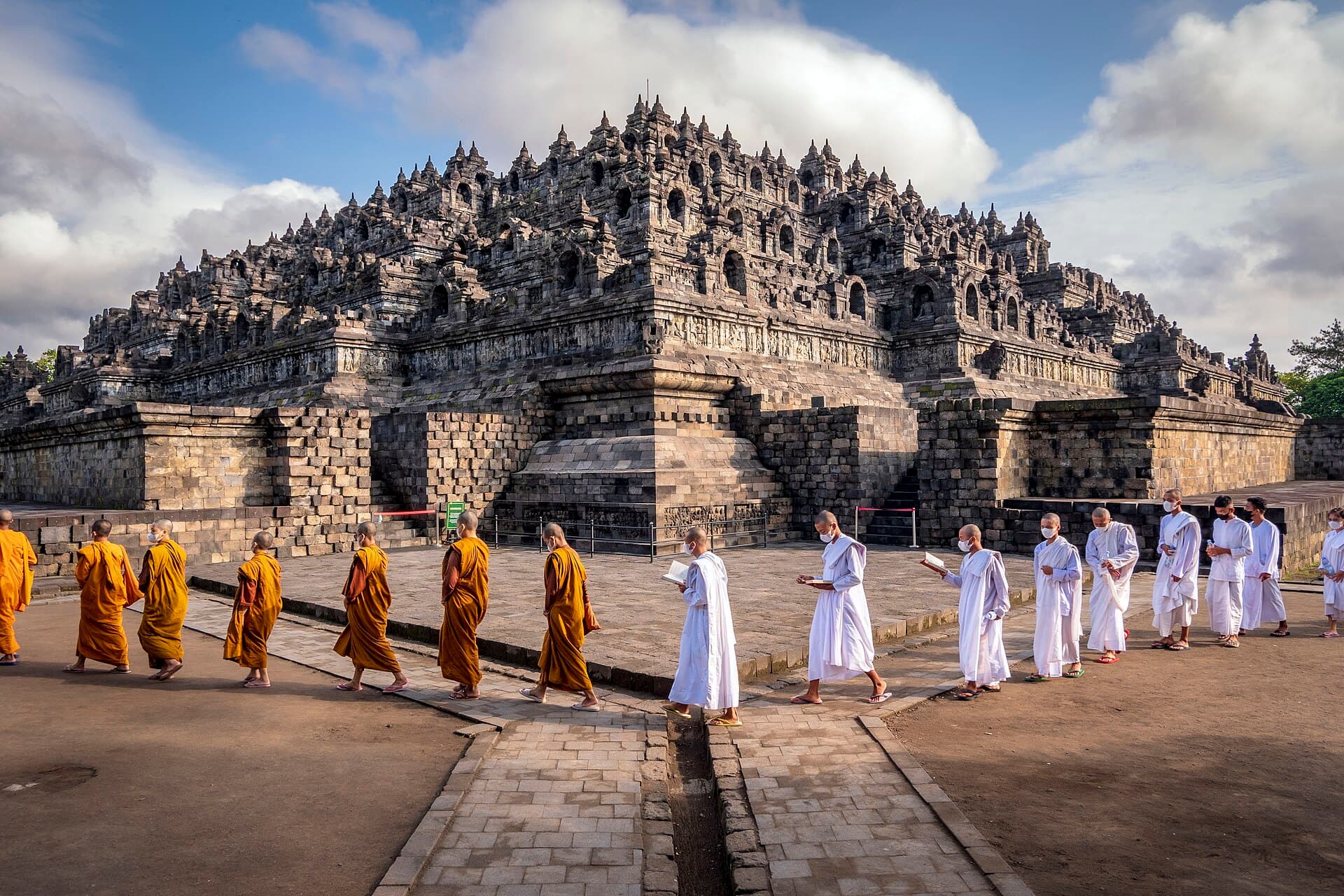 Heri nugroho / CC BY-SA 4.0, via Wikimedia Commons
Tour de audio autoguiado de Borobudur — ruta GPS a pie, reproducción offline, narración en 32 idiomas.
“Asciende a través de narrativas de piedra para tocar el reino de la inmaterialidad.”
No las postales. Las historias que ni los locales conocen — al oído, justo donde ocurrieron.
La estupa central en la cima de Borobudur, a diferencia de las 72 más pequeñas que la rodean, fue encontrada vacía.
Debajo de la base visible del templo yace una serie de relieves que representan un lado más oscuro de la existencia.
Durante siglos, este colosal monumento permaneció olvidado, consumido por la jungla y las cenizas volcánicas.
Descubre todos los secretos de Borobudur
Cada dirección, cada revelación al completo — a tu oído, justo donde ocurrió.
Eliges tus paradas. Caminas. La voz te revela lo que los demás ignoran.


Tu tour de audioguía por Borobudur te espera — elige tus lugares, tu idioma y empieza al llegar.
ComprarLume incluye una guía de realidad aumentada. Levanta el móvil y su cámara muestra la calle que tienes delante, con una flecha luminosa sobre la imagen real que siempre apunta a tu próxima parada — sin mapas que descifrar, sin giros equivocados. Como todo en Lume, funciona completamente sin conexión.
Borobudur, un colosal monumento budista en el centro de Java, Indonesia, se erige como el templo budista más grande del mundo y Patrimonio de la Humanidad por la UNESCO. Construido con piedra gris similar a la andesita en los siglos VIII y IX durante la dinastía Sailendra, su diseño combina la adoración ancestral indígena indonesia con los conceptos budistas de alcanzar el Nirvana. El templo guía a los peregrinos a través de un extenso sistema de escaleras y corredores a lo largo de nueve plataformas apiladas —seis cuadradas y tres circulares— que culminan en una cúpula central.
Más de 2.600 paneles de relieve y más de 500 estatuas de Buda adornan el monumento, con 72 estatuas de Buda sentadas dentro de estupas perforadas en las plataformas circulares. Estos relieves narrativos, que se extienden por cinco kilómetros, se consideran una de las colecciones más extensas de relieves budistas del mundo, ilustrando el camino hacia la iluminación. Borobudur no es meramente un templo; es un modelo tridimensional del universo budista Mahayana, un espacio sagrado para la peregrinación y el culto.
Redescubierto en 1814 después de siglos de estar enterrado bajo cenizas volcánicas y el crecimiento de la jungla, Borobudur ha sido objeto de importantes esfuerzos de restauración, destacando un gran proyecto del gobierno indonesio y la UNESCO entre 1975 y 1982, que aseguró su preservación y su lugar como una maravilla arqueológica global.
## Construcción y Significado Temprano Borobudur fue construido aproximadamente entre 778 y 850 d.C. bajo la dinastía Sailendra, un período en el que las influencias culturales indias eran prominentes en la sociedad indonesia. Esta era vio una fusión única de las formas de arte indias Gupta y javanesas locales en el diseño del templo. El monumento en sí es una profunda expresión de la cosmología budista Mahayana, destinada a representar el camino hacia la iluminación. Su estructura, una pirámide escalonada que encierra una colina natural, fue meticulosamente construida con un estimado de 1.6 a 2 millones de bloques de piedra volcánica sin el uso de mortero. No se conocen registros escritos que detallen su construcción o propósito preciso, y su cronología se estima comparando relieves tallados e inscripciones de los siglos VIII y IX.
## Abandono y Redescubrimiento Durante siglos, Borobudur permaneció desierto, oculto bajo capas de ceniza volcánica y densa vegetación selvática. Las razones exactas de su abandono siguen siendo un misterio, aunque probablemente ocurrió entre 928 y 1006 d.C. cuando el rey Mpu Sindok trasladó la capital del reino de Mataram a Java Oriental tras una serie de erupciones volcánicas. El monumento fue en gran parte olvidado hasta 1814, cuando su existencia fue señalada a Sir Thomas Stamford Raffles, entonces gobernante británico de Java, por los nativos indonesios.
## Restauración y Era Moderna El primer esfuerzo de restauración significativo fue emprendido por un equipo de arqueólogos holandeses entre 1907 y 1911 bajo la dirección de Theodor van Erp. Este trabajo inicial se centró en reconstruir estupas desmoronadas, pavimentar y limpiar tallas. Sin embargo, debido a presupuestos limitados y problemas de drenaje, se produjo un mayor deterioro. Un proyecto de restauración más completo e innovador fue iniciado en 1975 por el gobierno indonesio y la UNESCO, concluyendo en 1982. Esta masiva empresa implicó desmantelar las terrazas inferiores, limpiar más de un millón de piedras, tratar paneles de relieve e instalar un extenso sistema de drenaje. El monumento restaurado fue inaugurado en febrero de 1983 y designado Patrimonio de la Humanidad por la UNESCO en 1991, consolidando su estatus como un tesoro cultural global.
Borobudur es un viaje en sí mismo, diseñado para que los peregrinos circunden en el sentido de las agujas del reloj a través de sus niveles, ascendiendo hacia la iluminación. El monumento consta de nueve plataformas apiladas: seis terrazas cuadradas y tres circulares, coronadas por una estupa central.
Comience su exploración en las terrazas cuadradas inferiores, que presentan extensos paneles de relieve narrativos. Estos 1.460 paneles, que cubren 2.500 metros cuadrados, representan la vida y las enseñanzas de Buda, guiando a los visitantes a través de la cosmología budista. A medida que asciende, la imaginería transita del reino terrenal del deseo (Khamadhatu) al mundo de las formas (Rupadhatu), donde los individuos luchan por el dominio sobre los deseos mundanos.
Las terrazas circulares superiores representan el Arupadhatu, la esfera de la inmaterialidad. Aquí, 72 estupas perforadas encierran estatuas de Buda, visibles a través de su piedra enrejada. La ascensión culmina en la gran estupa central, que simboliza el Nirvana. Más allá del templo principal, considere visitar los templos cercanos de Mendut y Pawon, que se cree que tienen una conexión religiosa con Borobudur y forman una ruta procesional para el festival anual del Día de Vesak. El Museo de Borobudur y el Museo del Barco Samudraraksa también ofrecen información sobre la historia del templo y los hallazgos arqueológicos.
La estación seca, desde finales de abril hasta principios de octubre, ofrece el clima más fiable con cielos despejados y mañanas más frescas, lo que la hace ideal para explorar Borobudur. Mayo, junio y septiembre son particularmente recomendables para multitudes manejables. Si bien julio y agosto ofrecen un clima perfecto, coinciden con la temporada alta de turismo, lo que lleva a precios más altos y mayores multitudes. La estación húmeda, de noviembre a marzo, trae más lluvias pero también menos visitantes. Para una experiencia verdaderamente única, considere visitar durante Vesak (Waisak) en mayo o junio, cuando Borobudur se convierte en un sitio de peregrinación activo con monjes y procesiones de velas. Las mañanas temprano suelen ser las mejores para evitar multitudes y presenciar el amanecer, ya sea desde el propio templo con un boleto especial, o desde puntos de vista cercanos como Punthuk Setumbu.
Borobudur se encuentra aproximadamente a 42 kilómetros al noroeste de Yogyakarta, en el centro de Java. Los terrenos del templo suelen estar abiertos todos los días de 7 AM a 5 PM, con acceso al monumento para subir a la estructura del templo disponible de martes a domingo, de 8:30 AM a 5 PM, con franjas horarias de entrada. Los tours especiales al amanecer a menudo permiten un acceso más temprano. Es aconsejable reservar boletos en línea con anticipación, especialmente para visitas al amanecer o durante la temporada alta.
Se recomiendan zapatos cómodos para explorar los muchos niveles y relieves. El clima en Java Central es cálido y húmedo durante todo el año, con temperaturas generalmente entre 22°C y 30°C, por lo que se recomienda ropa ligera, protector solar y un sombrero. Si visita durante la temporada de lluvias, un impermeable también es útil. Considere contratar un guía local para apreciar plenamente las intrincadas narrativas de los relieves. Los alojamientos cercanos varían desde hoteles de gama media como The Amrta Borobudur hasta opciones como Manohara Borobudur, que ofrece vistas al amanecer.
Borobudur en coreano, en chino o en hebreo — y 29 idiomas más, cada parada narrada por una voz nativa. La mayor variedad de idiomas de cualquier audioguía autoguiada.
Disponible en: