St. Anastasia Island
This island, once a monastic retreat, holds tales not just of devotion, but of something far more swashbuckling.
Full story unlocks in the tour
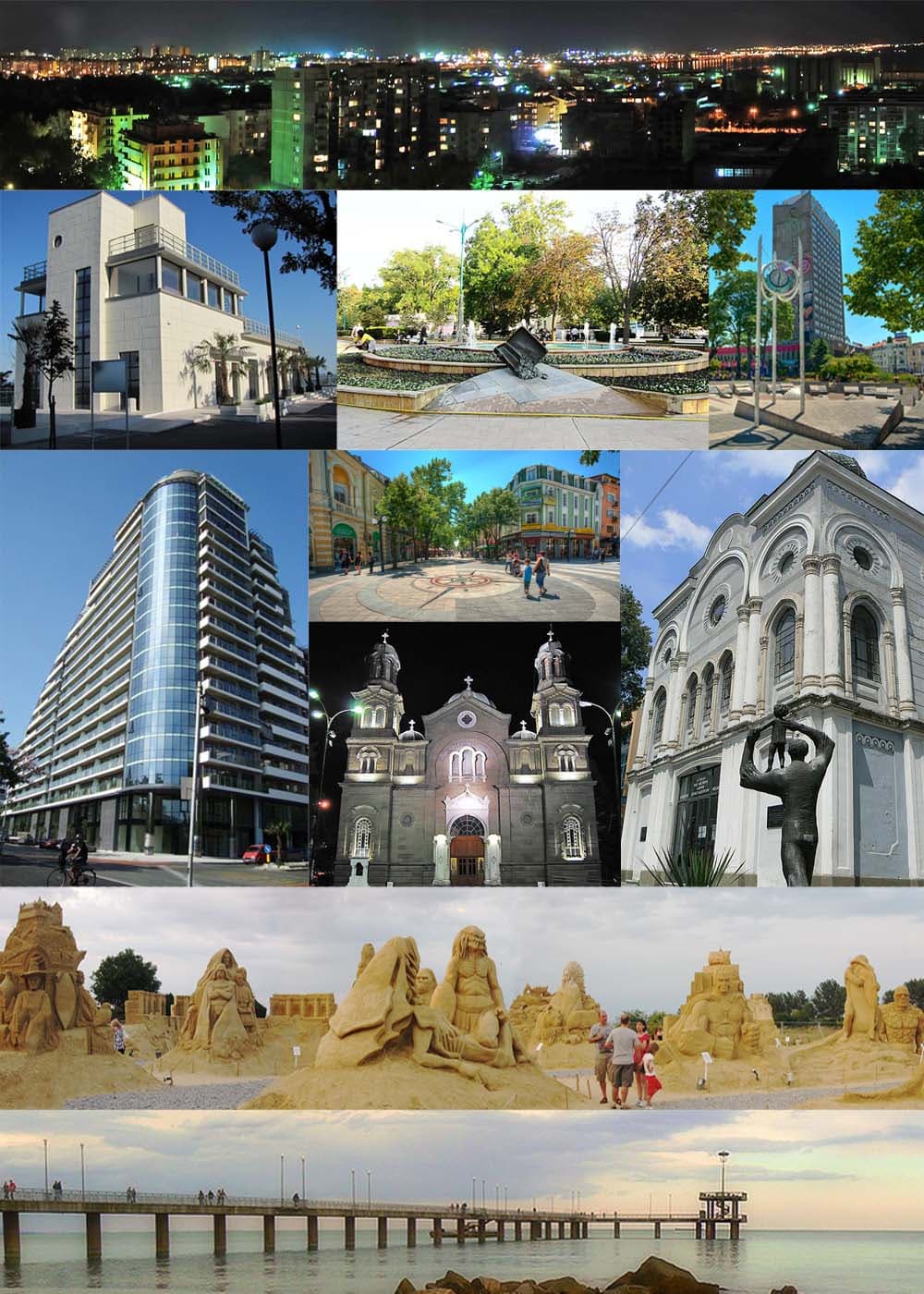 Collage by Dvais5. Photograph authors and links (from top to bottom, left to right): Panorama from "Slaveikov" District: File:Night Panorama of Burgas.jpg, Nasomatrix Cultural Center Sea Casino: File:Kazino8.jpg, Kazinobs Square "Tsaritsa Ioanna": File:Burgas Bulgarien PD 2011 20.JPG, Bin im Garten The Clock: File:IS Burgas3.PNG, Ivanistudio Complex "Panteona": File:ComplexPan.jpg, http://www.luximoti.bg/Apartamenti_v_Bulgaria/AD3859BG_Apartament_prodava_v_Burgas.html The Compass: File:IS Burgas2.PNG, Ivanistudio Burgas Art Gallery: File:Burgas-art-gallery-2.jpg, Vassia Atanassova - Spiritia St. st. Cyril and Methodius: File:Храм КиМ.JPG, Nasomatrix Sand Sculpture Festival Panorama: File:SandSculptures Burgas Panorama.png, Dvais5 Bay of Burgas: File:Burgas-bridge-Nasomatrix.jpg, Nasomatrix / CC BY-SA 4.0, via Wikimedia Commons
“Where ancient currents meet a modern shore.”
Not the postcards. The stories even locals don't know — whispered in your ear, right where they happened.
This island, once a monastic retreat, holds tales not just of devotion, but of something far more swashbuckling.
An ancient spa near Burgas attracted some of history's powerful figures, but it wasn't just for relaxation.
Just north of the city's beaches, you can find a unique kind of 'spa' experience, completely free of charge.
Discover every secret of Bourgas
Every address, every reveal in full — in your ear, right where it happened.
You pick your stops. You walk. The voice reveals what the others miss.
No tours available yet. Check back soon — we're preparing them.
Burgas, often spelled Bourgas, stands as Bulgaria's fourth-largest city and the second-largest on its Black Sea coast. While sometimes viewed as a transit point for other resorts, Burgas offers a distinct blend of industrial significance, natural splendor, and cultural depth. Positioned at the westernmost point of the expansive Burgas Bay, the city is embraced by three significant lakes—Atanasovsko, Burgas (Vaya), and Mandrensko—creating a unique ecosystem and a haven for birdwatchers.
This port city provides a relaxed immersion into seaside elegance, complemented by art nouveau architecture and a growing creative scene. Its wide promenades, particularly the Sea Garden, connect the bustling city center with the tranquil Black Sea. Visitors can explore fresh fish markets, art workshops, and restaurants that honor local culinary traditions. Burgas serves as a practical base for exploring the southern Black Sea coast, with its well-kept pedestrianized center, uncrowded beaches, and a selection of museums.
The history of Burgas is a layered narrative, stretching back to antiquity. Traces of human activity in the region date to the Bronze Age, with archaeological finds near Atanasovsko Lake suggesting developed agriculture, livestock breeding, and salt extraction as early as 6000 BC. The Thracians, around the 6th century BC, established numerous settlements in the area, including what was likely an important trading post and harbor.
In the 1st century AD, the Romans founded the colony of Deultum a few kilometers from modern Burgas, an important settlement for veterans of Legio VIII Augusta. The city's name is believed to derive from the Greek word 'Pyrgos' (Πύργος), meaning 'tower' or 'fortress,' referring to a small fortress and observation point established by Greeks from Apollonia (modern Sozopol) to protect trade routes. Later, the Latin form 'Burgos' gave the city its current name.
During the Middle Ages, the Burgas region was a frequent battleground between the Bulgarian state and the Byzantine Empire. Victories by Bulgarian Khans Tervel in 708 and Kardam in 792 solidified the Bulgarian state's position. Under Ottoman rule, Burgas evolved into a significant center for exporting salt, fish, and grain, benefiting from its expansive salt flats. The first written records of Burgas as a notable settlement date back to the 17th century, when it began to develop as a port and trade hub.
The liberation of Bulgaria in 1878 marked a turning point. Burgas experienced rapid growth and modernization, with the construction of railway lines and urban expansion. The modern port, officially opened in 1903, cemented Burgas's status as southern Bulgaria's primary maritime gateway. This development spurred industrial enterprises and transformed the city into a major administrative, industrial, and cultural center. By the early 20th century, Burgas was known for its cosmopolitan population, with Bulgarians, Greeks, Turks, and Armenians coexisting. Today, Burgas continues to blend its Roman, medieval, and Ottoman heritage with a modern identity focused on preserving its natural resources and fostering a lively cultural scene.
Begin your exploration at the Sea Garden (Morska Gradina), an expansive park along the Black Sea coast. This park, established in 1910, features sculpted flowerbeds, art installations, and winding coastal promenades. Within the Sea Garden, you'll find the Summer Theatre, a venue for concerts, film screenings, and folklore festivals. Do not miss the Burgas Pier, a popular spot for walks and sunset views.
For a journey through time, visit the Archaeological Museum, which showcases artifacts from the region's Thracian, Roman, and Byzantine heritage, including gold ornaments and ceramics. Another historical highlight is Aquae Calidae, an ancient town and archaeological reserve near Burgas, known for its healing mineral waters and exhibits from various historical periods.
A short boat ride from the city takes you to St. Anastasia Island, the only inhabited island in the Bulgarian Black Sea. This cultural retreat features a museum, an herbal pharmacy, and a lighthouse. Back in the city, wander through the pedestrianized main street of Burgas, with its appealing architecture, cafes, and the impressive St. Cyril and Methodius Cathedral. If visiting in summer, the Festival of Sand Sculptures at Lake Park is a distinctive artistic display.
Nature enthusiasts should explore the Burgas Lakes (Atanasovsko, Burgas, and Mandrensko), a significant bird migration corridor where you can spot diverse bird species like flamingos and pelicans. The Poda Nature Protection Centre offers marked trails for birdwatching. For a distinctive wellness experience, visit the Burgas Mineral Baths near Aquae Calidae, a balneology and mud-cure resort.
The ideal time to visit Burgas is during the warmer months, from June to September. July and August are the warmest months, with average daily highs around 28-30°C (82-86°F) and pleasant sea temperatures of 22-24°C (72-75°F), perfect for beach activities. For those preferring slightly cooler weather and fewer crowds, late May to mid-June or mid-September to mid-October offer a good balance, with mild temperatures and less rainfall. While summer can be intense, there are plenty of outdoor activities and cultural events to enjoy.
Burgas Airport (BOJ) is an international airport located approximately 10 km (6.2 miles) northeast of the city center, serving as a major entry point for the Bulgarian Black Sea coast. Taxis, car rentals, and bus routes connect the airport to the city and surrounding resorts. Public transportation within Burgas is well-developed, with a system of buses and trolleybuses operated by Burgasbus. Tickets can be purchased directly in the vehicle, with a single trip costing BGN 1.50. A mobile app is available for timetables and real-time alerts.
The official currency in Bulgaria is the Euro (EUR), which replaced the Bulgarian Lev (BGN) on January 1, 2026. While cards are widely accepted, especially in urban areas, it's advisable to carry some cash for smaller shops or rural excursions. Tipping around 10% in restaurants and rounding up taxi fares is customary. The official language is Bulgarian, which uses the Cyrillic alphabet.