This beloved recreational expanse nearly became something entirely different.
Chris06 / CC BY-SA 3.0, via Wikimedia CommonsBozeman
Self-guided audio walking tour of Bozeman — GPS route, offline playback, story-driven narration in 32 languages.
“Where granite peaks meet a forward-looking spirit.”
Bozeman, as no one tells it.
Not the postcards. The stories even locals don't know — whispered in your ear, right where they happened.
The path beneath your feet once moved at a famously unhurried pace.
Bozeman once held the title of the 'Sweet Pea Capital of the Nation.'
Discover every secret of Bozeman
Every address, every reveal in full — in your ear, right where it happened.
You pick your stops. You walk. The voice reveals what the others miss.

How long do you have in Bozeman?
Your self-guided audio tour of Bozeman is ready — pick your landmarks, choose your language, and start the moment you arrive.
BuyThe story of Bozeman
Bozeman, Montana, is a city where the untamed soul of the Rocky Mountains converges with a lively, contemporary culture. Situated in the fertile Gallatin Valley, encircled by the Bridger, Gallatin, Madison, and Tobacco Root mountain ranges, Bozeman offers a singular fusion of wilderness exploration and urban refinement. It is a place where one can transition from a downtown martini to a mountain trailhead in mere minutes, embodying a way of life that values both the grandeur of nature and modern comforts.
A gateway to Yellowstone National Park, Bozeman draws visitors seeking world-class skiing, hiking, fly-fishing, and opportunities to observe wildlife. Beyond its natural allure, the city cultivates a flourishing tech industry, bolstered by Montana State University's robust engineering programs, and a dynamic arts and culture scene. Bozeman has consistently appeared on 'Best Of' lists, garnering attention for its swift expansion and high quality of life.
From Trail Stop to Flourishing City
The Bozeman area has been inhabited for millennia by various Native American tribes, including the Shoshone, Bannock, and Blackfeet, who were drawn to its abundant wildlife, fresh water, and temperate climate. Meriwether Lewis and William Clark documented their encounters with local tribes in 1805 and 1806 during their expedition through the area. Indeed, Sacagawea, the Shoshone guide, suggested the expedition proceed through what is now Bozeman Pass towards the Yellowstone River on their return trip in 1806.
Gold discoveries in Montana in the 1850s and 1860s brought an influx of prospectors and settlers. In 1863, John Bozeman, a prospector from Georgia, and his partner John Jacobs established the Bozeman Trail. This northern spur off the Oregon Trail offered a shortcut to the gold mines of Virginia City, though it traversed lands reserved by treaty for the Sioux and Arapahoe tribes, leading to conflicts. In August 1864, John Bozeman, along with Daniel Rouse and William Beall, platted the town, envisioning it as a center for mining, agriculture, and commerce. The town was officially named Bozeman on August 9, 1864, and became the county seat of Gallatin County in 1867.
The arrival of the Northern Pacific Railway in 1883 significantly accelerated Bozeman's expansion, connecting it to eastern markets and facilitating the transport of goods and people. Montana's statehood in 1889 and Bozeman's bid to become the state capital in 1892 further stimulated investment in the community. In 1893, the College of Agriculture and Mechanic Arts, which would later become Montana State University, was established in Bozeman, solidifying the city's role as an agricultural and educational hub. By 1900, Bozeman's population had grown to 3,500 people. The early 20th century saw Bozeman become a major producer of canned and seed peas, earning it the moniker 'Sweet Pea Capital of the Nation.' Today, Bozeman continues to expand rapidly, with its population reaching 53,293 in 2020, making it Montana's fourth-largest city.
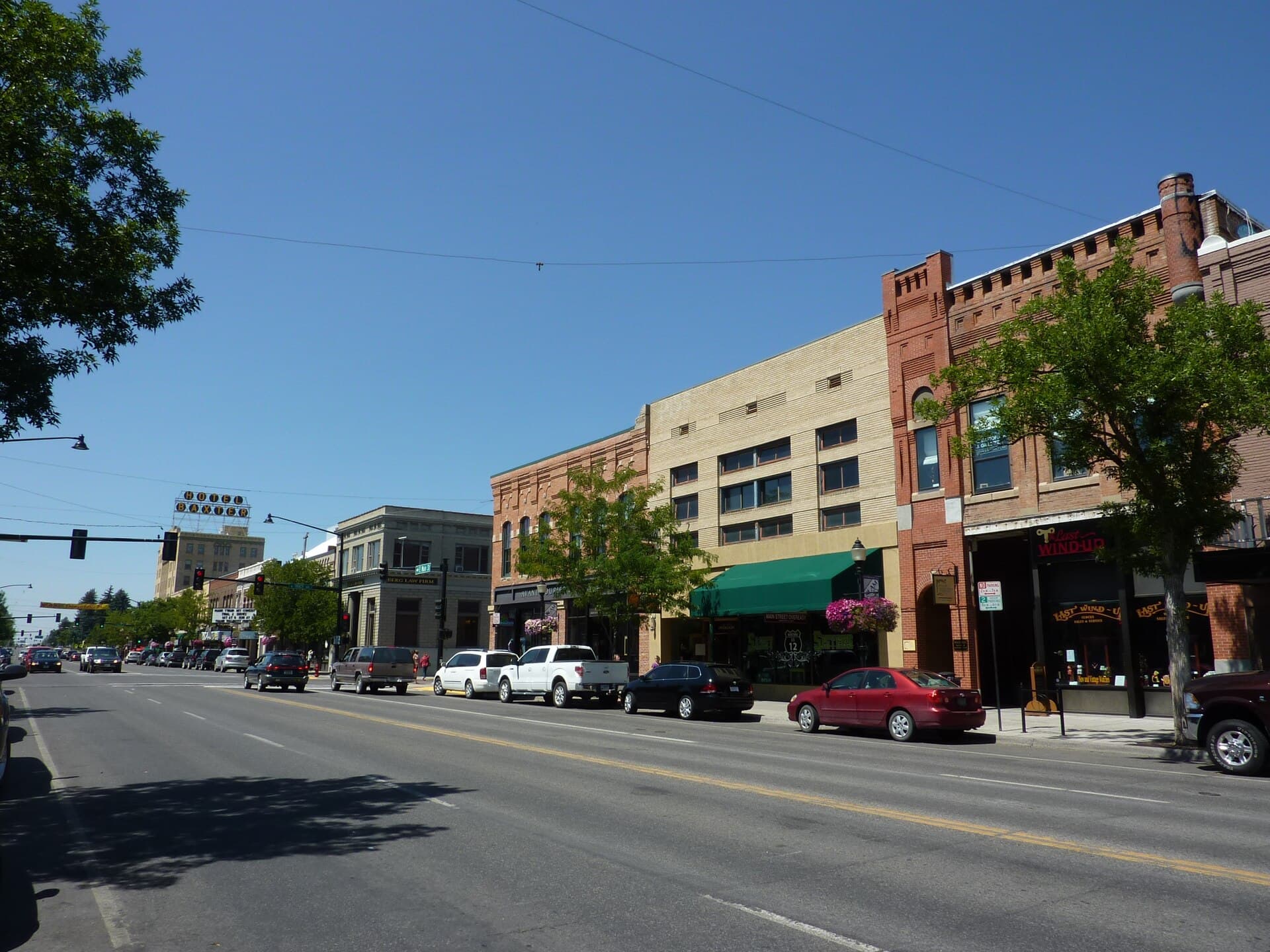
Begin your exploration in Downtown Bozeman, where historic architecture houses a variety of boutiques, art galleries, and eateries. For a deeper understanding of the region's past, visit the Museum of the Rockies, a Smithsonian affiliate recognized for its extensive collection of dinosaur fossils, including a mounted T. rex skeleton, and exhibits on Yellowstone and regional history. The Taylor Planetarium is also located within the museum. Another historical stop is the Gallatin History Museum, situated in a former 1911 county jail, which displays artifacts from Native peoples, pioneers, and early law enforcement.
Those who love the outdoors have a wealth of choices. Hike to the 'M' on the Bridger Mountains for expansive views of the Gallatin Valley. Peets Hill and Burke Park offer a more accessible network of paths for walking, running, and cycling. For a singular wildlife encounter, the Montana Grizzly Encounter is a sanctuary for rescued grizzly bears. During warmer months, consider floating the Madison River or exploring the many hiking and mountain biking trails in the surrounding Gallatin National Forest. In winter, Bridger Bowl Ski Area provides excellent skiing opportunities. Do not miss a chance to unwind at one of the local hot springs, such as Bozeman Hot Springs or the more secluded Norris Hot Springs.
Bozeman welcomes visitors throughout the year, with the optimal time depending on individual interests.
Summer (June-August) is perfect for outdoor pursuits like hiking, cycling, fishing, and exploring Yellowstone National Park, though it is also the busiest and most expensive period. July typically brings the warmest weather, with average highs in the low 80s Fahrenheit (27-29°C).
Fall (September-October) offers pleasant conditions, fewer crowds, and brilliant autumn colors, making it excellent for hiking and camping. Winter (November-March) delivers cold, snowy weather ideal for skiing and other winter sports, with December being the snowiest month. Spring (April-May) is characterized by verdant valleys and wildflowers, though it can be rainy, with May and June being the wettest months.
Bozeman Yellowstone International Airport (BZN) serves as the primary air access point, offering daily non-stop flights from major airlines across the United States. The airport provides various ground transportation options, including taxis, rideshares, and shuttles to Bozeman, Big Sky, and Yellowstone National Park. For navigating Bozeman itself, the Streamline Bus offers a zero-fare public transportation system with multiple routes throughout the city and commuter services to nearby Belgrade and Livingston. While driving is convenient, especially for exploring the surrounding natural areas, be aware that Bozeman is located along Interstate 90. The city also actively encourages active transportation with resources for cycling and walking. Accommodation, particularly during the peak summer season, should be reserved well in advance due to high demand and prices.
- What is Bozeman recognized for?
- Bozeman is recognized for its access to outdoor recreation, including skiing, hiking, and fly-fishing, its proximity to Yellowstone National Park, and its expanding tech and arts community.
- What is the population of Bozeman?
- As of the 2020 United States census, Bozeman's population was 53,293, making it Montana's fourth-largest city.
- What is the most effective way to travel within Bozeman?
- Bozeman offers several transportation options. The Streamline Bus provides free public transportation within the city. Taxis, rideshares, and car rentals are also available, especially for exploring beyond the city limits.
- What is the climate like in Bozeman?
- Bozeman experiences a continental mountain climate with four distinct seasons. Summers are warm and dry, with July highs around 83-85°F (28-29°C). Winters are cold and snowy, with December lows averaging 14°F (-10°C).
- Are there any museums in Bozeman?
- Yes, Bozeman is home to the Museum of the Rockies, which features extensive dinosaur fossil collections and exhibits on regional history, and the Gallatin History Museum, located in a historic jail.
- Is Bozeman a suitable base for visiting Yellowstone National Park?
- Yes, Bozeman is considered a gateway to Yellowstone National Park, with two of the park's most popular entrances (West Yellowstone and Gardiner) about an hour and a half drive away.