Statue Čumil (Mann bei der Arbeit)
Eine Bronzefigur, die aus einem Gullydeckel in Bratislavas Altstadt auftaucht und grinst, inspiriert verschiedene Ursprungsgeschichten.
Die ganze Geschichte wird in der Tour freigeschaltet
 Photo: Martin Katler / Unsplash
Selbstgeführte Audio-Walking-Tour durch Bratislava — GPS-Route, Offline-Wiedergabe, erzählerische Narration in 32 Sprachen.
“Bratislava: wo Geschichte aus Gullys auftaucht und ein UFO über der Donau schwebt.”
Nicht die Postkarten. Die Geschichten, die selbst Einheimische nicht kennen – dir ins Ohr geflüstert, genau dort, wo sie geschahen.
Eine Bronzefigur, die aus einem Gullydeckel in Bratislavas Altstadt auftaucht und grinst, inspiriert verschiedene Ursprungsgeschichten.
Die tulpenförmige Struktur auf der SNP-Brücke stammt nicht aus einem Science-Fiction-Film, bietet aber weite Ausblicke.
Wenn Sie die Turmspitze des Martinsdoms betrachten, erkennen Sie eine vergoldete Krone – ein Symbol der königlichen Vergangenheit Bratislavas.
Entdecke jedes Geheimnis von Bratislava
Jede Adresse, jede Enthüllung vollständig – in deinem Ohr, genau dort, wo es geschah.
Du wählst deine Stationen. Du gehst. Die Stimme enthüllt, was andere übersehen.


Deine selbstgeführte Audio-Tour durch Bratislava ist bereit – wähle deine Sehenswürdigkeiten, deine Sprache und starte, sobald du ankommst.
KaufenLume enthält einen integrierten Augmented-Reality-Guide. Halten Sie Ihr Handy hoch: Die Kamera zeigt die Straße vor Ihnen, mit einem leuchtenden Pfeil über dem echten Bild, der immer auf Ihren nächsten Stopp zeigt — keine Karte zum Rätseln, keine falschen Abzweigungen. Wie alles bei Lume funktioniert es komplett offline.
Bratislava, die Hauptstadt der Slowakei, bietet eine überzeugende Mischung aus beständiger Geschichte und modernem Leben und überrascht Besucher oft mit seinem einzigartigen Charakter. Die Stadt liegt am Fluss Donau und nimmt eine strategische Lage ein, die an Österreich und Ungarn grenzt, was sie zur einzigen nationalen Hauptstadt macht, die Grenzen mit zwei Ländern teilt. Ihre kompakte Altstadt mit gepflasterten Gassen und pastellfarbenen Gebäuden lädt zu einer gemütlichen Erkundung zu Fuß ein und offenbart einen authentischen und einladenden Charme.
Obwohl Bratislava im Vergleich zu einigen seiner mitteleuropäischen Pendants bescheidener ist, bietet es ein substanzielles kulturelles Erlebnis. Die Stadt fördert ein lebendiges kulturelles Umfeld mit zahlreichen Museen, Theatern und Galerien sowie einem wachsenden Ruf für ihre Küche und lokalen Weine. Besucher lassen sich oft von ihrem entspannten Rhythmus anziehen, ein erfrischender Kontrast zu belebteren europäischen Hauptstädten, der eine tiefere Wertschätzung ihrer vielschichtigen Geschichte und ihres zeitgenössischen Reizes ermöglicht.
Die Umgebung von Bratislava ist seit der Jungsteinzeit kontinuierlich besiedelt. Es gibt Hinweise auf keltische Siedlungen zwischen 400 und 50 v. Chr., die wichtige Zentren für Handwerk und Handel waren. Die Römer integrierten später die Gebiete entlang der Donau in ihre befestigte Grenze, den "Limes Romanus", vom 1. bis zum 5. Jahrhundert n. Chr. und führten auch den Weinanbau und die Weinherstellungstraditionen ein, die bis heute andauern. Slawische Stämme kamen im 5. und 6. Jahrhundert an und bildeten schließlich einen Teil von Großmähren, einem frühen westslawischen Staat.
Bratislava, erstmals 907 n. Chr. als Brezalauspurc erwähnt, wurde nach einer Schlacht zwischen Bayern und Ungarn Teil des Königreichs Ungarn. Seine strategische Lage an der Donau, einer wichtigen Wasserstraße, und am Schnittpunkt von Handelsrouten trieb sein Wachstum voran. 1291 erhielt es den Status einer Freien Königlichen Stadt, was die Entwicklung von Handwerk und Handel förderte. Von 1536 bis 1783 diente Bratislava, damals bekannt als Pressburg, als Hauptstadt des Königreichs Ungarn, eine Zeit, in der 11 Könige und 8 Königinnen im Martinsdom gekrönt wurden.
Die Stadt gedieh unter der Herrschaft von Königin Maria Theresia im 18. Jahrhundert und wurde zur größten und bedeutendsten Stadt des Königreichs Ungarn. Diese Ära sah eine Verdreifachung der Bevölkerung und den Bau vieler Paläste, Klöster und Straßen, die sie in eine elegante Barockstadt verwandelten. Der Frieden von Pressburg, ein Vertrag zwischen Napoleon und dem österreichischen Kaiser Franz II., wurde 1805 im barocken Primaspalast der Stadt unterzeichnet.
Nach dem Ersten Weltkrieg wurde Bratislava zur Hauptstadt der Slowakei innerhalb der ersten Tschechoslowakischen Republik bestimmt. Die Stadt erlebte während des Zweiten Weltkriegs eine dunklere Periode, fiel unter nationalsozialistischen Einfluss, und die meisten ihrer jüdischen Bevölkerung wurden in Konzentrationslager deportiert. Nach dem Krieg wurde sie Teil eines neu formierten Tschechoslowakei und erlebte eine kommunistische Herrschaft. Die kommunistische Ära führte auch zum Abriss eines Viertels der Altstadt, das durch neue Gebäude ersetzt wurde. Die kommunistische Herrschaft endete 1989 mit der Samtenen Revolution, und 1993 trennte sich die Tschechoslowakei friedlich, wodurch Bratislava zur Hauptstadt der unabhängigen Slowakischen Republik wurde.
Die Altstadt von Bratislava ist ein fußgängerfreundliches Viertel, ideal für Erkundungen zu Fuß. Zu den wichtigsten Sehenswürdigkeiten gehören der Hauptplatz (Hlavné námestie) mit dem Alten Rathaus (Stará Radnica) und dem Maximilianbrunnen. Der Martinsdom mit seiner gotischen Turmspitze und einer vergoldeten Nachbildung der ungarischen Krone ist ein bedeutendes historisches Wahrzeichen. Michaelertor, das einzige erhaltene Tor der mittelalterlichen Stadtbefestigung, bietet einen Uhrturm mit Blick auf die Stadt.
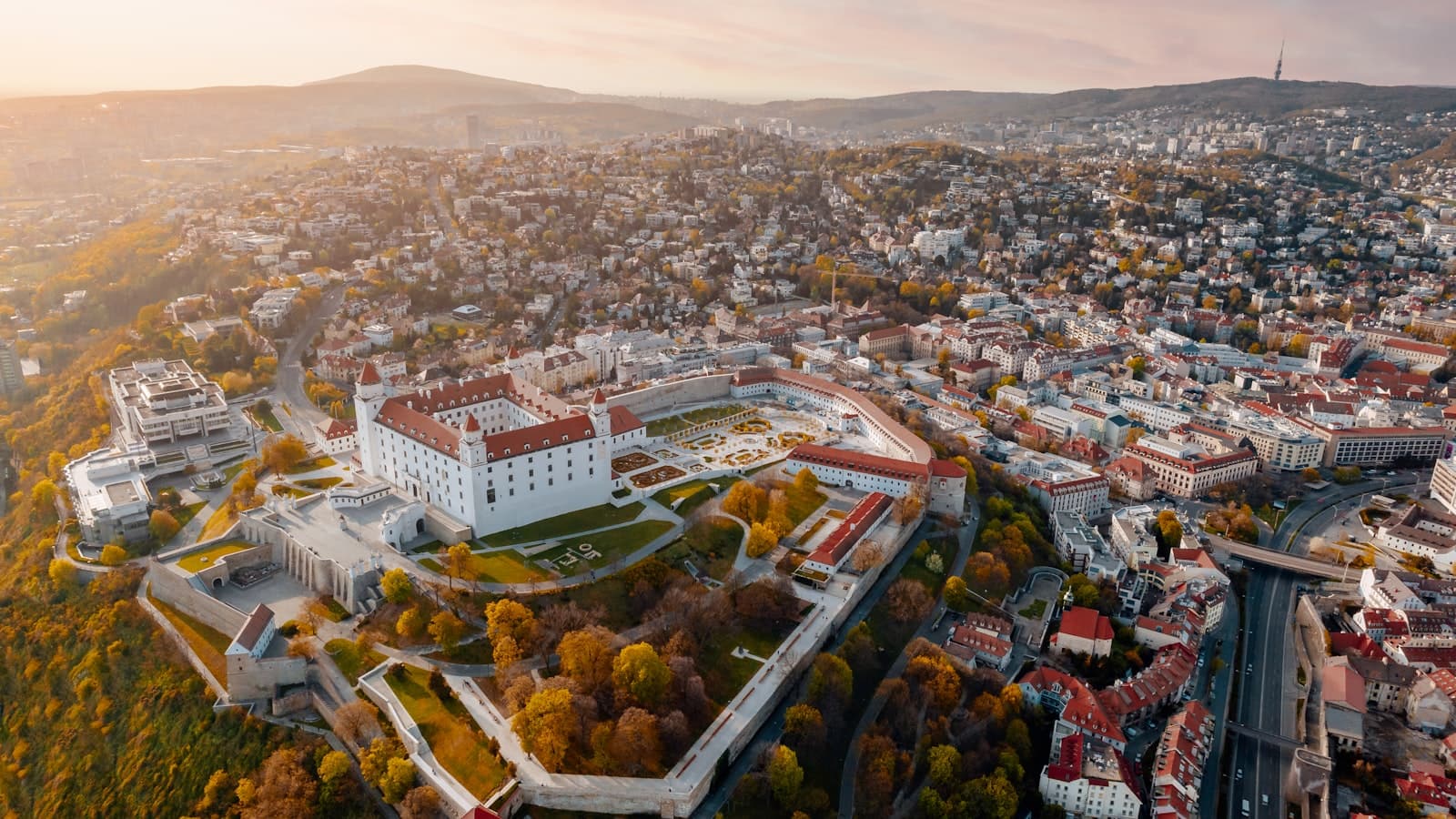
Die Skyline dominiert die Burg Bratislava, eine rekonstruierte Festung mit weitem Blick auf die Donau und die Stadt. Das ikonische UFO-Aussichtsdeck auf der Spitze der SNP-Brücke ist ein einzigartiges architektonisches Wunderwerk und bietet weite Ausblicke. Die markante Jugendstil-Blaue Kirche (St.-Elisabeth-Kirche) besticht durch ihre auffällige blaue Fassade. Einen Einblick in die Vergangenheit der Stadt bietet das Slowakische Geschichtsmuseum in der Burg Bratislava. Eine kurze Fahrt außerhalb der Stadt führt zu den Ruinen der Burg Devín, die historische Einblicke und landschaftliche Ausblicke am Zusammenfluss von March und Donau bietet.
Die angenehmsten Zeiten für einen Besuch in Bratislava sind das späte Frühjahr (April, Mai, Anfang Juni) und der Frühherbst (September, Oktober). Diese Monate bieten angenehmes Spazierwetter mit Temperaturen von frisch bis angenehm und in der Regel weniger Andrang. Der Sommer (Juli und August) bringt die wärmsten Temperaturen, ideal für Aktivitäten am Flussufer, kann aber aufgrund von Donauschifffahrten und Mehrtagestouren belebter sein. Der Winter kann kalt und grau sein, aber der Dezember ist wegen seiner Weihnachtsmärkte beliebt.
Die offizielle Währung der Slowakei ist der Euro (€). Kredit- und Debitkarten (Visa, Mastercard, Maestro) werden in städtischen Gebieten weitgehend akzeptiert, auch für kontaktlose Zahlungen. Es ist jedoch ratsam, etwas Bargeld für kleinere Einkäufe oder in ländlichen Gebieten mit eingeschränkter Kartenakzeptanz mitzuführen. Geldautomaten sind in Städten und Gemeinden leicht verfügbar.
Bratislava verfügt über ein effizientes öffentliches Nahverkehrssystem mit Bussen, Straßenbahnen und Oberleitungsbussen. Fahrkarten müssen vor dem Einsteigen an gelben Automaten an Haltestellen, Zeitungsläden oder Touristeninformationsbüros gekauft und dann sofort beim Betreten des Fahrzeugs entwertet werden, um Strafen zu vermeiden. Die Altstadt ist weitgehend zu Fuß erreichbar, aber öffentliche Verkehrsmittel sind nützlich für Verbindungen zum Flughafen, Bahnhof oder äußeren Stadtteilen. Für Taxis nutzen Sie offizielle Dienste oder Fahrdienst-Apps wie Bolt oder Hopin, um faire Preise zu gewährleisten.
Bratislava — Koreanisch, Chinesisch, Hebräisch und 29 weitere Sprachen, jede Station von einer muttersprachlichen Stimme erzählt. Die größte Sprachauswahl aller selbstgeführten Audiotouren.
Verfügbar auf: