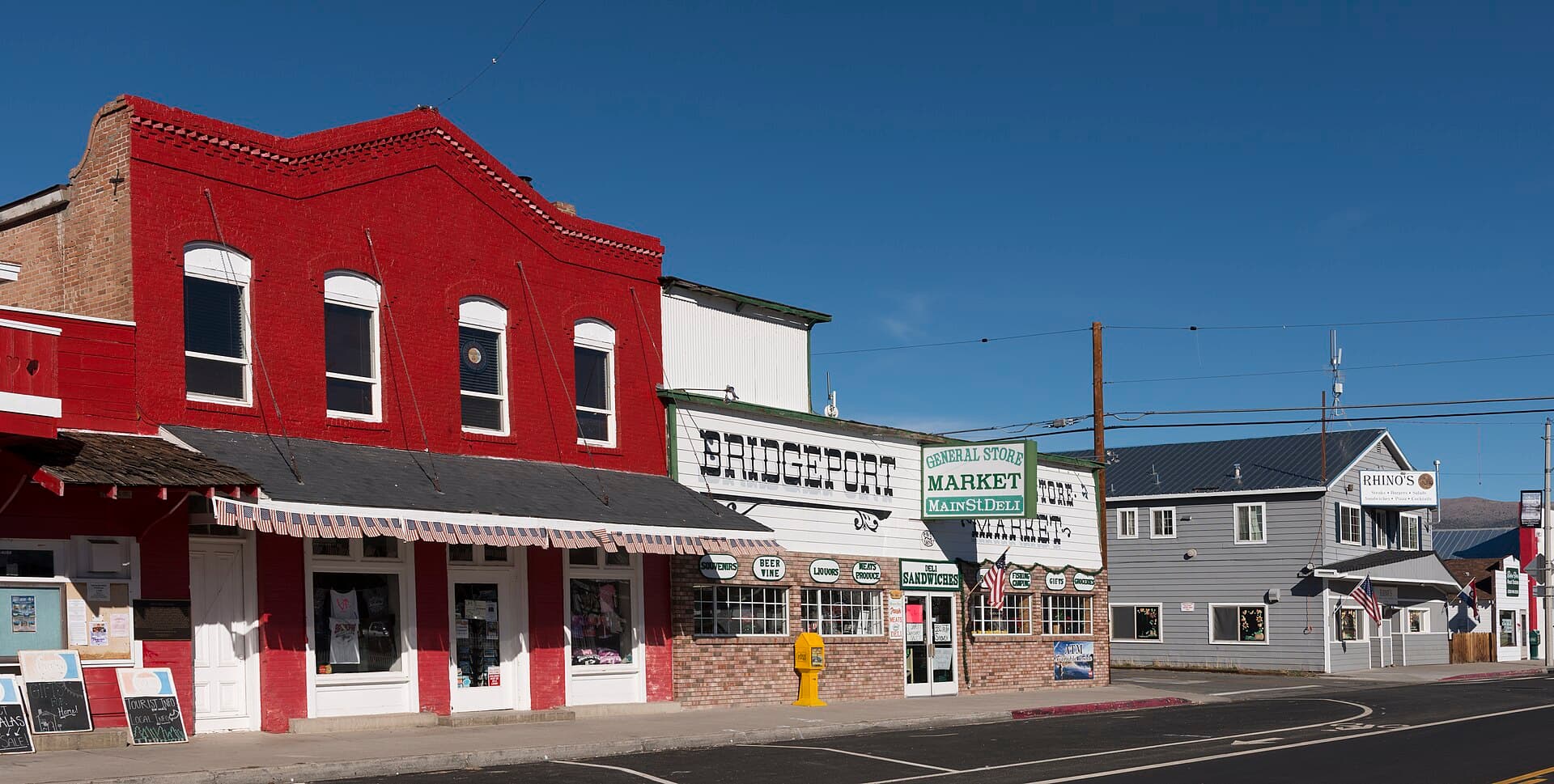
Bridgeport, United StatesCarol M. Highsmith / Public domain, via Wikimedia Commons
US

Bridgeport

Self-guided audio walking tour of Bridgeport — GPS route, offline playback, story-driven narration in 32 languages.

Where industrial ingenuity meets coastal charm, a city continually reinventing itself.

The secrets of Bridgeport

Bridgeport, as no one tells it.

Not the postcards. The stories even locals don't know — whispered in your ear, right where they happened.

3 secrets below. Many more wait inside the tour.
Mountain Grove Cemetery

P.T. Barnum, the legendary showman, chose a specific plot for his final act, but it wasn't just for the view.

Full story unlocks in the tour
Kossuth Street

Before it became a global phenomenon, a simple pie company in Bridgeport sparked an unexpected revolution in play.

Full story unlocks in the tour
Little Liberia

In the early 19th century, a unique community flourished in Bridgeport, founded by those seeking freedom and a new beginning.

Full story unlocks in the tour
The full tour

Discover every secret of Bridgeport

Every address, every reveal in full — in your ear, right where it happened.

Get the key to Bridgeport

You pick your stops. You walk. The voice reveals what the others miss.

Bridgeport — snow covered mountains under cloudy sky
Photo: Joss Woodhead / Unsplash
Bridgeport — mountain in front of field
Photo: Saksham Gangwar / Unsplash
Choose your time

How long do you have in Bridgeport?

Your self-guided audio tour of Bridgeport is ready — pick your landmarks, choose your language, and start the moment you arrive.

Buy
About Bridgeport

The story of Bridgeport

Bridgeport, Connecticut, the state's most populous city, rests at the mouth of the Pequonnock River on Long Island Sound. Once an active industrial center, Bridgeport's past is interwoven with manufacturing and innovation, while simultaneously embracing its identity as "Park City" due to its expansive public green spaces. It is a place where stately Victorian architecture meets modern revitalization efforts, offering a singular blend of historical depth and contemporary energy.

Just 60 miles from Manhattan, Bridgeport serves as a gateway to both the metropolitan pulse and the tranquil coastal landscapes of New England. The city's varied character is reflected in its neighborhoods, from the waterfront activity of Steelpointe Harbor to the artistic current of Downtown and the lively atmosphere of Black Rock. Bridgeport invites exploration, promising unexpected discoveries around every bend.

Bridgeport's narrative is one of continuous evolution, from its early days as a farming and fishing community to its industrial boom and subsequent shift towards service industries. Despite encountering economic challenges in the latter half of the 20th century, the city has actively pursued redevelopment, transforming former factories into lively galleries and markets, and fostering a growing arts scene.

History

From Paugussett Lands to Industrial Powerhouse

Before European colonization, the Bridgeport area was home to the Paugussett Native American tribe. English settlers arrived in the mid-17th century, establishing communities like Newfield and Stratfield that utilized the natural harbor. Initially part of Stratford, Bridgeport was incorporated as its own town in 1821 and then as a city in 1836. Early on, the economy revolved around farming and fishing, but its strategic location on Black Rock Harbor quickly spurred growth in shipbuilding and whaling.

The arrival of the railroad in the 1840s dramatically accelerated Bridgeport's development, connecting it to New Milford, Waterbury, New Haven, and eventually New York City. This ushered in an era of rapid industrialization, transforming Bridgeport into a major manufacturing hub. By the mid-19th century, the city was producing carriages, brass and cast-iron fittings, sewing machines, tools, and ammunition. The population swelled between 1870 and 1910, from approximately 25,000 to over 100,000, fueled by waves of Irish, Slovak, Hungarian, German, English, and Italian immigrants.

One of Bridgeport's most celebrated residents, the showman P.T. Barnum, played a significant role in the city's 19th-century growth, even serving as mayor in 1871. He headquartered his circus in Bridgeport during the winters and invested heavily in local businesses. The early 20th century saw continued expansion, with Bridgeport becoming Connecticut's chief manufacturing city by 1905. During World War I, the city's population surged further, thanks to its role in the war effort, including the massive Remington Arms plant, which was once the largest factory in the world.

Post-Industrial Shifts and Modern Revival

After World War II, Bridgeport, like many industrial centers, experienced a period of decline as major employers left and suburbanization drew residents away. This led to challenges with unemployment, urban decay, and crime in the 1970s and 80s. However, in the early 21st century, Bridgeport began a concerted effort to revitalize its downtown and surrounding areas. The city has embraced a new role as a center for service industries and has seen a resurgence in its arts and cultural scene.

Recent preservation projects, such as the transformation of the historic Read's Department Store into affordable artist housing and commercial spaces, exemplify Bridgeport's commitment to adaptive reuse and urban renewal. The city's crime rate has also seen a significant reduction since 2010. Today, Bridgeport is recognized for its diversity and its ongoing efforts to build a flourishing future while honoring its deep past.

What to see

Bridgeport offers a variety of attractions that reflect its unique character. The Barnum Museum is a compelling destination, dedicated to the life and legacy of P.T. Barnum and the history of the circus, featuring artifacts like a preserved elephant and miniature circus models. For those who love nature, Seaside Park, designed by Frederick Law Olmsted, provides three miles of coastline along Long Island Sound, ideal for walking, picnicking, swimming, and enjoying sweeping views. Adjacent to Seaside Park, Fayerweather Island Light offers a chance to explore a wildlife preserve and a historic lighthouse.

Animal enthusiasts can explore the Beardsley Zoo, Connecticut's only AZA-accredited zoo, home to over 300 animals from around the world. The Housatonic Museum of Art, located at Housatonic Community College, showcases a diverse collection of international artworks spanning centuries. For interactive learning, the Discovery Science Center and Planetarium provides hands-on exhibits focusing on science, nature, and technology, along with planetarium shows.

Bridgeport's evolving downtown area features a growing arts scene, including the Knowlton Walls with incredible murals by local artists. The Black Rock neighborhood is known for its lively nightlife and varied dining options. For a unique shopping experience, the Mongers Market offers a vast selection of antiques and eclectic items.

When to visit

Bridgeport experiences four distinct seasons, influenced by its humid continental climate and proximity to Long Island Sound. Summers (June to August) are warm and humid, with July being the warmest month, averaging highs of 28°C (83°F). Sea breezes can temper the heat, making it pleasant for beach activities. Winters (December to March) are cold, snowy, and windy, with January being the coldest, averaging highs around 3°C (38°F). Spring (April to May) and autumn (September to October) offer milder temperatures and are often considered the best times to visit. September and October, in particular, provide comfortable temperatures (18-24°C / 64-75°F), fewer crowds, brilliant fall foliage, and an active arts calendar. For budget travelers, November through March often see lower hotel rates.

Practical

Bridgeport is well-connected and offers several transportation options. The Bridgeport Transportation Center serves as a hub for commuter and intercity rail lines, linking the city to regional destinations, including an 85-minute train ride to New York City via Metro-North. Greater Bridgeport Transit (GBT) provides bus services connecting various neighborhoods and nearby towns, offering an affordable way to navigate the city. For those traveling to Long Island, the Bridgeport-Port Jefferson Ferry operates year-round, accommodating pedestrians, cars, and bicycles for a scenic 75-minute trip across the Sound. Taxis and ride-sharing services like Uber are also readily available. For larger groups, charter bus rentals with amenities like Wi-Fi and reclining seats can be arranged.

When packing, layering clothing is advisable year-round due to changeable New England weather. A compact umbrella is useful for the consistent rainfall throughout the year, and comfortable walking shoes are recommended for exploring the city's parks and streets. Shopping in Bridgeport leans towards practical modern experiences with large shopping centers and chain stores, though local markets offer fresh produce and unique handmade items.

Good to know
What is Bridgeport known for?
Bridgeport is widely known as "Park City" due to its 1,300 acres of public green space, including Seaside Park and Pleasure Beach. It is also recognized for its association with legendary showman P.T. Barnum, who lived in the city and served as its mayor. Historically, Bridgeport was a significant industrial and manufacturing center, with many notable "firsts" like the world's first mutual telephone exchange and the invention of the electric plug outlet.
Is Bridgeport a walkable city?
While specific areas like Downtown and Black Rock are pleasant for walking and exploring local shops and eateries, Bridgeport's overall walkability varies. Public transportation, including bus services and commuter trains, connects various neighborhoods and nearby towns, making it possible to get around without a car.
Are there beaches in Bridgeport?
Yes, Bridgeport features several public beaches. Seaside Park offers three miles of coastline along Long Island Sound, popular for swimming, sunbathing, and picnicking. Pleasure Beach, accessible by a free water taxi on summer weekends, provides a quieter, more natural beach experience.
What unique historical facts are associated with Bridgeport?
Bridgeport holds several unique historical distinctions. It was home to the world's first mutual telephone exchange (1877), the first dental hygiene school (1949), and the first bank telephone bill service in the U.S. (1981). The electric plug outlet was invented here in 1912, and the first Subway restaurant opened in the city in 1965.
What kind of cultural attractions does Bridgeport offer?
Bridgeport has a growing cultural scene. Key attractions include the Barnum Museum, dedicated to P.T. Barnum and circus history, and the Housatonic Museum of Art, featuring a diverse collection of international works. The city also has an active downtown arts scene with murals, and a community radio station, WPKN, known for its eclectic programming.
What are the best outdoor activities in Bridgeport?
Bridgeport's nickname, "Park City," highlights its abundant outdoor opportunities. Visitors can enjoy Seaside Park for walks, swimming, and picnics, or explore Fayerweather Island Light. The Beardsley Zoo offers a chance to see diverse animal species. Additionally, outdoor yoga classes are offered in various city parks during warmer months.
On the map
Bridgeport
From€9.90
No booking · activate anytime · 12h to walk it
Get the key to Bridgeport