Pavillon Royal
Le Pavillon Royal, avec son architecture extravagante d'inspiration indienne, a failli devenir une résidence très différente pendant la Seconde Guerre mondiale.
L'histoire complète se débloque dans le tour
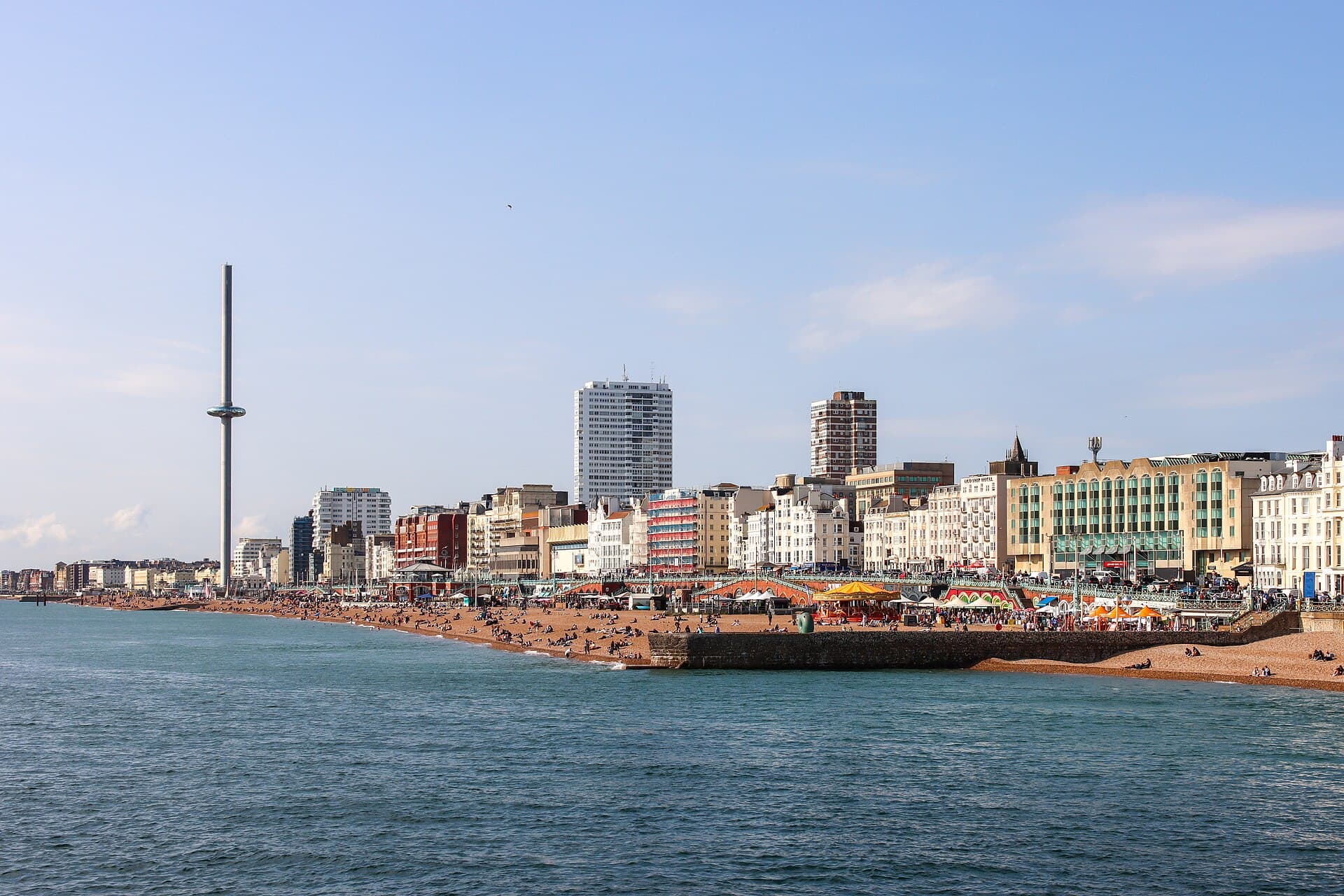 Photograph by Mike Peel (www.mikepeel.net). / CC BY-SA 4.0, via Wikimedia Commons
Visite audio autoguidée de Brighton — parcours GPS à pied, lecture hors ligne, narration en 32 langues.
“Là où la grandeur de la Régence rencontre l'esprit bohème au bord de la mer.”
Pas les cartes postales. Les histoires que même les habitants ignorent — soufflées à l'oreille, là où elles se sont passées.
Le Pavillon Royal, avec son architecture extravagante d'inspiration indienne, a failli devenir une résidence très différente pendant la Seconde Guerre mondiale.
L'emblématique jetée du Brighton Palace, symbole du divertissement balnéaire, a fait face à un défi dramatique avant même sa grande ouverture.
Sous les ruelles animées et étroites de The Lanes, un réseau secret permettait autrefois à la royauté de se déplacer incognito.
Découvrez tous les secrets de Brighton
Chaque adresse, chaque révélation en entier — dans ton oreille, là où elle s'est passée.
Tu choisis tes lieux. Tu marches. La voix te révèle ce que les autres ignorent.


Votre visite audioguidée de Brighton vous attend — choisissez vos lieux, votre langue, et lancez-vous dès votre arrivée.
AcheterLume intègre un guide en réalité augmentée. Levez votre téléphone : sa caméra montre la rue devant vous, avec une flèche lumineuse posée sur l'image réelle qui pointe toujours vers votre prochain arrêt — aucune carte à déchiffrer, aucun mauvais virage. Comme tout dans Lume, ça fonctionne entièrement hors-ligne.
Brighton, ville animée sur la côte sud de l'Angleterre, entremêle l'attrait d'une station balnéaire traditionnelle avec un caractère contemporain et libre d'esprit. Souvent appelée « Londres au bord de la mer », c'est un lieu reconnu pour ses communautés variées, son paysage culturel et son architecture distincte. De ses célèbres rives de galets à ses rues commerçantes complexes, Brighton offre une expérience côtière singulière, attirant ceux qui recherchent à la fois la tranquillité et les loisirs animés.
Cette ville, officiellement connue sous le nom de Brighton and Hove depuis 2000, est passée d'un ancien village de pêcheurs à un centre dynamique. Son attrait s'est considérablement accru à l'époque géorgienne, notamment grâce au patronage du Prince Régent, qui a transformé la ville en une station balnéaire à la mode. Aujourd'hui, Brighton maintient sa réputation de destination avant-gardiste, célébrée pour son ouverture et son engagement envers la durabilité.
L'histoire de Brighton commence en tant que petit village saxon nommé « Beorthelm's tun » au 5e siècle. Au 14e siècle, il était devenu un bourg animé, avec des pêcheurs et des agriculteurs formant sa première communauté. La ville a rencontré des difficultés au début de sa période moderne, notamment des assauts des Français au 16e siècle et des tempêtes destructrices.
Un moment charnière est survenu au milieu du 18e siècle lorsque les avantages perçus de l'eau de mer pour la santé ont suscité un nouvel intérêt pour Brighton. Cette popularité croissante a été consolidée par l'arrivée de George, Prince de Galles, dans les années 1780. Il a loué une pension et, avec son penchant pour l'extravagance, a commencé à la transformer en le somptueux Pavillon Royal, un palais de plaisance balnéaire qui fusionnait la grandeur de la Régence avec les styles architecturaux indien et chinois. La présence du Prince a considérablement propulsé la prospérité et la population de Brighton, offrant des emplois aux artisans locaux et stimulant les industries de services.
Le 19e siècle a été témoin d'une nouvelle expansion avec l'arrivée du chemin de fer en 1841, rendant Brighton facilement accessible aux excursionnistes de Londres. Cette période a vu la construction de nombreuses attractions victoriennes notables de Brighton, y compris de grands hôtels comme le Grand Hotel et le Hilton Brighton Metropole, ainsi que la West Pier et la Brighton Palace Pier. Le Pavillon Royal a finalement été acquis par les commissaires de la ville et ouvert au public, consolidant davantage la position de Brighton en tant que destination touristique importante. Brighton a continué de s'étendre tout au long du 20e siècle, fusionnant avec Hove en 1997 et obtenant officiellement le statut de ville en 2000.
Brighton présente un éventail d'attractions, des sites historiques aux divertissements animés. Le Pavillon Royal est une remarquable ancienne résidence royale, affichant des influences architecturales indiennes et chinoises distinctives, entourée de jardins idéaux pour un pique-nique estival. Explorez ses salles restaurées, y compris la chambre de la Reine Victoria, et admirez le lustre dragon de la salle de banquet.
Une promenade le long de la Jetée du Brighton Palace offre une expérience classique, avec des manèges, des jeux d'arcade et des plats traditionnels de bord de mer comme le fish and chips. Pour un autre type de shopping et de restauration, flânez dans The Lanes, un labyrinthe de passages étroits remplis de boutiques indépendantes, de bijouteries, de pubs historiques et de cafés. À proximité, le quartier de North Laine offre une atmosphère plus bohème avec des boutiques uniques, des magasins de vêtements vintage et un art de rue saisissant.
Pour les amateurs de vie marine, le Brighton Sea Life Centre a la particularité d'être le plus ancien aquarium en activité au monde, présentant une architecture victorienne et diverses expositions sous-marines. Ceux qui s'intéressent à l'art et à l'histoire peuvent visiter le Brighton Museum and Art Gallery dans les jardins du Pavillon Royal, qui présente l'histoire de la ville, des artefacts égyptiens et l'art du 20e siècle. Pour une perspective distincte, envisagez une promenade le long des kilomètres de plage de galets de Brighton, ou aventurez-vous vers Hove pour une expérience plus calme et pour observer les cabanes de plage colorées.
La période la plus agréable pour découvrir Brighton est pendant les mois les plus chauds, de juin à septembre, lorsque le temps est le plus propice pour profiter de la plage et des activités de plein air. Juillet et août marquent la haute saison touristique, offrant les températures les plus élevées mais aussi de plus grandes foules et des prix d'hébergement accrus. Mai et septembre offrent également d'excellentes opportunités, avec un temps doux et moins de monde. Mai est particulièrement animé avec le Brighton Festival et le Brighton Fringe présentant des arts et des spectacles. Bien que les hivers soient doux, ils sont plus froids et plus humides, bien que Brighton conserve un charme unique et soit plus calme pendant cette période.
Brighton est facilement accessible, située à environ 1h30 de Londres en train ou en voiture. La gare est idéalement située, à environ 15 minutes à pied du front de mer. La ville elle-même est compacte et très agréable à explorer à pied. Pour les longues distances, un vaste réseau de bus est disponible, avec un billet « citySAVER » offrant des trajets illimités pendant 24 heures. Brighton propose également un système de vélos en libre-service pour ceux qui préfèrent le vélo. Si vous conduisez, un système de parc-relais est disponible, et plusieurs parkings existent dans la ville, bien qu'il soit conseillé d'avoir de la monnaie pour les horodateurs. Brighton est reconnue pour son atmosphère conviviale envers la communauté LGBTQ+ et offre un large choix de restaurants végétaliens et végétariens.
Brighton en coréen, en chinois ou en hébreu — et dans 29 autres langues, chaque étape narrée par une voix native. La plus large gamme de langues de tous les audioguides autoguidés.
Disponible en :