Die Römischen Säulen
Eine Säule wacht über Brindisis Hafen, ein prächtiges Zeichen einer antiken Reise. Aber wo ist ihr Zwilling?
Die ganze Geschichte wird in der Tour freigeschaltet
 Stefn79 ph / CC BY-SA 4.0, via Wikimedia Commons
Selbstgeführte Audio-Walking-Tour durch Brindisi — GPS-Route, Offline-Wiedergabe, erzählerische Narration in 32 Sprachen.
“Wo alte Straßen auf die Adria treffen und die Geschichte durch jeden Stein atmet.”
Nicht die Postkarten. Die Geschichten, die selbst Einheimische nicht kennen – dir ins Ohr geflüstert, genau dort, wo sie geschahen.
Eine Säule wacht über Brindisis Hafen, ein prächtiges Zeichen einer antiken Reise. Aber wo ist ihr Zwilling?
Eine Treppe, die zu Brindisis Hafen führt, trägt den Namen eines legendären römischen Dichters. Was ist die Verbindung?
Diese süditalienische Hafenstadt trug während einer turbulenten Zeit kurzzeitig einen überraschenden nationalen Titel.
Entdecke jedes Geheimnis von Brindisi
Jede Adresse, jede Enthüllung vollständig – in deinem Ohr, genau dort, wo es geschah.
Du wählst deine Stationen. Du gehst. Die Stimme enthüllt, was andere übersehen.


Lume enthält einen integrierten Augmented-Reality-Guide. Halten Sie Ihr Handy hoch: Die Kamera zeigt die Straße vor Ihnen, mit einem leuchtenden Pfeil über dem echten Bild, der immer auf Ihren nächsten Stopp zeigt — keine Karte zum Rätseln, keine falschen Abzweigungen. Wie alles bei Lume funktioniert es komplett offline.
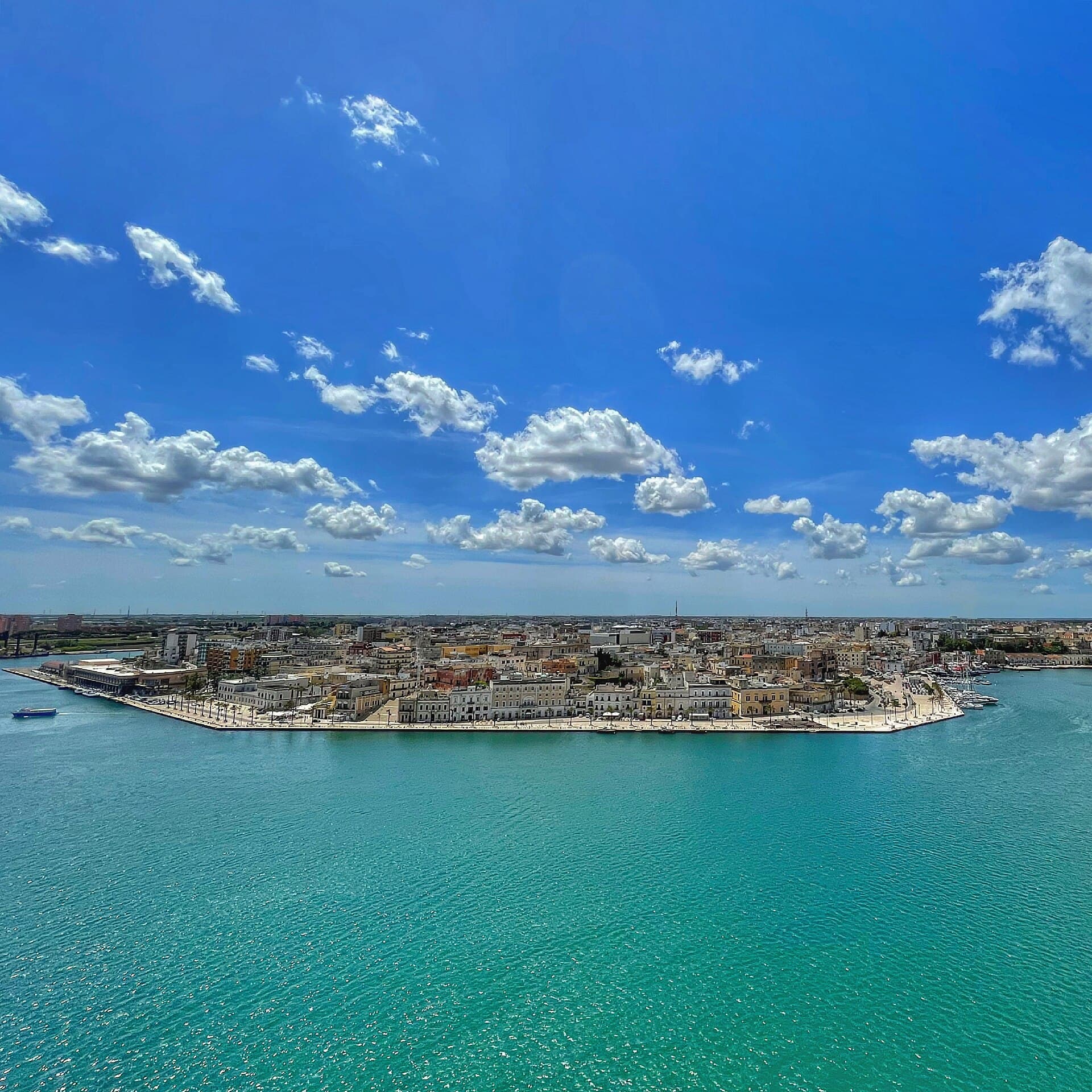
Brindisi, eine Stadt an der Adriaküste Italiens in der Region Apulien, war lange Zeit ein entscheidendes Tor zwischen Ost und West. Sein natürlicher Hafen, der wie ein Hirschkopf geformt ist, zieht seit Jahrtausenden Siedler und Seefahrer an und gab der Stadt ihren Namen, der vom messapischen Wort 'Brention' abgeleitet ist. Heute ist Brindisi immer noch ein geschäftiger Hafen, ein Zentrum für Fähren nach Griechenland und Albanien und ein einladendes Reiseziel für diejenigen, die ein authentisches italienisches Erlebnis abseits der überfüllten Touristenrouten suchen.
Mit seiner palmen gesäumten Promenade, dem historischen Zentrum und einer entspannten Atmosphäre bietet Brindisi eine überzeugende Mischung aus antiker Geschichte und zeitgenössischem Leben. Die strategische Bedeutung der Stadt zeigt sich in ihren römischen Ruinen, mittelalterlichen Burgen und barocken Kirchen. Besucher können das fußgängerfreundliche Zentrum erkunden, frische Meeresfrüchte genießen und es als Ausgangspunkt nutzen, um die weitere Salento-Region zu entdecken, die für ihre einzigartige Kultur und Landschaft bekannt ist.
## Antike Ursprünge und römische Größe Die Geschichte von Brindisi reicht bis in die Bronzezeit zurück, mit Hinweisen auf mykenische Siedlungen aus dem 16. Jahrhundert v. Chr. Die Stadt war ursprünglich eine messapische Siedlung, bevor sie von den Griechen kolonisiert wurde. Einige Überlieferungen schreiben ihre Gründung dem legendären Helden Diomedes zu. Im Jahr 267 v. Chr. eroberten die Römer Brindisi, damals bekannt als Brundisium, und erkannten sein immenses Potenzial als natürlichen Hafen.
Die Römer etablierten Brindisi schnell als wichtiges Zentrum für Handel und Seemacht und bauten die Via Appia, die Appische Straße, um sie mit Rom zu verbinden. Diese 540 Kilometer lange Straße, die 312 v. Chr. begonnen wurde, war entscheidend für den Transport von Truppen und Nachschub und ermöglichte es Rom, sein Reich nach Osten auszudehnen. Brindisi blühte unter römischer Herrschaft auf, seine Bevölkerung schwoll auf etwa 100.000 an, und die Stadt sah den Bau von Tempeln, Bädern und Amphitheatern. Der Dichter Pacuvius wurde hier um 220 v. Chr. geboren, und Vergil starb hier 19 v. Chr.
## Mittelalterliches Kreuzung und Aufbruch der Kreuzfahrer Nach dem Fall des Römischen Reiches erlebte Brindisi Herrschaftsperioden der Ostgoten und Byzantiner und erlitt 675 n. Chr. Zerstörungen durch die Langobarden. Sein wichtiger Hafen sorgte jedoch für einen schnellen Wiederaufbau. Im Jahr 1070 eroberten die Normannen Brindisi und gliederten es dem Fürstentum Tarent ein. Das 12. und 13. Jahrhundert markierten eine bedeutende Ära für Brindisi, da es zu einem Hauptausgangspunkt für die Kreuzzüge ins Heilige Land wurde. Kaiser Friedrich II., der 1225 in der Kathedrale von Brindisi Isabella II. von Jerusalem heiratete, förderte die Rolle der Stadt bei diesen Expeditionen weiter. In dieser Zeit wurde das Castello Svevo, die Stauferburg, zum Schutz des Hafens errichtet.
## Spätere Epochen und heutige Bedeutung In den folgenden Jahrhunderten wechselte Brindisi durch die Hände der Venezianer, Spanier, Österreicher und Bourbonen und erlebte Perioden von Pest, Plünderungen und Erdbeben. Die kommerzielle Bedeutung der Stadt erhielt mit der Eröffnung des Suezkanals im Jahr 1869 einen bedeutenden Schub, der Brindisi zu einem wichtigen Halt auf der Indian Mail Route machte. Während des Zweiten Weltkriegs spielte Brindisi erneut eine entscheidende nationale Rolle und diente von September 1943 bis Februar 1944 als vorübergehender Sitz der italienischen Regierung. Heute ist Brindisi eine moderne italienische Stadt, die ihr Erbe als wichtiger Hafen für Handel und Tourismus fortsetzt und gleichzeitig ihre historische Architektur bewahrt.
Beginnen Sie Ihre Erkundung an der Römischen Säule, dem einsamen Wächter, der den antiken Endpunkt der Via Appia markiert. Von diesem Aussichtspunkt führt eine breite Treppe, bekannt als Virgil-Treppe, hinunter zum Binnenhafen und bietet Ausblicke auf das Wasser. Spazieren Sie entlang der Lungomare Regina Margherita, der palmen gesäumten Uferpromenade, wo moderne Kunstinstallationen auf lebhafte Cafés und Restaurants treffen.
Tauchen Sie ein in die Vergangenheit der Stadt auf der Piazza Duomo, dem Standort der Kathedrale von Brindisi, einer romanischen Struktur, in der Kaiser Friedrich II. heiratete. In der Nähe entdecken Sie weitere bedeutende religiöse Gebäude wie die kreisförmige Kirche San Giovanni al Sepolcro, erbaut von den Tempelrittern, und die Chiesa Santa Maria del Casale. Das Castello Svevo (Stauferburg), eine imposante Festung aus dem 13. Jahrhundert, erbaut von Friedrich II., zeugt von der strategischen Bedeutung Brindisis, obwohl Teile noch vom italienischen Militär genutzt werden. Eine weitere beeindruckende Verteidigungsanlage ist das Castello Alfonsino oder Forte a Mare, das auf der Insel Sant'Andrea am Hafeneingang liegt. Für einen tieferen Einblick in die lokale Geschichte besuchen Sie das Archäologische Provinzmuseum "F. Ribezzo", das prähistorische und römische Artefakte beherbergt, darunter Bronzestatuen, die aus dem Hafen geborgen wurden. Erwägen Sie eine kurze Fährfahrt über den Hafen zum Denkmal des italienischen Seemanns, einer über 50 Meter hohen, steuerbordförmigen Betonstruktur, die einen Panoramablick auf die Stadt bietet.
Brindisi genießt ein mediterranes Klima mit milden, relativ regnerischen Wintern und heißen, sonnigen Sommern. Die optimale Reisezeit sind die Übergangsmonate von Ende Mai bis Mitte Juni und von September bis Mitte Oktober. In diesen Monaten sind die Temperaturen angenehm, liegen zwischen 19°C und 28°C, und das Meer ist warm genug zum Schwimmen. Juli und August bringen das heißeste Wetter mit Tageshöchsttemperaturen von durchschnittlich 30-32°C und das Meer erreicht seine höchste Temperatur von etwa 26°C. Während diese Monate ideal für Strandurlaube sind, können sie auch die geschäftigsten sein. Für kühlere Temperaturen und weniger Menschenmassen sollten Sie April, Mai, Oktober und November in Betracht ziehen.
Brindisi ist leicht mit dem Flugzeug, Zug und Bus erreichbar. Die Stadt hat ihren eigenen internationalen Flughafen, Brindisi Papola Casale Airport, mit Verbindungen zu wichtigen europäischen Städten. Ein halbstündlich verkehrender Shuttlebus verbindet den Flughafen mit dem Stadtzentrum, einschließlich des Bahnhofs und des Hafens. Das historische Zentrum ist kompakt und gut zu Fuß erkundbar, viele Sehenswürdigkeiten sind leicht zu Fuß erreichbar. Bequeme Wanderschuhe werden empfohlen, besonders für die Steinstraßen. Für Ausflüge außerhalb der Stadt ist Brindisi ein ausgezeichneter Ausgangspunkt für Tagesausflüge zu nahegelegenen apulischen Städten wie Alberobello, Ostuni und Lecce. Fähren von Brindisi bieten Verbindungen nach Griechenland und Albanien. Die lokale Währung ist der Euro. Brindisi gilt als sichere und einladende italienische Stadt.
Brindisi — Koreanisch, Chinesisch, Hebräisch und 29 weitere Sprachen, jede Station von einer muttersprachlichen Stimme erzählt. Die größte Sprachauswahl aller selbstgeführten Audiotouren.
Verfügbar auf: