Elevador Great Northern
Búfalo fue una vez el puerto de granos más grande del mundo, gracias a una invención que revolucionó el manejo de granos. Un elevador en particular fue pionero.
La historia completa se desbloquea en el tour
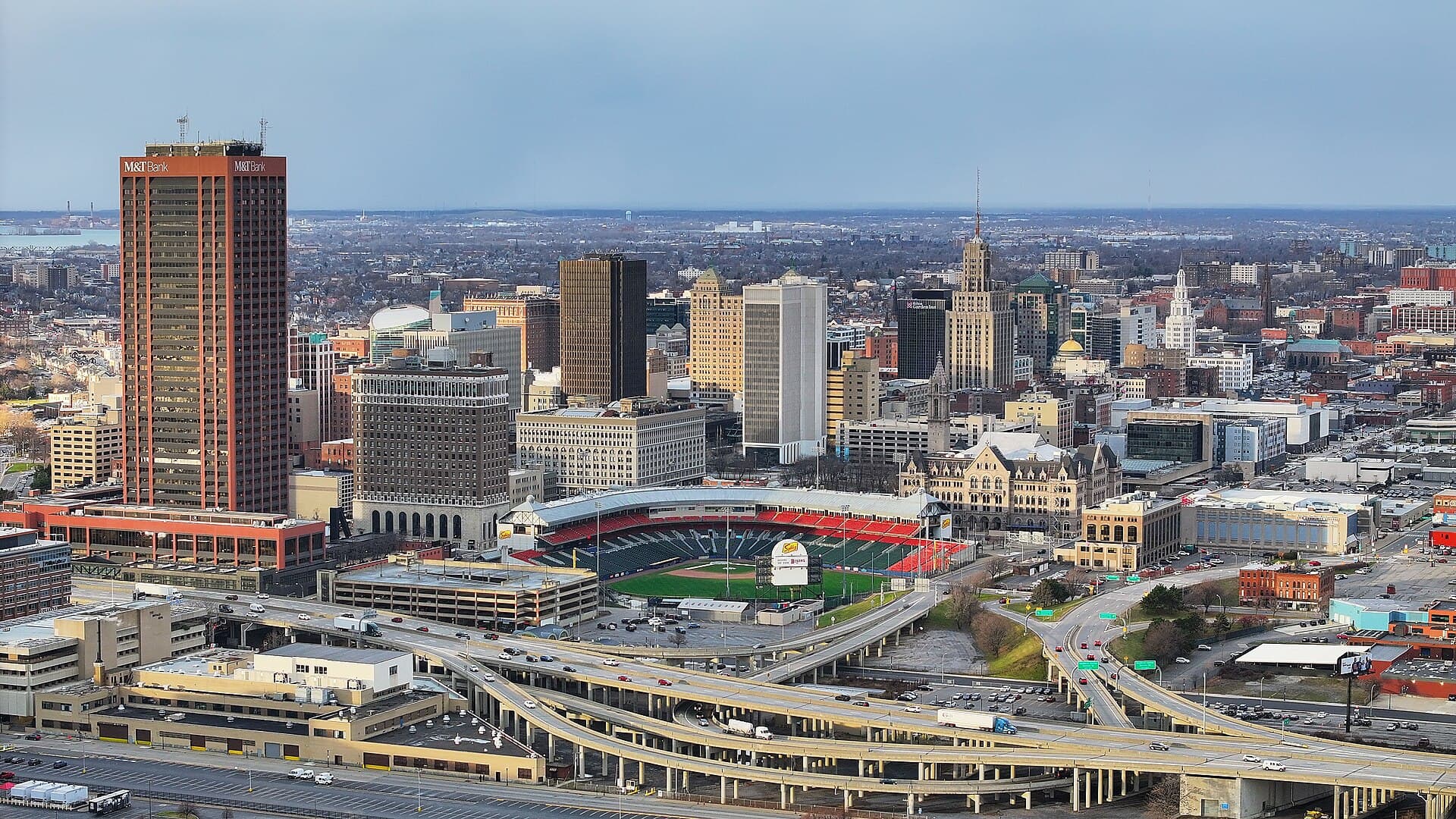 Quintin Soloviev / CC BY 4.0, via Wikimedia Commons
Tour de audio autoguiado de Buffalo — ruta GPS a pie, reproducción offline, narración en 32 idiomas.
“Búfalo: donde la potencia industrial se encuentra con la gracia arquitectónica, y la resiliencia está grabada en cada ladrillo.”
No las postales. Las historias que ni los locales conocen — al oído, justo donde ocurrieron.
Búfalo fue una vez el puerto de granos más grande del mundo, gracias a una invención que revolucionó el manejo de granos. Un elevador en particular fue pionero.
El intrincado sistema de canales de Búfalo fue crucial para su crecimiento, pero un canal importante dentro de la ciudad se convirtió en un dolor de cabeza persistente para los residentes.
Más allá de su gran historia, Búfalo tiene su cuota de escalofriantes leyendas locales, incluyendo un cementerio con una historia particularmente oscura.
Descubre todos los secretos de Buffalo
Cada dirección, cada revelación al completo — a tu oído, justo donde ocurrió.
Eliges tus paradas. Caminas. La voz te revela lo que los demás ignoran.


Tu tour de audioguía por Buffalo te espera — elige tus lugares, tu idioma y empieza al llegar.
ComprarLume incluye una guía de realidad aumentada. Levanta el móvil y su cámara muestra la calle que tienes delante, con una flecha luminosa sobre la imagen real que siempre apunta a tu próxima parada — sin mapas que descifrar, sin giros equivocados. Como todo en Lume, funciona completamente sin conexión.
Búfalo, la segunda ciudad más grande del estado de Nueva York, es una ciudad forjada por la industria y moldeada por su ubicación estratégica en el término occidental del Canal Erie. Una vez una pequeña comunidad comercial, se transformó rápidamente en una metrópolis industrial en auge, ganándose el apodo de "Puerta de entrada al Oeste" como punto de partida para los inmigrantes que se dirigían al corazón del país. Hoy, Búfalo es reconocida por su excepcional arquitectura, una vibrante escena artística y un profundo espíritu comunitario que le ha valido el apodo de "Ciudad de los Buenos Vecinos".
La zona ribereña de la ciudad a lo largo del lago Erie y el río Búfalo ha experimentado una importante revitalización, especialmente en Canalside, que ahora sirve como un popular punto de encuentro que alberga numerosos eventos durante todo el año. Más allá de su pasado industrial, Búfalo ofrece una diversa gama de atracciones, desde museos y galerías de arte de clase mundial hasta serenas reservas naturales y una apasionada cultura deportiva.
## De Puesto Fronterizo a Potencia Industrial Los orígenes de Búfalo se remontan a una pequeña comunidad comercial establecida alrededor de 1789, en una región habitada por los indios Séneca durante más de un milenio. El destino de la ciudad se alteró irrevocablemente con la finalización del Canal Erie en 1825. Esta vía fluvial de 363 millas conectaba el lago Erie con el río Hudson, haciendo el transporte marítimo más rápido y asequible, y transformando efectivamente Búfalo de una aldea fronteriza en un próspero centro comercial e industrial. La posición de Búfalo en el extremo occidental del canal lo convirtió en el principal punto de transbordo de bienes y pasajeros que se movían entre los Grandes Lagos y la Costa Este.
El floreciente comercio de granos fue un importante motor del crecimiento de Búfalo. En 1842, el empresario local Joseph Dart, junto con el ingeniero mecánico Robert Dunbar, inventaron el elevador de granos a vapor. Esta innovación revolucionó el manejo de granos, permitiendo la transferencia rápida de grandes cantidades de barcos a almacenamiento o barcazas de canal, un proceso que antes se hacía manualmente y era diez veces más lento. A mediados de la década de 1880, Búfalo tenía más de 30 elevadores de granos y había superado a otros puertos importantes como Londres, Odesa y Róterdam para convertirse en el puerto de granos más grande del mundo.
La prominencia industrial de Búfalo continuó hasta principios del siglo XX, con su población alcanzando un máximo de alrededor de 580,000 residentes para 1950. La ciudad también desempeñó un papel fundamental en la historia estadounidense, especialmente en 1901 cuando el presidente William McKinley fue asesinado aquí, lo que llevó a la toma de posesión de Theodore Roosevelt como el 26º presidente. Más allá de su importancia económica y política, Búfalo fue una parada crucial en el Ferrocarril Subterráneo, proporcionando una puerta a la libertad para los esclavos fugitivos, y más tarde se convirtió en un terreno fértil para el Movimiento por los Derechos Civiles. Si bien la ciudad experimentó décadas de declive demográfico después de su pico industrial, se registró un pequeño aumento en 2020, lo que indica un renovado interés y revitalización.
Búfalo ofrece una gran cantidad de atracciones para todos los intereses. Los entusiastas de la arquitectura se sentirán cautivados por los diversos estilos de la ciudad, incluyendo siete edificios de Frank Lloyd Wright, como la destacada Martin House. El Ayuntamiento de Búfalo, una obra maestra Art Deco de 32 pisos completada en 1931, ofrece vistas panorámicas de la ciudad desde su plataforma de observación en el piso 25.
Los amantes del arte pueden explorar el Museo de Arte Buffalo AKG, que alberga obras de artistas de renombre como Henri Matisse, Andy Warhol y Jackson Pollock. El Burchfield Penney Art Center también ofrece una importante colección. Para un viaje a través de la historia, visite el Sitio Histórico Nacional de la Inauguración de Theodore Roosevelt o el Parque Naval y Militar de Búfalo y el Condado de Erie, hogar de barcos y aviones de la Armada fuera de servicio. Canalside, la zona ribereña revitalizada, ofrece alquiler de kayaks, paseos en barco y numerosos eventos. Las familias pueden disfrutar de las exhibiciones interactivas en el Museo Infantil Explore & More o observar diversos animales en el Zoológico de Búfalo. No deje de explorar el vibrante arte callejero y los murales dispersos por toda la ciudad.
La mejor época para visitar Búfalo depende de sus actividades preferidas. Para actividades de clima cálido y festivales al aire libre, desde finales de junio hasta principios de septiembre ofrece temperaturas agradables, siendo julio el mes más caluroso con una máxima promedio de 79°F (26°C). Mayo y principios de junio, o finales de septiembre hasta mediados de octubre, ofrecen un equilibrio de clima más suave y menos multitudes, ideal para hacer turismo y disfrutar del vibrante follaje otoñal. Los inviernos son fríos y nevados, siendo enero el mes más frío con una mínima promedio de 21°F (-6°C), pero ofrecen oportunidades para atracciones temáticas de invierno y precios de alojamiento más bajos.
El Aeropuerto Internacional de Búfalo Niagara (BUF) se encuentra a unos 10-15 minutos al este del centro, con aproximadamente 85-110 vuelos diarios sin escalas a varios aeropuertos. La autopista New York State Thruway (I-90) proporciona fácil acceso en coche, y Amtrak ofrece servicio de tren desde Chicago y la ciudad de Nueva York.
Moverse por Búfalo es más conveniente con un coche, ya que muchas atracciones están repartidas por la ciudad y sus suburbios. El estacionamiento con parquímetro es común en muchas calles. Para aquellos sin coche, la Autoridad de Transporte de la Frontera del Niágara (NFTA) opera el sistema Metro Bus y Rail. El Metro Rail es una única línea de tren ligero que recorre Main Street desde Canalside hasta el Campus Sur de la Universidad de Búfalo, siendo el viaje en superficie gratuito. Los autobuses públicos sirven a toda la ciudad y los suburbios. Los servicios de viajes compartidos como Uber y Lyft también están disponibles. Si planea visitar las Cataratas del Niágara o cruzar a Canadá, recuerde llevar su pasaporte.
Buffalo en coreano, en chino o en hebreo — y 29 idiomas más, cada parada narrada por una voz nativa. La mayor variedad de idiomas de cualquier audioguía autoguiada.
Disponible en: