St John the Baptist Church
Onderzoek de oude doopvont van de kerk en u vindt een naam die in de steen is gegraveerd uit een turbulente periode.
Volledig verhaal ontgrendeld in de tour
 Ettlz at English Wikipedia / CC BY-SA 3.0, via Wikimedia Commons
Zelfgeleide audiowandeling door Burford — GPS-route, offline afspelen, meeslepende vertelling in 32 talen.
“Waar gouden steen dramatische geschiedenis ontmoet.”
Niet de ansichtkaarten. De verhalen die zelfs locals niet kennen — gefluisterd in je oor, precies waar ze gebeurden.
Onderzoek de oude doopvont van de kerk en u vindt een naam die in de steen is gegraveerd uit een turbulente periode.
Dit statige landhuis, ooit een klooster, zou nogal hardnekkige, etherische bewoners herbergen.
Lokale folklore suggereert dat als de rivier de Windrush ooit zou ophouden te stromen, een bijzonder onaangenaam paar historische figuren zou kunnen terugkeren.
Ontdek elk geheim van Burford
Elk adres, elke onthulling volledig — in je oor, precies waar het gebeurde.
Jij kiest je stops. Jij wandelt. De stem onthult wat de anderen missen.


Je zelfgeleide audiotour van Burford is klaar — kies je bezienswaardigheden, kies je taal en start zodra je aankomt.
KopenLume heeft een ingebouwde augmented-reality-gids. Houd je telefoon omhoog: de camera toont de straat voor je, met een oplichtende pijl over het echte beeld die altijd naar je volgende stop wijst — geen kaart om uit te puzzelen, geen verkeerde afslagen. Zoals alles in Lume werkt het volledig offline.
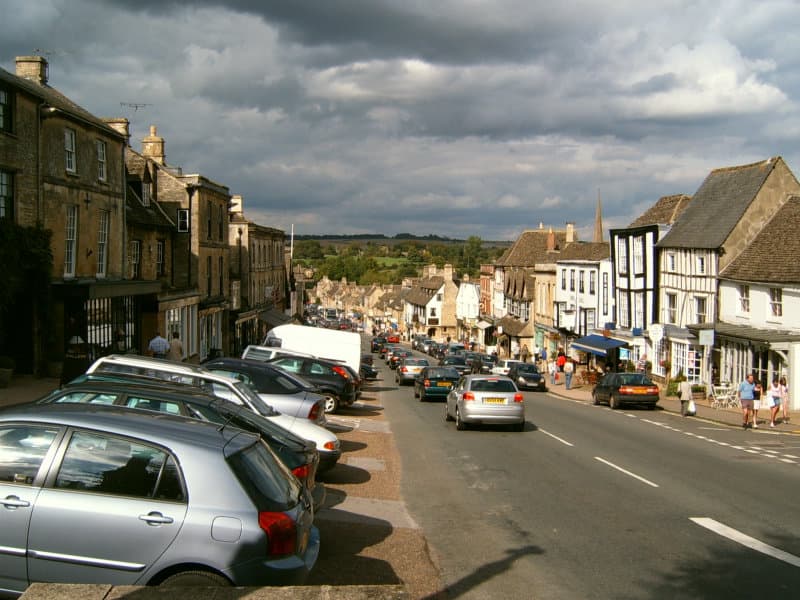
Burford, vaak de “Poort naar de Cotswolds” genoemd, maakt een opvallende eerste indruk met zijn High Street die dramatisch afloopt naar de rivier de Windrush. Dit historische marktstadje, gelegen in West Oxfordshire, biedt een mix van middeleeuwse charme en actief gemeenschapsleven. De kenmerkende gebouwen van goudkleurig Cotswold-steen herbergen onafhankelijke winkels, kunstgalerijen en traditionele pubs, die bezoekers uitnodigen om de karakteristieke straten en steegjes te verkennen.
De ongerepte schoonheid van de stad en de tastbare verbinding met zijn verleden maken het een lonende bestemming voor diegenen die op zoek zijn naar een rustigere, tijdloze ervaring dan sommige van de drukkere Cotswold-dorpen. Van de middeleeuwse brug tot de oude kerk, Burford biedt een gevoel van teruggaan in de tijd, terwijl het nog steeds uitstekende onafhankelijke winkels en eetgelegenheden biedt.
De strategische ligging van Burford aan oude handelsroutes en de rivier de Windrush heeft de ontwikkeling ervan door de eeuwen heen gevormd, waardoor het van een Saksische nederzetting is veranderd in een welvarend marktstadje. Tegenwoordig verwelkomt het nog steeds reizigers en biedt het schilderachtige voetpaden langs de rivier en het omliggende platteland, naast zijn historische bezienswaardigheden.
## Van Saksische nederzetting tot wolstad De oorsprong van Burford gaat terug tot de vroege Saksische periode, met een dorp dat werd gesticht nabij de locatie van het huidige klooster. De naam zelf is afgeleid van de Oudengelse woorden “burh”, wat versterkte stad of heuvelstad betekent, en “ford”, verwijzend naar een rivieroversteekplaats, wat de vroege strategische belangrijkheid aangeeft.
Begin 12e eeuw kreeg Burford een marktoctrooi, een cruciaal moment dat het van een agrarisch dorp transformeerde tot een actief marktstadje. Dit octrooi, een van de vroegste in Engeland, gaf de inwoners het recht om markten te houden en bevrijdde hen van het feodale systeem, wat de basis legde voor zijn onafhankelijke geest en welvaart.
## Het Gouden Tijdperk van Wol Van de 14e tot de 17e eeuw bloeide Burford op als een belangrijk centrum voor de wolhandel in de Cotswolds. De rijkdom die uit deze industrie voortkwam, is nog steeds zichtbaar in de goed bewaarde middeleeuwse architectuur van de stad, waaronder de grandioze “wolkerk”, St John the Baptist. Lokale industrieën die de wolhandel ondersteunden, zoals vollen, spinnen, weven en leerlooien, bloeiden op.
## Burgeroorlog en verval Burford speelde een dramatische rol in de Engelse Burgeroorlog. In 1649 werden een groep muitende parlementsoldaten, bekend als de Levellers, gevangengezet in de St John the Baptist Church. Drie van hun leiders werden op bevel van Oliver Cromwell geëxecuteerd op het kerkhof.
De welvaart van de stad kreeg in de 19e eeuw een aanzienlijke tegenslag toen een voorgestelde Victoriaanse spoorlijn werd omgeleid, wat de handelsactiviteit beïnvloedde. De opkomst van de automobiel in de 20e eeuw bracht echter hernieuwde bezoekers en handel.
## Modern Burford Vandaag de dag behoudt Burford zijn historische karakter en omarmt het zijn rol als populaire Cotswold-bestemming. De stad heeft door de eeuwen heen voortdurend onderhoud en renovatie ondergaan, waardoor de middeleeuwse High Street opmerkelijk goed bewaard is gebleven.
De High Street van Burford is een visueel anker, die naar beneden loopt richting de middeleeuwse brug over de rivier de Windrush. Het is omzoomd met gebouwen gemaakt van de kenmerkende Cotswold-kalksteen, met antiekwinkels, kunstgalerijen, onafhankelijke boekwinkels en boetiekjes.
De Kerk van St John the Baptist is een magnifieke parochiekerk die het lagere deel van de High Street domineert. Daterend uit de 12e eeuw, bevat het middeleeuwse gedenktekens, gebrandschilderd glas en graffiti achtergelaten door gevangengenomen Leveller-soldaten in de jaren 1640.
Het Tolsey Museum, gevestigd in een kenmerkend zwart-wit vakwerkhuis aan de High Street, vertelt het verhaal van Burford's geschiedenis als middeleeuwse wolstad. Het toont artefacten, lokale ambachten en tentoonstellingen over de handel en het gemeenschapsleven van de stad. Het gebouw zelf, ooit gebruikt voor markttol, dateert uit het begin van de 16e eeuw.
Vlak buiten de stad biedt de Burford Garden Company een grote winkelervaring met planten, interieurartikelen, geschenken, kleding, boeken en ambachtelijk voedsel, samen met een café ter plaatse.
Voor gezinnen is de Cotswold Wildlife Park and Gardens een korte rit met de auto, wat de mogelijkheid biedt om een breed scala aan dieren te zien.
Burford is het hele jaar door een heerlijke bestemming. Lente en zomer bieden levendige straatscènes en wandelingen langs de rivier, met eind juni tot eind augustus ideaal voor activiteiten bij warm weer. De herfst brengt rustigere lanen en rijke seizoenskleuren, en september heeft vaak warmer, droger weer dan augustus, met minder drukte nu de scholen weer beginnen. De winter biedt een rustigere ervaring om historische straten te verkennen. Levellers Day in mei is een hoogtepunt, met een kleurrijke optocht en evenementen ter viering van de vrijheid van meningsuiting en mensenrechten.
Burford is gemakkelijk bereikbaar met de auto, gelegen net buiten de A40 tussen Oxford en Cheltenham. Het is ongeveer 90 minuten rijden van Londen via de M40 en A40. Gratis parkeergelegenheid is beschikbaar op de Guildenford parkeerplaats (OX18 4SE) nabij de kerk voor maximaal 12 uur, hoewel deze in de zomer druk kan zijn. Parkeren op straat is ook beschikbaar aan de High Street, met een limiet van twee uur aan de oostkant en geen limiet aan de westkant.
Het dichtstbijzijnde treinstation is Charlbury, ongeveer 20 minuten met de taxi, met regelmatige treinen vanuit Oxford en London Paddington. Busroutes verbinden Burford ook met Oxford, Witney en Cheltenham. Het Tolsey Museum is over het algemeen geopend van april tot oktober, met weekendopeningen in november en december, en gesloten van januari tot maart. De toegang is gratis.
Burford — Koreaans, Chinees, Hebreeuws en nog 29 talen, elke stop verteld door een moedertaalspreker. Het grootste taalaanbod van alle zelfgeleide audiotours.
Beschikbaar in: