De Abdij van St Edmund
De abdij bevatte ooit een relikwie zo krachtig dat het werd gebruikt om geschillen te beslechten en eden af te leggen.
Volledig verhaal ontgrendeld in de tour
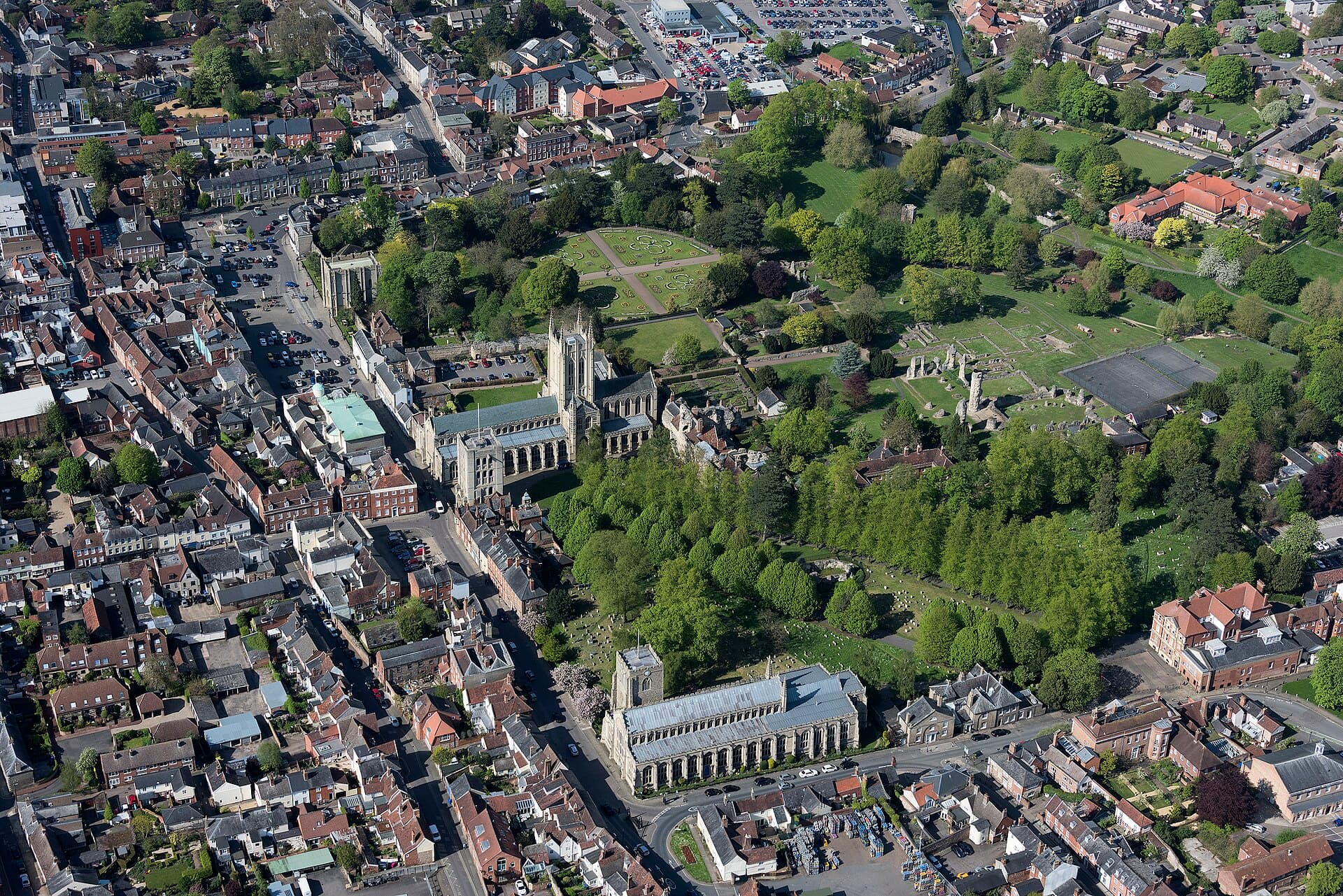 John Fielding from Norwich, UK / CC BY 2.0, via Wikimedia Commons
Zelfgeleide audiowandeling door Bury St Edmunds — GPS-route, offline afspelen, meeslepende vertelling in 32 talen.
“Onder een rustige marktstad fluisteren de stenen van een oude abdij over koningen en vergeten heiligen.”
Niet de ansichtkaarten. De verhalen die zelfs locals niet kennen — gefluisterd in je oor, precies waar ze gebeurden.
De abdij bevatte ooit een relikwie zo krachtig dat het werd gebruikt om geschillen te beslechten en eden af te leggen.
Een schijnbaar vredige groene ruimte was ooit het toneel van een cruciaal moment in de Engelse vrijheid.
Deze onopvallende pub bezit een bijzonder record vanwege zijn formaat.
Ontdek elk geheim van Bury St Edmunds
Elk adres, elke onthulling volledig — in je oor, precies waar het gebeurde.
Jij kiest je stops. Jij wandelt. De stem onthult wat de anderen missen.


Je zelfgeleide audiotour van Bury St Edmunds is klaar — kies je bezienswaardigheden, kies je taal en start zodra je aankomt.
KopenLume heeft een ingebouwde augmented-reality-gids. Houd je telefoon omhoog: de camera toont de straat voor je, met een oplichtende pijl over het echte beeld die altijd naar je volgende stop wijst — geen kaart om uit te puzzelen, geen verkeerde afslagen. Zoals alles in Lume werkt het volledig offline.
Bury St Edmunds, een historische marktstad in Suffolk, Engeland, biedt een boeiende mix van oud erfgoed en hedendaags karakter. In het hart liggen de magnifieke ruïnes van de Abdij van St Edmund, een bewijs van zijn verleden als een van de rijkste en machtigste Benedictijnse kloosters in middeleeuws Engeland. De rasterachtige stadsplattegrond, opgesteld in de 11e eeuw, leidt bezoekers nog steeds door een verzameling onafhankelijke winkels, traditionele pubs en uitnodigende cafés. Buiten het historische centrum bloeit Bury St Edmunds op als een cultureel centrum, met een levendige kunstscene en een sterk gemeenschapsgevoel.
Bury St Edmunds biedt een rustige ontsnapping met zijn schilderachtige Abbey Gardens, gevierde culinaire scene en een kalender vol evenementen en festivals. Het blijvende verhaal van de stad, van zijn oorsprong als een koninklijke Saksische nederzetting tot zijn cruciale rol in de gebeurtenissen die leidden tot Magna Carta, is voelbaar in zijn architectuur en sfeer. Of u nu wordt aangetrokken door de monastieke ruïnes, de actieve markt of de kenmerkende straten, Bury St Edmunds biedt een ervaring die zowel verhelderend als verrukkelijk is.
## Van Koninklijke Saksische Stad tot Monastieke Machtscentrum De oorsprong van Bury St Edmunds gaat terug tot de 7e eeuw, toen een kleine nederzetting groeide rond een klooster gesticht door Sigeberht, Koning van de East Angles. Het belang van de stad nam dramatisch toe met de komst van het lichaam van St Edmund, Koning van East Anglia, in 903 na Christus. Edmund was in 869 na Christus door de Vikingen gemarteld omdat hij weigerde zijn christelijk geloof af te zweren. Zijn schrijn werd al snel een belangrijke pelgrimsbestemming en de stad werd bekend als St Edmund's Bury.
## De Opkomst en Val van de Abdij In de 11e eeuw was de Abdij van St Edmund uitgegroeid tot een van de rijkste en machtigste Benedictijnse kloosters in Engeland. De abten hadden aanzienlijke invloed en de abdijkerk was een immens bouwwerk, dat qua grootte en grandeur kon wedijveren met vele kathedralen. De abdij speelde een belangrijke rol in nationale aangelegenheden, met name in 1214 toen baronnen daar bijeenkwamen om een eed af te leggen om Koning Jan te dwingen Magna Carta te accepteren. De stad bloeide onder het patronaat van de abdij, met een actieve markt en een sterke wolhandel.
## Ontbinding en Transformatie De Ontbinding van de Kloosters door Koning Hendrik VIII in 1539 bracht een abrupt einde aan de dominantie van de abdij. De monastieke gebouwen werden grotendeels ontmanteld, hun stenen hergebruikt voor andere constructies in de stad en daarbuiten. Ondanks de verwoesting blijven de indrukwekkende ruïnes van de abdijkerk en de Grote Poort over, die een krachtige inkijk bieden in zijn vroegere glorie. Na de Ontbinding transformeerde Bury St Edmunds tot een vooraanstaande marktstad, waarbij de economische focus verschoof naar landbouw en brouwen. De 18e en 19e eeuw zagen verdere ontwikkeling, met de bouw van elegante Georgische en Victoriaanse gebouwen die nog steeds een groot deel van de architectuur van de stad bepalen.
Begin uw verkenning in de Abbey Gardens, een rustige oase die de magnifieke ruïnes van de Abdij van St Edmund omvat. Wandel tussen de overgebleven muren van de abdijkerk, bewonder de imposante Normandische Toren en ontdek de serene zintuiglijke tuin. Mis de Grote Poort niet, een grandioze 14e-eeuwse ingang die ooit toegang gaf tot het monastieke complex.
Vlak buiten de Abbey Gardens biedt Angel Hill een weids uitzicht op de Grote Poort en het iconische Angel Hotel. Dit historische groene gebied is perfect voor een ontspannen wandeling en was de locatie van de bijeenkomst van de baronnen vóór Magna Carta.
Verken de aantrekkelijke straten van het stadscentrum, met name de Buttermarket en Cornhill, waar u een heerlijke reeks onafhankelijke winkels, cafés en restaurants vindt. Zoek voor een unieke ervaring The Nutshell, de kleinste pub van Groot-Brittannië.
Kunstliefhebbers moeten het Moyse's Hall Museum bezoeken, gehuisvest in een Normandisch gebouw, dat lokale geschiedenis, archeologie en een verzameling curiositeiten tentoonstelt. Voor een voorproefje van podiumkunsten, controleer het programma van het Theatre Royal, een prachtig gerestaureerd Regency-theater.
Bury St Edmunds is het hele jaar door heerlijk, maar de warmere maanden van mei tot september bieden het beste weer om de Abbey Gardens te verkennen en van buitenevenementen te genieten. De lente brengt bloeiende bloemen naar de tuinen, terwijl de herfst een kleurrijke achtergrond biedt. De kerstmarkt eind november is een populair evenement dat de stad transformeert in een feestelijk wonderland.
Bury St Edmunds is gemakkelijk bereikbaar met de trein, met directe verbindingen vanuit London King's Cross en andere grote steden. Als u met de auto komt, zijn er verschillende parkeerplaatsen aan de rand van het stadscentrum. De stad is compact en het beste te voet te verkennen, met de meeste belangrijke bezienswaardigheden op loopafstand van elkaar. Informatie over lokale bussen en taxi's is gemakkelijk verkrijgbaar bij het treinstation en het toeristeninformatiecentrum. Openbare toiletten bevinden zich verspreid over de stad, ook binnen de Abbey Gardens.
Bury St Edmunds — Koreaans, Chinees, Hebreeuws en nog 29 talen, elke stop verteld door een moedertaalspreker. Het grootste taalaanbod van alle zelfgeleide audiotours.
Beschikbaar in: