El Arco
Deze iconische rotsformatie bewaakt een afgelegen doorgang, die slechts zelden wordt onthuld.
Volledig verhaal ontgrendeld in de tour
 Microstar / CC BY-SA 4.0, via Wikimedia Commons
Zelfgeleide audiowandeling door Cabo San Lucas — GPS-route, offline afspelen, meeslepende vertelling in 32 talen.
“Waar de Stille Oceaan de Zee van Cortez omhelst, ontvouwt zich een woestijnvlakte.”
Niet de ansichtkaarten. De verhalen die zelfs locals niet kennen — gefluisterd in je oor, precies waar ze gebeurden.
Deze iconische rotsformatie bewaakt een afgelegen doorgang, die slechts zelden wordt onthuld.
Onder het oppervlak van de baai ligt een geologisch wonder, ontdekt door een gevierde oceanograaf.
De naam van de stad was niet altijd 'Cabo San Lucas', en de vroegste bewoners hadden een andere naam voor dit land.
Ontdek elk geheim van Cabo San Lucas
Elk adres, elke onthulling volledig — in je oor, precies waar het gebeurde.
Jij kiest je stops. Jij wandelt. De stem onthult wat de anderen missen.


Je zelfgeleide audiotour van Cabo San Lucas is klaar — kies je bezienswaardigheden, kies je taal en start zodra je aankomt.
KopenLume heeft een ingebouwde augmented-reality-gids. Houd je telefoon omhoog: de camera toont de straat voor je, met een oplichtende pijl over het echte beeld die altijd naar je volgende stop wijst — geen kaart om uit te puzzelen, geen verkeerde afslagen. Zoals alles in Lume werkt het volledig offline.
Cabo San Lucas, vaak simpelweg Cabo genoemd, is een badplaats aan de zuidelijke punt van het Mexicaanse schiereiland Baja California Sur. Het is een plek waar het dorre woestijnlandschap dramatisch samenkomt met het schitterende blauwe water van de Stille Oceaan en de Zee van Cortez. Deze kenmerkende geografie vormt een opvallende achtergrond voor een bestemming die bekend staat om zijn kustlijnen, zeeleven en buitenactiviteiten.
De stad vormt, samen met het aangrenzende San José del Cabo, het stedelijk gebied Los Cabos. Hoewel vaak geassocieerd met levendig avondentertainment en spring break-feesten, biedt Cabo San Lucas een diversiteit aan ervaringen, van uitzonderlijke sportvisserij en walvissafari's tot rustige stranden en culturele ontdekkingen.
Met gemiddeld 300-350 dagen zon per jaar en een subtropisch woestijnklimaat, biedt Cabo San Lucas het grootste deel van het jaar warme, milde dagen en koele avonden, waardoor het een aantrekkelijke bestemming is voor zonaanbidders en liefhebbers van de zee.
Het menselijke verhaal van Cabo San Lucas gaat minstens 10.000 jaar terug, met archeologische vondsten die wijzen op continue bewoning door het Pericú-volk. Deze inheemse bewoners, die het gebied Yenecamú noemden, voorzagen in hun levensonderhoud door middel van jacht, verzamelen en mariene bronnen. Helaas verdween de Pericú-cultuur en taal tegen het einde van de 18e eeuw, en veel van wat we over hen weten, komt uit Spaanse verslagen.
Europees contact begon in de 16e eeuw, met de aankomst van Hernán Cortés in 1535. In 1541 hernoemde Francisco Bolaños de zuidpunt van het schiereiland Cabo San Lucas nadat hij tijdens een storm op de feestdag van Sint Lucas beschutting had gevonden in de baai. De regio werd een belangrijke aanlegplaats voor Spaanse galjoenen die van de Filippijnen naar Acapulco reisden, beladen met goederen. Deze handelsroute trok echter ook kapers aan, zoals Thomas Cavendish, die in 1587 het 'onoverwinnelijke' galjoen Santa Ana bij Cabo San Lucas plunderde, waarbij hij El Arco als schuilplaats gebruikte.
Ondanks vroege Spaanse interesse, vorderde permanente vestiging langzaam. Jezuïeten vestigden in 1730 de Mission San José del Cabo Añuití om handelaren te beschermen. De 19e eeuw zag verdere uitbreiding, met landtitels die werden verleend en Engelse zeelieden die zich in het gebied vestigden. Cabo San Lucas werd in 1856 aangewezen als open haven en begon in de jaren 1860 stoomschepen uit San Francisco te ontvangen.
De 20e eeuw markeerde een ingrijpende transformatie. In 1917 vestigde een Amerikaans bedrijf een tonijnconservenfabriek, die meer dan 50 jaar een belangrijke industrie werd, de lokale economie stimuleerde en internationale uitwisseling bevorderde. De echte toeristische groei begon echter in 1974 met de voltooiing van de Transpeninsular Highway (Mexicaanse Federale Snelweg 1). Deze infrastructuurontwikkeling, gesteund door de Mexicaanse regering, had tot doel Cabo San Lucas te transformeren tot een belangrijk toeristisch centrum. Welgestelde Californiërs en Hollywood-beroemdheden, die het gebied eerder met privéjets en jachten bezochten, droegen bij aan de vorming van de stad tot de wereldklasse bestemming die het vandaag de dag is. De bevolking is snel gegroeid, bijna verdrievoudigd tussen 2010 en 2020.
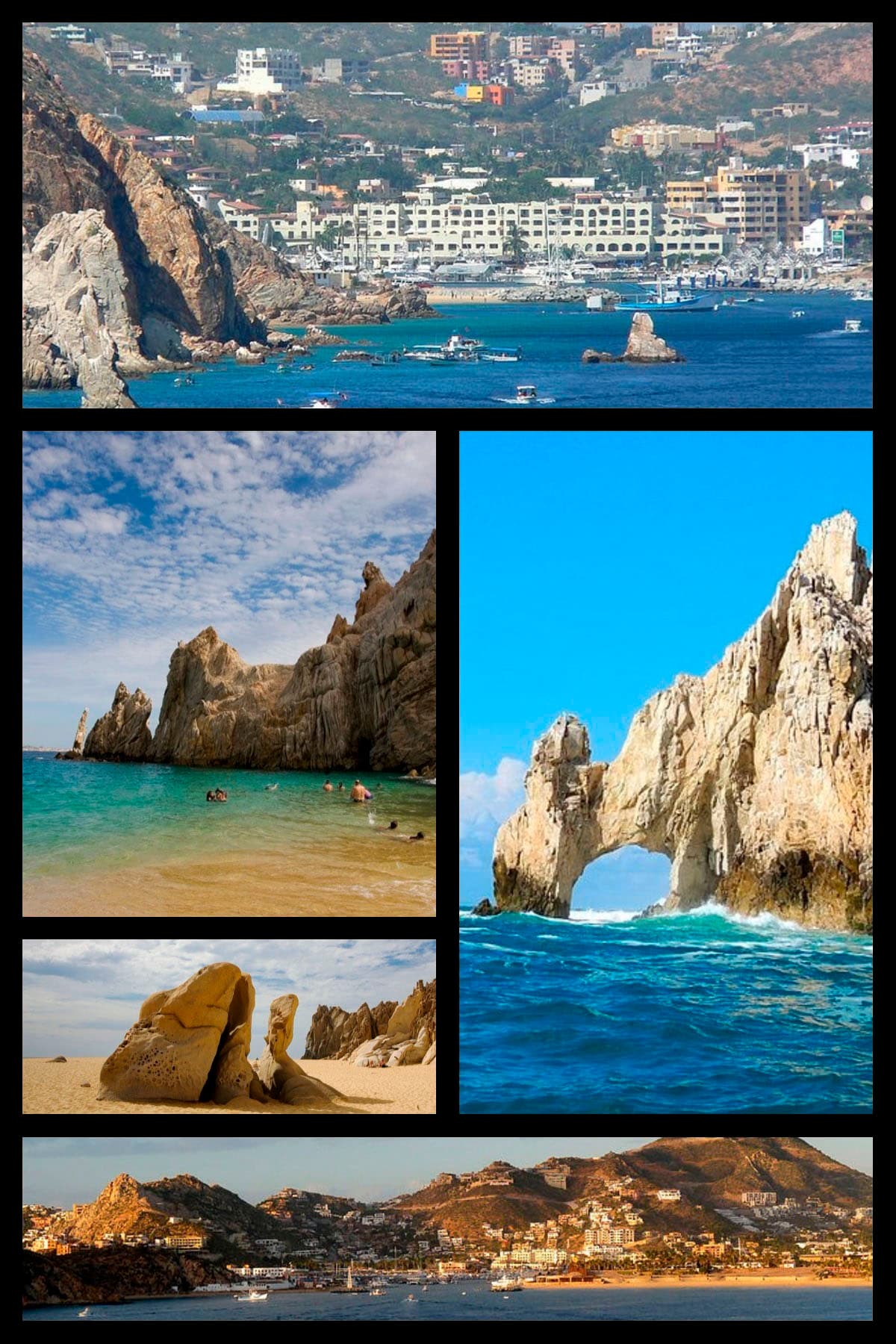
Het meest bekende herkenningspunt is El Arco de Cabo San Lucas, een natuurlijke rotsboog bij Land's End, waar de Stille Oceaan de Zee van Cortez begroet. Boottochten bieden uitzichten van dichtbij, en u kunt zeeleeuwen zien zonnebaden op nabijgelegen rotsen. Grenzend aan El Arco liggen Lover's Beach en Divorce Beach, bereikbaar per watertaxi of kajak.
Medano Beach is het meest bezochte strand van Cabo, bekend om zijn levendige sfeer, wateractiviteiten en strandclubs. Voor een rustigere strandervaring bieden Chileno Bay en Santa Maria Bay uitstekende snorkelmogelijkheden te midden van diverse zeeleven.
De Cabo San Lucas Marina is het bruisende centrum van de stad, omzoomd met eetgelegenheden en winkels, en dient als centraal punt voor diverse bootexcursies, waaronder walvissafari's in de wintermaanden. Naast de stranden kunt u een bezoek brengen aan het Museo de Historia Natural de Cabo San Lucas om meer te leren over het natuurlijke en paleontologische verleden van de regio. Voor een glimp van de lokale cultuur organiseert het nabijgelegen stadje San José del Cabo op donderdagavonden van november tot juni een populaire Art Walk, met galerieën, livemuziek en lokale verkopers.
Cabo San Lucas geniet een heet woestijnklimaat met meer dan 320 dagen zon per jaar. Het meest comfortabele weer, met warme dagen en koele avonden, strekt zich uit van november tot juni. De lente (maart tot mei) biedt aangename temperaturen in de lage tot hoge 20 graden Celsius overdag. De zomermaanden (juni tot oktober) zijn warmer, met gemiddelde dagelijkse maxima boven de 31°C, en kunnen drukkend aanvoelen. September is doorgaans de natste maand, hoewel de totale neerslag schaars is. Het walvissafari-seizoen loopt van half december tot april.
De officiële munteenheid is de Mexicaanse Peso, hoewel Amerikaanse dollars breed worden geaccepteerd. Spaans is de officiële taal, maar Engels wordt veel gesproken in resorts, winkels en door verkopers, wat de communicatie voor internationale bezoekers vergemakkelijkt. Los Cabos International Airport (SJD) bedient Cabo San Lucas en San José del Cabo en verwelkomt jaarlijks een aanzienlijk aantal bezoekers. Veel hotels bieden langeafstandsverbindingen, en internetcafés en mobiele diensten zijn gemakkelijk beschikbaar. Wees u ervan bewust dat, hoewel veel gebieden als veilig worden beschouwd, sommige lokale bewoners afraden om 's nachts in bepaalde gebieden te lopen en aanraden om taxi's of ritdeelplatforms te gebruiken. De tijd in Los Cabos komt overeen met de America/Mazatlan tijdzone.
Cabo San Lucas — Koreaans, Chinees, Hebreeuws en nog 29 talen, elke stop verteld door een moedertaalspreker. Het grootste taalaanbod van alle zelfgeleide audiotours.
Beschikbaar in: