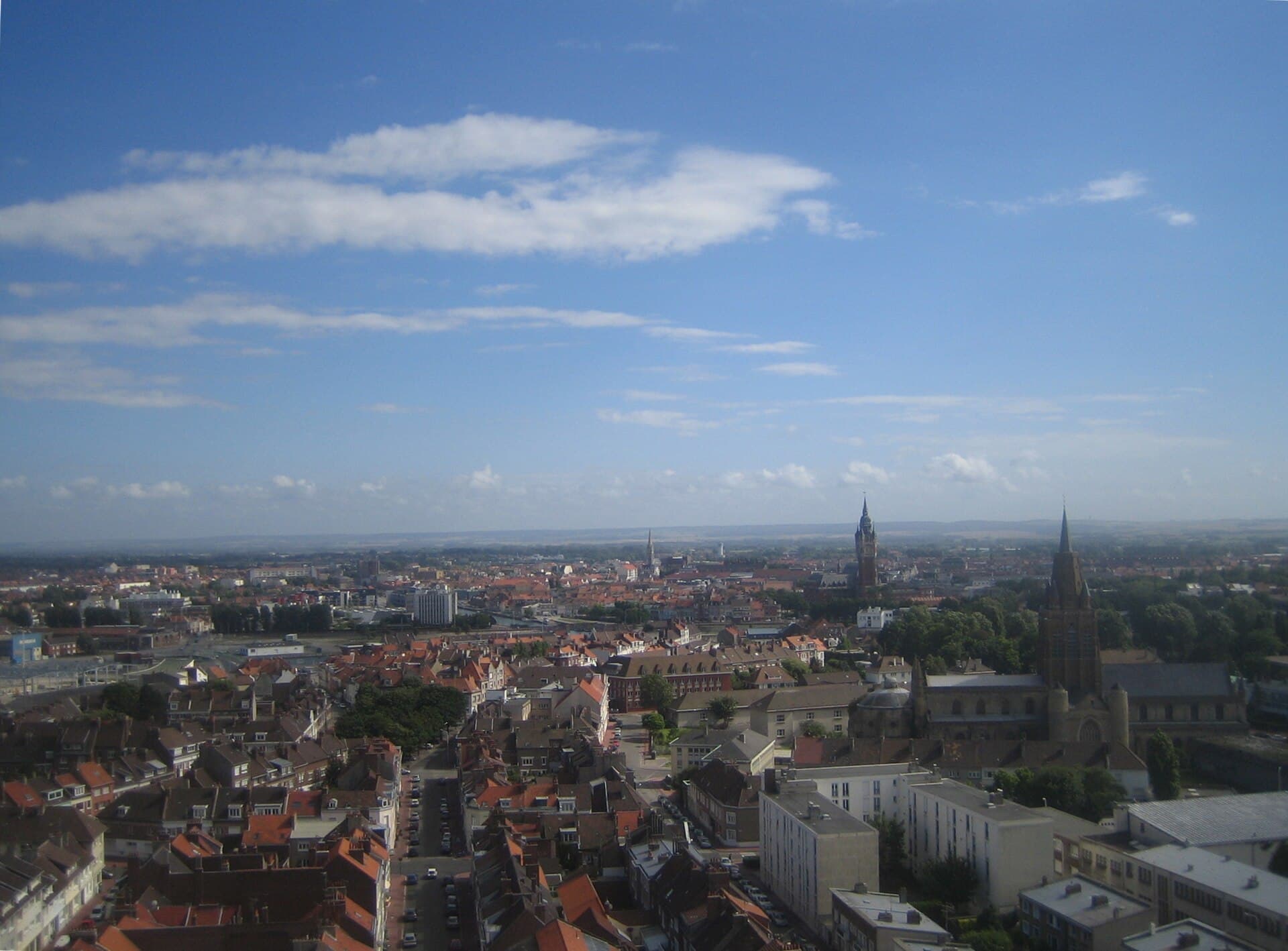
Rathaus von Calais
Das prächtige städtische Gebäude in Calais birgt eine unerwartete Verbindung zu einer Persönlichkeit von globaler Bedeutung.
Die ganze Geschichte wird in der Tour freigeschaltet
 Jiel Beaumadier / CC BY-SA 4.0, via Wikimedia Commons
Selbstgeführte Audio-Walking-Tour durch Calais — GPS-Route, Offline-Wiedergabe, erzählerische Narration in 32 Sprachen.
“Wo französische Eleganz auf die Umarmung des Ärmelkanals trifft.”
Nicht die Postkarten. Die Geschichten, die selbst Einheimische nicht kennen – dir ins Ohr geflüstert, genau dort, wo sie geschahen.
Das prächtige städtische Gebäude in Calais birgt eine unerwartete Verbindung zu einer Persönlichkeit von globaler Bedeutung.
Die filigrane Spitze von Calais hat eine rebellische Entstehungsgeschichte, die mit Einfallsreichtum Grenzen überschritt.
Dieser beständige Leuchtfeuer erzählt eine bemerkenswerte Geschichte der Widerstandsfähigkeit inmitten weit verbreiteter Zerstörung.
Entdecke jedes Geheimnis von Calais
Jede Adresse, jede Enthüllung vollständig – in deinem Ohr, genau dort, wo es geschah.
Du wählst deine Stationen. Du gehst. Die Stimme enthüllt, was andere übersehen.


Deine selbstgeführte Audio-Tour durch Calais ist bereit – wähle deine Sehenswürdigkeiten, deine Sprache und starte, sobald du ankommst.
KaufenLume enthält einen integrierten Augmented-Reality-Guide. Halten Sie Ihr Handy hoch: Die Kamera zeigt die Straße vor Ihnen, mit einem leuchtenden Pfeil über dem echten Bild, der immer auf Ihren nächsten Stopp zeigt — keine Karte zum Rätseln, keine falschen Abzweigungen. Wie alles bei Lume funktioniert es komplett offline.
Calais, eine bedeutende Hafenstadt im Norden Frankreichs, liegt am engsten Punkt des Ärmelkanals, nur 34 Kilometer (21 Meilen) von Dover, England, entfernt. An klaren Tagen sind die markanten weißen Klippen von Dover über die Meerenge sichtbar. Diese strategische Lage hat Calais' Identität als lebenswichtige Verbindung zwischen Frankreich und England über Jahrhunderte geprägt und dient als wichtiger Knotenpunkt für Fähren und den Kanaltunnel.
Über seine Funktion als Transitpunkt hinaus ist Calais eine Stadt mit eigenem Charakter, die französische Kultur mit einem starken maritimen Geist verbindet. Die Stadt gliedert sich in Calais-Nord, die historische Altstadt, die von Kanälen umgeben ist, und den neueren Stadtteil St-Pierre im Süden. Besucher können ein kompaktes Stadtzentrum mit einer Reihe von Attraktionen erkunden, von historischen Gebäuden über Museen bis hin zu weitläufigen Sandstränden entlang der Opalküste.
Calais lädt Besucher ein zu verweilen und seine einzigartige Mischung aus Geschichte, Industrie und Küstenreiz zu entdecken, und bietet eine Perspektive, die sich von vielen anderen französischen Reisezielen unterscheidet.
## Vom Fischerdorf zur befestigten Pforte Calais begann als bescheidenes Fischerdorf auf einer künstlichen Halbinsel, seine strategische Lage am Ärmelkanal wurde schnell erkannt. Im Jahr 997 verbesserte der Graf von Flandern den Hafen, und bis 1224 befestigte der Graf von Boulogne ihn. Diese frühe Befestigung legte den Grundstein für seine Zukunft als wichtiger militärischer und Handelsaußenposten.
## Die englische Ära und die Bürger von Calais Eine der prägendsten Perioden in der Geschichte von Calais war die Besetzung durch die Engländer. Nach der Schlacht von Crécy im Jahr 1346 belagerte Edward III. von England Calais. Nach einer elfmonatigen Belagerung ergab sich die Stadt aus Hunger. Edward verlangte, dass sechs führende Bürger, bekannt als die Bürger von Calais, sich als Geiseln zur Verfügung stellten, in einfacher Kleidung und mit Seilen um den Hals, im Austausch für das Überleben der Stadt. Obwohl sie die Hinrichtung erwarteten, intervenierte Königin Philippa von Hennegau und überzeugte Edward, ihr Leben zu verschonen. Calais blieb über zwei Jahrhunderte unter englischer Kontrolle, von 1347 bis zur Rückeroberung durch die Franzosen im Jahr 1558. Während dieser Zeit entwickelte es sich zu einem blühenden Zentrum der Wollproduktion und galt als entscheidend für seine Rolle im Handel mit Zinn, Blei, Spitze und Wolle.
## Industrielles Wachstum und Konflikte des 20. Jahrhunderts Das 19. Jahrhundert brachte Calais beträchtliche Expansion, insbesondere mit dem Aufstieg der Spitzenindustrie. Englische Arbeiter schmuggelten unter Umgehung von Blockaden Spitzenmaschinen nach Calais und verwandelten die Stadt in eine Hauptstadt der maschinellen Spitzenproduktion. Dieses industrielle Wachstum führte 1885 zur Fusion von Calais mit der Spitzenstadt Saint-Pierre und zum Bau neuer öffentlicher Gebäude, darunter das beeindruckende Rathaus. Das 20. Jahrhundert brachte jedoch immense Zerstörung. Während des Zweiten Weltkriegs war Calais im Mai 1940 ein Schlüsselziel für deutsche Streitkräfte und wurde durch strategische Bombardierungen fast vollständig zerstört. Die Deutschen befestigten die Küste stark und bauten große Bunker, um Raketen nach England zu starten. Die Stadt wurde im September 1944 befreit.
## Zeitgenössisches Calais Heute setzt Calais seine Rolle als wichtiger Hafen und als Stadt der Widerstandsfähigkeit und des kulturellen Interesses fort. Es hat eine bedeutende Revitalisierung erfahren, insbesondere entlang seiner Uferpromenade, und bleibt ein Zentrum für Handel, Fischerei und die renommierte Calais-Spitzenindustrie.
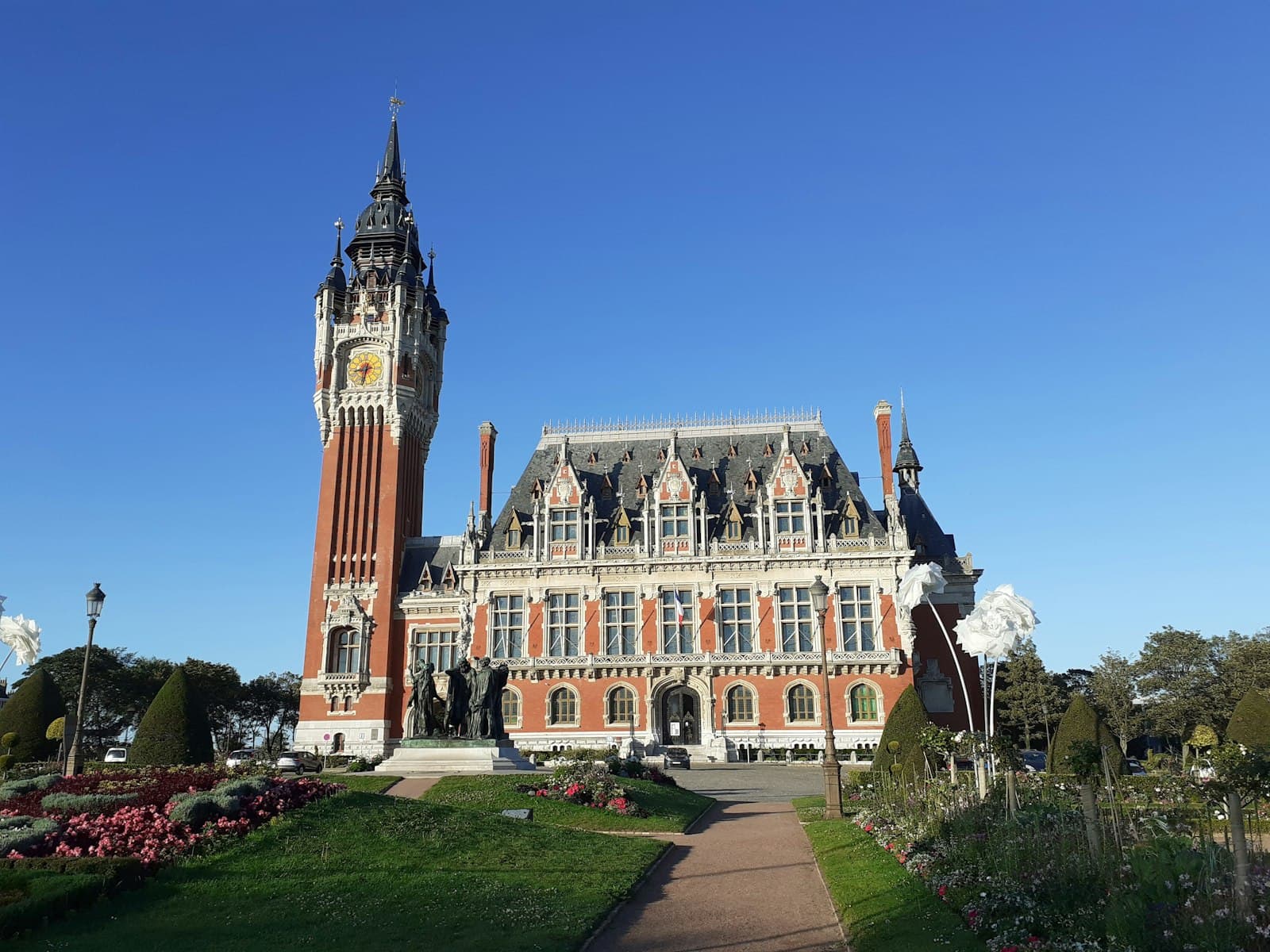
Beginnen Sie Ihre Erkundung am bedeutenden Rathaus von Calais (Hôtel de Ville), einem UNESCO-Weltkulturerbe, das für seine flämische Architektur und seinen beeindruckenden Glockenturm bekannt ist, der aus 75 Metern Höhe einen weiten Blick über die Stadt bietet. In den Gärten des Rathauses finden Sie Auguste Rodins berühmte Skulptur, Die Bürger von Calais, die einen entscheidenden Moment in der Geschichte der Stadt ehrt.
Tauchen Sie ein in das industrielle Erbe der Stadt in der Cité de la Dentelle et de la Mode (Internationale Stadt der Spitze und Mode), die in einer restaurierten Fabrik aus dem 19. Jahrhundert untergebracht ist und die filigrane Kunstfertigkeit der Calais-Spitzenherstellung zeigt. Für maritime Geschichte steigen Sie die 271 Stufen des Leuchtturms von Calais hinauf, um einen weiten Blick auf den Hafen und den Ärmelkanal zu genießen. In der Nähe bietet das historische Fischerviertel Courgain Maritime einen Einblick in die Seefahrergeschichte von Calais.
Genießen Sie die Natur am Strand von Calais, einer weitläufigen Sandfläche mit Spielplätzen, einem Skatepark und Imbissständen. Von hier aus können Sie auch den Drachen von Calais beobachten, eine große mechanische Kreatur, die den Hafeneingang bewacht. Für ein tieferes Verständnis der Geschichte des Zweiten Weltkriegs besuchen Sie das Musée Mémoire 39-45, das sich in einem ehemaligen deutschen Bunker befindet.
Calais hat ein gemäßigtes Meeresklima mit milden Temperaturen das ganze Jahr über. Die wärmsten Monate sind Juli und August mit Durchschnittstemperaturen um 18-18,5°C (64-65°F) und Höchstwerten von 21°C (70°F), was ideal für Outdoor-Aktivitäten und Strandbesuche ist. In diesen Monaten gibt es auch die wenigsten Regentage. Die Übergangszeiten Mai, Juni und September bieten angenehmes Wetter und weniger Andrang, wobei die Unterkunftspreise oft niedriger sind. Obwohl die Winter kühl sind, mit Durchschnittstemperaturen um 4-7°C (39-45°F) und häufigerem Regen, bleiben Museen und Indoor-Attraktionen zugänglich.
Die offizielle Währung in Calais ist, wie im Rest Frankreichs, der Euro (€). Obwohl Französisch die Amtssprache ist, wird Englisch, besonders in touristischen Gebieten, weitgehend verstanden. Trinkgeld in Restaurants ist nicht obligatorisch, da die Servicegebühren enthalten sind, aber das Aufrunden der Rechnung für guten Service wird geschätzt.
Calais verfügt über ein effizientes öffentliches Verkehrsnetz mit 13 kostenlosen Buslinien. Ein kostenloser Mini-Shuttle-Service, Balad'in, verkehrt im Stadtzentrum und verbindet den Fischerhafen mit dem Boulevard Lafayette. Für Fußgänger, die mit der Fähre anreisen, verkehren Shuttlebusse vom Fährterminal zum Hauptbahnhof der Stadt. Calais-Ville ist der zentrale Bahnhof, während Calais-Fréthun den Eurostar und die Hochgeschwindigkeitszüge TGV bedient, die durch einen kostenlosen Shuttlebus verbunden sind. Fahrräder von Public Vel'In können ebenfalls gemietet werden, wobei die erste Stunde kostenlos ist.
Calais — Koreanisch, Chinesisch, Hebräisch und 29 weitere Sprachen, jede Station von einer muttersprachlichen Stimme erzählt. Die größte Sprachauswahl aller selbstgeführten Audiotouren.
Verfügbar auf: