Altstadt von Calatayud
Wenn Sie durch das historische Zentrum spazieren, bemerken Sie vielleicht etwas Ungewöhnliches an einigen Baugrundstücken.
Die ganze Geschichte wird in der Tour freigeschaltet
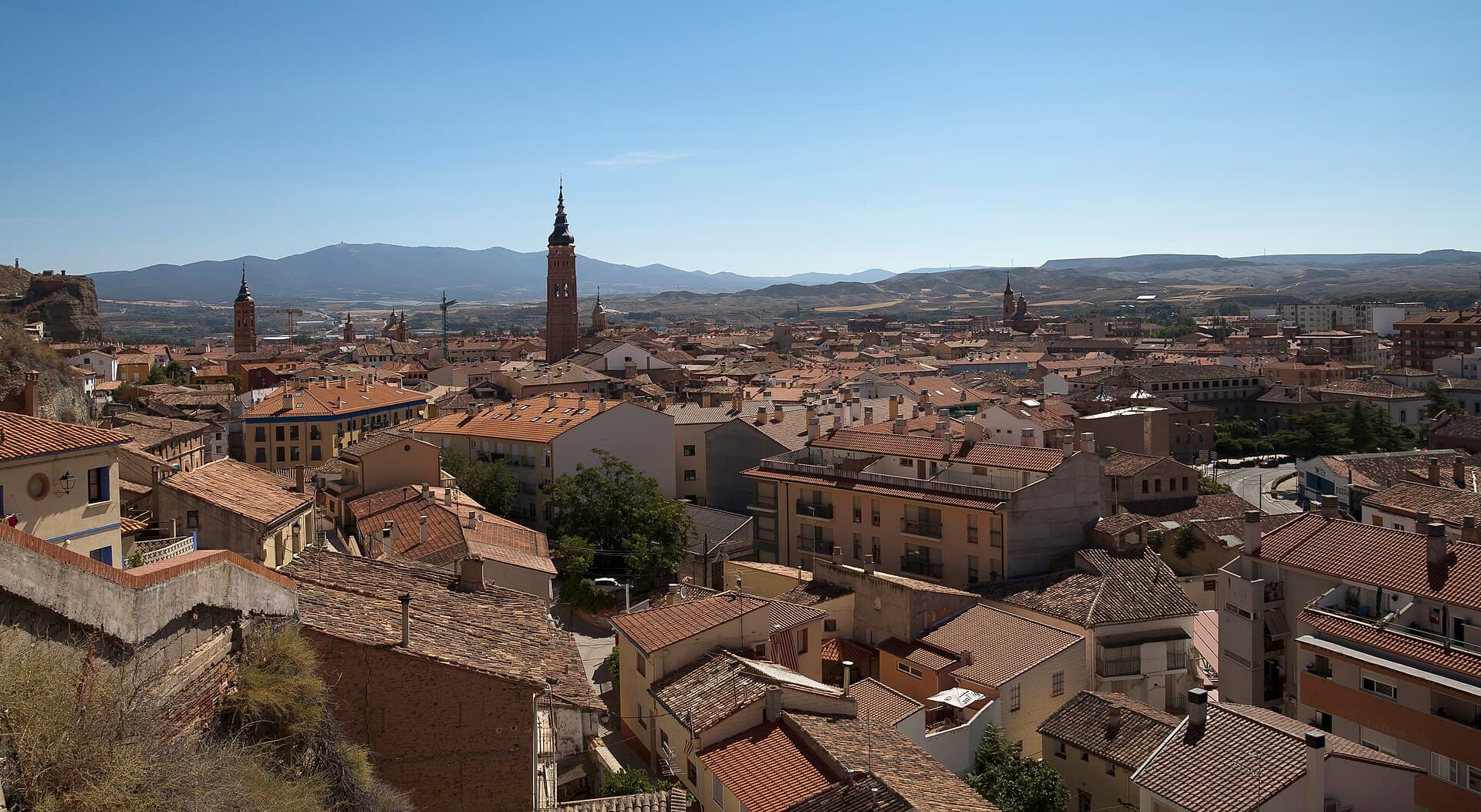 Diego Delso / CC BY-SA 3.0, via Wikimedia Commons
Selbstgeführte Audio-Walking-Tour durch Calatayud — GPS-Route, Offline-Wiedergabe, erzählerische Narration in 32 Sprachen.
“Wo alte Steine von Imperien erzählen und Mudéjar-Kunst den Himmel malt.”
Nicht die Postkarten. Die Geschichten, die selbst Einheimische nicht kennen – dir ins Ohr geflüstert, genau dort, wo sie geschahen.
Wenn Sie durch das historische Zentrum spazieren, bemerken Sie vielleicht etwas Ungewöhnliches an einigen Baugrundstücken.
Diese prächtige Kirche birgt ein Geheimnis unter ihrer Kuppel.
Der Name der Stadt ist nicht nur ein spanisches Wort; er erzählt von ihren Ursprüngen.
Entdecke jedes Geheimnis von Calatayud
Jede Adresse, jede Enthüllung vollständig – in deinem Ohr, genau dort, wo es geschah.
Du wählst deine Stationen. Du gehst. Die Stimme enthüllt, was andere übersehen.

Deine selbstgeführte Audio-Tour durch Calatayud ist bereit – wähle deine Sehenswürdigkeiten, deine Sprache und starte, sobald du ankommst.
KaufenLume enthält einen integrierten Augmented-Reality-Guide. Halten Sie Ihr Handy hoch: Die Kamera zeigt die Straße vor Ihnen, mit einem leuchtenden Pfeil über dem echten Bild, der immer auf Ihren nächsten Stopp zeigt — keine Karte zum Rätseln, keine falschen Abzweigungen. Wie alles bei Lume funktioniert es komplett offline.
Calatayud, eine Stadt in der Provinz Zaragoza, Aragón, Spanien, ist ein Ort, an dem sich menschliche Errungenschaften sichtbar in die Landschaft eingeprägt haben. Am Fluss Jalón inmitten des Iberischen Gebirges gelegen, ist sie die zweitgrößte Stadt ihrer Provinz. Dieser historische Knotenpunkt ist seit der Römerzeit eine bedeutende Siedlung und hat sich durch maurische und christliche Einflüsse entwickelt, die jeweils ihre Spuren in Architektur und Kultur hinterlassen haben.
Die Stadt bietet eine faszinierende Mischung aus antiken Ruinen, Mudéjar-Meisterwerken und einem lebendigen modernen Geist. Von der imposanten Burg Ayub, die der Stadt ihren Namen gab, bis hin zu den kunstvollen Ziegelarbeiten ihrer Mudéjar-Türme, die zum UNESCO-Weltkulturerbe gehören, lädt Calatayud zu einer tiefen Erkundung ein. Neben seinen historischen Monumenten ist die Region auch für ihre Thermalbäder, lokalen Weine und den Naturpark Monasterio de Piedra bekannt, was sie zu einem Reiseziel für vielfältige Interessen macht.
Die Ursprünge von Calatayud reichen bis zu einer keltisch-iberischen Siedlung zurück, die die Römer um das 2. Jahrhundert v. Chr. in Augusta Bilbilis verwandelten. Diese römische Stadt, etwa vier Kilometer nördlich des heutigen Calatayud gelegen, war die Geburtsstätte des Dichters Martial im Jahr 40 n. Chr. Bilbilis blühte als Handelsstation auf dem Weg nach Caesaraugusta (dem heutigen Saragossa) und war bekannt für seine Metallarbeiten und monumentalen öffentlichen Plätze, einschließlich schwefelhaltiger Quellen.
Mit dem Fall des Römischen Reiches und der anschließenden westgotischen Herrschaft erlebte Augusta Bilbilis eine Phase des Niedergangs. Die Ankunft der Mauren auf der Iberischen Halbinsel im frühen 8. Jahrhundert markierte ein neues Kapitel. Um 716 n. Chr. errichtete ein Emir von al-Andalus eine befestigte Stadt, ein Qal'at, in den Hügeln und nannte sie Qal'at Ayyub, was 'die Festung von Ayyub' bedeutet. Die Bewohner der alten römischen Stadt siedelten dann auf dieses neue Gelände um, das die Grundlage des modernen Calatayud bildete. Während der Taifa-Periode erlebte Calatayud als eine der Hauptstädte der Taifa von Saragossa eine kulturelle Blütezeit.
Alfons I. von Aragón eroberte Calatayud 1119 von den Muslimen. Trotz der christlichen Rückeroberung blieb der maurische Einfluss bestehen und führte zum einzigartigen Mudéjar-Architekturstil. Mudéjares waren Muslime, die in christlich kontrollierten Gebieten blieben, und ihre Bautechniken, die kostengünstige Materialien wie Stuck, Ziegel und Keramik verwendeten, schufen geometrische, farbenfrohe und fantasievolle Kunst. Calatayud ist ein Paradebeispiel für diese Verschmelzung, mit mehreren Mudéjar-Kirchen und -Türmen, die als UNESCO-Weltkulturerbe anerkannt sind.
Über die Jahrhunderte hinweg behielt Calatayud seine Bedeutung und war 1822–23 während des Trienio Liberal kurzzeitig Hauptstadt einer eigenen Provinz. Vom 16. bis 19. Jahrhundert erlebte die Stadt eine kulturelle Wiederbelebung mit Bemühungen, die Bildung der Stadt auf Universitätsniveau zu heben. Die Stadt spielte auch eine Rolle in den Napoleonischen Kriegen, wurde 1811 von den Franzosen erobert und später von spanischen Guerillas zurückerobert.
Beginnen Sie Ihre Erkundung an der Burg Ayub (Qal'at Ayyub), der alten Festung, die Calatayud seinen Namen gab. Aus dem 9. bis 15. Jahrhundert stammend, gilt sie als eines der wichtigsten islamischen Verteidigungssysteme Spaniens. Von ihrem Aussichtspunkt aus können Sie die Stadt und ihre Umgebung überblicken.
Steigen Sie hinab in die Maurischen und Jüdischen Viertel mit ihren engen, gewundenen Gassen, die von Jahrhunderten gemeinsamer Geschichte erzählen. Die Mudéjar-Architektur der Stadt ist ein Highlight, insbesondere die Kollegiatkirche Santa María la Mayor, ein UNESCO-Weltkulturerbe. Ihr achteckiger Turm, die Kreuzgänge und die Apsis zeigen den unverwechselbaren Mudéjar-Stil. Bemerkenswert sind auch die Kirche San Andrés mit ihrem Mudéjar-Turm und die Kirche San Pedro de los Francos, eine gotische Kirche aus dem 14. Jahrhundert mit Mudéjar-Elementen.
Besuchen Sie die Kirche San Juan el Real, um ihre Barockarchitektur und die Ölmalereien von Francisco de Goya auf den Pendentifs unter der Kuppel zu bewundern. Für einen tieferen Einblick in die Vergangenheit der Stadt beherbergt das Städtische Museum von Calatayud Artefakte aus der römischen Stadt Bilbilis.
Außerhalb des Stadtzentrums sollten Sie einen Ausflug zum Naturpark Monasterio de Piedra in Erwägung ziehen, einem abgelegenen Gebiet mit einem Kloster aus dem 12. Jahrhundert, Wasserfällen und üppiger Vegetation. Die Region ist auch für ihre Thermalbäder bekannt, wie die in Alhama de Aragón, die einen entspannenden Ausgleich zur historischen Erkundung bieten.
Calatayud hat ein kaltes semiarides Klima mit heißen, trockenen Sommern und kühlen bis sehr kalten Wintern. Die durchschnittliche Jahrestemperatur liegt bei etwa 13°C (55°F). Im Sommer, besonders im Juli und August, liegen die durchschnittlichen Tageshöchsttemperaturen bei 31-32°C (88-90°F), wobei der Juli der sonnigste Monat ist. Im Winter, besonders im Januar, liegen die Tagestemperaturen bei etwa 11°C (52°F) und die Nachttemperaturen bei 1°C (34°F).
Die beste Zeit für allgemeine Outdoor-Aktivitäten in Calatayud ist von Anfang Juni bis Ende September, mit einem Höhepunkt Ende August, wenn die Temperaturen angenehm sind. Für Aktivitäten bei warmem Wetter ist Anfang Juli bis Ende August ideal. Die Niederschläge sind unregelmäßig, wobei der April der feuchteste Monat und der August der trockenste ist.
Erwägen Sie einen Besuch Mitte August für die Festivals von San Roque, ein Ereignis von regionalem touristischem Interesse mit Paraden und traditionellen Feierlichkeiten. Das Festival Ilumina Calatayud Anfang September verwandelt das historische Zentrum mit Licht und Musik.
Calatayud ist gut angebunden und erreichbar. Sie können die Stadt mit dem Hochgeschwindigkeitszug AVE von Madrid (ca. 1 Stunde 13 Minuten) oder Saragossa erreichen. Regelmäßige Renfe-Züge bedienen ebenfalls die Stadt. Busse sind eine weitere Option, mit Direktverbindungen von Madrid, die etwa 2 Stunden 55 Minuten dauern.
Sobald Sie in Calatayud sind, ist das Stadtzentrum etwa 0,85 Kilometer vom Bahnhof entfernt und über lokale Buslinien oder Taxis erreichbar. Obwohl keine Autovermietungen direkt am Bahnhof Calatayud verfügbar sind, können Taxis im Voraus gebucht werden.
Die Unterkunftsmöglichkeiten reichen von Hotels wie dem Hotel Monasterio Benedictino und Globales Castillo de Ayud bis hin zu preisgünstigeren Hospederías und Ferienwohnungen. Das gastronomische Angebot in Calatayud bietet einen Vorgeschmack auf die aragonesische Küche mit Spezialitäten wie Ternasco (Lammbraten), Borraja (Borretsch) und lokalen Wurstwaren. Vergessen Sie nicht, die Weine aus der Calatayud Denominación de Origen (DO) zu probieren, die für ihre Garnacha-Trauben bekannt ist.
Calatayud — Koreanisch, Chinesisch, Hebräisch und 29 weitere Sprachen, jede Station von einer muttersprachlichen Stimme erzählt. Die größte Sprachauswahl aller selbstgeführten Audiotouren.
Verfügbar auf: