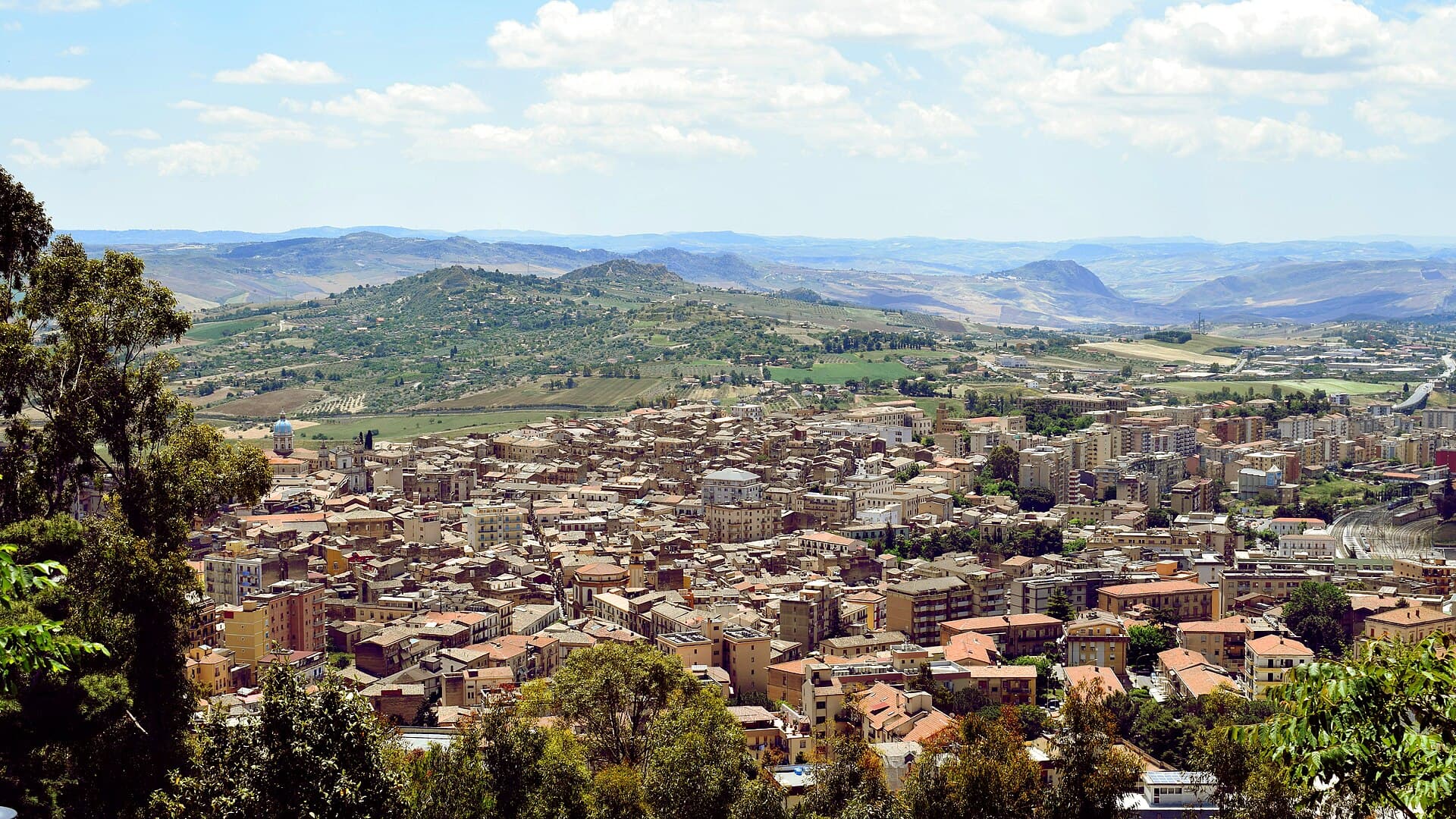
Castello di Pietrarossa
Il nome stesso di Caltanissetta porta con sé un'origine affascinante, legata a un'antica fortezza.
La storia completa si sblocca nel tour
 AlessandroAM / CC BY-SA 4.0, via Wikimedia Commons
Tour audio autoguidato di Caltanissetta — percorso GPS a piedi, riproduzione offline, narrazione coinvolgente in 32 lingue.
“Caltanissetta: Dove gli echi dell'antichità incontrano lo splendore barocco nel cuore della Sicilia.”
Non le cartoline. Le storie che nemmeno i locali conoscono — sussurrate nel tuo orecchio, proprio dove sono accadute.
Il nome stesso di Caltanissetta porta con sé un'origine affascinante, legata a un'antica fortezza.
I magnifici affreschi all'interno della Cattedrale di Santa Maria la Nova testimoniano silenziosamente un periodo di profonda ricostruzione.
Questo grande palazzo barocco, testimonianza del potere aristocratico, racchiude una storia di ambizione bruscamente interrotta.
Scopri ogni segreto di Caltanissetta
Ogni indirizzo, ogni rivelazione completa — nel tuo orecchio, proprio dove è accaduta.
Scegli le tue tappe. Cammini. La voce rivela ciò che gli altri perdono.

Il tuo tour audio autoguidato di Caltanissetta è pronto — scegli i tuoi punti di interesse, seleziona la tua lingua e inizia nel momento in cui arrivi.
AcquistaLume include una guida in realtà aumentata. Alza il telefono: la fotocamera mostra la strada davanti a te, con una freccia luminosa sovrapposta all'immagine reale che punta sempre verso la tua prossima tappa — nessuna mappa da decifrare, nessuna svolta sbagliata. Come tutto in Lume, funziona completamente offline.
Caltanissetta, una città nel cuore della Sicilia, invita all'esplorazione attraverso strati di tempo, dagli antichi insediamenti Sicani alla grandezza del Barocco. Situata sui Monti Erei, il centro cittadino s'innalza a 568 metri, rendendola la settima città capoluogo più alta d'Italia. La sua posizione interna le conferisce un carattere distintivo, lontana dal trambusto costiero, immersa in un paesaggio di dolci colline e siti archeologici.
Il punto strategico della città, che domina la valle del fiume Salso, ha plasmato il suo passato, attirando diverse civiltà nelle sue fertili terre. Oggi, Caltanissetta funge da centro di mercato e base per scoprire l'autentico fascino della Sicilia centrale, offrendo un connubio di patrimonio culturale e splendore naturale.
La storia di Caltanissetta risale al IV millennio a.C., con testimonianze di manufatti dell'età del Bronzo e tombe a camera scavate nella roccia da insediamenti Sicani come Sabucina e Gibil Gabib. Questi primi abitanti incontrarono in seguito l'influenza della colonia greca di Gela intorno al VI secolo a.C. e successivamente di Akragas (l'odierna Agrigento). Tracce romane sono anch'esse evidenti, inclusi manufatti da tombe a pozzo e l'Abbazia di Santo Spirito, che iniziò come avamposto militare romano.
Si ritiene che la città moderna sia stata fondata nel X secolo durante il periodo islamico della Sicilia. Fu allora che il nome 'Caltanissetta' si crede abbia avuto origine dall'arabo 'Qal'at an-Nisa,' che significa 'Castello delle Donne.' Gli Arabi riconobbero l'importanza strategica dell'area, stabilendola come centro fortificato.
Nel 1086, Ruggero I d'Altavilla iniziò la conquista normanna della Sicilia, rivendicando Caltanissetta in quell'anno. Sotto il dominio normanno, la città fu trasformata in un feudo. L'Abbazia di Santo Spirito, originariamente un avamposto militare romano, fu convertita in abbazia benedettina dal Conte Ruggero I nel 1151, fungendo da centro di fede e sapere. Dopo varie transizioni, l'influente famiglia Montcada di Paternò prese il controllo nel 1405, governando la Contea di Caltanissetta fino al 1812. Lasciarono un segno considerevole sulla città, incluso il Palazzo Moncada in stile barocco.
Dal XIX secolo in poi, Caltanissetta conobbe una notevole espansione industriale grazie ai suoi estesi giacimenti di zolfo, guadagnandosi la designazione di 'capitale mondiale dello zolfo.' Questo periodo portò prosperità ma anche condizioni di lavoro dure e disumane per i minatori, noti come 'zolfatai.' Nel 1862, il primo istituto minerario d'Italia, l'Istituto Sebastiano Mottura, fu fondato a Caltanissetta.
La città partecipò attivamente alle rivolte del 1848 e del 1860, accogliendo Garibaldi e i Mille prima della sua annessione al Regno d'Italia. Tuttavia, il XX secolo portò difficoltà, inclusi pesanti bombardamenti anglo-americani nel 1943 durante la Seconda Guerra Mondiale, che causarono numerose vittime e danneggiarono la Cattedrale. Il dopoguerra vide il declino irreversibile dell'industria dello zolfo, con la chiusura di tutte le miniere locali entro la fine degli anni '80.
Iniziate la vostra esplorazione da Piazza Garibaldi, la piazza centrale della città, dove sorge la Cattedrale di Santa Maria la Nova. Consacrata nel 1622, la Cattedrale presenta una pianta a croce latina con tre navate e elaborate decorazioni a stucco. Nelle vicinanze, la Fontana del Tritone conferisce un tocco classico alla piazza.
A pochi passi si trova Palazzo Moncada, un palazzo barocco costruito a metà del XVII secolo. La sua facciata in pietra è ornata da figure antropomorfe e zoomorfe scolpite che sostengono un lungo balcone. Oggi, il palazzo restaurato ospita mostre, eventi culturali e concerti, e conserva esposizioni permanenti sulla famiglia Moncada e sullo scultore locale Michele Tripisciano.
Per un viaggio nella storia antica, visitate il Museo Archeologico di Caltanissetta, situato vicino all'Abbazia di Santo Spirito. Esso custodisce una vasta collezione di reperti dall'epoca preistorica al medioevo, principalmente da siti come Sabucina e Gibil Gabib. L'Abbazia di Santo Spirito stessa, costruita da Ruggero il Normanno nel 1095 su un precedente insediamento arabo fortificato, merita anch'essa una visita. Dal centro storico si possono raggiungere anche i resti del Castello di Pietrarossa, che offre ampie vedute sulla città e sulla valle del Salso.
I periodi più gradevoli per visitare Caltanissetta sono la primavera (da aprile a giugno) e l'inizio dell'autunno (settembre-ottobre). Durante queste stagioni intermedie, il clima è piacevole, con temperature medie che variano dai 19°C ai 29°C, ideali per passeggiate e attività all'aperto. Le estati (da giugno ad agosto) possono essere calde e soleggiate, con temperature che occasionalmente superano i 40°C, adatte a chi apprezza il clima più caldo. Gli inverni (da dicembre a febbraio) sono miti, con periodi soleggiati alternati a pioggia, e massime medie di 14°C e minime di 3°C.
Caltanissetta è generalmente una destinazione sicura per i viaggiatori, ma si consigliano le precauzioni d'uso, in particolare dopo il tramonto. La valuta locale è l'Euro (EUR), che può essere cambiato in banche, uffici di cambio o prelevato da sportelli bancomat ampiamente disponibili.
Per arrivare a Caltanissetta, gli aeroporti più vicini sono quelli di Palermo (PMO) e Catania (CTA). Da lì, si può viaggiare in treno o noleggiare un'auto. Caltanissetta Centrale è la stazione ferroviaria principale, situata in Piazza Roma, che offre collegamenti con le principali città siciliane come Palermo e Catania. Il terminal degli autobus interurbani si trova in Via Rochester, con servizi frequenti che collegano Caltanissetta ad altre città siciliane. All'interno della città, gli autobus locali gestiti da SCAT sono la principale forma di trasporto pubblico, con tutte le linee che iniziano e terminano alla stazione centrale.
Caltanissetta — coreano, cinese, ebraico e altre 29 lingue, ogni tappa narrata da una voce madrelingua. La più ampia scelta di lingue tra i tour audio autoguidati.
Disponibile in: