Camden Waterfront
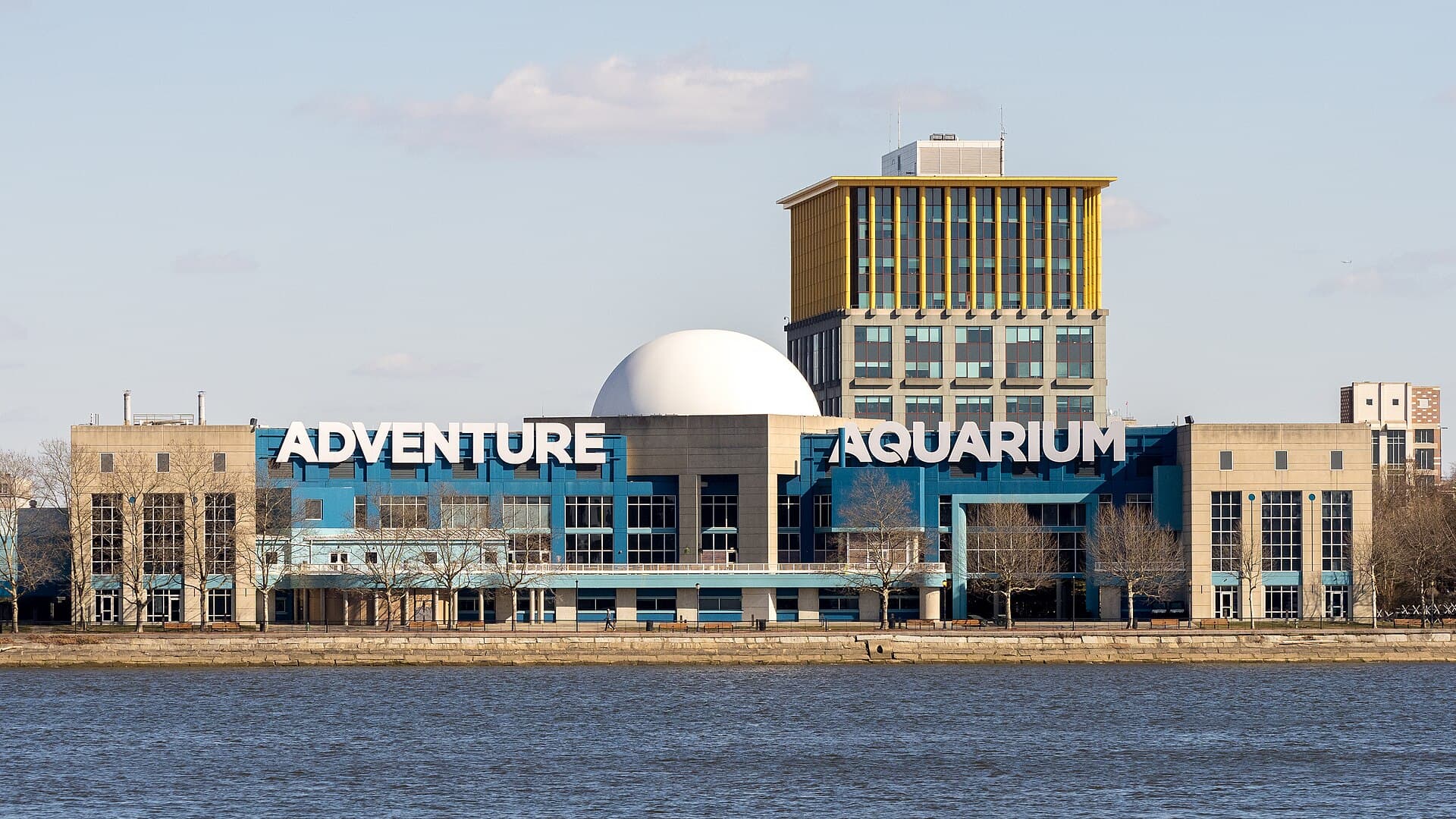
Más allá del impresionante acorazado USS New Jersey, un sorprendente residente acuático tiene su hogar en el Adventure Aquarium.
La historia completa se desbloquea en el tour
 ajay_suresh / CC BY 2.0, via Wikimedia Commons
Tour de audio autoguiado de Camden — ruta GPS a pie, reproducción offline, narración en 32 idiomas.
“Donde el río Delaware refleja el espíritu perdurable de una ciudad.”
No las postales. Las historias que ni los locales conocen — al oído, justo donde ocurrieron.
Más allá del impresionante acorazado USS New Jersey, un sorprendente residente acuático tiene su hogar en el Adventure Aquarium.
El primer autocine de un querido pasatiempo estadounidense hizo su debut en Camden, aunque su duración fue inesperadamente breve.
El célebre poeta estadounidense Walt Whitman pasó sus últimos años en Camden, pero su conexión con la ciudad se extiende más allá de su residencia.
Descubre todos los secretos de Camden
Cada dirección, cada revelación al completo — a tu oído, justo donde ocurrió.
Eliges tus paradas. Caminas. La voz te revela lo que los demás ignoran.
Tu tour de audioguía por Camden te espera — elige tus lugares, tu idioma y empieza al llegar.
ComprarLume incluye una guía de realidad aumentada. Levanta el móvil y su cámara muestra la calle que tienes delante, con una flecha luminosa sobre la imagen real que siempre apunta a tu próxima parada — sin mapas que descifrar, sin giros equivocados. Como todo en Lume, funciona completamente sin conexión.
Camden, Nueva Jersey, despliega una narrativa convincente, situada al otro lado del río Delaware desde Filadelfia. Una vez un titán industrial y un centro económico secundario para la región, la ciudad ha navegado períodos de declive económico y dificultades sociales. Sin embargo, las últimas décadas han sido testigos de sustanciales esfuerzos de revitalización, remodelando partes de su paisaje y centrándose en el desarrollo comunitario y la expansión económica.
Hoy, Camden es reconocida por su cambiante paseo marítimo, que presenta atracciones prominentes como el acorazado USS New Jersey y el Adventure Aquarium. La ciudad también sirve como nexo para la educación y la medicina, con instituciones como el Cooper University Hospital y los campus de la Universidad de Rutgers y la Universidad de Rowan que contribuyen significativamente al empleo local. Con una población diversa e iniciativas en curso para mejorar la calidad de vida, Camden es una ciudad que está activamente forjando su próximo capítulo.
La historia de Camden se remonta a la población indígena Lenape que habitaba el valle del Delaware. La actividad europea comenzó con colonos holandeses y suecos que buscaban controlar el comercio de pieles, con la Compañía Holandesa de las Indias Occidentales construyendo Fort Nassau en 1626. La expansión cuáquera, junto con la introducción del alcohol y las enfermedades, llevó a una disminución de la población Lenape. El desarrollo de un sistema de transbordadores a través del río Delaware impulsó el comercio entre Fort Nassau y Filadelfia, lo que llevó al establecimiento de asentamientos por parte de familias como los Cooper y los Kaighn.
En 1773, Jacob Cooper desempeñó un papel fundamental en el desarrollo del área, que fue nombrada Camden en honor a Charles Pratt, 1er Conde de Camden, un libertario civil británico que apoyó a las colonias americanas. Camden fue incorporada oficialmente como ciudad el 13 de febrero de 1828. Durante más de 150 años, sirvió como centro económico y de transporte secundario para el área de Filadelfia. Principios del siglo XIX trajeron una transformación significativa con la concesión de una de las primeras vías férreas de los Estados Unidos, el ferrocarril de Camden y Amboy, en 1830. Este ferrocarril, combinado con las terminales de ferry, facilitó los viajes entre la ciudad de Nueva York y Filadelfia, vigorizando la población y el comercio de Camden.
La ubicación estratégica de la ciudad entre vías fluviales y su proximidad a Filadelfia la convirtieron en un lugar ideal para diversas industrias, incluyendo la madera, la manufactura y las plantas químicas. A principios del siglo XX, Camden se convirtió en un centro de innovación musical y de entretenimiento con la presencia de la Victor Talking Machine Company, más tarde RCA Victor. La inmigración de Europa del Este también remodeló la demografía de la ciudad, convirtiéndolos en el grupo étnico principal para 1920.
La apertura del Puente Benjamin Franklin en 1926, que conecta Nueva Jersey y Pensilvania, tenía como objetivo reducir el tráfico de transbordadores, pero también afectó la vivienda en el norte de Camden, lo que llevó a la destrucción de algunas residencias de bajos ingresos y dividió efectivamente la ciudad. Después de la Segunda Guerra Mundial, Camden experimentó una constante partida de residentes y negocios de ingresos medios, lo que resultó en la caída de los valores de las propiedades, una base impositiva decreciente y concentraciones de pobreza. Los esfuerzos para revitalizar Camden comenzaron en 1980, con iniciativas como la construcción de una prisión estatal frente al río y una incineradora de basura a vapor, que encontraron oposición local. En 1999, la ciudad se declaró en bancarrota, lo que llevó a la ayuda estatal y a la asunción de las finanzas de Camden por parte del estado.
A pesar de estos desafíos, Camden ha visto un renovado enfoque en la reurbanización y las iniciativas lideradas por la comunidad. La reestructuración de la fuerza policial en 2013 se ha atribuido a una disminución significativa de la delincuencia violenta, con informes generales de delincuencia en 2020 un 74% menos en comparación con 1974. A enero de 2026, los homicidios en la ciudad habían disminuido un 82% desde 2012, y la ciudad experimentó su primer verano sin homicidios en 50 años en 2025. Organizaciones sin fines de lucro y asociaciones, como la Agencia de Reurbanización de Camden y Cooper's Ferry Partnership, están trabajando activamente en la adquisición de terrenos, la reutilización de sitios subutilizados y el desarrollo de nuevos parques, viviendas y empresas económicas. La reurbanización de barrios como Fairview Village, que incluye la rehabilitación y nueva construcción de viviendas asequibles, un centro comunitario y espacios comerciales, ejemplifica estos esfuerzos en curso.
El Camden Waterfront sirve como punto central para los visitantes, presentando una variedad de atracciones. El Museo y Memorial del Acorazado USS New Jersey es el acorazado más condecorado de América, permanentemente amarrado en el río Delaware. Los visitantes pueden embarcarse en recorridos interactivos, explorando los camarotes, el puente de navegación e incluso subiendo dentro de una torreta de cañón de 16 pulgadas. Cerca, el Adventure Aquarium exhibe más de 15,000 animales acuáticos, incluida la colección más grande de tiburones en la Costa Este, y es uno de los dos únicos acuarios en el país con un tiburón martillo. También cuenta con exhibiciones interactivas, un cine 4D y oportunidades para tocar rayas.
Para las familias, el Camden Children's Garden se extiende por cuatro acres en el paseo marítimo, proporcionando un espacio para descubrir el mundo natural con jardines y una casa de mariposas. El Freedom Mortgage Pavilion (anteriormente BB&T Pavilion) es un anfiteatro abierto todo el año que alberga grandes conciertos, producciones de Broadway y eventos familiares. Más allá del paseo marítimo, aquellos interesados en la historia pueden visitar la Casa de Walt Whitman, la residencia final del renombrado poeta estadounidense. La ciudad también ofrece varios parques, incluido el Wiggins Park and Marina, que ofrece un paseo a lo largo del río Delaware con vistas al horizonte de Filadelfia y alberga festivales y conciertos al aire libre.
Los momentos más agradables para visitar Camden para actividades de clima cálido son desde principios de junio hasta principios de julio y desde principios de agosto hasta finales de septiembre. Durante estos períodos, las temperaturas máximas diarias promedio superan los 25°C (77°F), creando condiciones cómodas para explorar las atracciones al aire libre. Julio es el mes más cálido, con una máxima promedio de 30°C (86°F). La primavera y principios del otoño también ofrecen temperaturas agradables y humedad moderada, ideales para actividades al aire libre. El mes con más precipitaciones suele ser julio, mientras que febrero experimenta la menor cantidad.
Camden está situada al otro lado del río Delaware desde Filadelfia, Pensilvania, lo que la hace fácilmente accesible desde el área metropolitana más grande. Hay opciones de transporte público disponibles, y la ciudad está conectada a las principales autopistas. Para quienes viajan en coche, se proporciona estacionamiento en las atracciones del paseo marítimo. Muchas atracciones, como el Acorazado USS New Jersey y el Adventure Aquarium, recomiendan comprar boletos o hacer reservaciones con anticipación, especialmente durante las temporadas altas. La ciudad alberga una variedad de organizaciones sin fines de lucro que ofrecen servicios de salud y sociales a los residentes. Si bien los esfuerzos de revitalización están en curso, los visitantes deben ser conscientes de las diversas condiciones de los barrios de la ciudad.
Camden en coreano, en chino o en hebreo — y 29 idiomas más, cada parada narrada por una voz nativa. La mayor variedad de idiomas de cualquier audioguía autoguiada.
Disponible en: