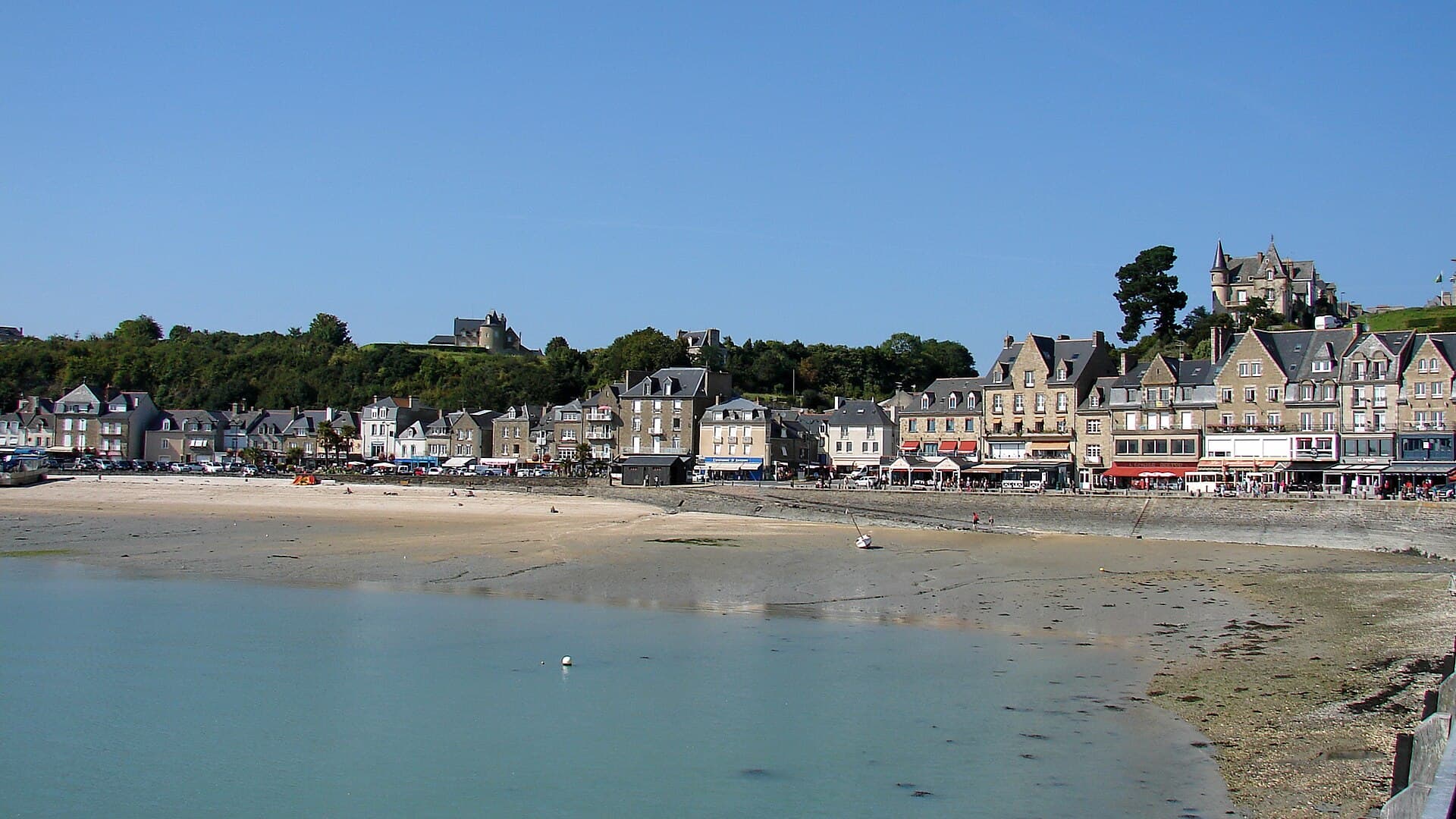
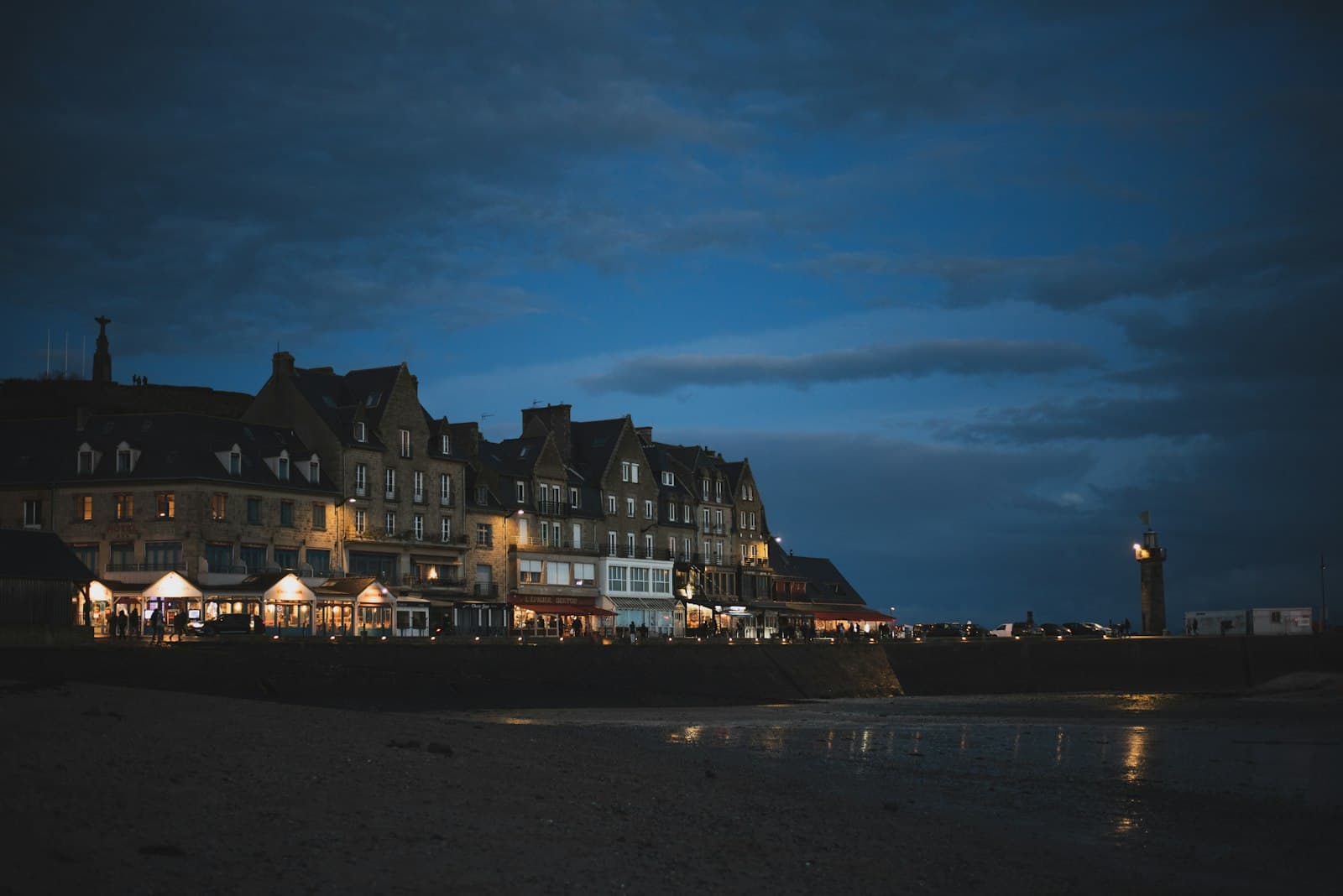
Cancale, FranceH. Helmlechner / CC BY-SA 4.0, via Wikimedia Commons
FR

Cancale

Cancale: Where the tide reveals a world of flavor.

The secrets of Cancale

Cancale, as no one tells it.

Not the postcards. The stories even locals don't know — whispered in your ear, right where they happened.

3 secrets below. Many more wait inside the tour.
The Oyster Market (Marché aux Huîtres)

The beach at Cancale's oyster market is paved with more than just sand.

Full story unlocks in the tour
The Name 'Cancale'

Cancale's name might hint at both its geography and its historic industry.

Full story unlocks in the tour
Notre Dame du Verger Chapel

Along Cancale's coastal path, a chapel holds a significant, yet somber, connection to the sea.

Full story unlocks in the tour
The full tour

Discover every secret of Cancale

Every address, every reveal in full — in your ear, right where it happened.

Get the key to Cancale

You pick your stops. You walk. The voice reveals what the others miss.

Choose your time

How long do you have in Cancale?

No tours available yet. Check back soon — we're preparing them.

About Cancale

The story of Cancale

Cancale, a fishing village on Brittany's Emerald Coast, is known as France's oyster capital. It faces the Bay of Mont-Saint-Michel, where the nutrient-rich waters contribute to the distinct flavor of its shellfish. The town's identity is deeply intertwined with the sea, from its active port to the extensive oyster beds that become visible at low tide.

Travelers are drawn to Cancale for its authentic Breton atmosphere, dramatic coastal scenery, and, of course, its celebrated oysters. The town offers a relaxed pace, inviting strolls along the harbor, explorations of its charming streets, and culinary experiences centered around fresh seafood. Whether you are an oyster enthusiast or simply seeking a tranquil seaside escape, Cancale provides a memorable taste of Brittany.

History

From Roman Harvests to Royal Delicacies

Cancale's story is inextricably linked to the sea and, more specifically, to oysters, with the trade dating back to Roman times when the quality of its seafood was already appreciated. The town's name itself may reflect this heritage, possibly stemming from a Celtic term for 'rock' or a Latin term for oyster enclosures.

In the 6th century, Saint Méen from Great Britain established a parish here, and during medieval times, Cancale evolved into a key port for salt, wine, and wheat trade. The 17th century saw Daniel de la Touche, Seigneur de la Ravardière, depart from Cancale to establish 'equinoctial France' in Brazil. The 18th century marked a significant turning point, as Cancale's oyster industry gained national and international recognition. Legend has it that King Louis XIV had Cancale oysters delivered daily to the Palace of Versailles.

The 19th century brought a surge in cod fishing, and the town became known as the 'oyster capital,' also being the birthplace of the bisquine, a traditional two-masted fishing boat. During this era, while men were at sea for months on cod fishing expeditions to Newfoundland, the women of Cancale managed the town, contributing to their reputation for candor. Today, Cancale preserves its maritime and cultural heritage, which can be explored at the Musée des Arts et Traditions Populaires and the tidal hall, now an exhibition space. The oyster farming practices of Cancale have even been recognized by UNESCO as intangible cultural heritage.

What to see

Cancale offers a blend of maritime charm and natural beauty. Begin at the Port de la Houle, the town's active heart, lined with colorful facades, restaurants, and shops. Here, you can watch fishing boats and oyster farmers, and enjoy the evening light over the bay. A stroll along the pier provides excellent views of Cancale from the water.

A highlight is the Marché aux Huîtres (Oyster Market) at the end of the port, where local vendors sell freshly shucked oysters directly from the beds. You can enjoy them with a glass of white wine while sitting on the sea wall, overlooking the oyster farms.

For sweeping coastal views, head to Pointe du Grouin, a rugged headland a few kilometers from Cancale. From here, you can see Mont Saint-Michel in the distance and observe seabirds. The Pointe du Grouin is also a starting point for the GR34 coastal path, offering walks along the Emerald Coast.

In the upper town, visit Eglise Saint-Méen, a small church built between 1715 and 1727, featuring stained-glass windows and tributes to lost seafarers. You can also explore the Musée de la Ferme Marine to learn about oyster farming history and techniques, and even enjoy an oyster tasting.

Consider a cruise on La Cancalaise, a replica of a traditional bisquine fishing boat, offering tours of the Bay of Mont-Saint-Michel. For a quieter experience, explore the nearby beaches like Port Mer, Plage de Port-Briac, or Plage du Verger.

When to visit

The most pleasant time to visit Cancale is between May and September, when days are long, temperatures are mild, and rain is less frequent. July and August are the most popular months, offering sunny weather ideal for coastal walks and oyster tasting. Spring and early summer see fewer crowds, while autumn provides a peaceful atmosphere and opportunities to enjoy the oyster harvest. The warm season, with average daily high temperatures above 67°F (19°C), typically lasts from mid-June to mid-September.

Practical

Cancale is easily accessible, located approximately 16 km from Saint-Malo and 48 km from Mont Saint-Michel. From Nantes, it's a 2-hour drive via the N137 to Rennes and then the D137. If traveling from Paris, the A81 to Rennes and then the D137 will take about 4 hours.

The town itself is small, with the port area being the main hub of activity. While there isn't extensive public transport within Cancale, many attractions are walkable, especially between the port and the upper village. For exploring further afield, such as Pointe du Grouin or nearby towns like Saint-Malo and Dinard, a car is recommended. Accommodations range from hotels to bed and breakfasts, with options available in the town and surrounding communes.

Good to know
What is Cancale known for?
Cancale is widely known as the 'oyster capital' of Brittany and France, celebrated for its oysters harvested from the Bay of Mont-Saint-Michel.
Can you eat oysters directly at the market in Cancale?
Yes, at the Marché aux Huîtres (Oyster Market) at the Port de la Houle, you can purchase freshly shucked oysters from local vendors and enjoy them on the spot, often with a view of the bay.
What is the Pointe du Grouin?
Pointe du Grouin is a rugged headland near Cancale offering sweeping coastal views of the Emerald Coast and, on clear days, Mont Saint-Michel. It's also a popular starting point for walking the GR34 coastal path.
Are there other things to do in Cancale besides eating oysters?
Beyond oysters, visitors can walk the coastal paths, visit the Marine Farm to learn about oyster farming, explore the Port de la Houle, visit Eglise Saint-Méen, and take a cruise on a traditional bisquine boat.
How far is Cancale from Mont Saint-Michel?
Cancale is approximately 48 kilometers (about 30 miles) from Mont Saint-Michel, and on clear days, you can see its silhouette from Cancale.
What is the 'Emerald Coast'?
The 'Emerald Coast' (Côte d'Émeraude) is the name given to the northern part of Brittany's coastline, characterized by the green hue of its waters, cliffs, and rock formations.
Cancale
From€9.00
No booking · activate anytime · 12h to walk it
Get the key to Cancale