A prisoner spent eleven years in a cell on the island you can see from the Croisette, and for three centuries nobody has agreed on his name.
Spike / CC BY-SA 4.0, via Wikimedia CommonsCannes
“A fishing village that learned to wear a tuxedo.”
Cannes, as no one tells it.
Not the postcards. The stories even locals don't know — whispered in your ear, right where they happened.
Walk past the masked prisoner's famous cell and you'll miss the men who suffered longer in the rooms beside it.
The most famous film festival on earth was scheduled to open in September. The date matters more than you'd think.
Discover every secret of Cannes
Every address, every reveal in full — in your ear, right where it happened.
You pick your stops. You walk. The voice reveals what the others miss.


How long do you have in Cannes?
No tours available yet. Check back soon — we're preparing them.
The story of Cannes
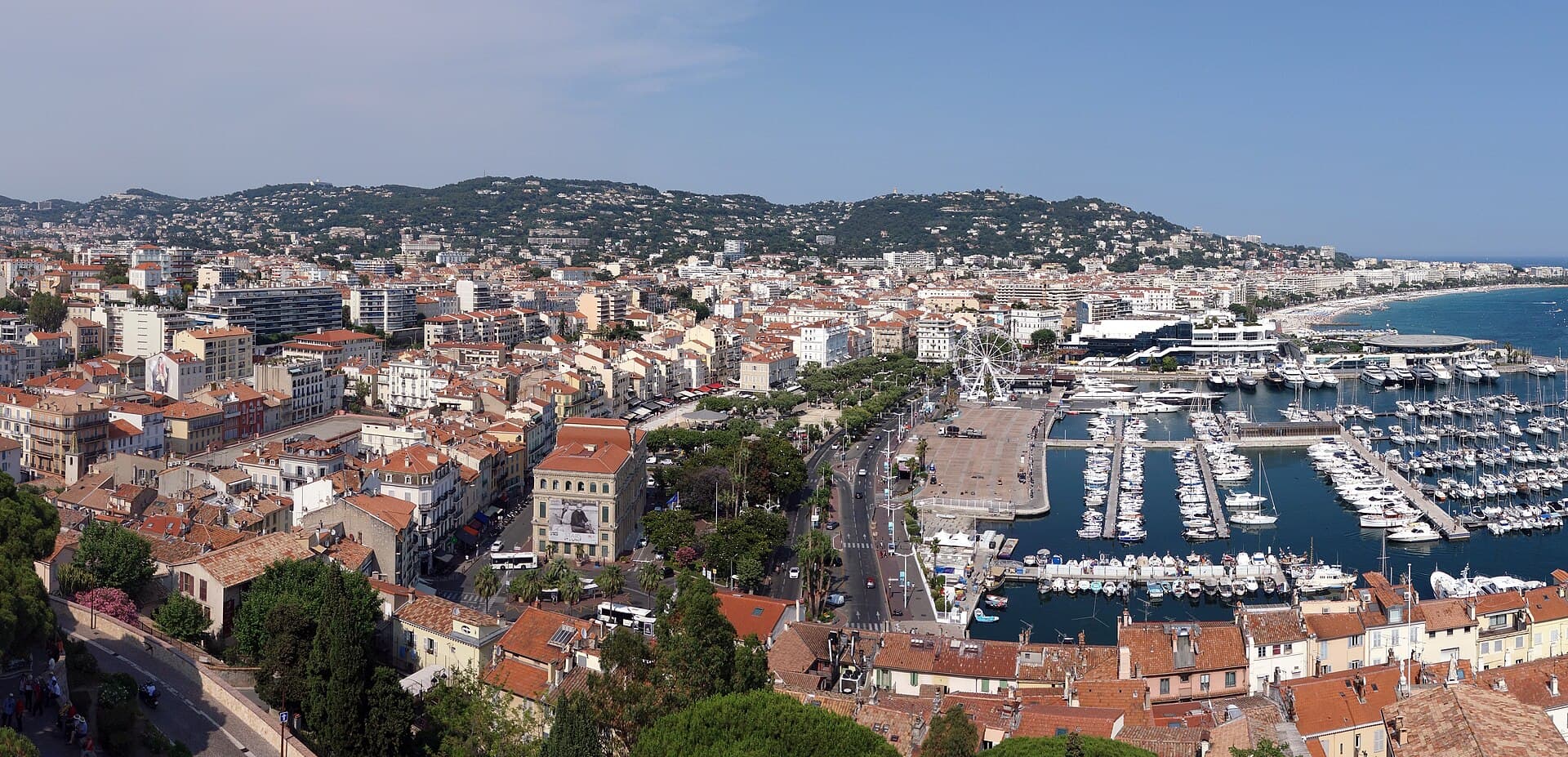
Cannes wears its glamour on the outside, which is exactly why most visitors never see the town underneath it. The Croisette, the palms, the eleven days of red carpet in May, these are real, but they are also recent and thin. Stand on the seafront and look across the water: two low green islands sit a mile offshore, and on one of them a prisoner whose name no one knows was locked away for eleven years, while on the other monks have been making wine since the fall of Rome.
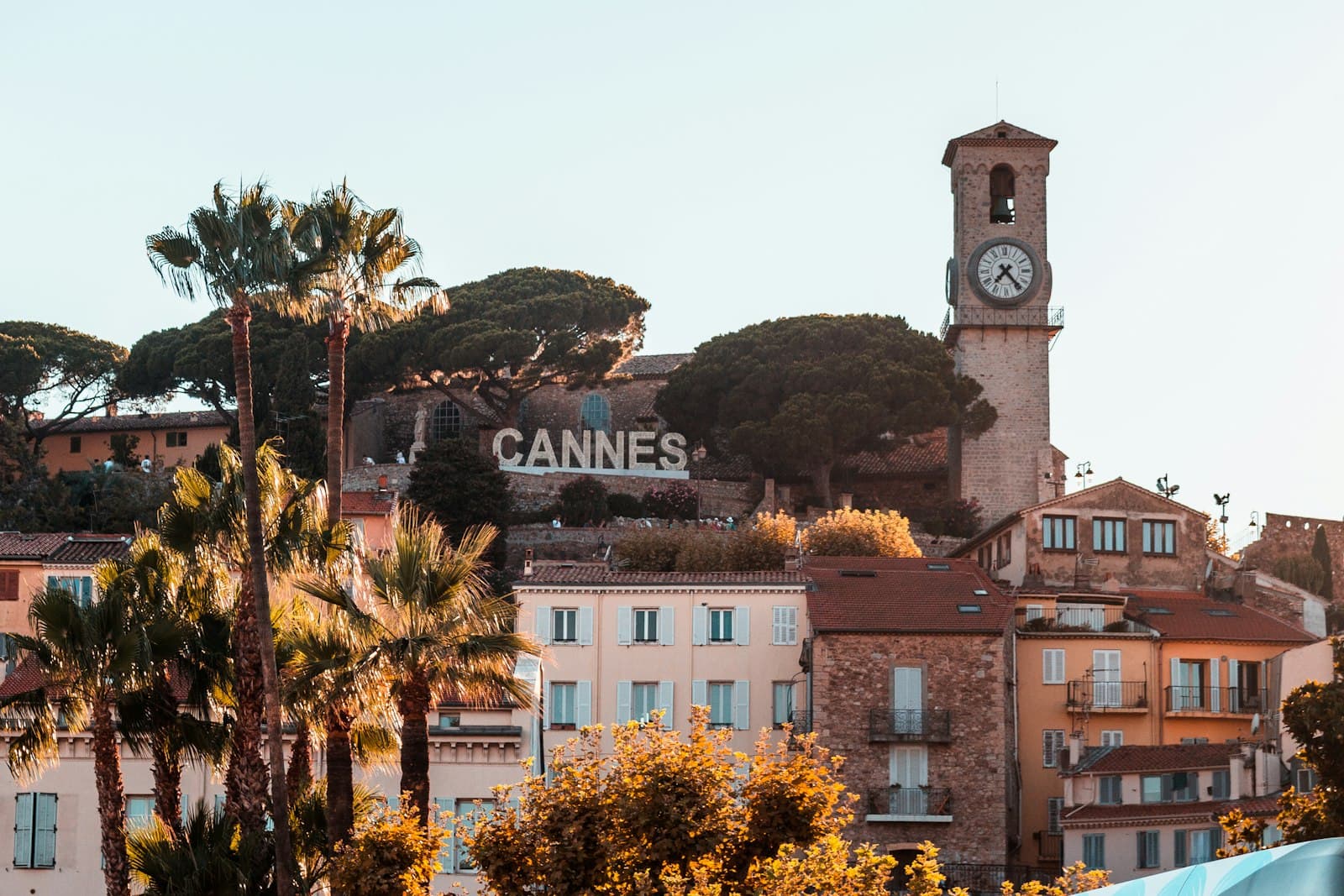
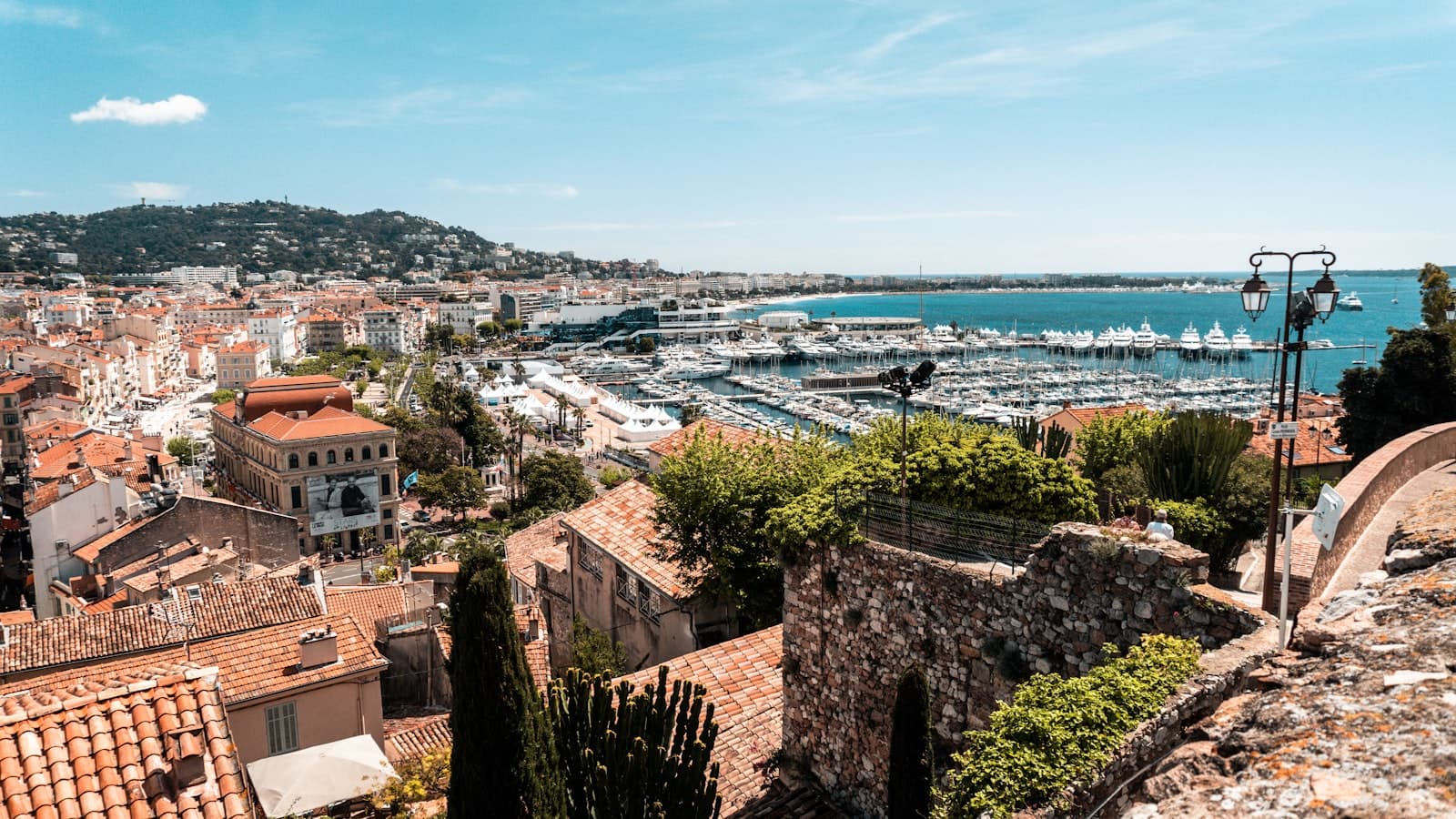
Climb the hill of Le Suquet behind the old port and the whole equation flips. Up here, in the original fishing village, a square watchtower from 1385 looks down on the marina full of superyachts. Cannes spent most of its life as a place where men rowed out at night and came back with the morning's fish. The tuxedo came later, and it was an Englishman's idea.
This walk is about the town behind the festival: the cell, the psalms, the cardboard cathedral, the courtesan and the domes, the island that quietly refuses to change.
From fishing village to Riviera
Cannes began on the hill the locals call Le Suquet, the original site of the town and once a Roman lookout. After Rome fell, Saracen raiders harried the coast for centuries until the monks of Lérins Abbey, on the island of Saint-Honorat offshore, took the mainland in hand and fortified it. Their square tower, raised on Le Suquet in 1385, doubled as watchpost and refuge. Below it, by the 17th century, a fishing village had settled along the shore, its men rowing out at night to land the morning's catch.
The accident that made Cannes
For most of its history Cannes was a place you passed through. That changed in 1834, when the former British Lord Chancellor, Henry Brougham, travelling south with an ailing daughter, found his road into Italy blocked at the River Var by a cholera quarantine. Forced to stop, he stayed at an inn in Cannes, ate the local fish soup, liked what he saw, and built himself a villa. He talked his wealthy English friends into following. They planted palms and mimosa, the British and then the Russians came to winter on the coast, and the sleepy village became a resort.
A festival born against fascism
The film festival was conceived in 1938 as France's reply to Venice, whose own festival Mussolini and Hitler had bent into a propaganda tool. Cannes was chosen in May 1939; the first edition was set for that September. It collapsed before it began. War was declared on 3 September 1939, the festival was abandoned, and only one film was ever shown. The festival the world knows started over in 1946, and it has defined the town's image ever since.
Le Suquet and the old port
Start where Cannes started. The lanes of Le Suquet climb from the Vieux Port to the square tower of 1385 and the church of Notre-Dame d'Espérance, whose Renaissance bell tower was finished in 1627. The summit, the Castre, holds the old castle of the Lérins monks, now a museum. From the top you get the bay, the islands, and the whole geography of the town at a glance.
Marché Forville
At the foot of the hill, the Marché Forville is the working stomach of Cannes, first built as a covered market in 1884 and rebuilt in 1934. Provençal produce, fish off the boats, cheese and flowers, busiest in the morning and shut on Mondays for a brocante.
The Lérins Islands
A 15-to-20-minute ferry from the Old Port reaches Île Sainte-Marguerite, where Fort Royal holds the Man in the Iron Mask's cell and the Musée de la Mer. The island is car-free, ringed by a 9 km path through Aleppo pines. The smaller Île Saint-Honorat belongs to its Cistercian monastery; you can visit the abbey, walk the vineyards, and buy the monks' wine.
The Croisette and the Palais
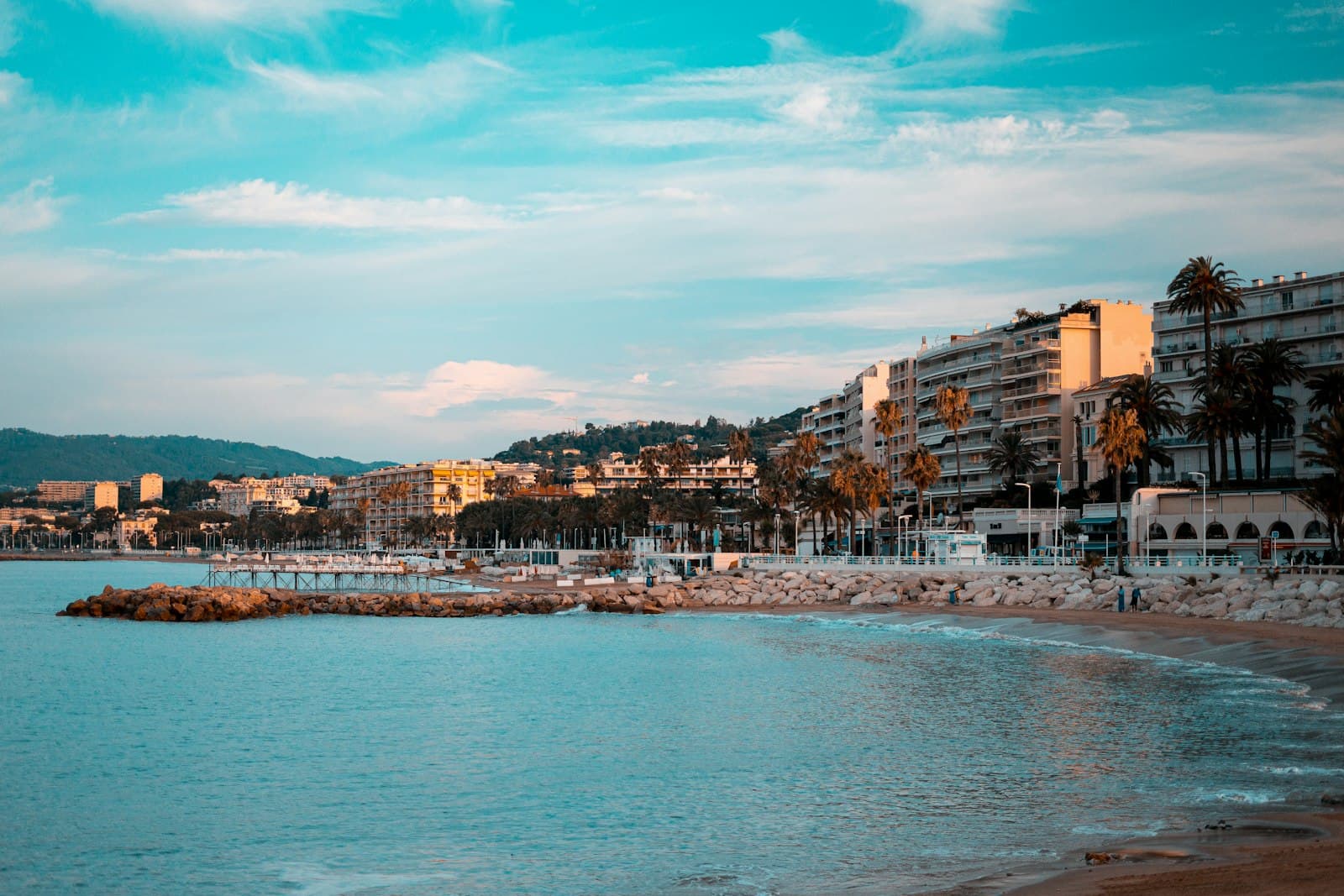
The Boulevard de la Croisette runs the seafront past the grand hotels, the Carlton with its two famous domes among them. Beside the Palais des Festivals, the Allée des Étoiles carries the handprints of the stars. You can see the red-carpet steps year-round.
Spring and autumn
May to June and September to October give you warm weather, swimmable sea and gardens in bloom without the deep-summer crush. These are the best windows for the islands and Le Suquet.
The festival
The Cannes Film Festival runs roughly eleven days in mid-May; in 2026 it was 12 to 23 May. The town is electric but packed, expensive, and large parts of the Palais zone are badge-only. Come for the spectacle, not for a quiet walk.
Summer
July and August are hot and crowded, the beaches full, the prices at their peak. The Lérins islands are a cool, green escape on the hottest days.
Winter
Quiet, mild and cheap. Some island ferries and restaurants run reduced schedules, but Le Suquet and the markets carry on, and you get the place almost to yourself.
Getting there
Nice Côte d'Azur airport is about 25 km away; trains run along the coast and stop at Cannes' central station. The old town and Croisette are walkable from there.
Getting to the islands
Ferries to the Lérins Islands leave from the Vieux Port, roughly 15 to 20 minutes across. No cars, bikes or scooters are allowed on the islands, so plan to walk. Bring water and sun cover; shade is limited on Sainte-Marguerite's paths.
Getting around town
Cannes is compact and best on foot. Le Suquet's climb is steep but short. The seafront is flat the length of the Croisette.
Money and timing
Prices spike enormously during the festival and high summer. Marché Forville is liveliest in the morning. Check the last ferry time before you cross to the islands, as the monks of Saint-Honorat ask all visitors to leave by the final boat.
Respect
Saint-Honorat is a living monastery. Dress and behave accordingly, and keep to the marked paths and vineyards.
- Is the Man in the Iron Mask's cell really in Cannes?
- Yes. The prisoner was held at Fort Royal on Île Sainte-Marguerite, a short ferry from the Old Port, from 1687 to 1698, and his cell can be visited inside the fort's museum. His identity has never been confirmed; the 'iron' mask was a later embellishment, as contemporaries described black velvet.
- Can I visit Cannes outside the film festival?
- Absolutely, and most of the year is calmer and cheaper. The festival takes about eleven days in mid-May (12 to 23 May in 2026); the rest of the year the Croisette, Le Suquet, the markets and the islands are all open and far less crowded.
- How do I get to the Lérins Islands?
- Ferries leave from the Vieux Port and take 15 to 20 minutes to Île Sainte-Marguerite. The islands are car-free, so you explore on foot; Sainte-Marguerite has a 9 km loop path, and Saint-Honorat is home to a working monastery.
- Why are there monks on an island off Cannes?
- Île Saint-Honorat has had a monastic community since the 5th century. Around thirty Cistercian monks live there today, tend the vineyards themselves and produce about 35,000 bottles of wine a year. You can visit the abbey and buy the wine, but there are no cars or hotels.
- What is Le Suquet and is it worth the climb?
- Le Suquet is the original Cannes, the old fishing village on the hill above the port, with a square watchtower from 1385 and the church of Notre-Dame d'Espérance. The climb is steep but short, and the summit gives the best view of the bay and the islands.
- What are the two domes on the Carlton hotel about?
- A long-standing local legend claims architect Charles Dalmas shaped the Carlton's twin cupolas after the breasts of La Belle Otéro, a famous Belle Époque courtesan. It is almost certainly a myth, but the hotel embraces it and named its top-floor restaurant after her.