La Finca Emlen Physick
Esta grandiosa casa victoriana ofrece una ventana a la vida del siglo XIX, pero también guarda una clave sutil de la identidad arquitectónica de la ciudad.
La historia completa se desbloquea en el tour
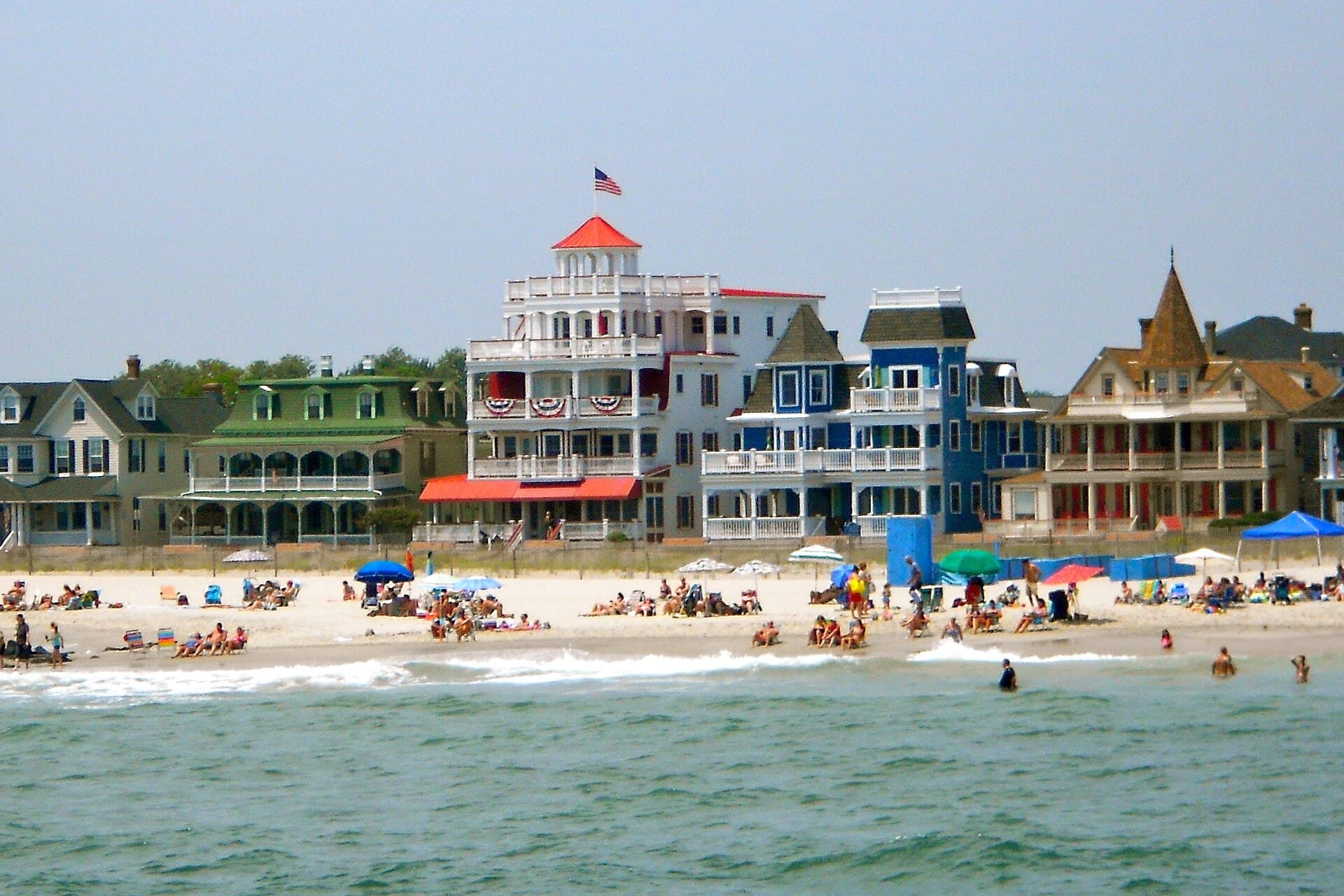 Smallbones / CC0, via Wikimedia Commons
Tour de audio autoguiado de Cape May — ruta GPS a pie, reproducción offline, narración en 32 idiomas.
“Donde la elegancia victoriana saluda al mar.”
No las postales. Las historias que ni los locales conocen — al oído, justo donde ocurrieron.
Esta grandiosa casa victoriana ofrece una ventana a la vida del siglo XIX, pero también guarda una clave sutil de la identidad arquitectónica de la ciudad.
De pie como centinela desde 1859, este prominente faro no es la primera estructura en guiar a los barcos más allá de Cape May Point.
Más allá de sus coloridas fachadas, se dice que algunas casas en Cape May desempeñaron un papel silencioso, pero profundo, en la historia estadounidense.
Descubre todos los secretos de Cape May
Cada dirección, cada revelación al completo — a tu oído, justo donde ocurrió.
Eliges tus paradas. Caminas. La voz te revela lo que los demás ignoran.
Tu tour de audioguía por Cape May te espera — elige tus lugares, tu idioma y empieza al llegar.
ComprarLume incluye una guía de realidad aumentada. Levanta el móvil y su cámara muestra la calle que tienes delante, con una flecha luminosa sobre la imagen real que siempre apunta a tu próxima parada — sin mapas que descifrar, sin giros equivocados. Como todo en Lume, funciona completamente sin conexión.
Cape May, situada en el extremo más meridional de Nueva Jersey, presenta una fusión singular de encanto costero y profundidad histórica. Reconocida como el balneario más venerable de América, sus avenidas están adornadas con una impresionante variedad de arquitectura victoriana, lo que le ha valido la designación de Monumento Histórico Nacional. Esta ciudad, donde el Océano Atlántico converge con la Bahía de Delaware, ofrece una experiencia distintiva, ya sea que sus inclinaciones se dirijan a sus playas vírgenes, su profundo pasado o su animado paisaje cultural.
La dedicación de la ciudad a salvaguardar su herencia victoriana es evidente en sus residencias meticulosamente mantenidas, a menudo cariñosamente llamadas 'Painted Ladies' (Damas Pintadas) por sus intrincados exteriores de múltiples tonos. Más allá de la grandeza arquitectónica, Cape May ofrece una atmósfera animada con una variedad de diversiones, desde excursiones en tranvía que profundizan en su pasado histórico hasta oportunidades para la observación de aves que atraen a entusiastas de todo el mundo.
La historia documentada de Cape May se remonta a 1620, cuando el capitán holandés Cornelius Jacobsen Mey exploró y nombró el área en su honor. Sin embargo, la tierra fue habitada mucho antes por los indios Kechemeche, una tribu de los Lenni-Lenape, quienes utilizaban la península para veranear y cazar.
El asentamiento europeo comenzó en 1685, con los cuáqueros formando el primer gobierno en 1688. Las primeras industrias incluían la caza de ballenas y la agricultura, atrayendo a familias de Nueva York y Nueva Inglaterra. A mediados del siglo XVIII, los filadelfianos comenzaron a descubrir Cape May como un lugar de vacaciones, y en 1761, se convirtió oficialmente en el primer balneario de América.
El siglo XIX fue testigo del ascenso de Cape May como un destino vacacional de primer nivel, lo que le valió el apodo de 'Parque de Recreo de los Presidentes', ya que figuras como Lincoln, Grant y Harrison veraneaban allí. Grandes hoteles y reuniones lujosas caracterizaron la época, con actividades como la navegación a vela, la pesca y el croquet. La llegada de los ferrocarriles a mediados de la década de 1860 solidificó aún más su posición como un popular balneario.
Un momento crucial en la historia de Cape May fue el destructivo incendio de 1878, que consumió 35 acres de propiedad en el distrito histórico. Los subsiguientes esfuerzos de reconstrucción, en gran parte en los estilos arquitectónicos victorianos predominantes como Queen Anne, Stick y Shingle, esculpieron la apariencia reconocible de la ciudad. Esta concentración de edificios de madera de finales del siglo XIX es una de las más grandes de los Estados Unidos. En 1976, el distrito histórico de Cape May fue designado Monumento Histórico Nacional, un reconocimiento que impulsó los esfuerzos de preservación y protegió su singular patrimonio arquitectónico.
Más allá de su identidad como balneario, Cape May desempeñó un papel crucial en el Ferrocarril Subterráneo. Su ubicación la convirtió en un eslabón vital para las personas esclavizadas que buscaban la libertad desde el Delaware Confederado hasta el Nueva Jersey de la Unión. La ciudad atrajo tanto a propietarios de plantaciones del Sur como a abolicionistas del Norte, y el área alrededor de las calles Lafayette y Franklin fue un centro de activismo abolicionista. Persisten historias de habitaciones y túneles secretos dentro de muchas de las casas históricas de Cape May, vestigios de esta red clandestina.
Cape May presenta una gran cantidad de lugares de interés, mezclando su patrimonio arquitectónico con el esplendor natural. Un excelente punto de partida es un recorrido en tranvía, que ofrece un viaje narrado por el distrito histórico, destacando la distintiva arquitectura victoriana y las narrativas locales. La Finca Emlen Physick, una casa museo victoriana de 1879, proporciona una exploración más profunda de la vida del siglo XIX y a menudo se incluye en los recorridos combinados en tranvía.
Para obtener amplias vistas del Océano Atlántico y la Bahía de Delaware, suba los 199 escalones del Faro de Cape May, una ayuda activa a la navegación construida en 1859. Los terrenos del faro también cuentan con una Casa del Aceite con un centro de orientación y una tienda del museo.
Las playas de Cape May, incluyendo tramos populares como The Cove, Congress Beach y Sunset Beach, ofrecen oportunidades para nadar, tomar el sol y observar la puesta de sol sobre la Bahía de Delaware. La observación de aves es otro atractivo significativo, particularmente en otoño, con Cape May reconocida como un destino principal para la observación de aves. El Parque Estatal Cape May Point y South Cape May Meadows ofrecen excelentes oportunidades para observar diversas especies de aves y disfrutar de senderos naturales accesibles.
Cape May ofrece experiencias distintas durante todo el año. Para clima cálido y animada actividad en la playa, de junio a agosto marca la temporada alta, con todas las atracciones abiertas y una atmósfera vibrante. Sin embargo, este período también trae mayores multitudes, esperas más largas en los restaurantes y menor disponibilidad de alquileres. Las temporadas intermedias de mayo, septiembre y octubre a menudo se consideran ideales, ofreciendo un clima agradable con menos multitudes y tarifas de alquiler más flexibles. Septiembre, en particular, es el preferido por los lugareños por sus cálidas temperaturas oceánicas y una escena gastronómica más relajada. El otoño también trae festivales de jazz, eventos de cosecha y excelentes oportunidades para la observación de aves. La primavera ofrece flores en flor y aves migratorias que regresan, lo que la hace excelente para los entusiastas de la naturaleza. Incluso el invierno tiene su encanto, con festivas decoraciones navideñas y un ambiente más tranquilo y sereno.
El estacionamiento en Cape May opera con un horario estacional. Los parquímetros están en vigor del 1 de abril al 31 de octubre, todos los días de 10:00 AM a 10:00 PM, con un costo de 25 centavos por cada 10 o 15 minutos. La ciudad recomienda usar la aplicación ParkMobile para el pago. El estacionamiento gratuito está disponible del 1 de noviembre al 30 de abril. Además, se puede encontrar estacionamiento de cortesía en la Escuela Primaria Cape May en Lafayette Street y Madison Avenue durante las vacaciones de verano y los fines de semana cuando no hay clases. Las personas con discapacidad con una tarjeta válida están exentas de las tarifas de los parquímetros.
Los baños públicos están disponibles en varias ubicaciones de la ciudad, incluyendo Washington Street y Ocean Street (Washington Commons), Decatur Street y Lyle Lane (Rotary Park), Gurney Street (adyacente a Convention Hall), Second y Beach Avenues, Philadelphia y Beach Avenues, y Kiwanis Park. Estacionalmente, los baños frente a la playa están abiertos de mediados de abril a mediados de noviembre en ubicaciones como Beach y Broadway, Beach y Grant, Beach y Trenton, y Beach y Wilmington. El Washington Street Mall también ofrece baños completos.
Cape May se esfuerza por ser accesible. Los tranvías accesibles para sillas de ruedas están disponibles con reservaciones con 48 horas de anticipación. Muchas atracciones, incluyendo la Finca Emlen Physick (primer piso), la Casa del Aceite en el Faro y las bodegas locales, ofrecen acceso para sillas de ruedas y baños accesibles. Las sillas de ruedas de playa están disponibles para préstamo gratuito durante la temporada de verano en las estaciones de la patrulla de playa.
Cape May en coreano, en chino o en hebreo — y 29 idiomas más, cada parada narrada por una voz nativa. La mayor variedad de idiomas de cualquier audioguía autoguiada.
Disponible en: