Château Comtal
Within the formidable walls of the Count's Castle, a surprising discovery was made beneath a demolished chapel.
Full story unlocks in the tour
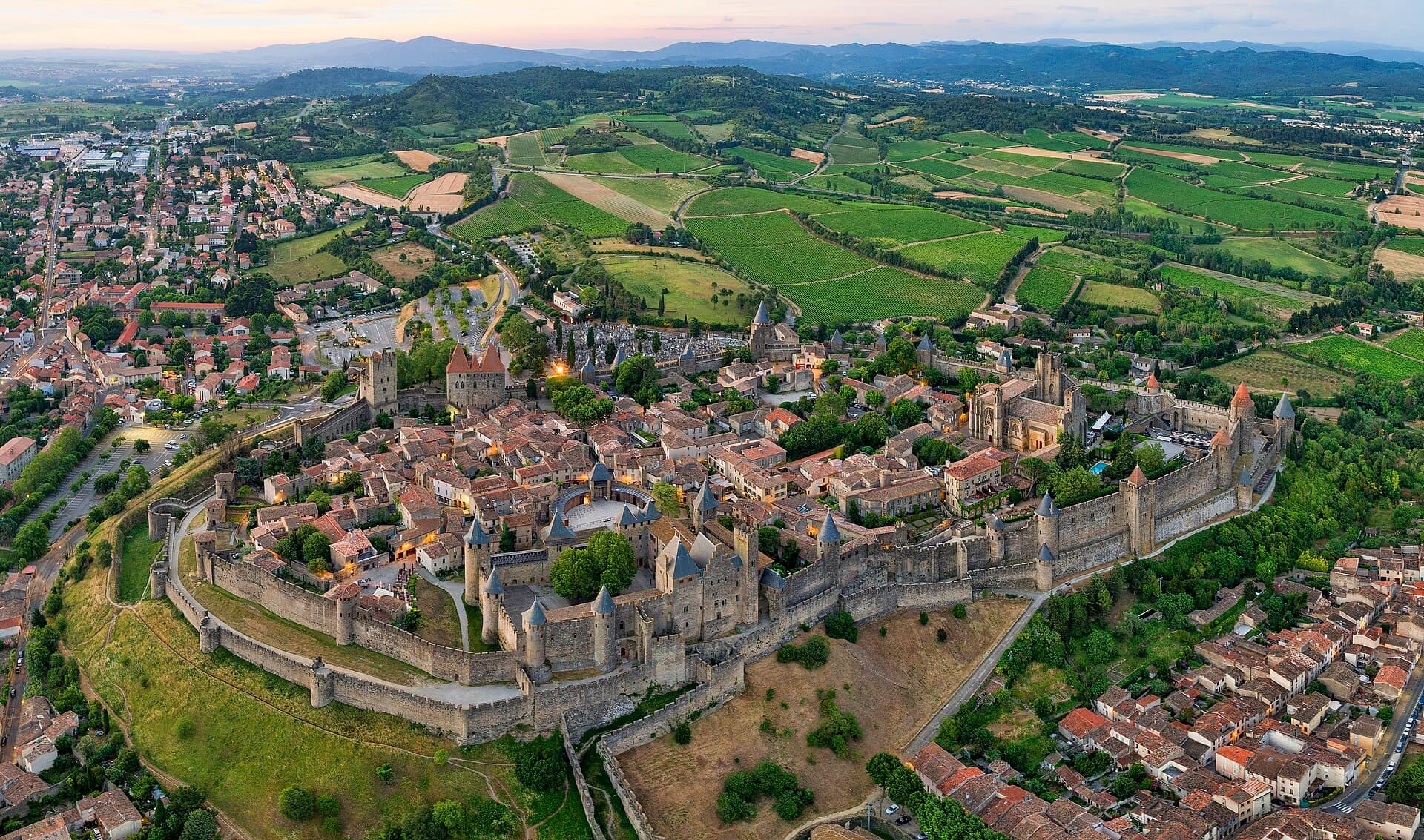 Chensiyuan / CC BY-SA 4.0, via Wikimedia Commons
Self-guided audio walking tour of Carcassonne — GPS route, offline playback, story-driven narration in 32 languages.
“Where ancient stones recount tales of Cathars and kings.”
Not the postcards. The stories even locals don't know — whispered in your ear, right where they happened.
Within the formidable walls of the Count's Castle, a surprising discovery was made beneath a demolished chapel.
Carcassonne's defenses held a vital, concealed secret for centuries, ensuring its survival during long sieges.
The Basilica's striking stained-glass windows, known as some of the most beautiful in the Midi region, hold a subtle detail that reveals a shift in power.
Discover every secret of Carcassonne
Every address, every reveal in full — in your ear, right where it happened.
You pick your stops. You walk. The voice reveals what the others miss.


Your self-guided audio tour of Carcassonne is ready — pick your landmarks, choose your language, and start the moment you arrive.
BuyLume has a built-in augmented-reality guide. Hold your phone up and its camera shows the street ahead of you, with a glowing arrow laid over the real view that always points to your next stop — no map to puzzle over, no wrong turns. Like everything in Lume, it works fully offline.
Carcassonne, a fortified city in Southern France, rises dramatically from the landscape, its double ring of ramparts and 52 towers presenting a silhouette that seems plucked from a medieval manuscript. This UNESCO World Heritage site is one of Europe's largest and best-preserved medieval fortresses, offering a tangible journey back through 2,500 years of history. More than just a collection of ancient stones, Carcassonne is a living testament to centuries of strategic importance, military architectural innovation, and the ebb and flow of empires.
Divided into two main areas, the medieval Cité and the lower town of Bastide Saint-Louis, Carcassonne offers distinct experiences. The Cité, with its labyrinthine streets, imposing Château Comtal, and the Basilica of Saints Nazarius and Celsus, is where the majority of visitors spend their time, exploring the inner workings of a medieval stronghold. Beyond the fortified walls, the Bastide Saint-Louis provides a contrast with its more contemporary urban life, complete with the train station, hotels, and local markets.
The history of Carcassonne stretches back to 800 BC, with evidence of a settlement at Carsac, southwest of the present city. Around 550 BC, this evolved into the oppidum of Carcaso, strategically positioned with unobstructed views over the Aude River and the surrounding plains. This early fortification became a crucial stop on the ancient route connecting Narbonne and Bordeaux. The Romans conquered the region in 122 BC, incorporating Carcassonne into their empire and fostering prosperity through the wine trade. By the 3rd and 4th centuries, the town began to take shape with the construction of robust walls, some of which are still visible today.
Following the collapse of Roman rule in the 5th century, Carcassonne fell under Visigothic control. The Visigoths rebuilt and strengthened the Roman defenses, particularly after the Battle of Vouillé in 507 AD, to withstand Frankish and later Moorish attacks. The city changed hands numerous times, experiencing periods under Saracen and Frankish rule. In 1067, the County of Carcassonne came into the possession of the Trencavel family, Viscounts of Albi and Nîmes, who initiated the construction of the Basilica of Saint-Nazaire and the palatium that would become the Château Comtal. This era saw significant expansion and a degree of independence for Carcassonne.
However, this period of autonomy ended dramatically with the Albigensian Crusade in the early 13th century. Carcassonne was a stronghold of the Cathars, a religious sect deemed heretical by the Catholic Church. In 1209, after a brutal siege, the city surrendered to Abbot Arnaud Amalric, and its Viscount, Raymond-Roger de Trencavel, died mysteriously in captivity. Carcassonne then yielded to French rule in 1247, becoming a border fortress between France and the Crown of Aragon under the Treaty of Corbeil in 1258. The Capetian kings, particularly Louis IX and Philip III the Bold, undertook extensive fortification works in the 13th century, adding a second rampart and further strengthening the castle, giving Carcassonne its present-day imposing appearance. This included monumental additions like the Porte Narbonnaise.
The city's military significance diminished after the Treaty of the Pyrenees in 1659, which shifted the Franco-Spanish border south. By the 18th century, the fortress had fallen into disrepair, and some walls were even dismantled for building materials. Napoleon even removed it from the list of strongholds in 1804. It was only in the mid-19th century that architect Eugène Viollet-le-Duc undertook a monumental restoration project, bringing the medieval city back to its former glory.
The heart of Carcassonne lies within its double fortified walls, a UNESCO World Heritage site that invites exploration. Begin at the Narbonnaise Gate (Porte Narbonnaise), the grandest entrance, flanked by two formidable towers and featuring a drawbridge over a dry moat. From here, you can access the Château Comtal (Count's Castle), a 12th-century fortress within the citadel. Your ticket to the castle includes access to the ramparts, offering wide views of the Cité and the surrounding countryside. Inside the Château Comtal, explore its courtyards, an archaeological museum, and climb the Bishop's Tower for a unique perspective on the fortifications.
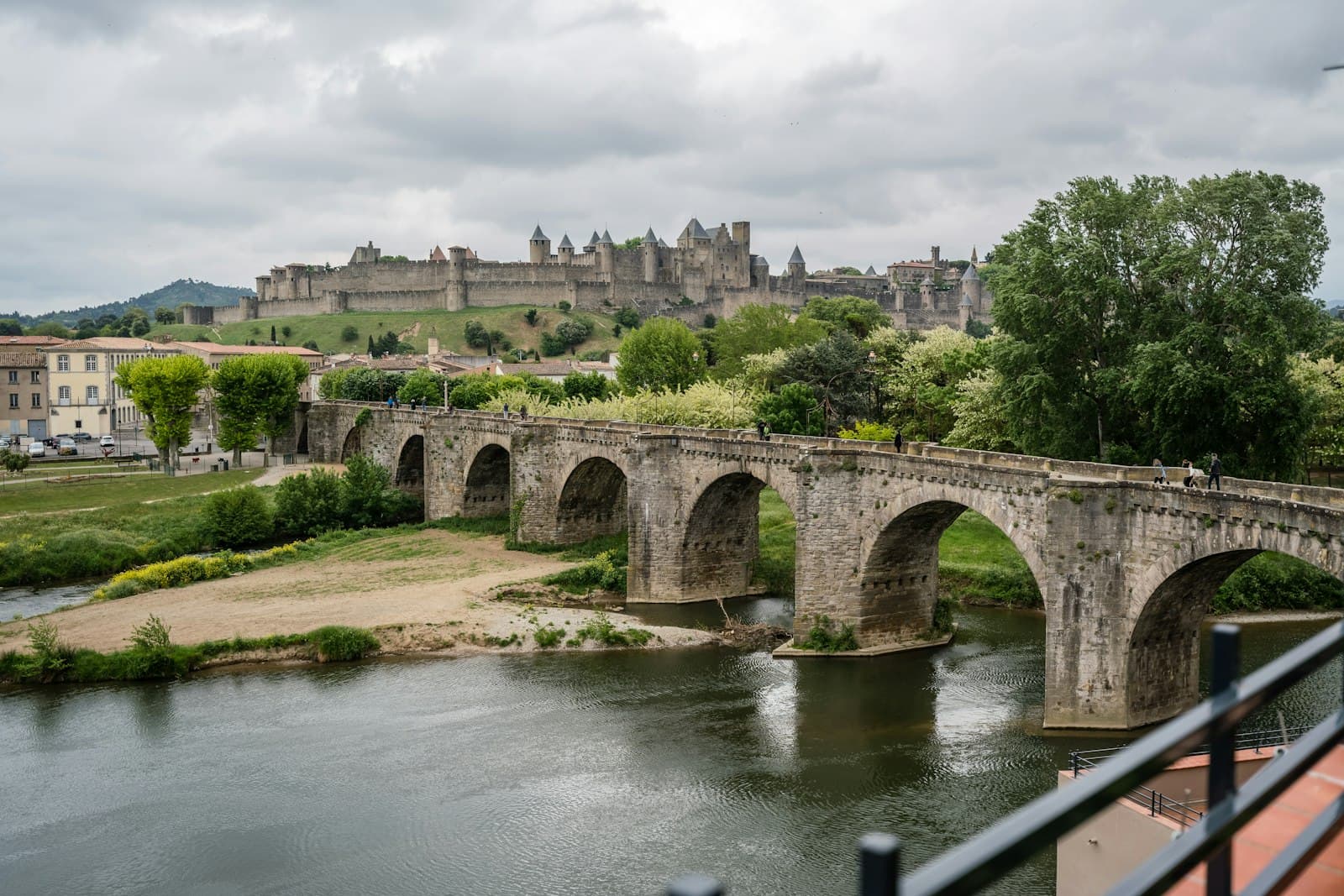
Wander the atmospheric streets and alleys of the Cité, where medieval houses still stand. The Basilica of Saints Nazarius and Celsus is a significant site, showcasing a harmonious blend of Romanesque and Gothic architecture with striking 13th-century stained-glass windows. For a different perspective, walk the Les Lices, the space between the inner and outer walls, which offers views of the defensive sections and towers. Beyond the Cité, the Canal du Midi, another UNESCO site, offers boat tours or leisurely strolls along its towpaths. The Pont Vieux (Old Bridge), a 14th-century stone bridge, provides excellent views of the medieval city, especially at sunset.
The shoulder seasons of spring (April to June) and autumn (September to October) are ideal for visiting Carcassonne. During these months, the weather is pleasant with warm temperatures (17-25°C), crowds are more manageable, and the surrounding countryside is particularly scenic with wildflowers in spring and grape harvests in autumn. July and August are peak season, bringing hot temperatures (30-31°C) and significant crowds, especially during the Bastille Day fireworks on July 14th and the Festival de Carcassonne. To avoid the busiest times, aim to arrive before 10 AM or after 4 PM, or consider visiting on weekdays rather than weekends.
Carcassonne is easily accessible by train, with services from Toulouse (45-60 minutes) and Montpellier (90 minutes). The train station is located in the Bastide Saint-Louis, approximately 2 km from the medieval Cité. You can reach the Cité on foot (about 30 minutes), by bus (Line 4), or by taxi (around €10-€15). Carcassonne Airport (CCF) is 3 km from the city center, with a shuttle bus (€5) connecting to the train station and some stops at the Cité.
While entry to the medieval Cité itself is free and open 24/7, there is an admission charge for the Château Comtal and its adjoining ramparts. Most visitors find one to two days sufficient to explore the historic center and key attractions. Tourist information offices are available near the railway station and within the Cité. For dining, the Cité offers numerous restaurants and outdoor cafés, many serving local specialties like cassoulet. Be aware that some restaurants and shops inside the Cité may close during the winter off-season.
Carcassonne in Korean, in Chinese or in Hebrew — and 29 more languages, every stop narrated by a native voice. The widest language range of any self-guided audio tour.
Available in: