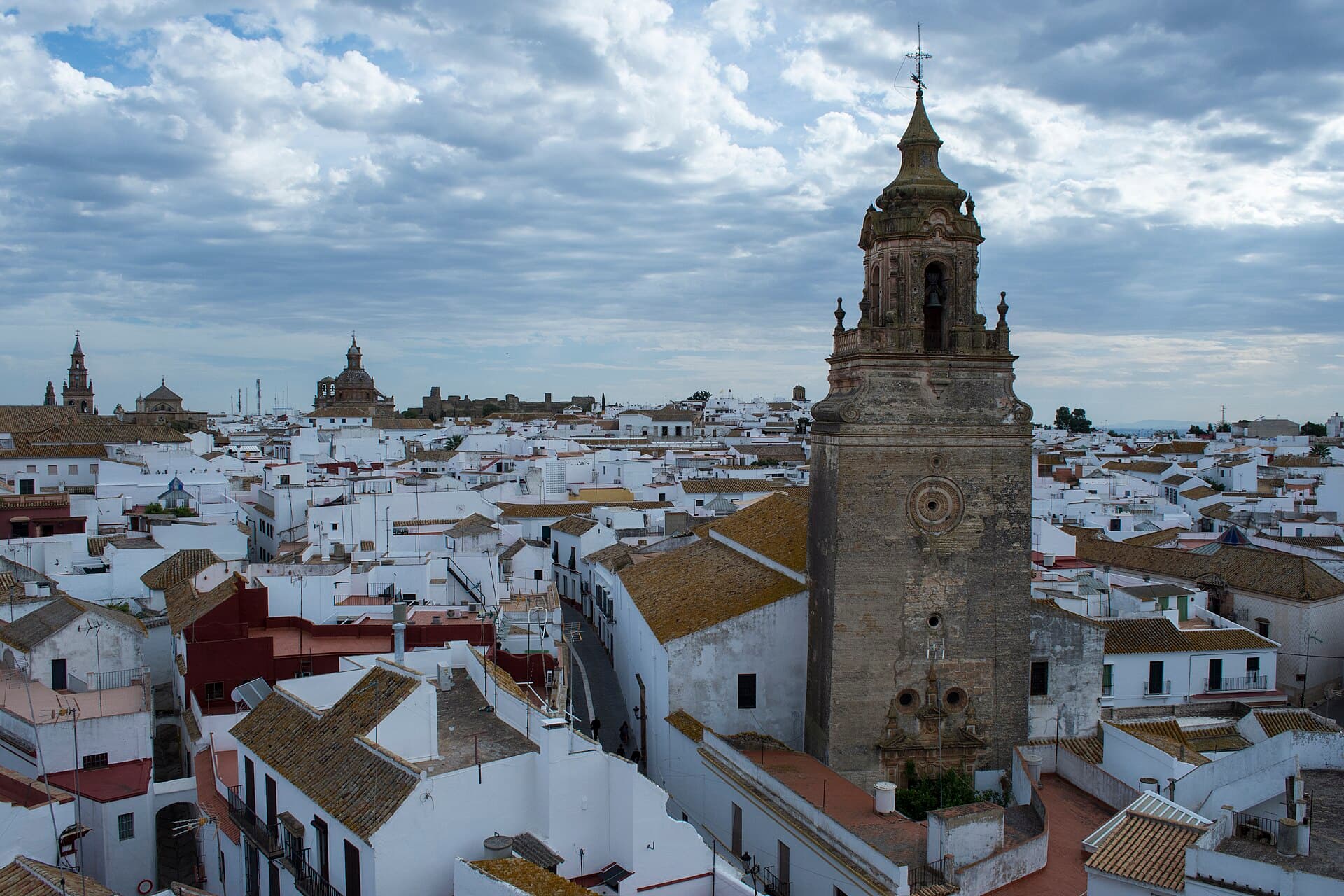
Carmona, SpainAnual / CC BY-SA 4.0, via Wikimedia Commons
ES

Carmona

Where Roman echoes meet Moorish whispers on sun-drenched hills.

The secrets of Carmona

Carmona, as no one tells it.

Not the postcards. The stories even locals don't know — whispered in your ear, right where they happened.

3 secrets below. Many more wait inside the tour.
Roman Necropolis, Tomb of the Elephant

This isn't just a tomb; it's a sanctuary where an unexpected animal became a symbol of eternity.

Full story unlocks in the tour
Puerta de Córdoba

Most city gates offer one way in, but this one presents a unique architectural feature that sets it apart in Spain.

Full story unlocks in the tour
Parador de Carmona

This grand hotel, once a royal fortress, holds a secret about a king's dramatic end and his chosen architect.

Full story unlocks in the tour
The full tour

Discover every secret of Carmona

Every address, every reveal in full — in your ear, right where it happened.

Get the key to Carmona

You pick your stops. You walk. The voice reveals what the others miss.

Choose your time

How long do you have in Carmona?

No tours available yet. Check back soon — we're preparing them.

About Carmona

The story of Carmona

Carmona, a town in the province of Seville, Andalusia, Spain, offers a journey through 5,000 years of continuous human occupation. Positioned on a ridge overlooking the fertile plains of the Guadalquivir River, the town presents a captivating blend of cultural influences and architectural heritage. Its strategic hilltop location made it a significant settlement for various civilizations, from the Phoenicians and Carthaginians to the Romans, Visigoths, and Moors.

Just 30 kilometers from Seville, Carmona retains its historical legacy within a historic center characterized by narrow, stone-paved streets, ancient walls, and viewpoints that offer sweeping vistas of the surrounding Andalusian countryside. The town's motto, SICVT LVCIFER LVCET IN AURORA, ITA IN VANDALIA CARMONA ('As the morning-star shines at Dawn, so shines Carmona in Andalusia'), hints at its profound and varied past, reflected in its many monuments, churches, and palatial homes. Carmona is considered one of the oldest cities in Andalusia and is a favored destination for those seeking to explore Andalusian heritage and authenticity.

History

Traces of Civilizations

The history of Carmona stretches back nearly five millennia, making it one of Europe's oldest continuously inhabited urban sites. Its strategic position on a plateau above the Corbones River plain made it a natural stronghold and a vital center for trade and resources. Evidence of Neolithic and Chalcolithic periods, including Bellbeaker culture vessels, mark the earliest complex agricultural societies in the Guadalquivir valley.

From the mid-8th century BC, a stable population developed, which underwent a radical transformation with the arrival of Phoenician traders from Tyre. Carmona, possibly named Kar-Hammon ('city of Hammon') by the Carthaginians, became an important trading colony and a formidable Carthaginian enclave. The Carthaginians fortified its western flank with walls and trenches, and reinforced the main access at the Puerta de Sevilla, creating an imposing structure that impressed Julius Caesar.

During the Punic Wars, Carmona was conquered by the Romans, who called it 'Carmo'. It became a significant outpost of the Roman Empire, a crossroads on the Via Augusta, and was granted the status of civium Romanorum. This period was culturally brilliant, leaving behind impressive remains like the Roman Necropolis and parts of the ancient city walls. After the Romans, the Visigoths held sway, followed by the Moors in the 8th century, who transformed Carmona into a fortified city within Al-Andalus, leaving a deep imprint on its culture and physical appearance.

In 1247, King Ferdinand III of Castile reconquered Carmona during the Reconquista. The city continued to flourish under Christian rule, developing into a prosperous Andalusian town with churches, palaces, and monasteries. King Pedro I, known as 'the Cruel', favored Carmona and transformed a Moorish castle into the Alcázar del Rey Don Pedro, now a Parador. Philip IV granted Carmona city status in 1630. This blend of Roman, Moorish, and Christian influences makes Carmona one of Andalusia's most historic cities.

What to see

Begin your exploration at the Alcázar de la Puerta de Sevilla, a fortress of Carthaginian origin, later expanded by Romans and Arabs. Climb the restored Torre del Homenaje for expansive views over the plains. Wander through the historic center, admiring the Mudejar palaces, baroque churches, and ancient walls.

At the other end of the old town lies the Puerta de Córdoba, the eastern entrance to the Roman city. Visit the Priory Church of Santa María la Mayor, a 15th-century church built on the site of a former mosque, featuring an original patio with a vaulted roof. The Church of San Pedro, with its tower resembling Seville's Giralda, is another notable baroque example.

Just outside the city walls, discover the Roman Necropolis and Amphitheater, one of the most important Roman archaeological sites in Spain. The necropolis, open to visitors since 1885, contains hundreds of tombs, including elaborate collective mausoleums and the famous Tomb of the Elephant. The Alcázar del Rey Don Pedro, now the Parador de Carmona, is a former Moorish fortress offering expansive views. Explore the Plaza de San Fernando, a central square ideal for soaking in the local atmosphere.

When to visit

The most pleasant times to visit Carmona are during spring (March–May) and autumn (September–November). During these periods, temperatures are mild and comfortable, ranging from 19°C to 28°C, ideal for walking and exploring the historic center. While there can be some rainfall, especially in October and November, these months offer a more relaxed experience with fewer crowds. Summers (June–August) are hot and dry, with average daily highs around 35°C, making hot-weather activities suitable. Winters (December–February) are mild with occasional rainfall.

Practical

Carmona is located approximately 30-34 kilometers east of Seville. If traveling by car, it is easily accessible via the A-4 motorway from Seville, or the A-92 from Granada or Málaga. Parking is available near the historic center, including close to the Puerta de Sevilla and around the Parador. Given the narrow streets of the old town, parking just outside and continuing on foot is recommended.

Public transport from Seville is also convenient. Direct buses depart from Plaza de Armas bus station in Seville approximately hourly, with a journey time of about 70 minutes. The Carmona Tourist Information Office, situated within the Alcázar de la Puerta de Sevilla, offers visitor services, including guided tours and audio guides. The office is open Monday to Saturday from 10 am to 6 pm, and Sundays and public holidays from 10 am to 3 pm, with adjusted hours in July and August.

Good to know
Is Carmona worth visiting?
Yes, Carmona is considered one of Andalusia's most captivating historic towns, offering a rich blend of Roman history, Moorish influences, and charming streets.
How much time is needed to visit Carmona?
You will need about half a day to a full day to see the main attractions of Carmona.
What are the main attractions in Carmona?
Key attractions include the Alcázar de la Puerta de Sevilla, the Roman Necropolis and Amphitheater, the Priory Church of Santa María, the Puerta de Córdoba, and the historic center with its viewpoints.
How far is Carmona from Seville?
Carmona is approximately 30-34 kilometers east of Seville.
Can I visit Carmona as a day trip from Seville?
Yes, Carmona is a popular and easy day trip from Seville, accessible by car or direct bus.
What kind of cuisine can I expect in Carmona?
Carmona offers traditional Andalusian cuisine, with local specialties like *alboronías* (a dish of Arab origin made with pumpkin and courgette) and spinach with chickpeas.
Carmona
From€9.00
No booking · activate anytime · 12h to walk it
Get the key to Carmona