Feira de Caruaru
Tussen de levendige kraampjes van de gevierde markt van Caruaru gedijt een bijzondere traditie, waarbij meer wordt uitgewisseld dan alleen valuta.
Volledig verhaal ontgrendeld in de tour
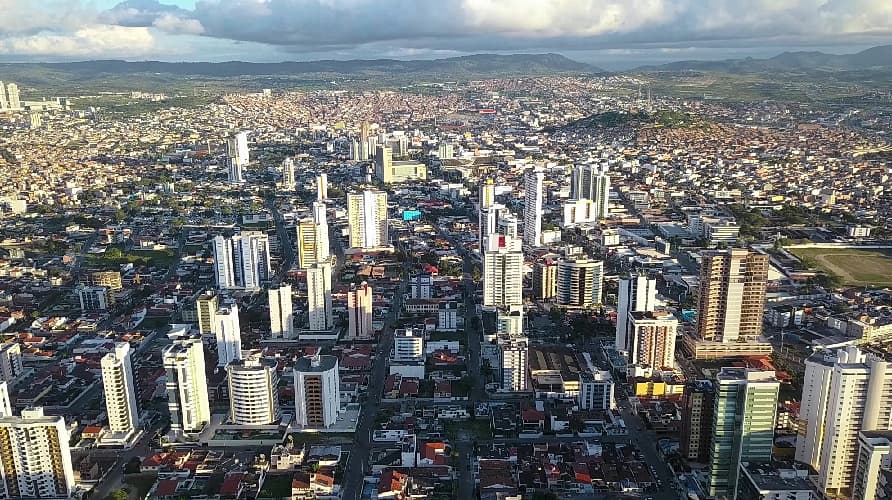 Print-lock / CC BY-SA 4.0, via Wikimedia Commons
Zelfgeleide audiowandeling door Caruaru — GPS-route, offline afspelen, meeslepende vertelling in 32 talen.
“Waar de beat van forró de ziel van klei ontmoet.”
Niet de ansichtkaarten. De verhalen die zelfs locals niet kennen — gefluisterd in je oor, precies waar ze gebeurden.
Tussen de levendige kraampjes van de gevierde markt van Caruaru gedijt een bijzondere traditie, waarbij meer wordt uitgewisseld dan alleen valuta.
Dit district, erkend door UNESCO voor zijn figuratieve kunst, onderhoudt een onverwachte band met een wereldwijd erkend museum in Parijs.
Tijdens het immense festival van Caruaru in juni kunt u culinaire creaties van werkelijk grootse proporties tegenkomen.
Ontdek elk geheim van Caruaru
Elk adres, elke onthulling volledig — in je oor, precies waar het gebeurde.
Jij kiest je stops. Jij wandelt. De stem onthult wat de anderen missen.


Je zelfgeleide audiotour van Caruaru is klaar — kies je bezienswaardigheden, kies je taal en start zodra je aankomt.
KopenLume heeft een ingebouwde augmented-reality-gids. Houd je telefoon omhoog: de camera toont de straat voor je, met een oplichtende pijl over het echte beeld die altijd naar je volgende stop wijst — geen kaart om uit te puzzelen, geen verkeerde afslagen. Zoals alles in Lume werkt het volledig offline.
Caruaru, vaak gevierd als de 'Hoofdstad van Forró', is een stralend cultureel licht in de staat Pernambuco, Brazilië. Deze energieke stad biedt een meeslepende reis in de artistieke geest van Brazilië, en boeit bezoekers met zijn levendige ritmes, kleurrijke ambachten en oprechte gastvrijheid. Gelegen in de Agreste-regio, een overgangszone tussen de weelderige kust en het semi-aride binnenland, is Caruaru de thuisbasis van ongeveer 347.000 inwoners die zijn blijvende tradities trouw bewaren.
De stad wordt geprezen om de Feira de Caruaru, een uitgestrekte openluchtmarkt die wordt erkend als immaterieel cultureel erfgoed, waar je alles kunt ontdekken, van lederwaren tot heerlijk regionaal eten. Degenen die kunst waarderen, zullen Alto do Moura boeiend vinden, een wijk die beroemd is om zijn figuratieve aardewerk, een ambacht dat is geïnitieerd door de legendarische Mestre Vitalino. Het verkennen van het verleden van Caruaru onthult hoe deze unieke artistieke uitingen de identiteit van de stad door de jaren heen hebben gevormd. Of je nu komt voor de muziek, de meesterlijke handwerken of de feestelijke sfeer, Caruaru belooft een onuitwisbare ervaring vol authentiek Noordoostelijk karakter.
Het verhaal van Caruaru begint in de late 18e eeuw als een boerderij langs een route voor veeherders. Deze locatie werd een natuurlijke stop voor reizigers en handelaren, wat leidde tot een nederzetting rond een kapel gewijd aan Onze-Lieve-Vrouw van de Onbevlekte Ontvangenis. De groeiende gemeenschap kreeg in 1849 dorpsstatus en werd officieel stad op 18 mei 1857.
De voordelige geografische ligging van Caruaru op het kruispunt van handelsroutes was cruciaal voor de evolutie tot een commercieel centrum. De Feira de Caruaru, een van de grootste openluchtmarkten van Brazilië, ontstond al vóór de stad zelf en werd de belangrijkste motor van de economie. Deze beurs was niet alleen een economisch knooppunt, maar ook een cultureel knooppunt, dat de uitwisseling van nieuws, tradities en kunst bevorderde. Hier wortelden culturele fenomenen zoals de kunst van kleifiguren, gepopulariseerd door Mestre Vitalino, en 'cordel' volkspoëzie.
In 1895 stimuleerde de komst van spoorwegen de economie van de stad aanzienlijk, waardoor de distributie van producten van de hoofdstad Recife naar het binnenland van Pernambuco werd vergemakkelijkt. Caruaru verstevigde zo zijn belang als commercieel centrum. Midden 20e eeuw bloeide de kunst van kleifiguren op, waarbij de creaties van Mestre Vitalino de stad wereldwijde erkenning brachten. Zijn kleifiguren, die scènes uit het dagelijks leven en folklore uitbeelden, vestigden Caruaru als een erkende hoofdstad van volkskunst in Brazilië. Tegen de jaren '70 was Caruaru het centrum geworden van de 'Polo de Confecções do Agreste', de grootste textielcluster in de regio.
Caruaru presenteert een verscheidenheid aan attracties die zijn diepe culturele erfgoed weerspiegelen. De Feira de Caruaru is een immense openluchtmarkt, erkend als Braziliaans Cultureel Erfgoed. Het is georganiseerd in specifieke gebieden, waaronder de 'Feira de Artesanato' voor lederwaren, strooien manden en aardewerk, en de 'Feira da Sulanca' (nu officieel 'Feira da Moda de Caruaru') voor kleding in de groothandel. Het district Alto do Moura is een door UNESCO erkend centrum voor figuratieve kunst, gevierd om zijn kleibewerking. Hier kunt u de Casa-Museu Mestre Vitalino bezoeken, de voormalige woning van de legendarische ambachtsman, en talloze ateliers en gedenktekens verkennen ter ere van lokale kunstenaars zoals Mestre Galdino en Mestre Manuel Eudócio.
Voor weidse uitzichten over de regio, beklim Monte Bom Jesus, een van de hoogste punten in het gebied, met een kapel op de top. De Espaço Cultural Tancredo Neves herbergt het Museu do Barro (Kleimuseum), met een uitgebreide collectie keramische kunst, waaronder originele stukken van Mestre Vitalino. In hetzelfde complex bevindt zich het Museu do Forró Luiz Gonzaga, gewijd aan de 'Koning van Baião', met accordeons, kostuums en platen van het muziekgenre. De Pátio do Forró is het belangrijkste centrum voor livemuziek en dans tijdens de São João en São Pedro festivals.
De ideale tijd om Caruaru te ervaren is tijdens het São João Festival in juni, dat een van de grootste en meest traditionele feesten van Brazilië is en vaak tot in juli doorloopt. Dit festival trekt miljoenen bezoekers met zijn volksmuziek, dans en lokale keuken. Het weer gedurende deze periode is over het algemeen mild en aangenaam, met gemiddelde temperaturen tussen 21,7°C en 22,5°C. Hoewel de warmste maanden van november tot februari lopen, bieden de koelere wintermaanden van juni tot augustus comfortabele temperaturen voor buitenactiviteiten.
Caruaru ligt op ongeveer 130 kilometer (81 mijl) van Recife, de hoofdstad van Pernambuco. De dichtstbijzijnde grote luchthaven is in Recife, vanwaar u een bus kunt nemen of een auto kunt huren naar Caruaru via de BR-232 snelweg. Caruaru heeft ook een eigen luchthaven, Oscar Laranjeiras Airport (CAU), met geplande vluchten vanuit Recife. Accommodatiemogelijkheden variëren van economische hostels tot comfortabele middenklasse hotels en lokale pensions (pousadas). Hoewel over het algemeen veilig, is het raadzaam om op uw omgeving te letten en uw bezittingen te bewaken, zoals in elke stad. Voor medische behoeften bevindt het Hospital Mestre Vitalino, een groot noodhospitaal, zich aan de BR-104.
Caruaru — Koreaans, Chinees, Hebreeuws en nog 29 talen, elke stop verteld door een moedertaalspreker. Het grootste taalaanbod van alle zelfgeleide audiotours.
Beschikbaar in: