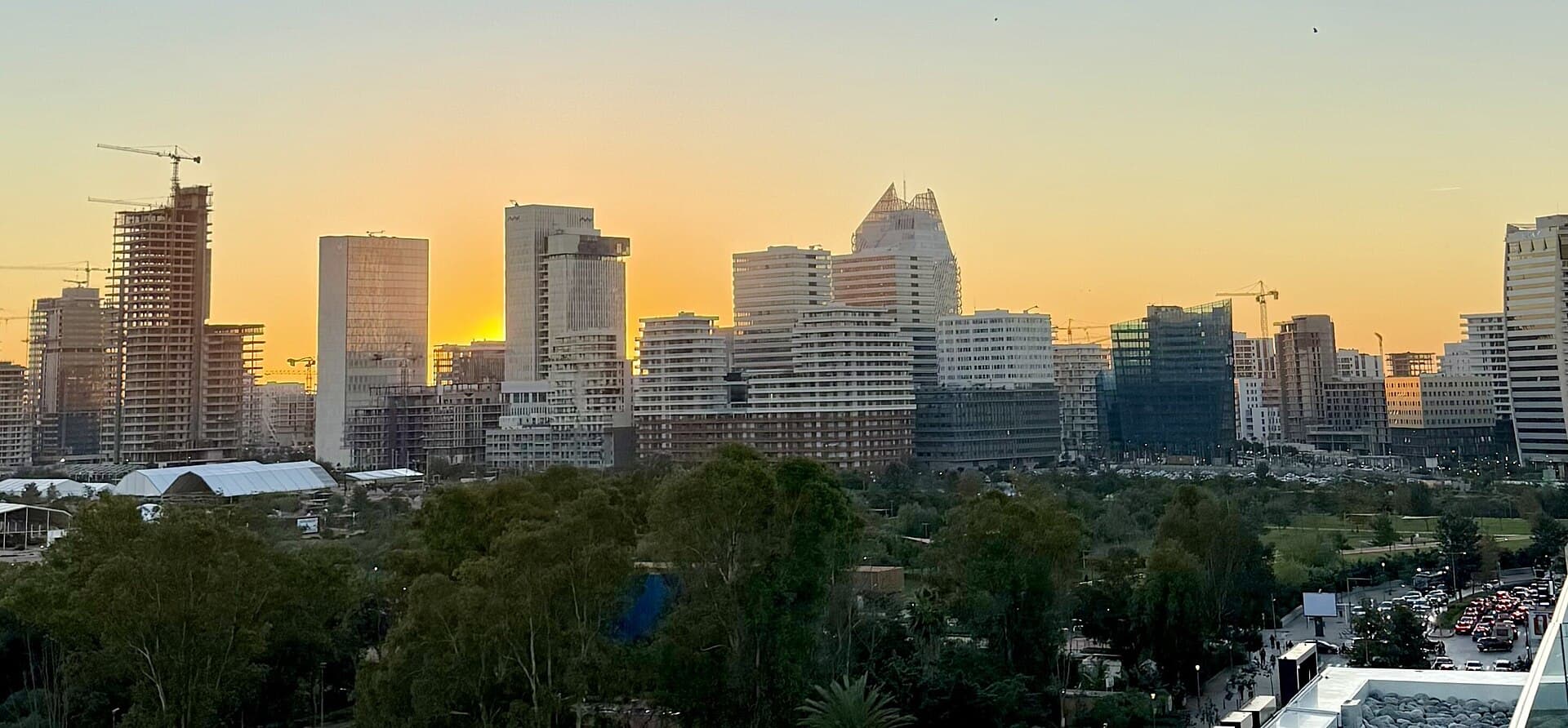
Les remparts de l'Ancienne Médina
La première incarnation de Casablanca, Anfa, était autrefois un port prospère, attirant à la fois d'honnêtes marchands et des éléments plus obscurs.
L'histoire complète se débloque dans le tour
 Chah.salah / CC0, via Wikimedia Commons
Visite audio autoguidée de Casablanca — parcours GPS à pied, lecture hors ligne, narration en 32 langues.
“Casablanca : Là où les lignes Art Déco rencontrent le souffle de l'Atlantique et un esprit d'endurance.”
Pas les cartes postales. Les histoires que même les habitants ignorent — soufflées à l'oreille, là où elles se sont passées.
La première incarnation de Casablanca, Anfa, était autrefois un port prospère, attirant à la fois d'honnêtes marchands et des éléments plus obscurs.
Ce quartier attrayant, souvent appelé la « Nouvelle Médina », n'a pas évolué organiquement au fil des siècles comme les anciennes médinas marocaines.
Parmi les nombreuses gloires Art Déco de Casablanca, un cinéma a autrefois accueilli des artistes et des premières internationales.
Découvrez tous les secrets de Casablanca
Chaque adresse, chaque révélation en entier — dans ton oreille, là où elle s'est passée.
Tu choisis tes lieux. Tu marches. La voix te révèle ce que les autres ignorent.
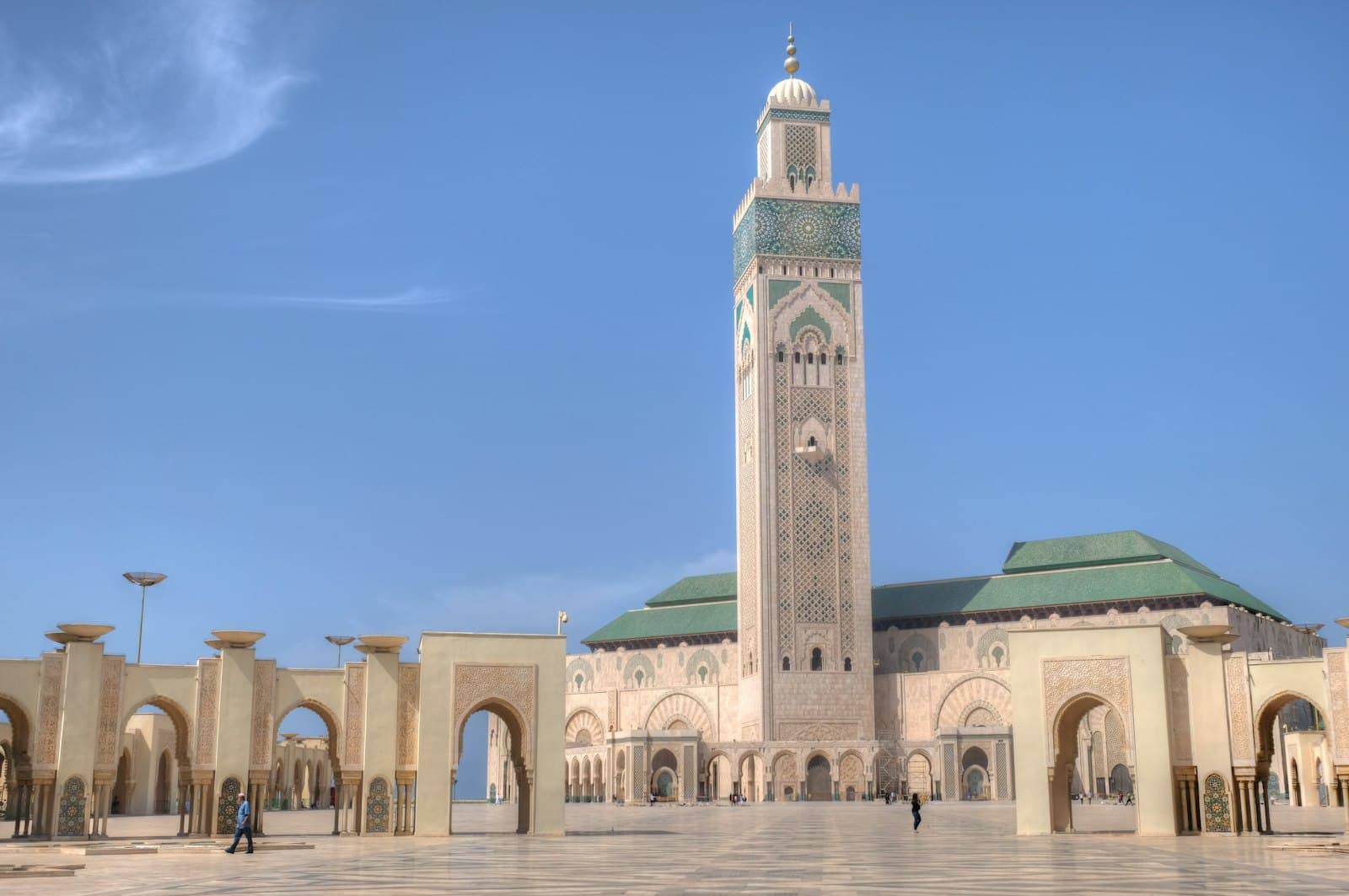
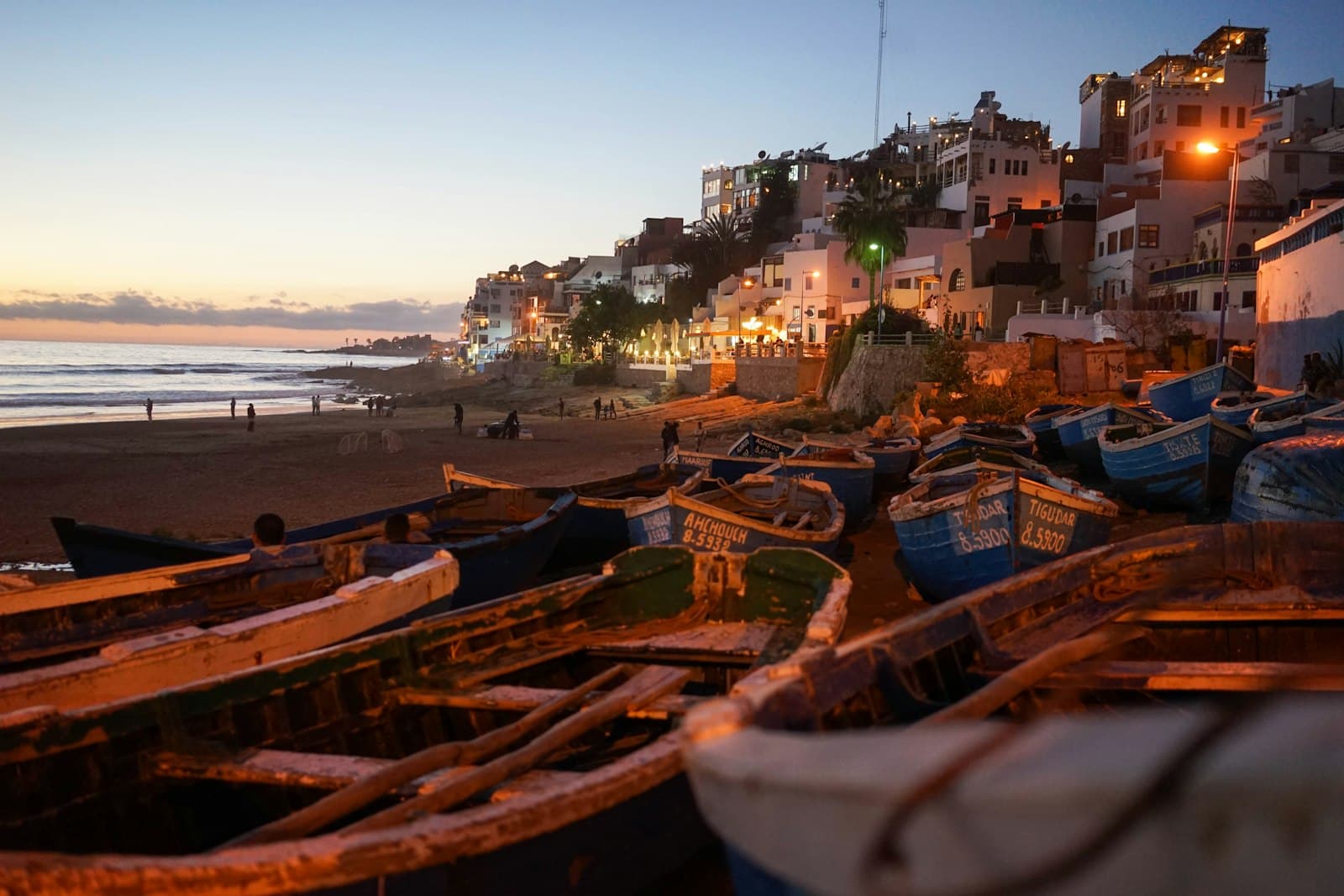
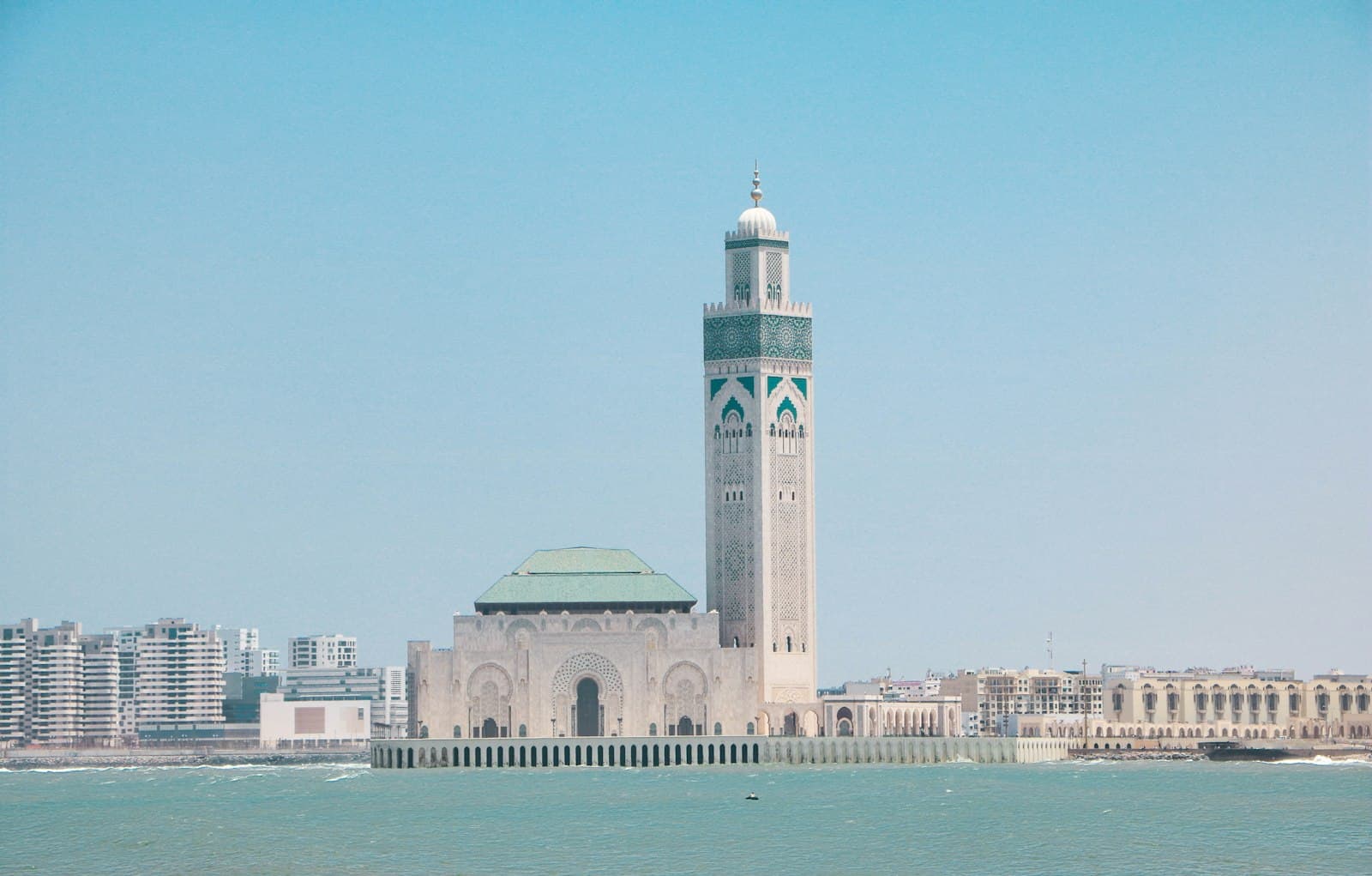
Votre visite audioguidée de Casablanca vous attend — choisissez vos lieux, votre langue, et lancez-vous dès votre arrivée.
AcheterLume intègre un guide en réalité augmentée. Levez votre téléphone : sa caméra montre la rue devant vous, avec une flèche lumineuse posée sur l'image réelle qui pointe toujours vers votre prochain arrêt — aucune carte à déchiffrer, aucun mauvais virage. Comme tout dans Lume, ça fonctionne entièrement hors-ligne.
Casablanca, affectueusement appelée « Casa » par ses habitants, est le moteur économique du Maroc et sa plus grande ville, une métropole dynamique située sur la côte atlantique. Cette ville défie l'image pittoresque typique du Maroc, offrant plutôt une fusion singulière de profondeur historique et d'architecture saisissante du XXe siècle. Bien qu'elle ne possède pas les médinas ancestrales que l'on trouve à Fès ou Marrakech, Casablanca déploie un récit captivant de résilience, de transformation et de vie contemporaine.
De ses origines antiques en tant que comptoir phénicien et romain à son rôle pivot pendant le Protectorat français, Casablanca n'a cessé de se réinventer. Aujourd'hui, elle présente un centre animé avec de larges avenues, un quartier des affaires dynamique et une atmosphère cosmopolite. Les visiteurs découvriront une ville qui embrasse son passé stratifié tout en se tournant avec confiance vers l'avenir, ce qui en fait un début ou une conclusion intrigante à tout voyage marocain.
L'histoire de Casablanca remonte au moins au VIIe siècle av. J.-C., lorsqu'elle était connue sous le nom d'Anfa, un établissement berbère qui fonctionnait comme un comptoir commercial phénicien, puis romain. Sa position stratégique sur l'Atlantique en fit un port important, attirant marchands et marins, bien qu'elle ait également acquis une réputation de bastion de corsaires aux XIVe et XVe siècles. Cette notoriété conduisit à sa destruction par les Portugais en 1468, qui revinrent plus tard en 1515 pour construire un établissement fortifié qu'ils nommèrent Casa Branca, signifiant « Maison Blanche ».
La ville fut largement abandonnée après le tremblement de terre dévastateur de Lisbonne en 1755. C'est le sultan Mohammed ben Abdallah qui reconstruisit la ville à la fin du XVIIIe siècle, la renommant Dar El Beïda, la traduction arabe de Casa Branca, qui évolua finalement en Casablanca. Le XIXe siècle vit le port rouvrir au commerce, et en 1906, Casablanca avait dépassé Tanger en volume d'échanges.
La transformation la plus profonde eut lieu sous la domination coloniale française, qui commença par le bombardement de la ville en 1907 et l'établissement formel d'un protectorat en 1912. Les Français reconnurent le potentiel de Casablanca en tant que port moderne et centre commercial, ce qui entraîna une expansion industrielle et urbaine rapide. Sous la direction de l'architecte français Henri Prost, la ville fut redessinée avec de larges boulevards et des bâtiments de style européen, mêlant l'esthétique marocaine aux styles Art Déco et colonial. Cette époque vit l'émergence de l'architecture Art Déco distinctive de Casablanca, avec des exemples notables ornant le boulevard Mohammed V.
Casablanca joua un rôle stratégique crucial pendant la Seconde Guerre mondiale, servant de lieu pour la Conférence de Casablanca en 1943, où Roosevelt et Churchill se rencontrèrent pour élaborer une stratégie. Après l'indépendance en 1956, Casablanca consolida son statut de moteur économique du Maroc, poursuivant son évolution vers la métropole contemporaine qu'elle est aujourd'hui.
Commencez votre exploration par la magnifique Mosquée Hassan II, une merveille architecturale moderne dotée du plus haut minaret du monde, placée de manière spectaculaire au bord de l'océan Atlantique. Les non-musulmans peuvent participer à des visites guidées, offrant un aperçu de son design complexe de marbre, de bois de cèdre sculpté à la main et de zellige coloré. Ensuite, promenez-vous le long de la Corniche, la promenade du front de mer de la ville, offrant des vues sur l'océan et une atmosphère animée.
Plongez dans le patrimoine architectural singulier de la ville en explorant les bâtiments Art Déco qui bordent des boulevards comme Mohammed V et la Place 16 Novembre. Pour un aperçu de la vie marocaine traditionnelle, bien que soigneusement planifiée, visitez le Quartier Habous, également connu sous le nom de Nouvelle Médina. Vous y trouverez des boutiques d'artisans, des souks et des restaurants locaux. Le Marché Central offre une autre expérience sensorielle, avec des étals débordant de produits frais, d'épices et de fruits de mer, avec des restaurants à proximité prêts à préparer vos sélections. Ne manquez pas l'occasion de visiter le Musée du Judaïsme Marocain, l'un des deux seuls musées de ce type dans le monde arabe, exposant le riche récit de la communauté juive du Maroc.
Les périodes les plus agréables pour visiter Casablanca sont le printemps (de mi-mars à mai) ou l'automne (de septembre à octobre). Pendant ces périodes, le temps reste doux et agréable, parfait pour explorer les sites de la ville sans la chaleur intense de l'été. Vous trouverez des températures confortables pour la marche et moins de foules. L'été, de juillet à septembre, offre des eaux atlantiques chaudes et du soleil, idéal pour les activités de plage, bien que vous partagerez la côte avec les habitants. L'hiver, de novembre à février, apporte des soirées plus fraîches mais des températures diurnes douces, ce qui en fait un bon choix pour ceux qui recherchent moins de foules et des tarifs hôteliers plus modestes.
Casablanca est généralement sûre pour les voyageurs, comparable aux villes européennes de taille moyenne, bien que des vols mineurs puissent survenir dans les zones très fréquentées. Il est judicieux de rester conscient de votre environnement et de sécuriser vos objets de valeur. Pour vous déplacer, Casablanca propose un système de tramway moderne, des bus et des taxis. Le tram est efficace et relie les principaux quartiers. Les « petits taxis » rouges sont nombreux et peu coûteux, mais assurez-vous que le compteur est utilisé. La monnaie locale est le Dirham marocain (MAD), et bien que les cartes soient acceptées dans de nombreux endroits, l'argent liquide s'avère utile pour les petits achats et les vendeurs de rue.
En ce qui concerne le code vestimentaire, Casablanca est plus ouverte que d'autres villes marocaines, avec des vêtements de style occidental largement portés. Cependant, la modestie est toujours appréciée, en particulier dans les zones traditionnelles et les sites religieux. Pour les femmes, des vêtements couvrant les épaules et les genoux sont conseillés. Lors de la visite de la Mosquée Hassan II, hommes et femmes doivent s'habiller de manière conservatrice, couvrant les épaules et les genoux ; les femmes n'ont généralement pas besoin d'un foulard, mais peuvent en apporter un pour leur confort personnel ou par respect culturel.
Casablanca en coréen, en chinois ou en hébreu — et dans 29 autres langues, chaque étape narrée par une voix native. La plus large gamme de langues de tous les audioguides autoguidés.
Disponible en :