Largo do Pelourinho
At the village square's core, a grand Baroque fountain feels out of place against the medieval architecture. What is the story behind this striking presence?
Full story unlocks in the tour
 Lucas Martínez Farrapeira / cc by-sa 2.0, via Wikimedia Commons
Self-guided audio walking tour of Castelo Novo — GPS route, offline playback, story-driven narration in 32 languages.
“Where granite holds the memory of Templars and forgotten witches.”
Not the postcards. The stories even locals don't know — whispered in your ear, right where they happened.
At the village square's core, a grand Baroque fountain feels out of place against the medieval architecture. What is the story behind this striking presence?
The village is named 'New Castle,' yet records hint at an 'old castle' nearby. Why the name, and what became of the original?
As you wander the winding granite passages, you might observe subtle, almost cryptic markings on some stones. What do these architectural details convey?
Discover every secret of Castelo Novo
Every address, every reveal in full — in your ear, right where it happened.
You pick your stops. You walk. The voice reveals what the others miss.
Your self-guided audio tour of Castelo Novo is ready — pick your landmarks, choose your language, and start the moment you arrive.
BuyLume has a built-in augmented-reality guide. Hold your phone up and its camera shows the street ahead of you, with a glowing arrow laid over the real view that always points to your next stop — no map to puzzle over, no wrong turns. Like everything in Lume, it works fully offline.
Castelo Novo, one of Portugal's twelve 'Historical Villages,' is a study in granite and enduring time, set within the green and grey amphitheater of the Serra da Gardunha. Its winding streets, paved with stone, lead through a labyrinth of well-preserved medieval architecture, where each turn reveals a stone house adorned with flowers, creating a scene that feels drawn from a storybook. This village, recognized by the UNWTO as a 'Best Tourist Village,' extends a quiet invitation, encouraging visitors to immerse themselves in a past where history is etched into every stone.
At an altitude of 650 meters, Castelo Novo presents a singular blend of cultural exploration and natural splendor. From the formidable castle ruins that stand sentinel over the village to the natural springs and fountains dispersed throughout, the village's identity is deeply interwoven with its ancestral narrative and the surrounding mountain landscape. It is a place where the sound of water gushing from springs and the steadfast granite that forms the dwellings, temples, and paving create an unparalleled architectural heritage.
## From Templar Lands to Royal Charters Castelo Novo's origins are deeply rooted in the early years of Portuguese independence, with its first mention, then called Alpreada, dating back to around 1202 AD. In 1208, Pedro Guterres bequeathed his lands, including what would become Castelo Novo, to the Knights Templar, who played a crucial role in securing these territories conquered from the Moors in the 13th century. It is believed the castle was already under construction around this time.
King Dinis, recognizing the strategic significance of the area, ordered the castle's structure to be renewed a few decades later, imbuing the fortress with the Gothic style that can still be observed today. The village, like many others along the 'raia beirã' (border region), grew organically around its defensive walls, with narrow streets spiraling up the slope towards the keep. The name 'Castelo Novo' (New Castle) itself hints at a deeper past, as the current 12th-century castle was designated 'new' because an older, less effective defensive structure had existed nearby and was subsequently abandoned.
## Manueline and Baroque Flourishes By the 16th century, under King Manuel I, Castelo Novo received its royal charter, and the king's influence is evident in the village's architectural heritage from this period. The Largo do Pelourinho (Pillory Square) presents a remarkable architectural ensemble, featuring the Casa da Câmara e Cadeia (Town Hall and Jail) and the Manueline pillory, both from the Manueline era. Adding a striking contrast, the 18th-century Baroque D. João V fountain, ordered by the monarch himself, is embedded into the Town Hall's façade, its grandeur a stark departure from the medieval simplicity. This blend of Manueline and Baroque styles characterizes the significant architectural interventions that shaped the village's appearance over centuries.
## A Village Preserved Castelo Novo's urban structure remains predominantly medieval, with irregular blocks, winding streets, and public staircases navigating the hilly terrain. The traditional granite houses, often two stories with external staircases leading to the living quarters, are a testament to the enduring building practices of the region. In recent decades, Castelo Novo has undergone extensive recovery and requalification efforts as part of the Historical Villages of Portugal program, focusing on sustainable management, innovation, and social cohesion. These initiatives, which included upgrades to public lighting and Wi-Fi networks, contributed to the village being recognized as a 'Best Tourist Village' by the World Tourism Organization (UNWTO) in 2022.
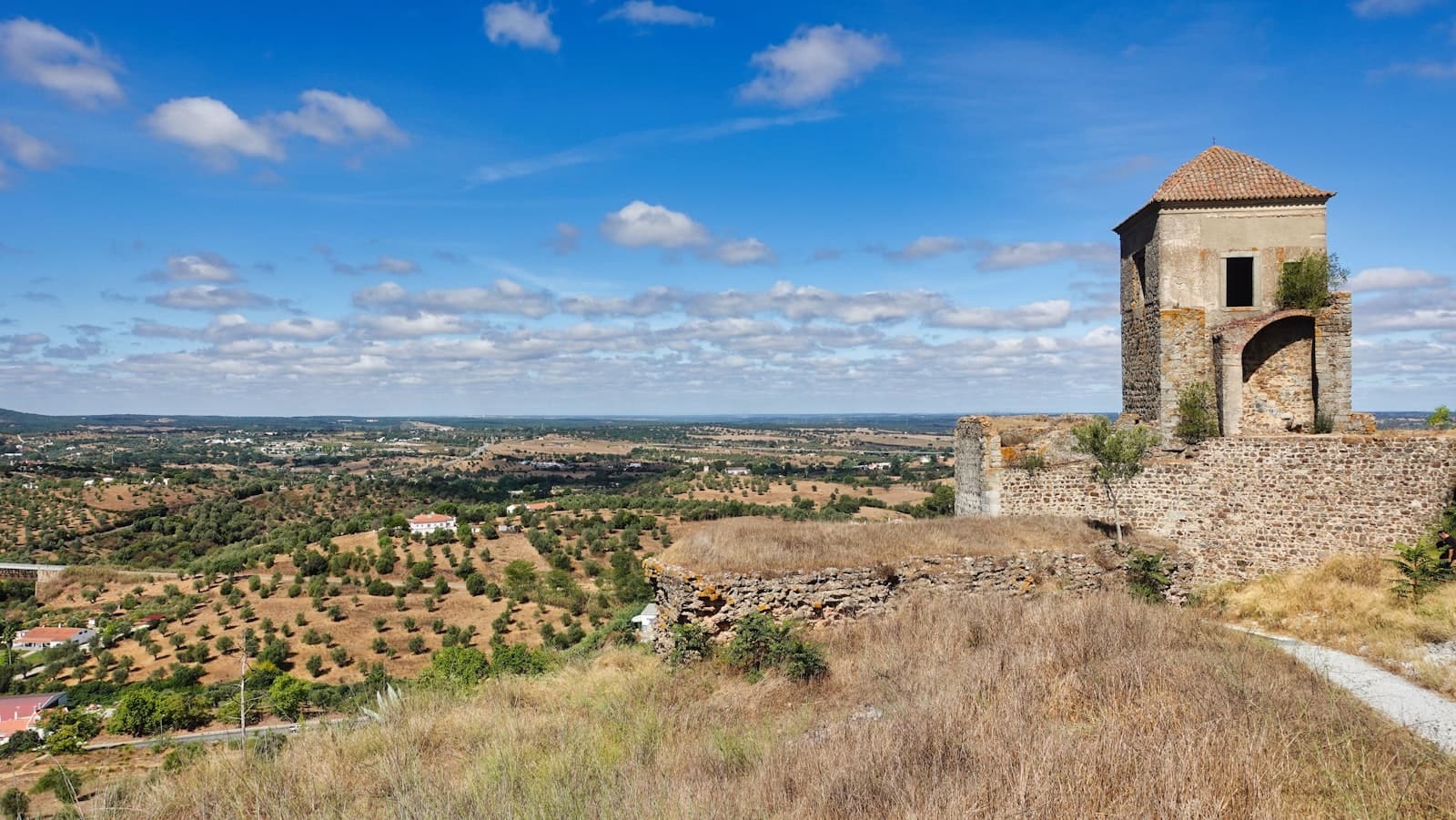
Begin your exploration at the Castelo Novo Castle Ruins, situated at the village's highest elevation. This medieval fortress, though partially ruined, offers expansive views of the surrounding landscape and the Serra da Gardunha.
Descend into the Largo do Pelourinho, the central square, where you will find the distinct Manueline pillory and the Casa da Câmara e Cadeia (Town Hall and Jail). Do not miss the imposing D. João V fountain, an 18th-century Baroque work integrated into the Town Hall's façade.
Wander through the narrow, winding streets, admiring the unique granite architecture of the traditional houses and the charming manor houses that once belonged to noble families. The Church of Nossa Senhora da Graça (Our Lady of Grace) stands out with its white walls and Baroque windows.
Seek out the Chafariz da Bica, an 18th-century Baroque fountain accessed by a grand staircase in Largo da Bica square. For a deeper dive into the village's past, visit the Castelo Novo Museum Centre, housed in the old Town Hall, which displays artifacts from archaeological excavations of the castle.
For expansive vistas, make your way to the Castelo Velho viewpoint, situated at nearly 1,000 meters above sea level, offering broad views of the Castelo Branco plain and beyond. You can also discover the remnants of old watermills along the Alpreada stream and an ancient Roman arch from a bridge at the bottom of the village hill.
The most favorable times to visit Castelo Novo are during spring (April to June) and fall (September to November). During these transitional seasons, the weather is mild and pleasant, ideal for exploring the village's hilly streets and surrounding natural beauty without the intense summer heat or large crowds. Spring brings wildflowers, while autumn offers rich colors and harvest festivals. While Portugal generally experiences ample sunshine, summers (June-August) can be very hot, especially inland. Winters (November-March) are cooler and wetter but still offer sunny periods and fewer tourists, with the south typically milder.
Castelo Novo is a compact, walkable village, but its granite streets are hilly, so comfortable walking shoes are essential. While a rental car provides flexibility, it is not strictly necessary for exploring the village itself. Parking is generally available at the entrance to the historic center. To reach Castelo Novo from Lisbon, you can take a train or bus to Castelo Branco, then a local bus or taxi to the village; the journey takes approximately 3-4 hours.
Accommodation options include charming guesthouses, rural tourism homes, and small hotels; booking in advance is recommended, especially during busier seasons. Local delicacies to try include 'maranho' (a type of sausage), 'bucho recheado' (stuffed pork stomach), local cheeses, and regional wines. The village is generally safe for solo travelers, but standard precautions are always advisable. Castelo Novo is also recognized for its sustainable initiatives, offering electric vehicles for transport from nearby train stations, and it is Portugal's first carbon-neutral location.
Castelo Novo in Korean, in Chinese or in Hebrew — and 29 more languages, every stop narrated by a native voice. The widest language range of any self-guided audio tour.
Available in: