San Fernando del Valle de Catamarca
The capital city of Catamarca has a surprising origin story, earning it a unique nickname.
Full story unlocks in the tour
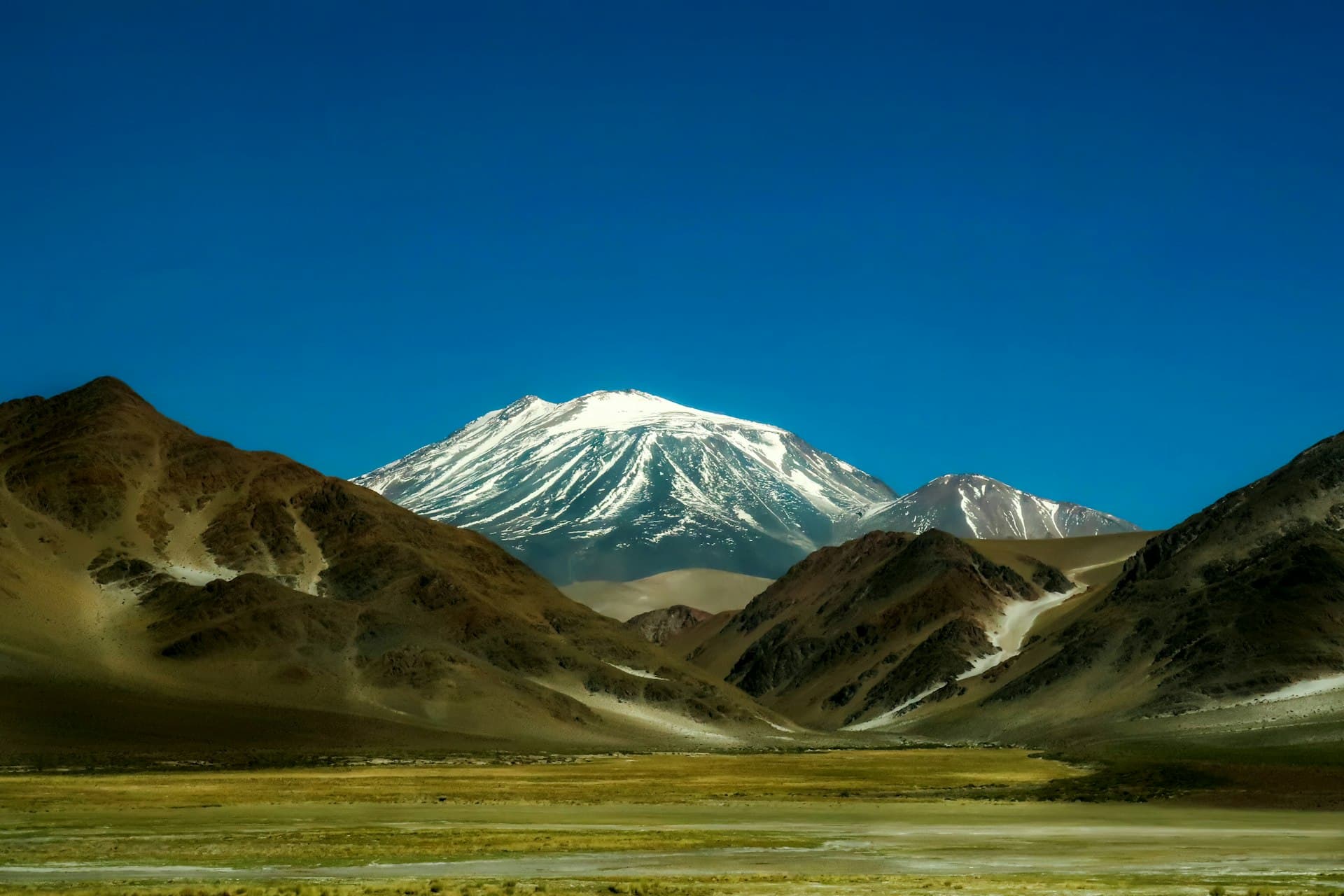 Photo: Hector Ramon Perez / Unsplash
Self-guided audio walking tour of Catamarca — GPS route, offline playback, story-driven narration in 32 languages.
“Where ancient traditions meet dramatic landscapes.”
Not the postcards. The stories even locals don't know — whispered in your ear, right where they happened.
The capital city of Catamarca has a surprising origin story, earning it a unique nickname.
This grand cathedral holds a spiritual treasure with an unusual discovery tale.
Catamarca's most famous festival isn't just a celebration; it's a lifeline for a precious animal.
Discover every secret of Catamarca
Every address, every reveal in full — in your ear, right where it happened.
You pick your stops. You walk. The voice reveals what the others miss.


Your self-guided audio tour of Catamarca is ready — pick your landmarks, choose your language, and start the moment you arrive.
BuyLume has a built-in augmented-reality guide. Hold your phone up and its camera shows the street ahead of you, with a glowing arrow laid over the real view that always points to your next stop — no map to puzzle over, no wrong turns. Like everything in Lume, it works fully offline.
San Fernando del Valle de Catamarca, often simply called Catamarca, is an enthralling city in Argentina's northwestern reaches. It rests at the foot of the Andes, flanked by the Ambato and Ancasti mountain ranges, presenting a singular blend of urban rhythms and profound natural grandeur. The name 'Catamarca' is thought to stem from the Quechua words 'cata' (hillside) and 'marca' (fortress), translating to 'fortress on the hillside.' This terrain unfolds as a panorama of deserts, volcanoes, high-altitude plateaus, and fertile valleys, offering a varied canvas for discovery.
The province embodies a convergence of indigenous ancestry, particularly from the Diaguita and Calchaquí peoples, and Spanish colonial history. This deep cultural intermingling is palpable in local crafts, customs, and celebrations. San Fernando del Valle de Catamarca, sometimes termed 'the Athens of the Argentinian north,' serves as a lively nexus, displaying this singular blend through its museums, churches, and energetic marketplaces.
## From Indigenous Strongholds to Colonial Foundations Catamarca's chronicles stretch back millennia, with the land initially settled by indigenous groups like the Diaguitas and the formidable Calchaquí tribe. The Inca Empire also extended its reach into the region in the 15th century, establishing significant fortresses such as the Pucará de Aconquija.
The Spanish conquest brought repeated attempts at settlement, often met with resistance. Juan Pérez de Zurita first founded a settlement in 1558, naming it Londres de la Nueva Inglaterra in homage to Philip II's English wife, Mary Tudor. However, this and subsequent foundations were frequently assaulted and relocated due to indigenous conflicts and environmental challenges. The city of San Fernando del Valle de Catamarca was finally established at its present location on July 5, 1683, by Fernando de Mendoza Mate de Luna, ushering in a period of greater stability.
During the colonial era, Catamarca's economy was primarily agrarian, with cotton, grapes, and fruits cultivated in irrigated oasis areas. The region also became known for its skilled weavers, whose high-quality fabrics and ponchos laid the foundation for enduring artisanal traditions. The reverence for the Virgen del Valle, whose image was discovered in a grotto between 1618 and 1620, became a spiritual bedrock, transforming Catamarca into a significant pilgrimage center in northern Argentina.
Catamarca contributed to Argentina's independence movement, supplying men and provisions. In 1821, the province declared its autonomy from Tucumán, with Nicolás Avellaneda y Tula becoming its first governor. The province remained somewhat isolated by its mountainous terrain until the arrival of railways in 1888, which connected it more closely with the rest of Argentina. The mid-19th century witnessed a significant architectural transformation with the arrival of Italian architect Luis Caravati, who designed many of the city's notable buildings, including the monumental Cathedral Basilica.
Begin your exploration at the Catedral Basílica de Nuestra Señora del Valle, a neoclassical architectural achievement and a significant pilgrimage destination. Its commanding facade and twin towers ascend nearly forty meters, and inside, murals by Italian artist Orlando Orlandi illustrate scenes from the Virgin's history. Adjacent to the cathedral is 25 de Mayo Plaza, a lively central square ideal for observing local life.
Delve into the region's ancient past at the Adán Quiroga Archaeological Museum, which shelters an extensive array of artifacts from pre-Columbian cultures that inhabited the area over 10,000 years ago. For a taste of local craftsmanship, visit the Casa de la Puna, where you can often observe artisans weaving vicuña and llama wool on traditional looms. Those who appreciate nature can find solace in Adán Quiroga Park, a sprawling green expanse within the city featuring intriguing structures that honor indigenous culture.
Beyond the city, consider the Adobe Route, a historical architectural circuit displaying well-preserved churches and constructions crafted from sun-dried clay bricks. The Fiambalá Hot Springs offer a calming respite with natural hot springs and expansive views from their hillside location. For a truly otherworldly encounter, journey to the Campo de Piedra Pómez (Pumice Field), a landscape of white, pink, and gray volcanic rock formations. The Tatón Dunes are home to some of the world's highest dunes, perfect for sandboarding and photographic excursions.
The most favorable time to visit Catamarca is during autumn and spring (March, April, May, September, October, and November). During these months, the weather is mild, with maximum temperatures generally not exceeding 30 degrees Celsius. This period is ideal for outdoor activities and exploring attractions. While summer (December to February) can be quite warm, with temperatures reaching up to 45°C, and some rainfall, the Puna area maintains pleasant temperatures due to its altitude, though nights are distinctly colder. The annual National Poncho Festival, a significant cultural event, occurs in July, drawing many visitors.
San Fernando del Valle de Catamarca is generally secure, but it is always wise to remain aware of your surroundings and safeguard personal belongings. The local currency is the Argentine Peso (ARS).
Navigating Catamarca can be accomplished in several ways. The city operates a local bus system, known as colectivos, which connects various parts of the city and surrounding areas. For exploring the wider province, renting a car offers flexibility, though some rural or remote areas may necessitate a 4x4 vehicle due to unpaved or variable road conditions. Taxis and ride-sharing services like Uber are also available within the city. For longer distances between major towns, intercity buses are a cost-effective option. Organized tours are also a convenient way to visit remote attractions, often including a local guide.
When visiting the high-altitude Puna region, be mindful of altitude sickness, especially if arriving from lower elevations. Temperatures can fluctuate significantly between day and night in this area.
Catamarca in Korean, in Chinese or in Hebrew — and 29 more languages, every stop narrated by a native voice. The widest language range of any self-guided audio tour.
Available in: