The name 'Cedar City' is a botanical misnomer, a small quirk of pioneer nomenclature.
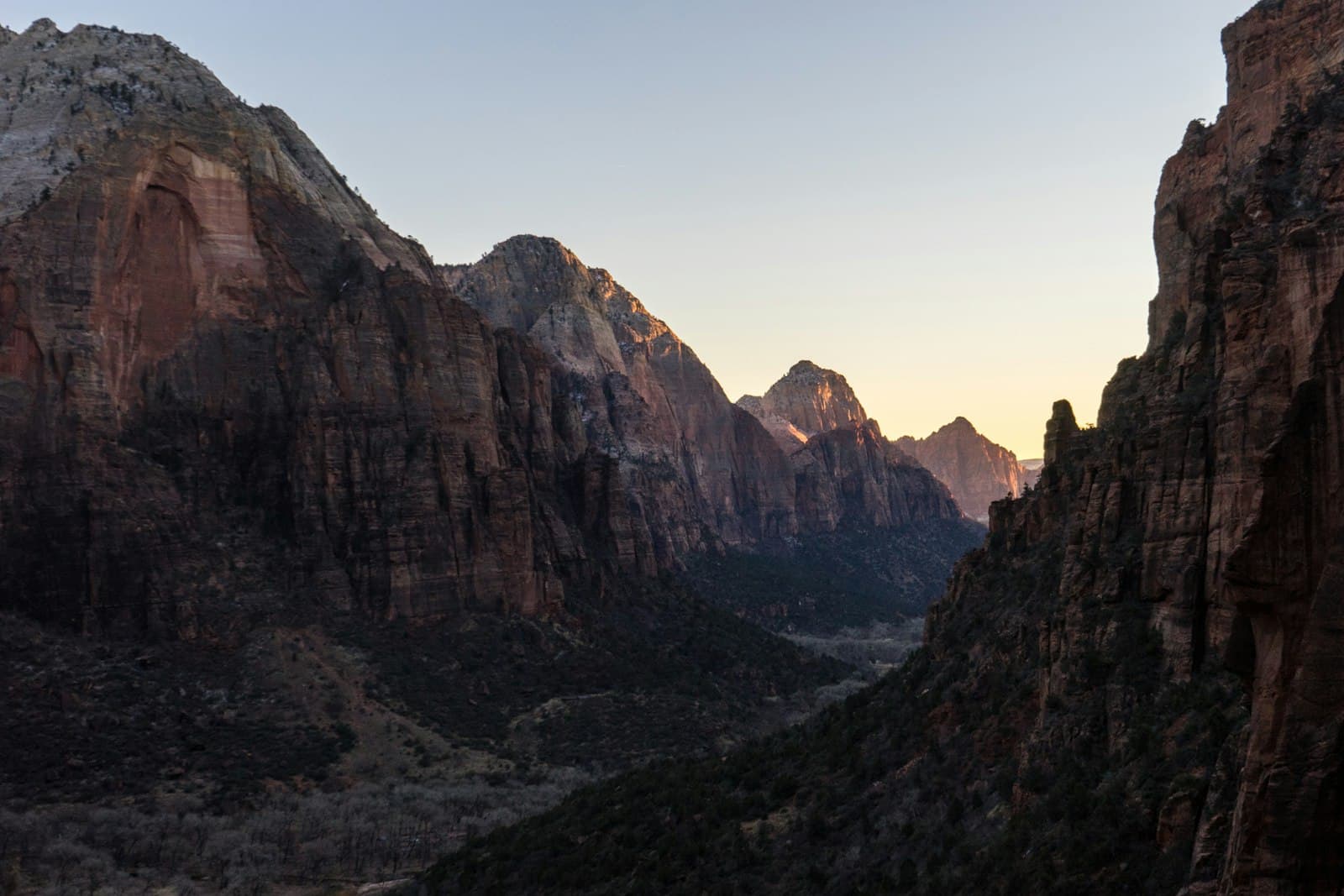
Photo: Julian Villella / UnsplashCedar City
Self-guided audio walking tour of Cedar City — GPS route, offline playback, story-driven narration in 32 languages.
“Where red rock drama meets the stage, and history echoes in juniper-filled canyons.”
Cedar City, as no one tells it.
Not the postcards. The stories even locals don't know — whispered in your ear, right where they happened.
Cedar City's very foundation was built on a quest for self-sufficiency, though the initial venture was short-lived.
Just north of Cedar City, ancient stories are etched into the desert landscape, long before any pioneers arrived.
Discover every secret of Cedar City
Every address, every reveal in full — in your ear, right where it happened.
You pick your stops. You walk. The voice reveals what the others miss.
How long do you have in Cedar City?
Your self-guided audio tour of Cedar City is ready — pick your landmarks, choose your language, and start the moment you arrive.
BuyThe story of Cedar City
Cedar City, Utah, often called "Festival City USA," is a lively crossroads where the dramatic landscapes of Southern Utah converge with a flourishing arts and culture scene. Positioned 250 miles south of Salt Lake City and 170 miles north of Las Vegas, this city of approximately 43,000 residents offers a singular blend of outdoor adventure and world-class entertainment. It serves as a gateway to some of Utah's most iconic natural wonders, including Zion and Bryce Canyon National Parks, and the striking Cedar Breaks National Monument.
Beyond its proximity to national parks, Cedar City is home to Southern Utah University and the Tony Award-winning Utah Shakespeare Festival, drawing visitors for both academic pursuits and theatrical performances. The city's elevation of 5,846 feet provides a cooler climate than the nearby St. George region, making it an appealing destination year-round for those seeking both cultural enrichment and access to diverse outdoor activities, from skiing in winter to hiking and mountain biking in warmer months.
From Iron Mission to Festival City
The history of Cedar City began in late 1851 when a group of 35 Mormon pioneers, dispatched from Parowan, arrived with a specific directive from Brigham Young: establish an ironworks. The settlement, initially named Fort Cedar, was strategically chosen for its proximity to both iron ore deposits to the west and coal resources in Cedar Canyon to the east. The name itself was a slight misnomer, as the abundant trees the pioneers identified as 'cedars' were, in fact, junipers. This ambitious "Iron Mission" aimed to create a self-sufficient iron production center, and indeed, the first iron west of the Mississippi River was produced here. However, the challenges of the harsh environment and technical difficulties led to the closure of the ironworks in 1858.
Following the ironworks' closure, Cedar City's economy shifted towards agriculture and livestock farming, particularly sheep. Mining, however, continued in the region until the 1980s. A significant turning point arrived in 1897 with the founding of the Branch Normal School, which would eventually evolve into Southern Utah University (SUU). This institution transformed Cedar City into a regional educational hub.
The early 20th century brought another pivotal development: the arrival of the railroad in 1923. This connection opened up Utah's national parks to a wider audience, solidifying Cedar City's reputation as the "gateway to the parks." The railroad also facilitated the transport of mined iron products. In 1961, the Utah Shakespeare Festival was established, further cementing Cedar City's cultural identity and earning it the moniker "Festival City USA." Today, the city's economy is a blend of tourism, agriculture, some mining, industrial complexes, and the enduring influence of Southern Utah University.
Begin your exploration at the Frontier Homestead State Park Museum, which offers a deep dive into Cedar City's pioneer and Native American heritage through exhibits and hands-on activities. Wander through Historic Downtown, where local shops, diverse eateries, and Southern Utah's premier winery create an inviting atmosphere. For art enthusiasts, the Southern Utah Museum of Art (SUMA) on the Southern Utah University campus showcases regional and national art, complemented by the Stillman and Shakespeare Sculpture Gardens.
No visit is complete without experiencing the Utah Shakespeare Festival, a Tony Award-winning event running from June through October with performances in both outdoor Globe-style and indoor theaters. Beyond the city limits, natural wonders beckon. Drive 25 minutes east to Cedar Breaks National Monument, a natural amphitheater of red rock formations at 10,000 feet, offering views reminiscent of Bryce Canyon. The Kolob Canyons section of Zion National Park is a mere 30 minutes south, providing a less crowded entry to Zion's dramatic landscapes. For a unique hiking experience, consider Kanarraville Falls, a slot canyon hike with waterfalls and ladders, located about 10 minutes south of Cedar City. The Three Peaks Recreation Area, a few miles northwest of town, is an outdoor playground for hiking, biking, climbing, and off-roading.
Cedar City experiences four distinct, generally mild seasons. The best time for warm-weather activities and festivals is from late June to early September, with July being the hottest month, averaging 87°F. Fall, from mid-September through October, brings cooler temperatures, brilliant fall foliage at Cedar Breaks, and the tail end of the Shakespeare Festival. Winter, from December through March, is ideal for snow sports at Brian Head Resort, with December being the snowiest month. Spring, from mid-March through May, offers mild temperatures and the emergence of wildflowers, particularly in the Cedar Breaks area.
Cedar City is located in Southern Utah, accessible via Interstate 15. The Cedar City Regional Airport serves the area, and visitors can also fly into Salt Lake City (SLC) or Las Vegas (LAS) and drive. The city is a convenient base for exploring nearby national parks, with Zion's south entrance about an hour away and Bryce Canyon approximately 1 hour and 30 minutes distant. While Cedar City offers a range of accommodations, including hotels and motels, the short-term rental market has a moderate income potential with a 30% occupancy rate. The cost of living in Cedar City is generally lower than larger Utah cities like St. George or Salt Lake City, particularly for housing and utilities. Groceries and gas prices are comparable to the state average. The city actively manages water conservation efforts.
- What is Cedar City known for?
- Cedar City is known for its unique blend of outdoor adventure and performing arts, particularly the Utah Shakespeare Festival, its proximity to national parks like Zion and Bryce Canyon, and as the home of Southern Utah University.
- How far is Cedar City from Zion and Bryce Canyon National Parks?
- Zion National Park's south entrance is about an hour away, and the Kolob Canyons section (Zion's north entrance) is 30 minutes south. Bryce Canyon National Park is approximately 1 hour and 30 minutes east.
- What is the best time of year to visit Cedar City?
- For warm-weather activities and festivals, late June to early September is ideal. Fall (mid-September to October) offers cooler weather and fall foliage. Winter (December to March) is best for snow sports at Brian Head.
- Are there hiking opportunities in Cedar City?
- Yes, Cedar City offers extensive hiking opportunities, from trails in Dixie National Forest and Cedar Breaks National Monument to unique experiences like the Kanarraville Falls slot canyon.
- What is the climate like in Cedar City?
- Cedar City has a semi-arid climate with four distinct seasons. Summers are warm (July average high of 87°F) and winters are cold (December average low of 18°F), with moderate snowfall.
- Is Cedar City a good base for visiting national parks?
- Yes, Cedar City's location between Bryce Canyon and Zion National Park, along with its proximity to Cedar Breaks National Monument, makes it an excellent base camp for exploring Southern Utah's natural attractions.