Kathedraal van Cefalù
De belofte van koning Rogier II om de Duomo te bouwen na een hevige storm is algemeen bekend, maar de ware reden voor zijn imposante, fort-achtige ontwerp kan verrassen.
Volledig verhaal ontgrendeld in de tour
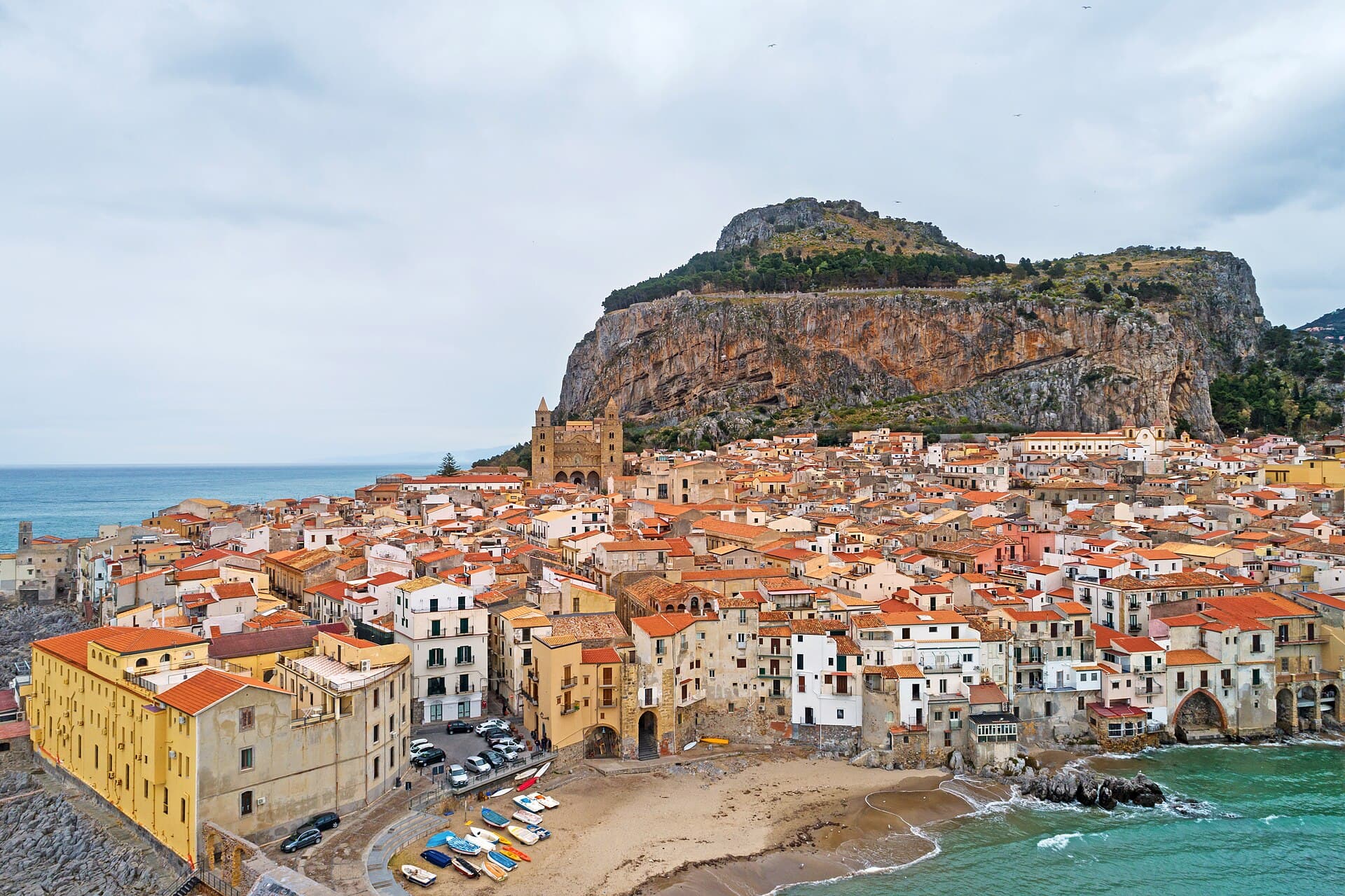 Ludvig14 / CC BY-SA 4.0, via Wikimedia Commons
Zelfgeleide audiowandeling door Cefalù — GPS-route, offline afspelen, meeslepende vertelling in 32 talen.
“Waar oude legendes de Tyrreense Zee ontmoeten.”
Niet de ansichtkaarten. De verhalen die zelfs locals niet kennen — gefluisterd in je oor, precies waar ze gebeurden.
De belofte van koning Rogier II om de Duomo te bouwen na een hevige storm is algemeen bekend, maar de ware reden voor zijn imposante, fort-achtige ontwerp kan verrassen.
Het middeleeuwse washuis, met zijn leeuwenkop-tuiten, stroomt met water dat zuiverder zou zijn dan zilver. Maar de bron van deze legendarische zuiverheid is verbonden met een verhaal van liefdesverdriet.
De dramatische rots met uitzicht op Cefalù heeft een oude naam, 'Kephaloidion', wat 'hoofd' betekent, verwijzend naar zijn vorm. Toch is de vorming ervan verbonden met een Griekse mythe van tragische liefde en transformatie.
Ontdek elk geheim van Cefalù
Elk adres, elke onthulling volledig — in je oor, precies waar het gebeurde.
Jij kiest je stops. Jij wandelt. De stem onthult wat de anderen missen.


Je zelfgeleide audiotour van Cefalù is klaar — kies je bezienswaardigheden, kies je taal en start zodra je aankomt.
KopenLume heeft een ingebouwde augmented-reality-gids. Houd je telefoon omhoog: de camera toont de straat voor je, met een oplichtende pijl over het echte beeld die altijd naar je volgende stop wijst — geen kaart om uit te puzzelen, geen verkeerde afslagen. Zoals alles in Lume werkt het volledig offline.
Cefalù, een boeiende kustplaats aan de noordkust van Sicilië, biedt een mix van oude geschiedenis, adembenemende natuurlijke schoonheid en een ontspannen, authentieke Siciliaanse sfeer. Gekenmerkt door het dramatische rotsachtige voorgebergte van La Rocca en de imposante torens van de Normandische Kathedraal, is het middeleeuwse karakter van de stad direct duidelijk.
Dwaal door een labyrint van smalle, kronkelende straatjes waar wasgoed van balkons hangt en de geur van verse cannoli uit bakkerijen zweeft. Cefalù biedt een unieke ervaring waar je 's ochtends eeuwenoude geschiedenis kunt ontdekken, 's middags kunt zwemmen in het heldere, blauwgroene water van de Tyrreense Zee, en 's avonds kunt genieten van uitstekende lokale gerechten, allemaal binnen een compacte en beloopbare omgeving.
De oorsprong van Cefalù gaat terug tot prehistorische tijden, met de eerste nederzettingen aan het einde van de 5e of begin 4e eeuw voor Christus. Het werd waarschijnlijk gesticht als een fort voor de Himeraeërs, een nabijgelegen Griekse stad, mogelijk zelfs als toevluchtsoord voor vluchtelingen na de vernietiging van Himera. De stad, toen bekend als Cephaloedium, kwam rond 395 v.Chr. voor het eerst in historische verslagen voor, toen het een alliantie vormde met de Carthaagse generaal Himilco. De strategische ligging op het voorgebergte maakte het een gewilde prijs, wat leidde tot veroveringen door de Syraacussche tirannen Dionysius I en Agathocles, en later door de Carthagers, voordat de Romeinen het in 254 v.Chr. innamen.
Na de val van het Romeinse Rijk kende Cefalù periodes onder Byzantijns en vervolgens Arabisch bewind, waarbij de Arabieren het Gafludi noemden, wat "versterkte stad met overvloedig water" betekent. Het meest transformerende tijdperk begon in 1063 met de Normandische verovering. In 1131 begon koning Rogier II van Sicilië met de bouw van de iconische kathedraal in Normandische stijl, een monumentale onderneming die een UNESCO-werelderfgoedlocatie zou worden. Hoewel de buitenkant van de kathedraal zijn oorspronkelijke Normandische elementen behoudt, onderging het interieur aanzienlijke restauraties in de 16e en 17e eeuw. De Byzantijnse mozaïeken in de apsis, met name de Christus Pantocrator, worden beschouwd als enkele van de mooiste in Sicilië.
Tussen de 13e en 15e eeuw werd Cefalù beheerst door verschillende feodale families voordat het eigendom werd van de Romeinse bisschoppen. De historische lagen van de stad zijn ook zichtbaar in bouwwerken zoals het middeleeuwse washuis, de overblijfselen van een megalithisch heiligdom uit de 9e eeuw voor Christus, bekend als de Tempel van Diana op La Rocca, en delen van een megalithische muur uit de 6e eeuw voor Christus. De diepgaande geschiedenis van Cefalù, gevormd door Griekse, Romeinse, Byzantijnse, Arabische en Normandische invloeden, blijft zijn unieke karakter bepalen.
In de jaren twintig werd Cefalù het onverwachte thuis van de Britse occultist Aleister Crowley en zijn volgelingen. Hij vestigde daar zijn Abbey of Thelema, een commune waar hij zijn ceremoniële magie beoefende. Crowley woonde ongeveer drie jaar in Cefalù totdat hij uiteindelijk uit Italië werd verdreven vanwege beschuldigingen van immoreel gedrag. Tegenwoordig liggen zijn voormalige abdij in ruïnes nabij het voetbalstadion.
Begin je verkenning bij de Duomo di Cefalù, een UNESCO-werelderfgoedlocatie. De imposante Normandische architectuur en het opvallende Byzantijnse mozaïek van Christus Pantocrator in de apsis zijn essentieel voor de identiteit van de stad. Voor een weids uitzicht over de stad en de kustlijn, onderneem de wandeling naar La Rocca, het dramatische rotsachtige voorgebergte. Onderweg kom je overblijfselen tegen van een middeleeuws kasteel en de oude Tempel van Diana.
Daal af naar de Oude Stad en dwaal door de smalle, voetgangersvriendelijke straten. Corso Ruggero is de hoofdstraat, maar de ware aantrekkingskracht ligt in de kleinere steegjes en pleinen. Mis de Lavatoio Medievale niet, een middeleeuws washuis met water dat uit leeuwenkop-tuiten in stenen bassins stroomt, een fascinerende inkijk in het dagelijks leven van eeuwen geleden. Wandel langs de Molo di Cefalù, de oude pier, voor schilderachtige uitzichten op de vissershuizen en de waterkant van de stad. Voor een verfrissende duik biedt de stad Spiaggia del Porto Vecchio, een klein strand met de oude stad erachter, en de langere Spiaggia di Cefalù verderop langs de promenade.
De ideale periodes om Cefalù te bezoeken zijn tijdens de schouderseizoenen: april, mei, september en oktober. Gedurende deze maanden is het weer aangenaam warm, perfect om te verkennen en te zwemmen, en zijn de drukte aanzienlijk kleiner dan in de zomermaanden juli en augustus. Hoewel juli en augustus de warmste temperaturen en een levendige sfeer bieden, brengen ze ook de grootste drukte en de hoogste prijzen met zich mee. De winter is rustiger, met sluitingen van sommige restaurants, maar de stad blijft fotogeniek voor wie rust boven stranden verkiest.
Het oude centrum van Cefalù is grotendeels autovrij, waardoor lopen de primaire vervoerswijze binnen het historische centrum is. Voor aankomsten is de trein vaak de makkelijkste en meest schilderachtige optie, met regelmatige verbindingen vanaf Palermo Centrale die ongeveer 45-60 minuten duren. Het treinstation van Cefalù ligt op slechts 15 minuten lopen van het historische centrum. Als je met de auto komt, houd er rekening mee dat parkeren in Cefalù uitdagend kan zijn, vooral in de zomer. Betaalde parkeerplaatsen bevinden zich aan de rand van de oude stad, en parkeren op straat kan beschikbaar zijn in de nieuwe stad. Overweeg om bagage af te zetten bij de barrière van de oude stad voordat je parkeert.
Het is raadzaam om accommodatie en dinerreserveringen van tevoren te boeken, vooral als je tijdens het hoogseizoen reist, omdat kwaliteitsopties en populaire restaurants snel volgeboekt zijn. Hoewel de meeste plaatsen kaarten accepteren, is het altijd handig om wat contant geld bij je te hebben voor kleinere aankopen. Lokale bewoners raden vaak aan om flessenwater te drinken vanwege oudere leidingen in delen van de stad.
Cefalù — Koreaans, Chinees, Hebreeuws en nog 29 talen, elke stop verteld door een moedertaalspreker. Het grootste taalaanbod van alle zelfgeleide audiotours.
Beschikbaar in: