Slotgracht van Český Krumlov
De verdediging van het kasteel bestaat niet alleen uit stenen muren en een diepe gracht. Ze zijn al eeuwenlang bewoond door een verrassende, harige bewaker.
Volledig verhaal ontgrendeld in de tour
 Ron Van Oers / CC BY-SA 3.0 igo, via Wikimedia Commons
Zelfgeleide audiowandeling door Český Krumlov — GPS-route, offline afspelen, meeslepende vertelling in 32 talen.
“Waar de Moldau een dramatisch toneel vormt voor eeuwen Boheemse geschiedenis, ontvouwt zich een sprookjesstad.”
Niet de ansichtkaarten. De verhalen die zelfs locals niet kennen — gefluisterd in je oor, precies waar ze gebeurden.
De verdediging van het kasteel bestaat niet alleen uit stenen muren en een diepe gracht. Ze zijn al eeuwenlang bewoond door een verrassende, harige bewaker.
Naast de verzorgde hagen en barokke versieringen draait een theatrale innovatie stilletjes rond, die een uniek perspectief op optredens biedt.
Hoewel veel steden bier brouwen, heeft de historische brouwerij van Český Krumlov een directe lijn naar machtige adellijke families en een verleden dat meer inhoudt dan alleen hop en gerst.
Ontdek elk geheim van Český Krumlov
Elk adres, elke onthulling volledig — in je oor, precies waar het gebeurde.
Jij kiest je stops. Jij wandelt. De stem onthult wat de anderen missen.
Lume heeft een ingebouwde augmented-reality-gids. Houd je telefoon omhoog: de camera toont de straat voor je, met een oplichtende pijl over het echte beeld die altijd naar je volgende stop wijst — geen kaart om uit te puzzelen, geen verkeerde afslagen. Zoals alles in Lume werkt het volledig offline.
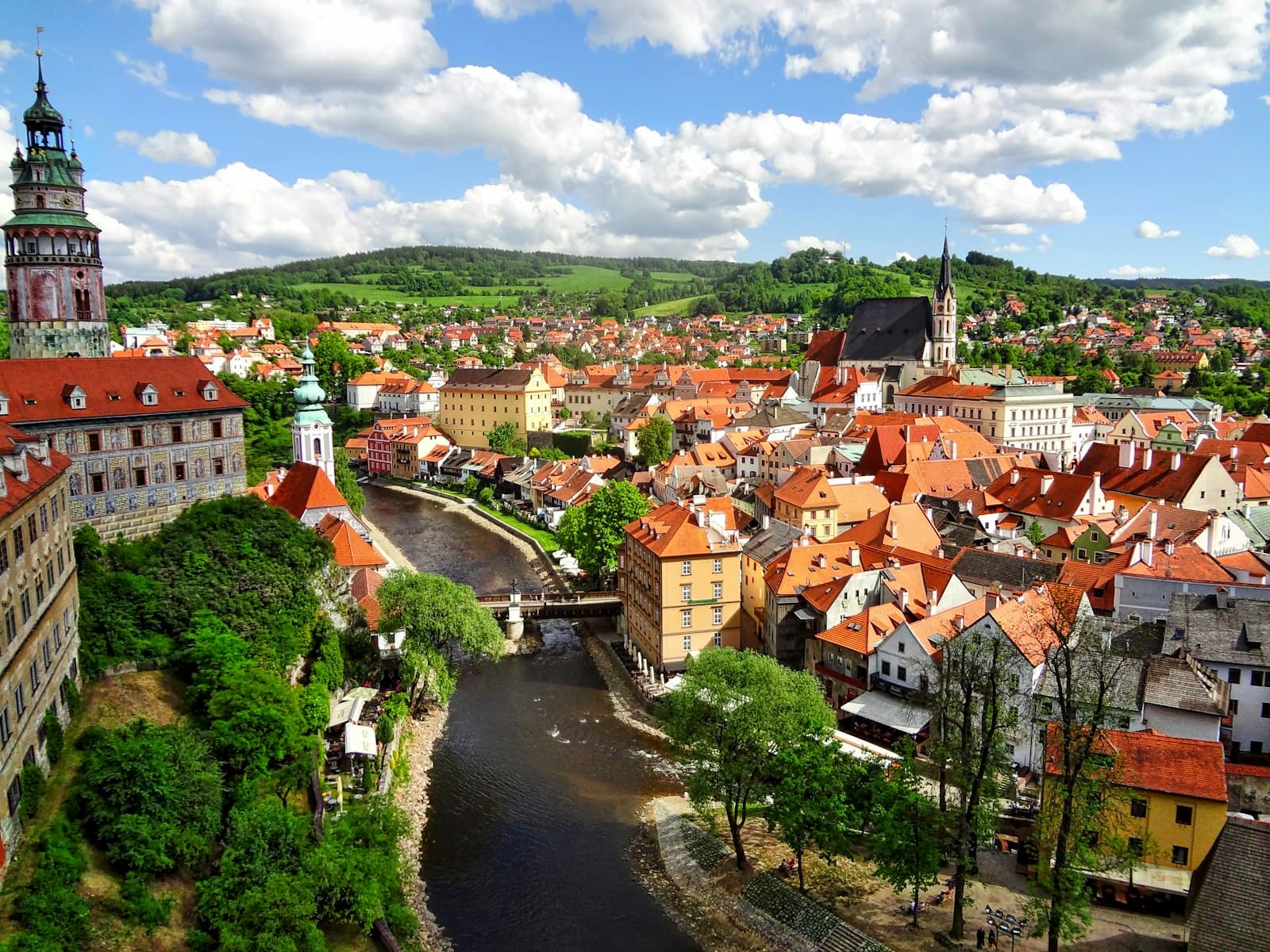
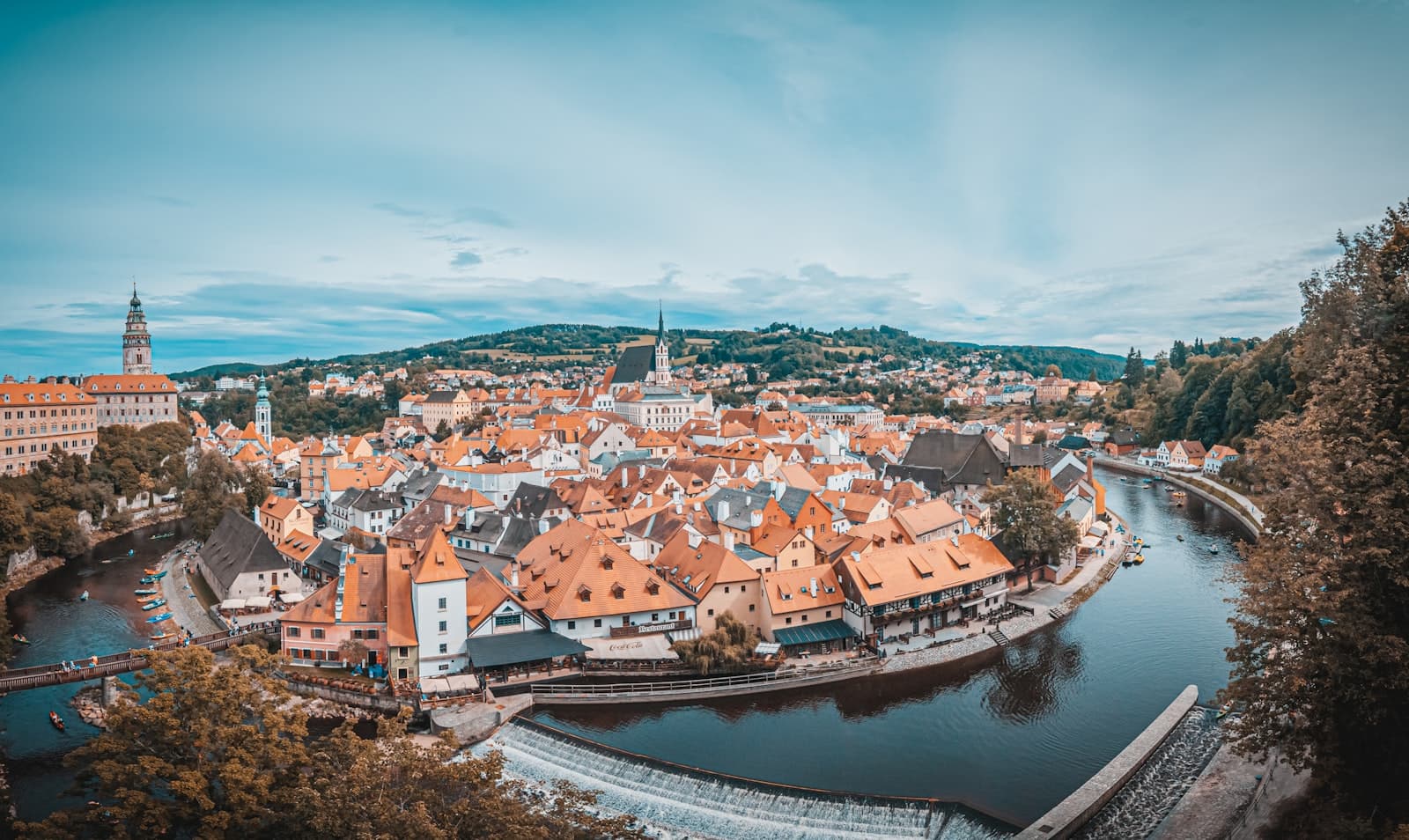
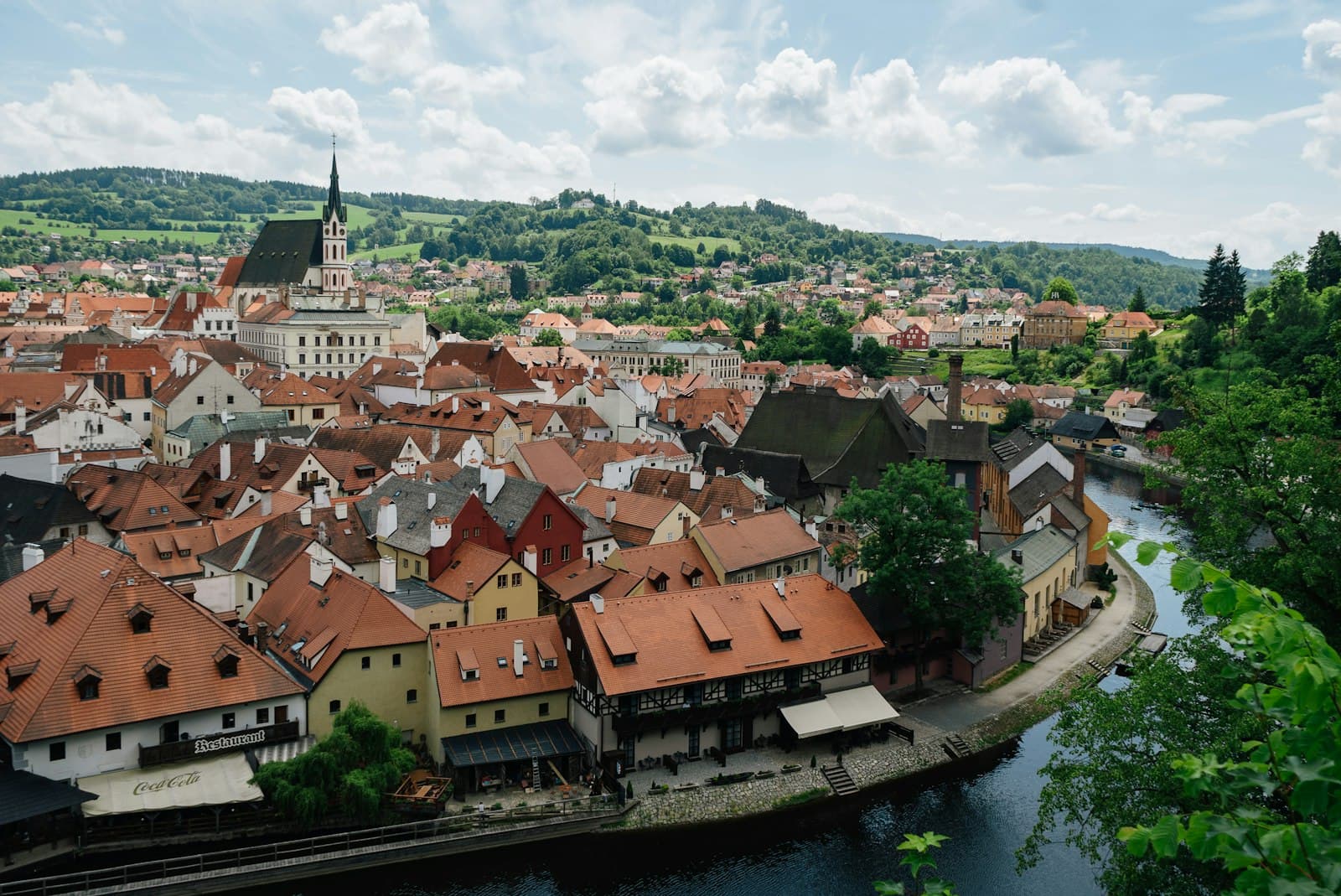
Český Krumlov, een UNESCO-werelderfgoedsite, lijkt bijna in de tijd te zijn opgeschort, met zijn middeleeuwse en renaissance-architectuur die gracieus buigt rond een nauwe meander van de Moldau-rivier. Dit Zuid-Boheemse stadje, met zijn dominante kasteelcomplex, biedt een visueel feest van gotische, renaissance- en barokke gevels, waarvan vele nog steeds hun oorspronkelijke middeleeuwse karakter behouden.
Český Krumlov binnenstappen voelt als het betreden van een levend sprookjesboek. De indeling van de stad, een charmante warboel van eeuwenoude gebouwen, nodigt uit tot doelloos dwalen. Het is een plek waar je gemakkelijk kunt verdwalen in smalle, met stenen geplaveide passages, om vervolgens uit te komen op een uitkijkpunt met uitzicht op de terracotta daken en de kronkelende rivier beneden.
Hoewel populair, vooral bij dagjesmensen, onthult Český Krumlov zijn magie echt in de rustigere uren - vroege ochtenden en avonden - wanneer de drukte afneemt en het verlichte kasteel een betovering werpt over de slapende stad. Dit is het moment waarop zijn ware karakter naar voren komt.
De geschiedenis van Český Krumlov strekt zich uit tot de Oudere Steentijd, met bewijs van massale bewoning in de Bronstijd en Keltische aanwezigheid rond 400 voor Christus. Slavische stammen vestigden zich in het gebied vanaf de 6e eeuw na Christus en gebruikten de Moldau-rivier voor handelsroutes. De naam van de stad, 'Krumlov', is naar verluidt afgeleid van het Middelhoogduitse 'Krumme Aue', wat 'kromme weide' betekent, een passende beschrijving voor de locatie binnen de dramatische bocht van de Moldau. Het adjectief 'Český' (Boheems) werd in de 15e eeuw toegevoegd om het te onderscheiden van een andere stad.
Kasteel Český Krumlov, het bepalende kenmerk van de stad, werd kort voor 1250 gesticht door een lokale tak van de adellijke Vítkovci-familie. De stad zelf ontwikkelde zich in twee fasen: Latrán, spontaan gebouwd onder het kasteel en bewoond door mensen die ermee verbonden waren, en de Oude Stad, een nieuwe nederzetting. De eerste schriftelijke vermelding van Český Krumlov, als 'Chrumbenowe', verscheen in een akte uit 1253.
De belangrijkste periode in de geschiedenis van Český Krumlov begon toen de familie Rosenberg de Krumlovse landgoederen verwierf. Ze maakten Krumlov hun hoofdverblijf, en onder hun heerschappij bloeiden zowel de stad als het kasteel op. De Rosenbergs waren instrumenteel in het vormgeven van het 14e-eeuwse uiterlijk van de stad, waarbij Peter I von Rosenberg de Sint-Vituskerk stichtte en in 1334 Joodse gemeenschappen naar de stad uitnodigde. De 16e eeuw wordt beschouwd als het Gouden Tijdperk van de stad, dat kunstenaars, wetenschappers en alchemisten uit heel Europa aantrok. Ambachten en handel bloeiden, uitgebreide huizen werden gebouwd en de stad verwierf privileges zoals het recht om te malen, bier te brouwen en markten te houden.
Nadat de mannelijke lijn van de Rosenbergs in 1611 uitstierf, ging het domein in 1622 over naar het Huis Eggenberg. Onder hun eigendom werden het kasteel en de stadshuizen in barokke stijl verbouwd, en barokke kunst werd prominent in kerkmeubilair. De Eggenbergs hadden de controle tot 1717, waarna de landgoederen overgingen naar het Huis Schwarzenberg, die de stad bleven moderniseren en ontwikkelen.
Český Krumlov ontsnapte grotendeels aan belangrijke veldslagen of bombardementen tijdens de Tweede Wereldoorlog, hoewel de Duitse bevolking in 1945 werd verdreven na de bevrijding door het Amerikaanse leger. Sinds het midden van de jaren zestig is er een toegewijde inspanning om de historische integriteit van Český Krumlov te behouden, wat culmineerde in de inschrijving op de UNESCO-lijst van cultureel en natuurlijk werelderfgoed in 1992. Tegenwoordig is de goed bewaard gebleven gotische, renaissance- en barokke architectuur een schoolvoorbeeld van een kleine middeleeuwse stad in Centraal-Europa, een bewijs van blijvende schoonheid.
Het Kasteel en Chateau Český Krumlov is het meest prominente herkenningspunt van de stad en het op één na grootste kasteelcomplex in Tsjechië. Je kunt er vrij rondlopen op de binnenplaatsen en de terreinen, genietend van weidse uitzichten over de stad. Beklim de Kasteeltoren voor ongeëvenaarde panoramische vergezichten over Český Krumlov en de Moldau-rivier, een uitzicht dat de omarming van de stad door het water werkelijk vastlegt.
Verbonden met het kasteel is de Mantelbrug, een dramatische overdekte boogbrug met meerdere niveaus die een ander uitstekend uitkijkpunt biedt. Binnen het kasteelcomplex is het Baroktheater een zeldzaam overblijfsel, een van de best bewaarde 18e-eeuwse baroktheaters ter wereld, compleet met originele decors, rekwisieten en podiummechanismen. Hoewel optredens zeldzaam zijn vanwege de leeftijd, bieden rondleidingen een kijkje in de ingewikkelde werking ervan, een stap terug in een vervlogen tijdperk van dramatische kunsten.
Dwaal door de Oude Stad, een UNESCO-werelderfgoedsite, waar elke straat en elk gebouw een verhaal vertelt. De Sint-Vituskerk, met zijn hoge boogramen, is een ander architectonisch hoogtepunt. Overweeg voor een ander perspectief een houten vlotriviercruise op de Moldau, een populaire activiteit die unieke uitzichten op de stad vanaf het water biedt en de contouren vanuit een nieuwe hoek onthult.
Naast de belangrijkste bezienswaardigheden, verken je het Museum Fotoatelier Seidel, een bewaard gebleven fotostudio die een kijkje biedt in het leven van begin 20e eeuw, of het Regionaal Museum voor een diepere duik in de geschiedenis van de regio. Voor een eigenzinnige ervaring bezoek je het Spiegelkabinet en de Lachhal aan de Široká Straat, een moment van speelse afleiding.
De schouderseizoenen van mei en september bieden een ideale balans tussen aangenaam weer, beheersbare drukte en redelijke prijzen. De temperaturen zijn comfortabel om te wandelen, de kasteeltuinen staan in bloei en het licht schildert de stad vaak in perfecte tinten voor fotografie.
Juli en augustus brengen het warmste weer en de langste dagen, maar ook de piek van de toeristische drukte en hogere accommodatiekosten. Als je in de zomer bezoekt, mik dan op de vroege ochtenden of late namiddagen om de drukste tijden te vermijden, wanneer de stad echt ontwaakt of tot rust komt. De winter (december-februari) biedt een magische, rustigere ervaring met feestelijke kerstmarkten en mogelijk besneeuwde landschappen, hoewel de daglichturen korter zijn en sommige diensten mogelijk beperkt zijn, wat een ingetogen charme geeft.
Het historische centrum van Český Krumlov is grotendeels autovrij, waardoor het uitzonderlijk goed beloopbaar is. De meeste bezienswaardigheden liggen op 10-15 minuten loopafstand van het centrale plein. Wees voorbereid op enkele klimmetjes, vooral naar het kasteel, dus comfortabele schoenen zijn essentieel om de oude paden te navigeren.
Voor vervoer naar Český Krumlov zijn bussen vanuit Praag frequent en duren ongeveer drie uur. Hoewel er een directe treinverbinding vanuit Praag is, duurt deze over het algemeen langer. Shuttlediensten zijn ook beschikbaar vanuit Praag, Linz, Wenen en Salzburg, vaak met hotelaflevering, wat zorgt voor een naadloze aankomst. Als je met de auto arriveert, is er parkeergelegenheid buiten de voetgangerszone. Overnachten wordt sterk aanbevolen om de stad te ervaren voor en na de dagjesmensen, wanneer het ware karakter zich ontvouwt.
Český Krumlov — Koreaans, Chinees, Hebreeuws en nog 29 talen, elke stop verteld door een moedertaalspreker. Het grootste taalaanbod van alle zelfgeleide audiotours.
Beschikbaar in: