Musée Nicéphore Niépce
The world's earliest photograph, a quiet view from a window, emerged not with a quick click, but through a painstaking process that unfolded over many hours.
Full story unlocks in the tour
 Benjamin Smith / CC BY-SA 4.0, via Wikimedia Commons
Self-guided audio walking tour of Chalon-sur-Saône — GPS route, offline playback, story-driven narration in 32 languages.
“Where the Saône River flows, and the very first photograph began.”
Not the postcards. The stories even locals don't know — whispered in your ear, right where they happened.
The world's earliest photograph, a quiet view from a window, emerged not with a quick click, but through a painstaking process that unfolded over many hours.
This ancient bridge has witnessed centuries of life along the Saône, and it holds a subtle tribute to Chalon's most renowned inventor.
Wander through the lively market square, and you might notice something particular about the old wooden buildings that line its edges.
Discover every secret of Chalon-sur-Saône
Every address, every reveal in full — in your ear, right where it happened.
You pick your stops. You walk. The voice reveals what the others miss.
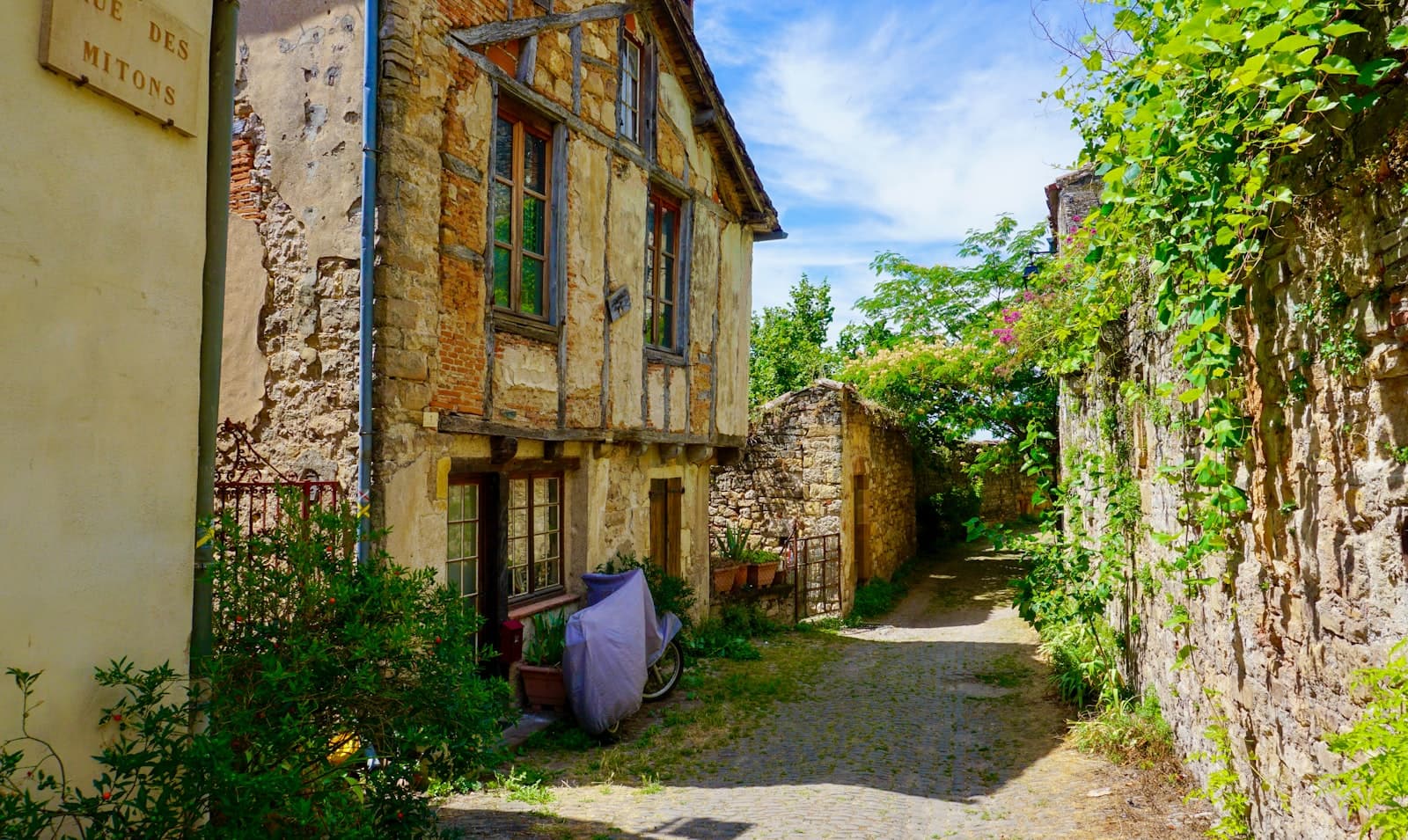
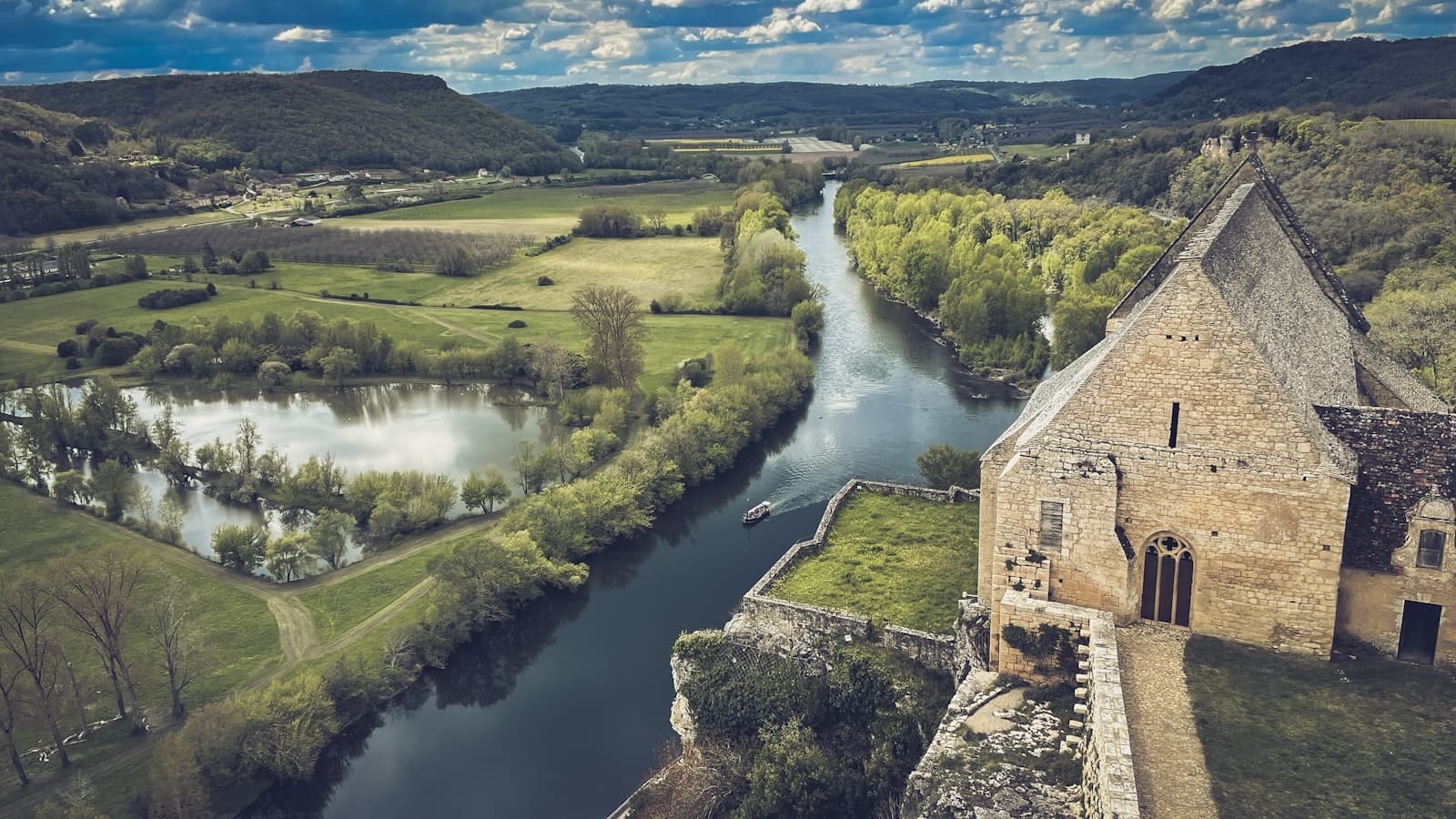
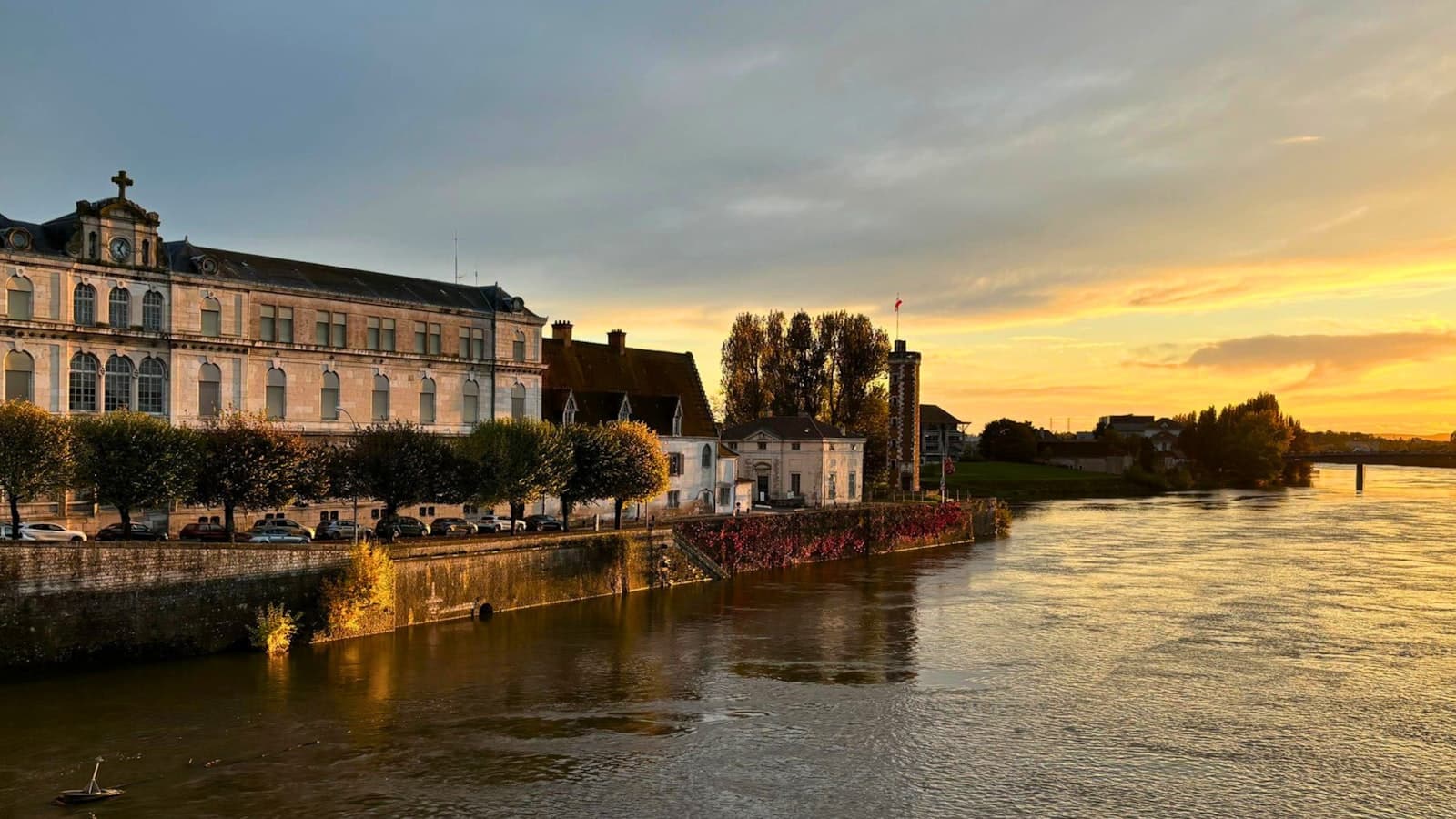
Your self-guided audio tour of Chalon-sur-Saône is ready — pick your landmarks, choose your language, and start the moment you arrive.
BuyLume has a built-in augmented-reality guide. Hold your phone up and its camera shows the street ahead of you, with a glowing arrow laid over the real view that always points to your next stop — no map to puzzle over, no wrong turns. Like everything in Lume, it works fully offline.
Chalon-sur-Saône, a city in the Bourgogne-Franche-Comté region of eastern France, rests gracefully along the Saône River. This dynamic urban center, the largest in its department, has long been a crucial point for trade and transport, deeply connected to the river that flows through its core.
Beyond its commercial significance, Chalon-sur-Saône is recognized as a 'City of Art and History.' It is a place where ancient Roman foundations meet medieval character and a profound contribution to modern technology. The city invites exploration, from its active market squares to its peaceful riverside paths, offering a blend of cultural depth and the Burgundian way of life.
## From Roman Outpost to Burgundian Seat Chalon-sur-Saône's story begins in antiquity as Cabillonum, an important town for the Gallic tribe of Aedui. Julius Caesar himself mentioned it in his Gallic War in 58 BC, noting its role as a significant commercial crossroads accessible by both land and water. The Romans recognized its strategic position, establishing it as a river port and a hub for road communications, including the Via Agrippa.
By the 6th century, Chalon-sur-Saône's importance grew further when King Guntram chose it as a de facto capital of Burgundy. This period solidified its status as a Christian center, with the establishment of a bishopric and the convening of a Church Council. However, its prominence also meant it was frequently subjected to attacks until the 10th century. In feudal times, it became the seat of a countship, and in 1256, Hugh IV, Duke of Burgundy, granted the town a charter.
## Medieval Defenses and Modern Fortitude The city's defensive structures evolved over centuries. A Gallo-Roman enclosure was constructed in the late 3rd and early 4th centuries, with remnants like the Tour de l'Evêché, Tour de Marcilly, and Tour Saudon still visible. In the 16th century, new fortifications were designed by Sienese engineer Girolamo Bellamarto to adapt to changing warfare. These ramparts and bastions, including Royal, Saint-Pierre, Saint-Paul, and Saint-Vincent, now provide pleasant strolling paths. Chalon-sur-Saône also notably resisted Austrian troops in 1814.
## The Genesis of Photography Chalon-sur-Saône holds a singular place in world history as the birthplace of photography. Nicéphore Niépce, born here in 1765, is credited with inventing photography, capturing the first enduring photograph in 1826 or 1827. This pioneering spirit continues to be honored, with the city housing the Musée Nicéphore Niépce, a museum dedicated to the story of photography.
Today, Chalon-sur-Saône is the second most important manufacturing town in Burgundy and a significant administrative and commercial center for the Saône valley. It has been awarded the 'Ville d'Art et d'Histoire' (City of Art and History) label, acknowledging its profound historical and architectural legacy.
Begin your journey in the old quarter around Place Saint-Vincent, where the Saint-Vincent Cathedral stands, displaying architectural styles spanning from the 8th to the 19th centuries. The square itself is a lively gathering place, often hosting markets on Fridays and Sundays, framed by delightful half-timbered houses.
A short walk leads to the Musée Nicéphore Niépce, a vital stop for anyone curious about the origins of photography. This museum holds millions of photographs, thousands of cameras, and interactive exhibits detailing the unfolding of the photographic image. Across from the museum, on Saint-Laurent Island, you will find the Tour du Doyenné, a 15th-century tower offering expansive city views. The island also features the Pont Saint-Laurent, an 11th-century stone bridge with distinctive obelisks.
For art and archaeology, the Musée Vivant Denon offers a fine collection of European paintings and Gallo-Roman artifacts, providing insight into Chalon's ancient past. Take the opportunity for a riverside walk along the Saône or a boat tour to see the city from a different perspective. The Canal du Centre also provides scenic cycling routes.
The most agreeable time to visit Chalon-sur-Saône for outdoor pursuits is from mid-June to mid-September. During these months, temperatures are comfortable, generally ranging from 22°C to 28°C (72°F to 82°F), with July being the warmest month. This period also offers the clearest skies and peak sunshine hours, with July averaging around 8.6 hours of sunshine per day. While some rainfall may occur, it balances sunny days, making it suitable for exploring the city and enjoying outdoor activities. Autumn offers a different character, with vineyards transforming into vivid colors and local gastronomy festivals taking place.
Chalon-sur-Saône is easily reached, situated approximately 341 km southeast of Paris and 140 km north of Lyon. High-speed trains connect Paris to Lyon, with onward connections to Chalon, making the journey from Paris about 2.5 hours. The Autoroute du Soleil (A6) passes by the city, providing good road access from Dijon and Mâcon. Within the city, walking and cycling are convenient ways to move around, and a local bus network serves the city and its suburbs.
The city offers a range of accommodation options and numerous restaurants and bars, particularly in the city center and on Saint-Laurent Island, catering to various tastes and budgets. The Tourist Office of Chalon-sur-Saône can provide further practical and cultural information.
Chalon-sur-Saône in Korean, in Chinese or in Hebrew — and 29 more languages, every stop narrated by a native voice. The widest language range of any self-guided audio tour.
Available in: