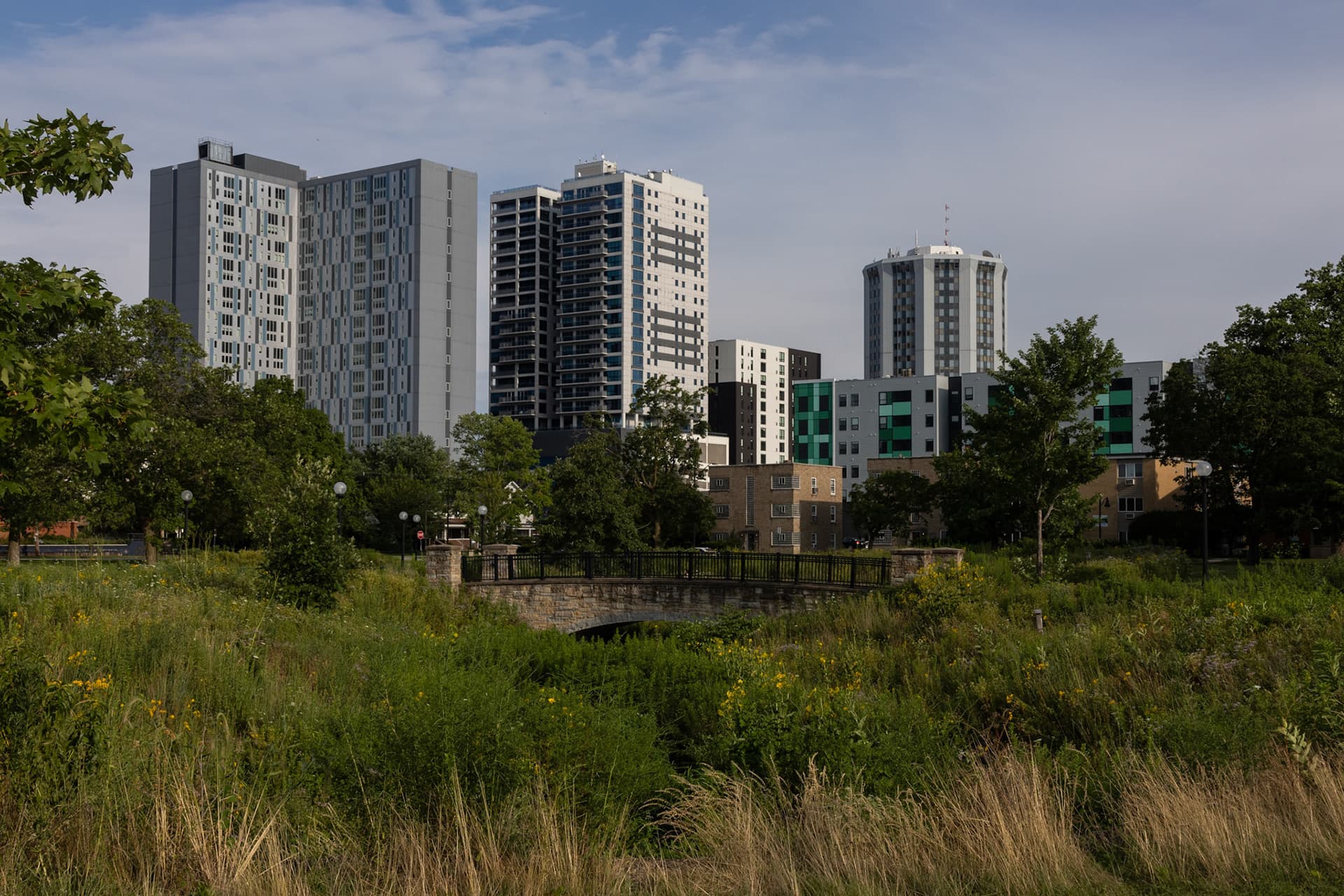
ChampaignBonkerStonker29 / cc by-sa 4.0, via Wikimedia Commons
US

Champaign

Self-guided audio walking tour of Champaign — GPS route, offline playback, story-driven narration in 32 languages.

Beyond the prairie, a nexus of unexpected innovation and global flavors.

The secrets of Champaign

Champaign, as no one tells it.

Not the postcards. The stories even locals don't know — whispered in your ear, right where they happened.

3 secrets below. Many more wait inside the tour.
University of Illinois Urbana-Champaign

Before YouTube and PayPal became household names, their genesis can be traced to a surprising location.

Full story unlocks in the tour
Champaign's Name

The city's name evokes images of celebratory bubbly, but its true origin is far more grounded.

Full story unlocks in the tour
Former Resident's Musical Connection

A Grammy-winning rapper and actor once called Champaign home, influencing a unique musical legacy.

Full story unlocks in the tour
The full tour

Discover every secret of Champaign

Every address, every reveal in full — in your ear, right where it happened.

Get the key to Champaign

You pick your stops. You walk. The voice reveals what the others miss.

Champaign — a park bench sitting next to a lake
Photo: Gayatri Pandkar / Unsplash
Champaign — a wooden cutting board topped with cheese and crackers
Photo: Timothy James / Unsplash
Choose your time

How long do you have in Champaign?

Your self-guided audio tour of Champaign is ready — pick your landmarks, choose your language, and start the moment you arrive.

Buy
About Champaign

The story of Champaign

Champaign, Illinois, often paired with its sister city Urbana, offers a distinctive blend of academic vitality and Midwestern allure. This east-central Illinois city is primarily known as the home of the University of Illinois Urbana-Champaign, which infuses the area with a youthful spirit, varied culture, and a strong emphasis on ingenuity. The metropolitan area supports a population of approximately 153,000 residents, creating a lively urban atmosphere balanced with the welcoming feel of the American heartland.

Beyond its academic renown, Champaign has garnered recognition as a culinary destination, earning the title of Midwest Living's 'Greatest Midwest Food Town.' This diverse food scene is a direct result of the university's significant international population, with over 11,000 international students and scholars from 110 countries contributing to a wide array of global cuisines available. From African to Vietnamese, the city's restaurants offer exceptional quality and service, rivalling those found in larger metropolitan areas.

Champaign's flat, open landscape, derived from the French word 'champaigne,' provides a backdrop for both urban exploration and access to natural escapes. The city maintains a strong commitment to sustainability, evidenced by initiatives like Urbana's Market at the Square, one of Illinois' largest farmers' markets, and pioneering recycling programs. Whether exploring its historic downtown, dynamic arts scene, or cheering on the Fighting Illini, Champaign presents a memorable experience for visitors.

History

From Railroad Stop to Innovation Hub

Champaign's origins trace back to 1855, when the Illinois Central Railroad laid its tracks two miles west of downtown Urbana. This new settlement, initially dubbed 'West Urbana,' quickly grew around the railway, transforming into a regional center for trade and agriculture. By 1860, the community acquired a city charter and was officially renamed Champaign, a name derived from Champaign County, Ohio, which in turn took its name from the French word for 'open, level country.'

The arrival of the railroad was a pivotal moment, stimulating population growth and the flourishing of businesses like grain elevators and mercantile stores. The city's destiny was further shaped in 1867 with the founding of the Illinois Industrial University in nearby Urbana, which later became the University of Illinois. This institution fostered a 'twin city' dynamic, driving significant economic and cultural development for both Champaign and Urbana.

The early 20th century saw Champaign continue to expand, with infrastructure improvements like streetcars and paved roads. The university's influence deepened, becoming a major driver of the city's growth. Post-World War II, Champaign experienced suburbanization, with new neighborhoods and shopping centers emerging. Crucially, the university's advancements in research, particularly in early computer technology like the PLATO system, elevated Champaign's status as a center for innovation. This legacy of technological pioneering continues today, with the University of Illinois Research Park hosting numerous companies and tech startups.

Throughout its history, Champaign has balanced its agricultural roots with a forward-looking embrace of technology and diversity. The city has evolved from a simple railroad depot into a modern center of culture and commerce, all while preserving its unique heritage. Notable historic landmarks, such as the Cattle Bank building constructed in 1858, stand as testaments to its past.

What to see

The University of Illinois Urbana-Champaign is central to the city's identity, offering a wealth of attractions. Stroll through the Main Quad, a verdant expanse surrounded by stately academic buildings, perfect for a leisurely walk. The campus is also home to several museums, including the Krannert Art Museum, which offers free admission to its collection spanning ancient Egypt to modern photography. The Spurlock Museum showcases world cultures, providing another engaging, free-to-enter experience. For a moment of tranquility, visit the Japan House, where you can experience tea ceremonies and seasonal festivals amidst serene gardens.

Beyond the university, downtown Champaign is a lively district filled with local restaurants, cafes, and boutiques. The Virginia Theatre, a historic performing arts center, hosts concerts, plays, films, and the acclaimed Roger Ebert's Film Festival. For outdoor enthusiasts, Meadowbrook Park features the Wandell Sculpture Garden, combining nature with art. Just outside the city, the Middle Fork River Forest Preserve is Illinois' only International Dark Sky Park, offering exceptional stargazing opportunities. You can also explore the Illinois Amish Country for a glimpse into a different way of life, complete with horse-drawn buggies and artisan goods.

When to visit

Champaign experiences a humid continental climate with four distinct seasons. The best times to visit for comfortable weather are from May to June and again from mid-August to October. During these periods, temperatures are mild and humidity is lower. Summers, particularly July, are warm to hot and can be muggy, with average highs around 85°F (30°C). Winters, from late November to early March, are very cold with frequent snowfalls, and average January temperatures around 26°F (-3°C). Precipitation is moderate throughout the year, with May and June typically being the wettest months.

Practical

The primary airport serving Champaign is the University of Illinois Willard Airport (CMI), located just six miles from the city center. CMI offers direct flights to major airport hubs, facilitating connections nationwide. For more flight options, Central Illinois Regional Airport (BMI) is about 48 miles away, and major international airports like Chicago O'Hare (ORD) and Indianapolis International (IND) are within driving distance.

Once in Champaign, the Champaign-Urbana Mass Transit District (MTD) provides an award-winning public bus service throughout Champaign, Urbana, and the University of Illinois campus. MTD is recognized for its low to zero-emission fleet and high customer satisfaction. A one-way trip is affordable, and routes can be planned online or via phone. The Illinois Terminal in downtown Champaign serves as a multi-modal hub, connecting local buses, intercity bus providers like Burlington Trailways, and Amtrak passenger rail. For areas outside the MTD service, the Champaign County Area Rural Transit System (C-CARTS) offers on-demand public transportation.

Regarding safety, crime rates in Champaign are higher than the national average, particularly in certain neighborhoods. The southwest part of the city is generally considered the safest. Visitors are advised to be aware of their surroundings, especially at night, and take standard precautions like locking doors and windows.

Good to know
What is Champaign known for?
Champaign is best known as the home of the University of Illinois Urbana-Champaign, its diverse international population, and a lively culinary scene. It's also recognized for its history of innovation, particularly in technology.
How do I get around Champaign?
The Champaign-Urbana Mass Transit District (MTD) provides extensive bus service within Champaign, Urbana, and the university campus. Amtrak and intercity bus services are available at Illinois Terminal, and taxis and rideshares operate throughout the city.
What is the weather like in Champaign?
Champaign experiences a humid continental climate with four distinct seasons. Summers are warm and humid, while winters are very cold with snow. Spring and fall offer milder temperatures.
Is Champaign a safe city to visit?
Crime rates in Champaign are higher than the national average in some areas, so it's advisable to be aware of your surroundings, especially in certain neighborhoods. The southwest part of the city is generally considered safer.
Are there any unique attractions in Champaign?
Yes, Champaign is home to Illinois' only International Dark Sky Park at the Middle Fork River Forest Preserve, offering exceptional stargazing. The city also has a long history of technological innovation, with connections to the development of the first modern web browser.
What kind of food can I expect in Champaign?
Champaign offers a remarkably diverse food scene, influenced by its international university population. You can find a wide range of global cuisines, from African to Vietnamese, earning it recognition as a top food town in the Midwest.
On the map
Champaign
From€9.90
No booking · activate anytime · 12h to walk it
Get the key to Champaign