The 'End of the World Cinema'
Deep in the Sinai desert, an open-air cinema once stood, mysteriously abandoned. What became of it?
Full story unlocks in the tour
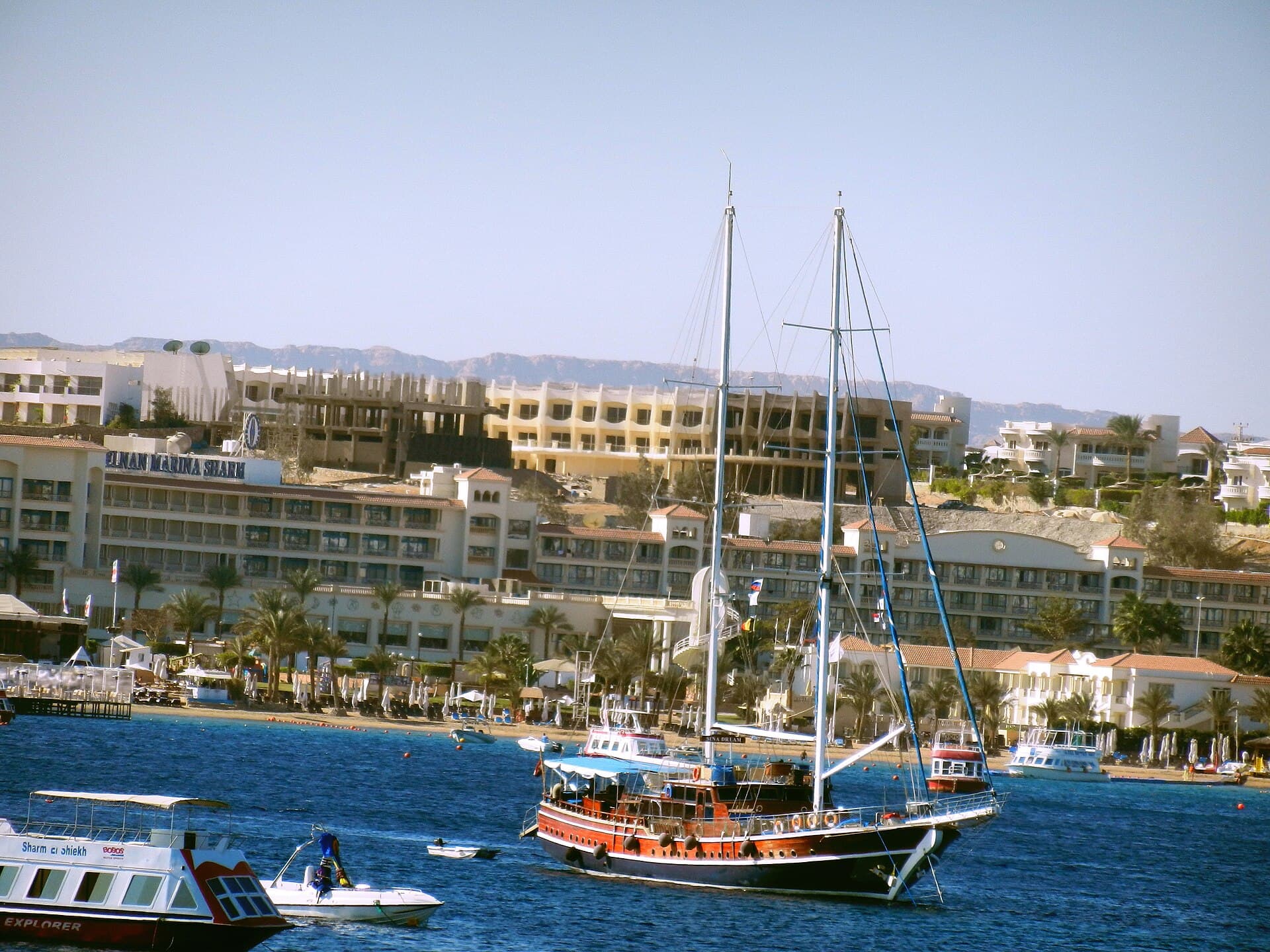 Tanya Dedyukhina / CC BY 3.0, via Wikimedia Commons
“Where the desert meets the Red Sea, ancient echoes and coral gardens unfold.”
Not the postcards. The stories even locals don't know — whispered in your ear, right where they happened.
Deep in the Sinai desert, an open-air cinema once stood, mysteriously abandoned. What became of it?
Beneath the waves of this celebrated diving spot, a secret lies, not merely of marine life, but of history.
While known for their clear waters, certain stretches of the coast present an unexpected caution for swimmers.
Discover every secret of Charm el-Cheikh
Every address, every reveal in full — in your ear, right where it happened.
You pick your stops. You walk. The voice reveals what the others miss.
No tours available yet. Check back soon — we're preparing them.
Sharm el-Cheikh, often known simply as Sharm, graces the southern tip of Egypt's Sinai Peninsula, where the desert's expanse meets the clear, inviting waters of the Red Sea. It functions as the administrative center for the South Sinai Governorate, overseeing smaller coastal settlements and the rugged mountainous interior, including St. Catherine and Mount Sinai. Once a quiet fishing village and military station, Sharm el-Cheikh has blossomed into an international resort city, drawing millions of visitors each year.
The city's allure stems from its singular blend of natural grandeur and contemporary conveniences. The Red Sea's vivid coral reefs and varied marine inhabitants establish it as a premier destination for snorkeling and scuba diving. Beyond the shoreline, the golden dunes of the Sinai desert beckon adventurers with opportunities ranging from camel excursions to stargazing beneath vast night skies. Sharm el-Cheikh has also earned recognition as 'The City of Peace,' having hosted numerous international conferences and diplomatic gatherings.
## From Strategic Outpost to 'City of Peace' Sharm el-Cheikh, meaning 'Sheikh's Bay' in Arabic, began as a small, secluded fishing settlement and a valuable observation point due to its strategic location overlooking the Straits of Tiran at the mouth of the Gulf of Aqaba. Its significance grew in the 20th century, particularly during World War II, when the British identified its potential as a naval base.
The area played a considerable role in regional conflicts. It was occupied by Israel during the Suez Crisis in 1956 and returned to Egypt in 1957. A United Nations peacekeeping force was stationed there until 1967, when its withdrawal by Egyptian President Gamal Abdel Nasser contributed to the Six-Day War, leading to its reoccupation by Israel. During the Israeli occupation from 1967 to 1982, an Israeli settlement named Ofira was constructed, which, unlike other settlements, was handed over intact to Egypt and flourishes today.
Following the Egypt-Israel peace treaty of 1979 and the return of the Sinai Peninsula to Egypt in 1982, Sharm el-Cheikh began its substantial transformation into a tourist destination. Egyptian President Hosni Mubarak designated it as 'The City of Peace,' and the government actively supported its development. This period saw considerable investment from Egyptian and global businessmen, leading to the construction of numerous resorts, mosques, and churches. The city's rapid expansion and focus on tourism also led to modern systems in architecture, entertainment, and hotel services, earning it recognition from UNESCO as one of the top five cities of peace in the world.
Sharm el-Cheikh offers a range of activities, both on land and within the Red Sea. A primary draw is Ras Mohammed National Park, Egypt's first national marine park, celebrated for its world-class diving and snorkeling opportunities. Here, explore colorful coral reefs, encounter diverse marine life, and even spot the remnants of sunken ships.
For desert adventures, consider a desert excursion with Bedouins. This can involve jeep tours, quad biking, or camel rides through the Sinai Desert, culminating in traditional tea and dinner under the stars. You might also visit the Colored Canyon, a natural wonder with striking multicolored rock formations.
Within the city, Naama Bay is a bustling area with a promenade, shops, restaurants, and a lively nightlife. The Old Market (Sharm Old Town) offers a glimpse into local culture, with stalls selling spices, textiles, and souvenirs. While there, admire the Al Sahaba Mosque, known for its distinctive architectural style. For a calmer experience, Nabq Protected Area combines desert landscapes with mangrove forests, providing opportunities for hiking, bird-watching, and tranquil beaches.
The most pleasant times to visit Sharm el-Cheikh are from mid-April to early June and from September to mid-November. These shoulder seasons offer comfortable temperatures, excellent water conditions for diving and snorkeling, and manageable crowd levels. Temperatures during these periods typically range between 25°C and 30°C. Winter months, from December to February, are also agreeable with mild temperatures around 18-23°C, making them suitable for desert activities and cultural tours. Summers, from June to August, are very hot, with temperatures often surpassing 35°C, which can be intense for some visitors.
The local currency is the Egyptian Pound, and while cards are accepted in many establishments, carrying cash is useful for taxis, markets, and smaller shops. Taxis are the most common way to navigate the city, though it's wise to agree on the fare before beginning your journey. Some hotels also provide shuttle services to popular tourist areas. Sharm el-Cheikh International Airport (SSH) is conveniently situated near the city center, approximately 15 km away, with domestic flights connecting to Cairo and other Egyptian cities.
When planning your visit, consider booking hotels and tours in advance, particularly during peak season. It's also recommended to use reef-safe sunscreen to protect the delicate Red Sea coral reefs. Bargaining is a common practice in local markets, so be ready to negotiate for fair prices.