Tsjeboksary Baai
De opvallende Tsjeboksary Baai, een centrale ontmoetingsplek, was er niet altijd. Het ontstond uit een verrassende transformatie.
Volledig verhaal ontgrendeld in de tour
 Алексей Белобородов / CC BY-SA 3.0, via Wikimedia Commons
Zelfgeleide audiowandeling door Tsjeboksary — GPS-route, offline afspelen, meeslepende vertelling in 32 talen.
“Waar de Wolga door de Tsjoevasjische cultuur stroomt, onthult Tsjeboksary verhalen geëtst in steen en water.”
Niet de ansichtkaarten. De verhalen die zelfs locals niet kennen — gefluisterd in je oor, precies waar ze gebeurden.
De opvallende Tsjeboksary Baai, een centrale ontmoetingsplek, was er niet altijd. Het ontstond uit een verrassende transformatie.
Deze duurzame stenen kathedraal getuigt van het verleden van Tsjeboksary, maar het is de enige overlevende van een eens machtige verdedigingsstructuur.
In een land dat wordt gedomineerd door het Russisch, is Tsjeboksary een bolwerk voor een taal die een unieke positie inneemt onder de Turkse talen.
Ontdek elk geheim van Tsjeboksary
Elk adres, elke onthulling volledig — in je oor, precies waar het gebeurde.
Jij kiest je stops. Jij wandelt. De stem onthult wat de anderen missen.


Je zelfgeleide audiotour van Tsjeboksary is klaar — kies je bezienswaardigheden, kies je taal en start zodra je aankomt.
KopenLume heeft een ingebouwde augmented-reality-gids. Houd je telefoon omhoog: de camera toont de straat voor je, met een oplichtende pijl over het echte beeld die altijd naar je volgende stop wijst — geen kaart om uit te puzzelen, geen verkeerde afslagen. Zoals alles in Lume werkt het volledig offline.
Tsjeboksary, de hoofdstad van de Tsjoevasjische Republiek, is een boeiende stad waar de Tsjeboksarka-rivier de machtige Wolga ontmoet. Deze groene stedelijke ruimte biedt een duidelijke mix van hedendaags leven en diepgewortelde culturele tradities. Tsjeboksary staat bekend om zijn smetteloze straten en overvloedige groene ruimtes en biedt een rustige maar toch boeiende sfeer, die reizigers uitnodigt om de diversiteit van de Wolga-regio en het unieke erfgoed van het Tsjoevasjische volk te verkennen.
Het hart van de stad is de door mensen gemaakte Tsjeboksary Baai, een favoriete plek voor de lokale bevolking om te wandelen en te socializen, met weidse uitzichten en een serene sfeer. Naast de waterkant dient Tsjeboksary als een cultureel knooppunt, de thuisbasis van onderscheidende musea, theaters die producties presenteren in zowel de Russische als de Tsjoevasjische taal, en monumenten die het zich ontvouwende verhaal en gevierde figuren eren. Met een bevolking van ongeveer 500.000 voelt Tsjeboksary levendig aan zonder overweldigend te zijn, waardoor het een toegankelijke bestemming is voor diegenen die op zoek zijn naar een authentieke Russische ervaring met een duidelijke Tsjoevasjische smaak.
## Van Oude Nederzetting tot Wolga Handelscentrum De geschiedenis van Tsjeboksary strekt zich verder terug dan de eerste geschreven vermelding in 1469, toen Russische troepen hier stopten op weg naar het Kanaat Kazan. Archeologische opgravingen onthullen dat er vanaf het einde van de 13e tot het begin van de 14e eeuw een Bulgaars-Tsjoevasjische nederzetting op deze locatie bestond. In 1555, nadat de Tsjoevasjische regio zich bij de Moskovitische staat had aangesloten, beval Tsaar Ivan de Verschrikkelijke de bouw van een houten fort in Tsjeboksary ter bescherming van de zuidelijke grenzen. Dit fort, het Tsjeboksary Kremlin, was strategisch belangrijk en omvatte het hof van de heerser, de schatkist, kerken en huizen voor edelen en soldaten.
## Commerciële Bloei en Keizerlijke Erkenning Tegen het einde van de 17e eeuw nam de defensieve rol van Tsjeboksary af en transformeerde het tot een belangrijke commerciële stad in de Wolga-regio. Deze periode zag een economische en culturele bloei, gekenmerkt door de bouw van stenen kerken en koopmanshuizen. De Vvedensky Kathedraal, gebouwd in de jaren 1660, is het eerste stenen gebouw van de stad en een overgebleven voorbeeld van deze architecturale groei. De stad verwierf bekendheid voor zijn klokkengieterij, waarbij Tsjeboksary-klokken reikten tot buiten de Wolga-regio, zelfs tot in Europa. In 1767 was Keizerin Catharina II zo onder de indruk van de schoonheid van de stad tijdens een Wolga-reis dat ze, volgens de legende, verklaarde dat het 'in alle opzichten beter was dan Nizjni Novgorod.' Tsjeboksary verkreeg officieel de status van stad binnen het Gouvernement Kazan in 1781.
## Transformatie in de 20e Eeuw en Moderne Identiteit De 20e eeuw bracht radicale veranderingen voor Tsjeboksary. In 1920 werd het het administratieve centrum van de Tsjoevasjische Autonome Oblast, en in 1925 werd het verheven tot de hoofdstad van de Tsjoevasjische ASSR. Deze nieuwe status stimuleerde aanzienlijke ontwikkeling, leidend tot bevolkingsgroei, de oprichting van onderwijsinstellingen, culturele centra en industriële ondernemingen. Het midden van de 20e eeuw vormde verder het industriële karakter van de stad, met name met de verhuizing van grote elektrische apparatenfabrieken tijdens de Tweede Wereldoorlog. Een grote transformatie vond plaats met de voltooiing van de Tsjeboksary Dam in 1978, wat leidde tot de creatie van de kunstmatige Tsjeboksary Baai en de onderdompeling van delen van de oude stad. Desondanks heeft de stad zijn geest succesvol behouden door nieuwe architecturale ensembles en monumenten, en is geëvolueerd tot een modern industrieel en cultureel centrum dat zijn lange geschiedenis harmonieus combineert met het hedendaagse leven.
Begin uw verkenning bij de Tsjeboksary Baai (Zaliv), een centraal knooppunt voor ontspannen wandelingen en weidse uitzichten. Het Moeder Beschermvrouwe Monument, een torenhoog symbool van het Tsjoevasjische volk met uitgestrekte armen, domineert de skyline. Vlakbij biedt de Vvedensky Kathedraal, het eerste stenen gebouw van de stad uit de 17e eeuw, een kijkje in vroege Russische architectuur.
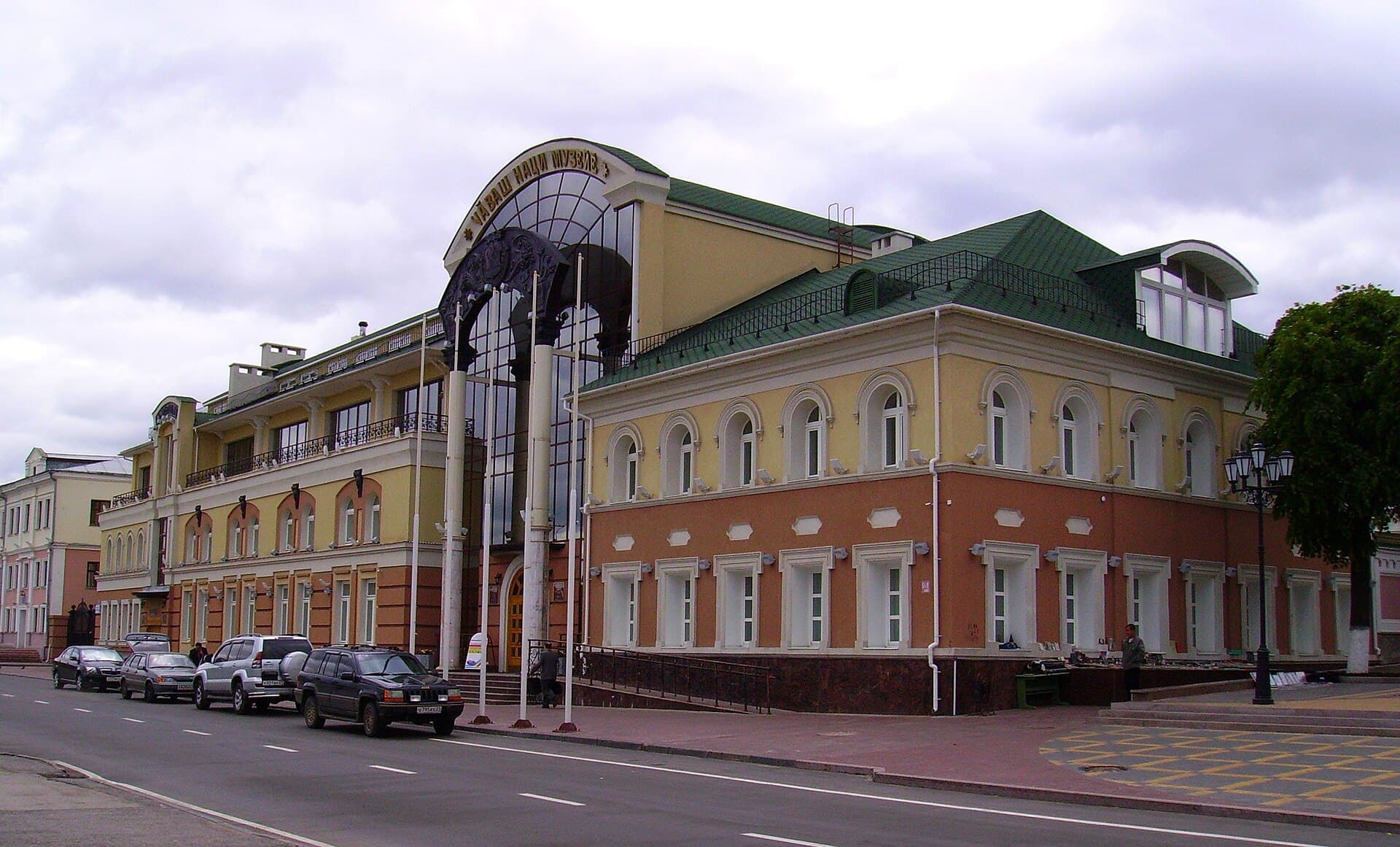
Duik in de Tsjoevasjische cultuur in het Nationale Museum van Tsjoevasjië, dat een uitgebreid beeld geeft van het zich ontvouwende verhaal en de tradities van de regio. Bezoek voor een unieke ervaring het Museum van de Geschiedenis van Tractoren, dat een collectie vintage landbouwmachines toont, of het Bier Museum, dat de langdurige brouwtradities van Tsjoevasjië als de 'hoofdstad van hop' viert. Breng hulde aan een lokale held op het Chapaev Plein en zijn monument, ter ere van Vasily Chapaev, een legendarische commandant uit de Burgeroorlog die hier in de buurt werd geboren. Mis het grillige Monument voor Ostap Bender en Kisa Vorobyaninov niet, een knipoog naar de beroemde satirische roman De Twaalf Stoelen, waarin de personages overwogen zich in Tsjeboksary te vestigen. Voor groene ruimtes kunt u Overwinningspark met zijn gedenktekens verkennen, of het Lakreevsky Bos, een natuurlijk eikenbos dat is omgevormd tot recreatiegebied.
De beste tijd om Tsjeboksary te bezoeken is tijdens de warmere maanden, van mei tot augustus. De zomers zijn aangenaam met gemiddelde temperaturen in juli rond de 19,9°C (68°F) en maxima tot 24,3°C (76°F), wat ideaal is voor buitenactiviteiten langs de Wolga-rivier en het verkennen van de parken van de stad. Lente en vroege herfst bieden ook aangenaam weer en minder drukte, met kleurrijke bladeren in de herfst. Winters zijn koud en besneeuwd, waarbij januari de koudste maand is met een gemiddelde van -9,4°C (15°F).
Tsjeboksary is goed verbonden, met een lokale luchthaven (CSY) op slechts 6 km van het stadscentrum, die vluchten naar Moskou en andere Russische steden aanbiedt. Treinreizen is ook handig, met het treinstation van Tsjeboksary minder dan een kilometer van het centrum. Zich door de stad verplaatsen is betaalbaar en gemakkelijk met een uitgebreid openbaarvervoernetwerk van trolleybussen, bussen en marshrutka's (minibusjes). Voor directe routes zijn ritdeelapps zoals Yandex.Taxi beschikbaar. Hoewel het stadscentrum beloopbaar is, liggen sommige attracties verder uit elkaar, dus het is raadzaam om uw routes te plannen. Basiskennis van Russische zinnen is nuttig, hoewel jongere mensen in toeristische gebieden mogelijk wat Engels spreken. Het is ook verstandig om kleine coupures contant geld bij u te hebben voor kleinere verkopers en openbaar vervoer.
Tsjeboksary — Koreaans, Chinees, Hebreeuws en nog 29 talen, elke stop verteld door een moedertaalspreker. Het grootste taalaanbod van alle zelfgeleide audiotours.
Beschikbaar in: