The Wilson Art Gallery and Museum
O explorador mais celebrado de Cheltenham embarcou em uma jornada fatídica para o Polo Sul, e sua história é preservada aqui.
História completa desbloqueada no tour
 Photo: Richard Bell / Unsplash
Tour de áudio autoguiado por Cheltenham — rota GPS a pé, reprodução offline, narração envolvente em 32 idiomas.
“Onde o refinamento Regency encontra a curiosidade moderna.”
Não os postais. As histórias que nem os locais conhecem — sussurradas ao seu ouvido, exatamente onde aconteceram.
O explorador mais celebrado de Cheltenham embarcou em uma jornada fatídica para o Polo Sul, e sua história é preservada aqui.
Observe atentamente as figuras que sustentam as fachadas das lojas na Montpellier Walk; elas não são exatamente o que parecem.
Cheltenham abriga um importante edifício de inteligência com um apelido bastante incomum.
Descubra cada segredo de Cheltenham
Cada endereço, cada revelação na íntegra — no seu ouvido, exatamente onde aconteceu.
Você escolhe as suas paragens. Você caminha. A voz revela o que os outros perdem.

O seu tour áudio autoguiado de Cheltenham está pronto — escolha os seus pontos de interesse, selecione o seu idioma e comece no momento em que chegar.
ComprarA Lume inclui um guia de realidade aumentada. Levante o telemóvel: a câmara mostra a rua à sua frente, com uma seta luminosa sobreposta à imagem real que aponta sempre para a sua próxima paragem — sem mapa para decifrar, sem voltas erradas. Como tudo na Lume, funciona totalmente offline.
Cheltenham, uma distinta cidade de spa em Gloucestershire, Inglaterra, oferece uma mistura cativante de arquitetura Regencial, dinamismo cultural e proximidade com os pitorescos Cotswolds. Renomada como 'A cidade Regencial mais completa da Inglaterra', suas ruas elegantes e edifícios grandiosos transportam os visitantes para uma era refinada.
Além de sua graça arquitetônica, Cheltenham floresce como um centro cultural, hospedando um calendário anual de festivais aclamados internacionalmente que celebram literatura, jazz, ciência e música. A importância histórica da cidade como um resort de saúde e férias, impulsionada pela descoberta de fontes minerais no início do século XVIII, continua a atrair visitantes em busca de relaxamento e estímulo intelectual.
Com seus calçadões arborizados, jardins floridos e uma cena culinária dinâmica, Cheltenham oferece uma experiência sofisticada e acolhedora. Serve como uma base ideal para explorar as colinas ondulantes e as aldeias pitorescas dos Cotswolds, ao mesmo tempo que oferece uma riqueza de atrações e atividades dentro de seus próprios limites.
As origens de Cheltenham remontam a mais de 1.200 anos como uma vila anglo-saxônica, registrada pela primeira vez como "Celtan hom" em 803. Recebeu uma carta de mercado em 1226 do Rei Henrique III, estabelecendo-se como um ponto focal para as vilas vizinhas e lançando as bases para seu crescimento econômico. Por séculos, permaneceu principalmente um assentamento agrícola com uma população de apenas algumas centenas.
O destino da cidade mudou dramaticamente em 1716 com a descoberta de fontes minerais. Moradores locais observaram pombos bicando depósitos de sal perto de uma fonte em Bayshill Meadows, sugerindo o conteúdo mineral único da água. Essa descoberta levou Cheltenham a ser classificada como uma cidade de spa inglesa. O empresário Capitão Henry Skillicorne, reconhecendo o potencial, aprofundou a fonte, construiu salões de assembleia e criou avenidas arborizadas, transformando Cheltenham em um destino da moda.
A popularidade de Cheltenham disparou depois que o Rei George III, buscando alívio para suas enfermidades, visitou em 1788 e permaneceu por cinco semanas. Esse endosso real cimentou sua reputação como um resort de spa de primeira linha, atraindo a nobreza e a alta sociedade. A cidade experimentou um rápido crescimento durante a era Regencial (1811-1820), um período arquitetônico que se estendeu até a década de 1840. Essa era deixou um legado duradouro de fachadas elegantes em estuque, terraços amplos e vilas grandiosas, rendendo a Cheltenham o título de cidade Regencial mais completa da Inglaterra.
Em 1850, a população de Cheltenham havia aumentado para 35.000, tornando-a a maior cidade de Gloucestershire. A era vitoriana viu a abertura de estações ferroviárias, hospitais e instituições educacionais significativas como Cheltenham College (1841) e Cheltenham Ladies' College (1854), solidificando ainda mais seu status como um centro residencial, espiritual e educacional. Embora a popularidade das curas com água mineral tenha diminuído no século XX, Cheltenham se adaptou, com seu último poço em funcionamento na Pittville Pump Room sendo restaurado em 2005.
Na era pós-Primeira Guerra Mundial, Cheltenham tornou-se o lar de um centro secreto de vigilância, a Government Code and Cypher School (GC&CS), agora conhecida como GCHQ (Government Communications Headquarters). Este edifício de inteligência de vital importância é famoso por ser apelidado de 'O Rosquinha' devido à sua forma circular. Hoje, Cheltenham continua a nutrir seu patrimônio enquanto abraça características modernas, mantendo sua beleza e apelo.
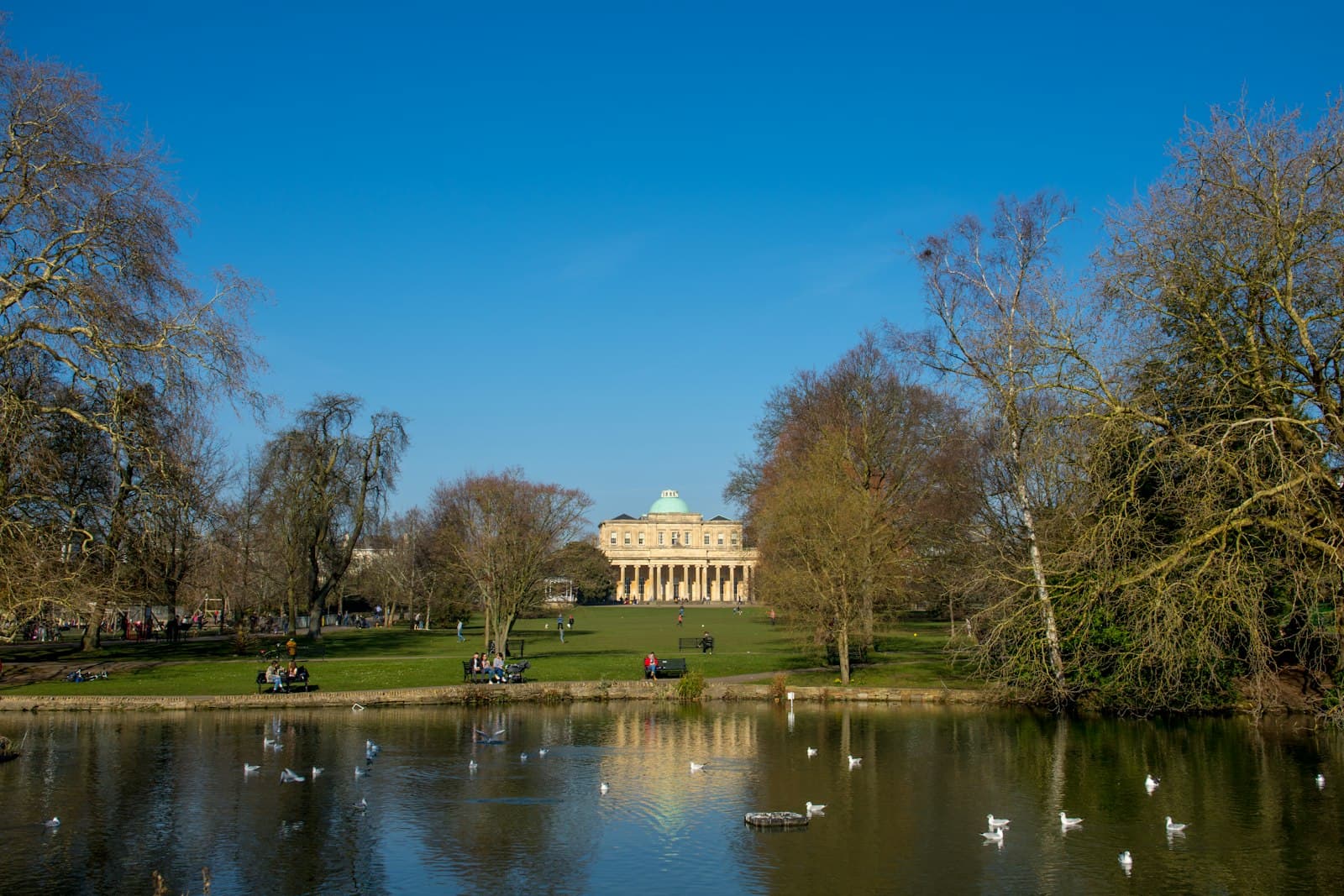
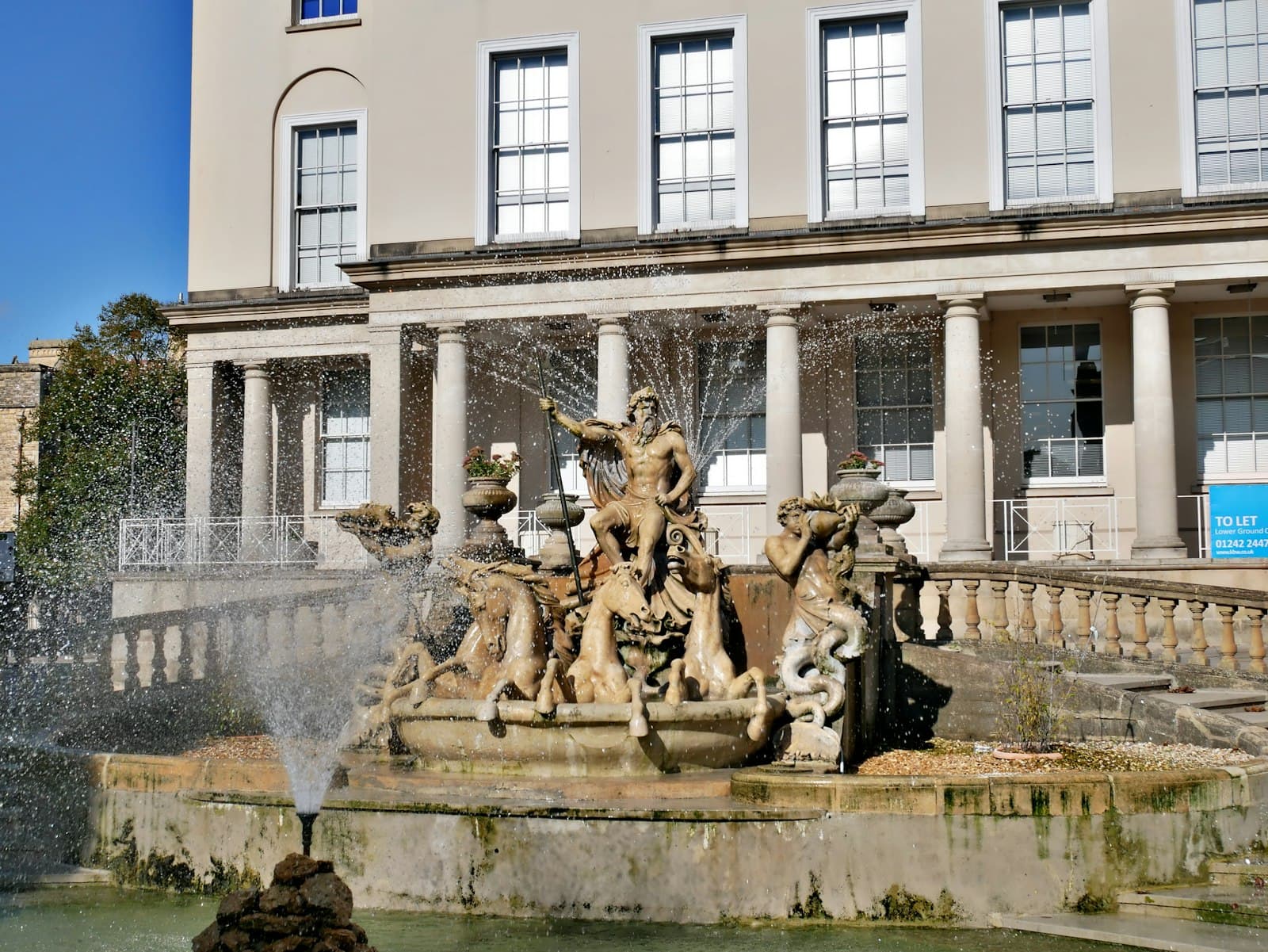
Comece sua exploração na The Promenade, uma avenida arborizada que exibe algumas das melhores arquiteturas Regenciais da Inglaterra, levando aos Long Gardens e à Fonte de Netuno. Perto dali, a Montpellier Walk é conhecida por suas distintas estátuas de Cariátides que sustentam as fachadas das lojas e oferece boutiques independentes, galerias e confeitarias. Para um gostinho do patrimônio de spa da cidade, visite a Pittville Pump Room em Pittville Park, uma grandiosa estrutura Regencial que ainda oferece águas medicinais. O próprio parque possui um lago para barcos, viveiro e áreas de lazer.
Mergulhe na cultura no The Wilson Art Gallery and Museum, que abriga a principal coleção de arte de Gloucestershire, incluindo uma coleção reconhecida internacionalmente do Movimento Arts and Crafts, e um arquivo dedicado ao explorador antártico Edward Adrian Wilson. Amantes da música podem visitar a Holst Victorian House, o local de nascimento do compositor Gustav Holst. Para entretenimento, o Everyman Theatre, um local vitoriano, oferece um programa diversificado de musicais e comédias. O Cheltenham Racecourse é um local de renome mundial, particularmente reconhecido pelo Cheltenham Festival em março.
A época ideal para visitar Cheltenham é durante os meses de primavera e verão (abril a setembro), quando o clima é ameno e os parques e jardins da cidade estão em plena floração. A primavera é particularmente bonita com flores coloridas adornando os edifícios Regenciais. Os meses de verão, de junho a agosto, oferecem temperaturas médias em torno de 17°C, com máximas atingindo 20-21°C, perfeitas para atividades ao ar livre. O outono, especialmente setembro e outubro, também é atraente com menos multidões e o início das impressionantes cores de outono dos Cotswolds, coincidindo com o Cheltenham Literature Festival. Embora os invernos sejam amenos, eles podem ser mais tranquilos e oferecer uma atmosfera festiva em dezembro.
Cheltenham é bem conectada por estrada e ferrovia. É acessível pela rodovia M5 e pela A40, e a estação Cheltenham Spa oferece serviços de trem diretos para as principais cidades, incluindo Londres (aproximadamente 2 horas), Bristol (40 minutos) e Birmingham (45 minutos). Para aqueles que viajam do exterior, serviços de ônibus diretos estão disponíveis no Aeroporto de Heathrow.
Uma vez em Cheltenham, a cidade é compacta e facilmente explorada a pé. A Stagecoach opera os principais serviços de ônibus, incluindo rotas para o Park & Ride e atrações locais, com serviços rodando com frequência a cada 15 minutos. A Royal Well Bus Station é um centro central para desembarque de ônibus e ônibus locais. Táxis estão prontamente disponíveis e aluguel de bicicletas é uma opção para se locomover. Estacionamento pago está disponível em toda a cidade, com um sistema de sentido único no centro.
Cheltenham — coreano, chinês, hebraico e mais 29 idiomas, cada parada narrada por uma voz nativa. A maior variedade de idiomas entre os passeios de áudio autoguiados.
Disponível em: