Rehe (the 'Hot River')
Before Chengde became an imperial sanctuary, its original name hinted at an unusual natural phenomenon.
Full story unlocks in the tour
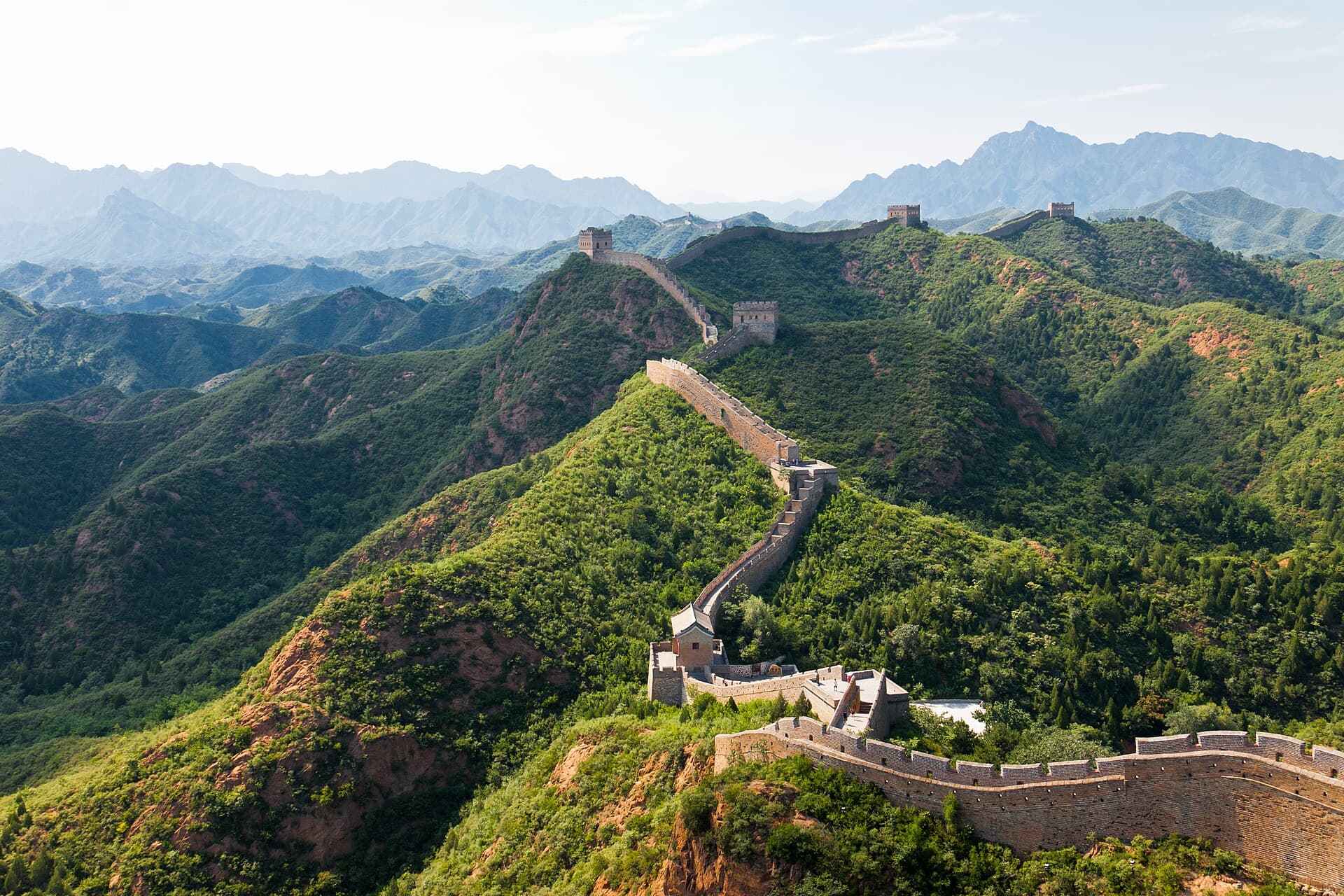 Nikolaj Potanin from Russia / CC BY-SA 2.0, via Wikimedia Commons
Self-guided audio walking tour of Chengde — GPS route, offline playback, story-driven narration in 32 languages.
“Where Qing Emperors Sought Respite and Forged an Empire”
Not the postcards. The stories even locals don't know — whispered in your ear, right where they happened.
Before Chengde became an imperial sanctuary, its original name hinted at an unusual natural phenomenon.
This grand temple, a replica of a Tibetan monastery, holds a surprising record for its central deity.
The Qing emperors' summer escape spanned a far greater expanse than even Beijing's imperial complexes.
Discover every secret of Chengde
Every address, every reveal in full — in your ear, right where it happened.
You pick your stops. You walk. The voice reveals what the others miss.


Your self-guided audio tour of Chengde is ready — pick your landmarks, choose your language, and start the moment you arrive.
BuyLume has a built-in augmented-reality guide. Hold your phone up and its camera shows the street ahead of you, with a glowing arrow laid over the real view that always points to your next stop — no map to puzzle over, no wrong turns. Like everything in Lume, it works fully offline.
Chengde, once known as Jehol or Rehe, is a prefecture-level city in Hebei province, approximately 225 kilometers (140 miles) northeast of Beijing. This city is primarily recognized as the location of the Mountain Resort, an expansive imperial garden and palace complex that served as a summer residence for Qing emperors. Far more than just a seasonal escape, Chengde functioned as a vital political center, where emperors convened court, welcomed foreign envoys, and made significant state decisions, particularly to manage relations with Mongolian tribes and Tibetan hierarchs.
The city's distinctive architectural landscape reflects a deliberate fusion of Han, Tibetan, and Mongolian styles, especially apparent in the surrounding Eight Outer Temples. This blend of cultures transformed Chengde into a symbol of a multi-ethnic empire. Today, with a population exceeding 3.2 million, Chengde offers a clear window into China's imperial past, providing a cooler climate than Beijing during the summer months due to its higher elevation.
The area now recognized as Chengde was initially a small settlement called Jehol (or Rehe), meaning 'Hot River,' a name derived from a local thermal spring. Its transformation began in 1681 when the Kangxi Emperor initiated grand hunting activities in the Mulan Hunting Ground, establishing it as a royal tradition to train armies and strengthen Qing rule in northern territories. This strategic importance led Emperor Kangxi to command the construction of a summer residence here in 1703, laying the groundwork for what would become the vast Mountain Resort.
Throughout the 18th century, the Mountain Resort was expanded and refined, notably by the Qianlong Emperor, who named 36 additional scenic spots within the complex. This imperial retreat was designed to allow emperors to escape Beijing's intense summer heat, but it quickly evolved into the empire's second political capital. Emperors conducted state affairs, received Mongolian and Tibetan leaders, and hosted foreign delegations, including the British mission led by Earl Macartney in 1793. The seat of government effectively followed the rulers, making Chengde a significant political hub during these periods.
Alongside the Mountain Resort, a complex of twelve temples, known as the 'Eight Outer Temples' (though eight remain), was erected. These temples, constructed between 1713 and 1780, were architectural marvels, replicating renowned religious structures from Tibet and China, such as the Potala Palace in Lhasa. This architectural diplomacy served to appease and unify various ethnic groups within the multi-ethnic Qing Empire, particularly the Mongol and Tibetan populations. The city gained formal administrative status as a subprefecture in 1723 and a prefecture in 1733. After 1821, however, imperial visits to Chengde gradually ceased. The city later served as the capital of Rehe Province under the early Beiyang Republic of China and was under Japanese occupation from 1933 to 1945. In 1948, the People's Liberation Army took control, and in 1955, Chengde was incorporated into Hebei province.
Both the Mountain Resort and its Outlying Temples were inscribed as a UNESCO World Heritage Site in 1994, recognizing their profound cultural and historical significance.
The primary draw of Chengde is the Mountain Resort (Bishu Shanzhuang), a UNESCO World Heritage Site and the largest imperial garden in the world. This sprawling complex, built over nearly 90 years, features a harmonious blend of palaces, lakes, forests, and mountainous terrain. Visitors can explore the Palace Zone, designed to resemble Beijing's Forbidden City, and wander through various gardens, lakes, and pavilions that showcase diverse Chinese architectural styles.
Surrounding the Mountain Resort are the Eight Outer Temples (Wai Ba Miao), a collection of imperial Buddhist temples built to reflect the architectural styles of Tibet and Mongolia. Notable among these is the Putuo Zongcheng Temple, often referred to as the 'Little Potala Palace' due to its resemblance to Lhasa's iconic structure. Another significant temple is Puning Temple, or the 'Big Buddha Temple,' known for its impressive 22.28-meter-tall wooden statue of Avalokiteśvara. These temples were crucial in fostering ethnic unity during the Qing Dynasty.
Beyond the imperial complexes, visitors can also explore sections of the Great Wall of China, such as the Jinshanling Great Wall, known for its well-preserved watchtowers and expansive views. For those interested in nature, the Mulan Paddock (Mulan Weichang), a former imperial hunting ground, offers broad grasslands and forests, particularly beautiful in autumn with its red maple leaves.
The most favorable time to visit Chengde is from April to October, offering distinct charms across the seasons. Spring (April to May) brings gradual warming and is ideal for outdoor excursions, though dust storms can occur. Summer (June to August) is the peak season, with warm temperatures and occasional heat, but Chengde remains cooler than Beijing due to its higher elevation. July is the warmest and wettest month. Autumn (September to November) is characterized by cool temperatures, clear skies, and bright fall foliage, making early September to early October particularly suitable for visiting Mulan Paddock. Winters (December to February) are cold and dry, offering opportunities to enjoy snowy landscapes, skating, and hot springs.
Chengde is well-connected and easily reached. Most travelers arrive by train from Beijing, a journey that typically takes around 4 hours. Buses also run frequently from Beijing, taking approximately 3.5 hours. Within the city, taxis are readily available and reasonably priced, with a starting fare of around CNY 6 for the first 2 kilometers. Buses offer an integrated transport service to most scenic spots. Bicycle rentals are also an option for exploring the city and its temples.
For accommodation, Chengde offers a range of hotels to suit various budgets. When visiting the Mountain Resort, a 2-day private tour ticket can start from around $158. It is advisable to book high-speed train tickets in advance, especially during holidays. Local cuisine often features Mongolian influences, with dishes like mutton hotpot and various game meats such as venison. Dongda Street is a recognized food street where you can find many local snacks.
Chengde in Korean, in Chinese or in Hebrew — and 29 more languages, every stop narrated by a native voice. The widest language range of any self-guided audio tour.
Available in: