Sitio del Templo Heungdeoksa
Antes de que Gutenberg grabara su nombre en la historia, otra revolución de la imprenta se gestaba en Cheongju.
La historia completa se desbloquea en el tour
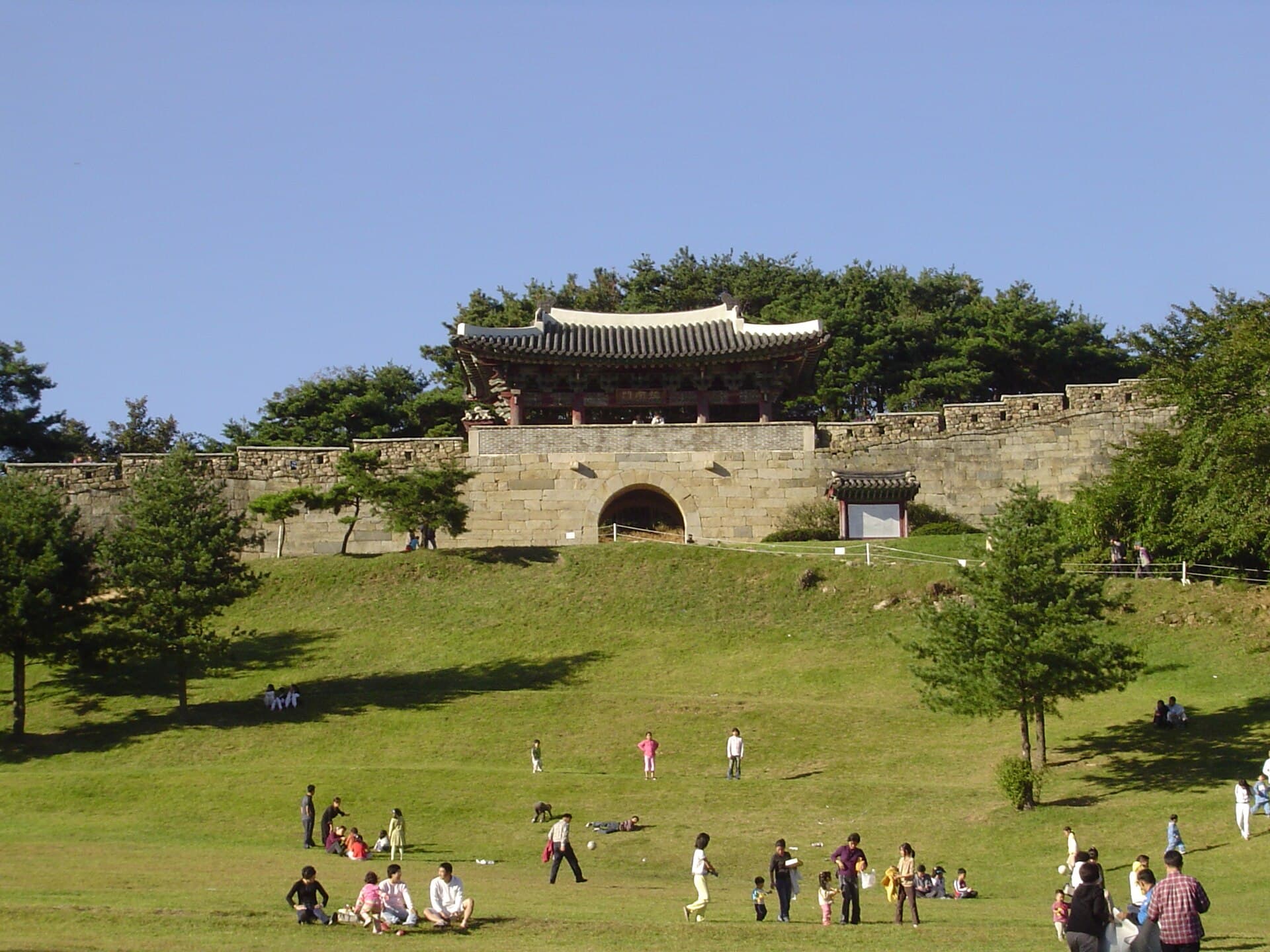 Hutch1225 / Public domain, via Wikimedia Commons
Tour de audio autoguiado de Cheongju — ruta GPS a pie, reproducción offline, narración en 32 idiomas.
“Donde la innovación ancestral se encuentra con el lienzo del arte callejero.”
No las postales. Las historias que ni los locales conocen — al oído, justo donde ocurrieron.
Antes de que Gutenberg grabara su nombre en la historia, otra revolución de la imprenta se gestaba en Cheongju.
Un barrio en la ladera de una colina, que alguna vez fue un asentamiento de posguerra, ahora narra sus historias no solo a través de sus habitantes, sino a través de sus propias paredes.
En lo alto de la ciudad, una fortaleza se alza como centinela, sus muros perdurables relatan siglos de importancia estratégica y escaramuzas pasadas.
Descubre todos los secretos de Cheongju
Cada dirección, cada revelación al completo — a tu oído, justo donde ocurrió.
Eliges tus paradas. Caminas. La voz te revela lo que los demás ignoran.


Tu tour de audioguía por Cheongju te espera — elige tus lugares, tu idioma y empieza al llegar.
ComprarLume incluye una guía de realidad aumentada. Levanta el móvil y su cámara muestra la calle que tienes delante, con una flecha luminosa sobre la imagen real que siempre apunta a tu próxima parada — sin mapas que descifrar, sin giros equivocados. Como todo en Lume, funciona completamente sin conexión.
Cheongju, el corazón y la ciudad más grande de la provincia de Chungcheong del Norte, presenta una fusión convincente de profundas raíces históricas y cultura contemporánea. Situada en el centro de Corea del Sur, la ciudad está moldeada por el río Geum y sus afluentes, el Musim y el Miho, que fluyen por su núcleo, mientras que las montañas de Wuam y Bumo delimitan sus extremos oriental y occidental. Aunque puede que no posea los rascacielos imponentes o la animada vida nocturna de las grandes metrópolis coreanas, Cheongju recompensa a quienes buscan una experiencia auténtica de la vida coreana, ofreciendo un ritmo más tranquilo junto a sus sitios históricos y ofertas culturales.
La identidad de la ciudad está profundamente ligada a su papel pionero en la imprenta, siendo el crisol del tipo metálico móvil más antiguo del mundo. Más allá de esta significativa distinción histórica, Cheongju revela un variado paisaje de atracciones, desde antiguas fortalezas y museos nacionales hasta animadas aldeas murales y serenas estancias en templos. Su posición estratégica la ha establecido durante mucho tiempo como una importante ciudad provincial, evolucionando desde antiguos asentamientos hasta un moderno centro de manufactura, agricultura y tecnología.
La narrativa de Cheongju se remonta a miles de años, con hallazgos arqueológicos que revelan asentamientos desde la Edad de Piedra Antigua hasta la Edad del Bronce dentro de las montañas de Cheongju, particularmente alrededor del área de Sangdang Sanseong. Durante el período Baekje (18 a. C. – 660 d. C.), Cheongju emergió como un centro regional vital, un hecho corroborado por extensas tumbas descubiertas en áreas como Bongmyung-dong y Sinbong-dong. Después de la unificación de los Tres Reinos por Silla en 676, el budismo comenzó a florecer, influenciado por la conexión de la cultura Silla con la Ruta de la Seda. Cheongju obtuvo la designación 'Seowon Sokyung', una capital menor, en 685, actuando como un conducto crucial entre Chungcheong-do y Gyeonggi-do.
Durante la era Goryeo (918–1392), Cheongju siguió siendo un punto focal cultural, con numerosos monumentos budistas creados. La contribución más profunda de la ciudad a la historia global ocurrió en 1377 en el Templo Heungdeoksa, donde se imprimió el Jikji. Esta antología de enseñanzas budistas se erige como el libro más antiguo del mundo producido con tipos metálicos móviles, precediendo la obra de Gutenberg por 78 años, y está consagrado en el Registro de la Memoria del Mundo de la UNESCO. Esta innovación solidificó el legado perdurable de Cheongju como la 'ciudad de la imprenta'.
El período Joseon (1392–1897) trajo un cambio hacia el confucianismo, aunque los templos continuaron contribuyendo a los avances de la imprenta. Cheongju sufrió pruebas significativas durante la invasión japonesa de 1592, con la Batalla de Cheongju en 1593 presenciando la participación de más de 8,000 monjes guerreros coreanos en la reconquista de la ciudad. La Fortaleza de Sangdangsanseong, inicialmente construida durante el Reino de Baekje, experimentó mejoras integrales en 1596 y fue reconstruida posteriormente como una fortaleza de piedra en 1716, sirviendo como una estructura defensiva crítica.
Principios del siglo XX impulsaron un mayor crecimiento, con una línea ferroviaria tendida a través del condado en 1905 y la apertura de la Línea Chungbuk en 1926, estimulando la expansión regional. En 1908, el gobierno provincial de la provincia de Chungcheong del Norte se trasladó de Chungju a Cheongju, afirmando su posición como capital regional. Cheongju se convirtió oficialmente en ciudad en 1949 y desde entonces ha experimentado un crecimiento demográfico sustancial, cuadruplicándose de 147,000 en 1970 a más de 582,000 en 2000. Hoy, Cheongju también se erige como un centro clave para la industria de semiconductores de Corea del Sur, albergando importantes instalaciones de producción para empresas como SK Hynix.
Comience su exploración en el Museo de Impresión Temprana de Cheongju, construido sobre los terrenos del Templo Heungdeoksa. Este museo exhibe el Jikji, el libro más antiguo del mundo impreso con tipos metálicos móviles, e ilumina las tecnologías de impresión pioneras de Corea. Después, ascienda a la Fortaleza de Sangdangsanseong, una gran fortaleza de piedra que adorna las laderas del monte Uam. Su muro de 4.2 kilómetros ofrece vistas panorámicas y una ventana a las estrategias de defensa de la Dinastía Joseon. Dentro de sus confines, una pequeña aldea turística ofrece opciones para comer.
Para una perspectiva diferente, pasee por la Aldea Mural de Suamgol, un antiguo asentamiento de refugiados transformado en una animada comunidad artística. Sus coloridos murales y encantadores callejones la han convertido en un lugar de filmación muy solicitado para los K-dramas, y los cafés locales ofrecen excelentes vistas de la ciudad, especialmente al atardecer. El Museo Nacional de Cheongju, concebido por el renombrado arquitecto Kim Swoo Geun, alberga más de 42,000 artefactos, con aproximadamente 1,200 piezas en exhibición, que abarcan desde la Edad de Piedra Antigua hasta el período Joseon, con un énfasis particular en la Dinastía Goryeo.
Considere una visita a Cheongnamdae, una antigua villa presidencial situada cerca del lago Daecheong. Abierta al público en 2003, cuenta con senderos para caminar, jardines y exposiciones sobre la presidencia coreana. Para el arte moderno, el Museo Nacional de Arte Moderno y Contemporáneo (MMCA) Cheongju es distintivo por ser el proyecto de almacenamiento abierto inaugural del país, permitiendo a los visitantes observar no solo exposiciones sino también los procesos de almacenamiento y restauración de arte dentro de una fábrica de tabaco reinventada.
Las épocas más agradables para visitar Cheongju por su clima agradable y actividades al aire libre son desde finales de mayo hasta principios de julio y desde mediados de agosto hasta finales de septiembre. La primavera (abril a junio) y el otoño (septiembre a noviembre) ofrecen condiciones templadas y secas, perfectas para explorar la ciudad y sus alrededores naturales. Durante estos períodos, las temperaturas promedio oscilan entre 15°C y 29°C. Las lluvias son generalmente menos frecuentes en estos meses, siendo octubre a menudo el más claro. El otoño también trae un follaje brillante, realzando el paisaje en lugares como la Fortaleza de Sangdangsanseong.
Cheongju se beneficia de una extensa y asequible red de autobuses, con dos terminales principales que sirven rutas a otras ciudades coreanas, incluida Seúl. Los taxis también ofrecen una forma conveniente y económica de recorrer la ciudad. El Aeropuerto Internacional de Cheongju (CJJ) sirve al centro de Corea del Sur con vuelos nacionales e internacionales. Desde el aeropuerto, los autobuses limusina y los autobuses locales conectan con la ciudad de Cheongju y las áreas circundantes, y los taxis están fácilmente disponibles. Aunque no hay una conexión ferroviaria directa con el aeropuerto, la estación de tren de alta velocidad KTX Osong está cerca, con conexiones de autobús o taxi. Para moverse dentro de la ciudad, muchas áreas, especialmente cerca de las terminales de autobuses y las principales atracciones, son bastante transitables a pie. Aunque el sistema de autobuses es eficiente, a los que no hablan coreano les puede resultar útil planificar las rutas.
Cheongju en coreano, en chino o en hebreo — y 29 idiomas más, cada parada narrada por una voz nativa. La mayor variedad de idiomas de cualquier audioguía autoguiada.
Disponible en: