The Rows
Chester's kenmerkende tweelaagse winkelgalerijen bieden meer dan alleen winkelmogelijkheden.
Volledig verhaal ontgrendeld in de tour
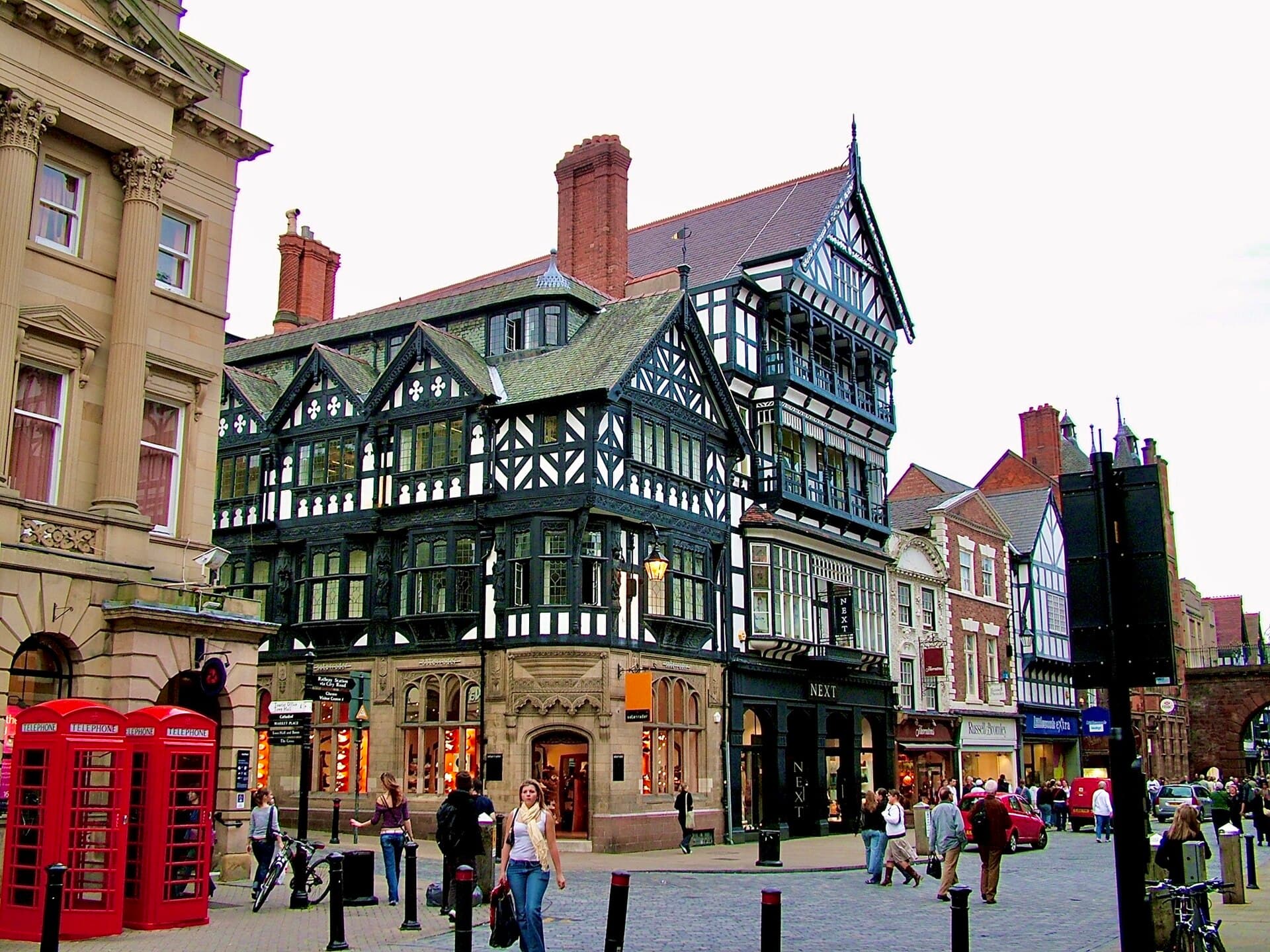 No machine-readable author provided. Tagishsimon assumed (based on copyright claims). / CC BY-SA 3.0, via Wikimedia Commons
Zelfgeleide audiowandeling door Chester — GPS-route, offline afspelen, meeslepende vertelling in 32 talen.
“Waar Romeinse legioenen ooit marcheerden en middeleeuwse Rows uitnodigen tot ontspannen verkenning, is Chester een stad gebouwd op boeiende, zichtbare lagen van tijd.”
Niet de ansichtkaarten. De verhalen die zelfs locals niet kennen — gefluisterd in je oor, precies waar ze gebeurden.
Chester's kenmerkende tweelaagse winkelgalerijen bieden meer dan alleen winkelmogelijkheden.
Vóór het denderen van hoeven zag dit oude sportterrein een ander soort passage.
In een rustig veld biedt een verweerde steen een zeldzaam venster op het Romeinse spirituele leven.
Ontdek elk geheim van Chester
Elk adres, elke onthulling volledig — in je oor, precies waar het gebeurde.
Jij kiest je stops. Jij wandelt. De stem onthult wat de anderen missen.


Je zelfgeleide audiotour van Chester is klaar — kies je bezienswaardigheden, kies je taal en start zodra je aankomt.
KopenLume heeft een ingebouwde augmented-reality-gids. Houd je telefoon omhoog: de camera toont de straat voor je, met een oplichtende pijl over het echte beeld die altijd naar je volgende stop wijst — geen kaart om uit te puzzelen, geen verkeerde afslagen. Zoals alles in Lume werkt het volledig offline.
Chester, een stad in Cheshire, Engeland, gelegen nabij de Welshe grens, biedt een onderscheidende reis door de tijd. De stichting als het Romeinse fort Deva Victrix in de jaren 70 n.Chr. legde een erfenis vast die vandaag de dag nog steeds zijn straten en karakter vormgeeft. De stad staat bekend om zijn opmerkelijk goed bewaarde Romeinse muren, de meest complete in Groot-Brittannië, die een stadscentrum omringen dat bruist van middeleeuwse architectuur.
Naast zijn Romeinse oorsprong ontwikkelde Chester zich tot een belangrijke middeleeuwse haven, een status die leidde tot de creatie van zijn unieke Rows – tweelaagse overdekte wandelgangen met winkels. Deze architectonische wonderen, samen met de imposante Chester Cathedral en het grootste Romeinse amfitheater van het land, dragen bij aan Chester's boeiende mix van historische perioden. Het beloopbare centrum van de stad stelt bezoekers in staat om deze lagen van geschiedenis gemakkelijk te verkennen, van oude vestingwerken tot Victoriaanse elegantie, waardoor het een lonende bestemming is voor diegenen die een tastbare verbinding met het verleden zoeken.
Chester's aantrekkingskracht strekt zich uit buiten zijn historische bezienswaardigheden tot moderne attracties zoals Chester Zoo, een van de meest bezochte wildbestemmingen van het VK, en een bloeiende onafhankelijke culinaire scene. Of je nu langs de River Dee wandelt, onafhankelijke boetiekjes verkent, of je verdiept in zijn diepe erfgoed, Chester biedt een meeslepende ervaring die het onderscheidt van andere Engelse steden.
## Romeinse Fundamenten en Vroege Ontwikkeling Het verhaal van Chester begint rond 75 n.Chr. met de vestiging van Deva Victrix door het Romeinse Rijk, een belangrijk fort gebouwd om de Keltische Cornovii te controleren en te dienen als een belangrijk militair kamp in Romeins Groot-Brittannië. De Romeinen legden de basis voor het stratenplan van de stad en bouwden de eerste stadsmuren, waarvan delen vandaag de dag nog steeds zichtbaar zijn. Het fort omvatte ook het grootste Romeinse amfitheater dat ooit in Groot-Brittannië is opgegraven, met plaats voor 8.000 tot 10.000 toeschouwers voor militaire training en entertainment.
Na de terugtrekking van de Romeinen werd Chester, in het Welsh Cair Legion genoemd, onderdeel van het koninkrijk Powys en zag het later conflicten tussen Welshe en Saksische koninkrijken. In 616 verstevigde Æthelfrith van Northumbria's overwinning in de Slag bij Chester de Angelsaksische controle. De Saksen herbouwden en versterkten de stadsmuren in de 10e eeuw, breidden ze uit tot hun huidige omtrek en hernoemden de stad 'Legacaestir', wat uiteindelijk werd verkort tot Chester.
## Middeleeuwse Welvaart en Normandische Invloed Na de Normandische verovering in 1066 was Chester een van de laatste Engelse steden die viel. Willem de Veroveraar beval de bouw van Chester Castle om dominantie te vestigen en zich te verdedigen tegen de Welshmen. De stad bloeide in de middeleeuwen als een belangrijke handelshaven in het Noordwesten, een welvaart die leidde tot de ontwikkeling van zijn unieke tweelaagse winkelgalerijen, bekend als The Rows, die al sinds ten minste de 13e eeuw bestaan. Chester Cathedral, oorspronkelijk opgericht als een Benedictijnse Abdij in 1093, ontwikkelde zich in deze periode ook tot een belangrijk religieus en architectonisch monument.
## Burgeroorlog, Verval en Victoriaanse Heropleving De Engelse Burgeroorlog bracht ontberingen met zich mee voor Chester, aangezien de stad, een Koninklijke bolwerk, een tweejarige belegering doorstond voordat ze in 1645 overgaf vanwege hongersnood en ziekte. Door de eeuwen heen verzandde de River Dee, waardoor het belang van Chester als haven in het Georgische tijdperk afnam. De stad kende echter een heropleving in de Victoriaanse tijd, gemarkeerd door de bouw van het gotische stadhuis en de iconische Eastgate Clock, opgericht ter ere van het diamanten jubileum van Koningin Victoria. Deze perioden van continue bewoning en ontwikkeling hebben Chester een diepe reeks architectonische stijlen en historische verhalen nagelaten, waardoor het verleden in elke hoek voelbaar is.
Begin je verkenning met een wandeling langs Chester's stadsmuren, het meest complete Romeinse en middeleeuwse verdedigingscircuit in Groot-Brittannië, dat een breed uitzicht biedt over de stad, de River Dee en zelfs een glimp van Wales. Mis de iconische Eastgate Clock niet, naar verluidt de op een na meest gefotografeerde klok van Engeland na Big Ben, gelegen boven de Eastgate.
Daal af van de muren om The Rows te verkennen, Chester's kenmerkende middeleeuwse tweelaagse winkelgalerijen, waar onafhankelijke boetiekjes en bekende namen gevestigd zijn in historische zwart-witte vakwerkhuizen. Vlakbij biedt het Chester Roman Amphitheater, het grootste opgegraven amfitheater van Groot-Brittannië, een krachtig gevoel van het Romeinse verleden van de stad. Voor een diepere duik in het Romeinse leven, zoek naar de Minerva Shrine, het enige Romeinse heiligdom uit rotsen dat nog in zijn oorspronkelijke locatie in Groot-Brittannië staat.
Bezoek Chester Cathedral, een duizend jaar oude voormalige Benedictijnse Abdij, bekend om zijn ingewikkelde middeleeuwse houtsnijwerken en de mogelijkheid om een torentour te maken voor een weids uitzicht. Voor een andere sfeer, overweeg een boottocht over de River Dee, of verken Grosvenor Park. Buiten het stadscentrum is Chester Zoo een topattractie, met 35.000 dieren en belangrijke natuurbeschermingsinspanningen.
Chester is een stad waar je het hele jaar door van kunt genieten, waarbij elk seizoen een andere ervaring biedt. De warmste en droogste maanden, ideaal om te voet te verkennen, zijn over het algemeen van juni tot augustus, hoewel dit ook het hoogseizoen is voor toeristen. Voor aangenaam weer en minder drukte, overweeg een bezoek in de late lente (mei-juni) of vroege herfst (september). Deze schouderseizoenen bieden een goede balans voor sightseeing en buitenactiviteiten. De winter, hoewel kouder, brengt de charme van kerstmarkten in december.
Het centrum van Chester is compact en het best te voet te verkennen, met veel belangrijke bezienswaardigheden op loopafstand. Voor reizen binnen en rond de stad zijn lokale busdiensten beschikbaar. Chester is goed verbonden per spoor, met directe diensten vanuit grote steden zoals Liverpool (ongeveer 45 minuten), Manchester (ongeveer 1 uur) en Londen (ongeveer 2 uur vanaf Euston). Over de weg is de stad bereikbaar via de snelwegen M56 en M53.
Voor degenen die per vliegtuig aankomen, is Manchester Airport (MAN) ongeveer 35 mijl ten noordoosten van Chester, met handige trein- en busverbindingen die ongeveer één tot twee uur duren. Verschillende parkeergarages in het stadscentrum zijn beschikbaar, hoewel vooraf boeken wordt aanbevolen tijdens drukke periodes. Overweeg alternatief het gebruik van Park and Ride-diensten voor gemak en om het verkeer in het stadscentrum te verminderen.
Chester — Koreaans, Chinees, Hebreeuws en nog 29 talen, elke stop verteld door een moedertaalspreker. Het grootste taalaanbod van alle zelfgeleide audiotours.
Beschikbaar in: