Chettinad Herenhuizen
De oppervlakken van de meest magnifieke huizen van Chettinad hebben een geheim ingrediënt, afwezig in elke kruidenkast.
Volledig verhaal ontgrendeld in de tour
 Photo: Naveen Raj Dhanapal / Unsplash
Zelfgeleide audiowandeling door Chettinad — GPS-route, offline afspelen, meeslepende vertelling in 32 talen.
“Waar weelderige landhuizen de saga van een vergeten handelsimperium vertellen.”
Niet de ansichtkaarten. De verhalen die zelfs locals niet kennen — gefluisterd in je oor, precies waar ze gebeurden.
De oppervlakken van de meest magnifieke huizen van Chettinad hebben een geheim ingrediënt, afwezig in elke kruidenkast.
De vurige curries van Chettinad worden geprezen, maar de ware essentie van hun ingewikkelde smaak gaat verder dan alleen hitte.
De levendige, ambachtelijk vervaardigde Athangudi tegels die de vloeren van Chettinad sieren, delen een onverwachte connectie met het klimaat van de regio.
Ontdek elk geheim van Chettinad
Elk adres, elke onthulling volledig — in je oor, precies waar het gebeurde.
Jij kiest je stops. Jij wandelt. De stem onthult wat de anderen missen.
Je zelfgeleide audiotour van Chettinad is klaar — kies je bezienswaardigheden, kies je taal en start zodra je aankomt.
KopenLume heeft een ingebouwde augmented-reality-gids. Houd je telefoon omhoog: de camera toont de straat voor je, met een oplichtende pijl over het echte beeld die altijd naar je volgende stop wijst — geen kaart om uit te puzzelen, geen verkeerde afslagen. Zoals alles in Lume werkt het volledig offline.
Chettinad, een district in Tamil Nadu, India, presenteert een cultureel landschap waar geschiedenis, architectuur en keuken samenkomen. Het omvat 74 dorpen verspreid over de districten Sivaganga en Pudukkottai en wordt voornamelijk erkend als het voorouderlijk land van de Nattukottai Chettiars, een welvarende bankiers- en zaken gemeenschap. Deze droge uitgestrektheid, ooit een verzameling van 96 dorpen, onderscheidt zich met zijn kolossale herenhuizen, blijvende symbolen van de immense welvaart van de Chettiars, vergaard door wereldwijde handel in de 19e en vroege 20e eeuw.
Hoewel veel van deze uitgebreide structuren nu in verschillende staten van verval bestaan, biedt een reis naar Chettinad een zeldzame blik in een vervlogen tijdperk van ongeëvenaarde grandeur en precieze kunstzinnigheid. De regio wordt ook geprezen om zijn kenmerkende, geurige keuken, die in heel India wordt erkend om zijn complexe en genuanceerde smaken. Chettinad biedt een culturele onderdompeling buiten de gebaande paden, en nodigt bezoekers uit om zijn unieke nalatenschap, levendige gebruiken en ambachtelijke handwerken te ontdekken die al meer dan 150 jaar bewaard zijn gebleven.
Het verhaal van Chettinad begint in de 13e eeuw, toen de Nattukottai Chettiars, een koopmansgemeenschap, zich landinwaarts migreerden vanuit de oude havenstad Cauvery Poompattinam na een catastrofale overstroming. Ze vestigden zich in wat toen het koninkrijk Ramnad was, en legden de basis voor een gemeenschap die prominent zou worden door uitgebreide wereldhandel. Historisch geïdentificeerd als Chettiar Nadu, of "het land van de Chettiars", omvatte de regio oorspronkelijk 96 dorpen, nu geconsolideerd tot 74.
In de 19e en vroege 20e eeuw hadden de Chettiars hun positie verstevigd als invloedrijke bankiers en financiers tijdens de Britse koloniale periode. Hun handelsnetwerken strekten zich uit over Zuidoost-Azië, waaronder Birma, Ceylon (nu Sri Lanka), Maleisië, Singapore, en zelfs Vietnam en Indonesië. De fortuinen die ze vergaarden door de handel in zout, specerijen en edelstenen, naast geldverstrekking en bankzaken, werden teruggevoerd naar hun thuisland in Chettinad.
Deze immense rijkdom financierde de bouw van duizenden paleisachtige residenties, vaak aangeduid als Nattukottai Chettiar herenhuizen, tussen 1850 en 1940. Deze herenhuizen, waarvan vele tienduizenden vierkante meters beslaan met meer dan 50 kamers en meerdere binnenplaatsen, waren ontworpen om uitgestrekte gezamenlijke families te huisvesten. Ze belichamen een unieke fusie van Indiase en Europese architectonische stijlen, met materialen geïmporteerd uit de hele wereld. Birmaans teakhout, Italiaans marmer, Belgische kristallen kroonluchters, Engelse keramiek, en zelfs Belgisch glas en Indonesisch aardewerk werden gebruikt, wat de internationale connecties en verfijnde smaak van de Chettiars weerspiegelt. Naast de grandioze architectuur investeerden de Chettiars ook in tempels, scholen en culturele instellingen, waarmee ze een nalatenschap van ondernemerschap en filantropie veiligstelden. Het culturele erfgoed van de regio is diep verweven met religie en spiritualiteit, met talrijke oude tempels gebouwd of ondersteund door de Chettiar gemeenschap.
Chettinad biedt een boeiende reis door zijn kenmerkende architectonische en culturele landschap. Begin met het verkennen van de Chettinad Herenhuizen, met name in dorpen zoals Kanadukathan en Karaikudi. Kanadukathan dient als een uitstekend startpunt voor het bezoeken van deze grandioze huizen, waar u de weelderige interieurs kunt bewonderen, versierd met Birmaans teakhout, Belgisch kristal en Italiaans marmer. Het Chettinad Paleis in Kanadukathan, gebouwd in 1912, is een prima voorbeeld van deze architectonische pracht.
Duik in de artistieke tradities van de regio door een Athangudi Tegelwerkplaats te bezoeken, waar u het ingewikkelde proces van het vervaardigen van deze handgemaakte, levendig gekleurde vloertegels kunt aanschouwen. Voor degenen met interesse in textiel, zoek lokale ambachtslieden die Chettinad sari's weven, bekend om hun gedurfde kleuren en opvallende patronen.
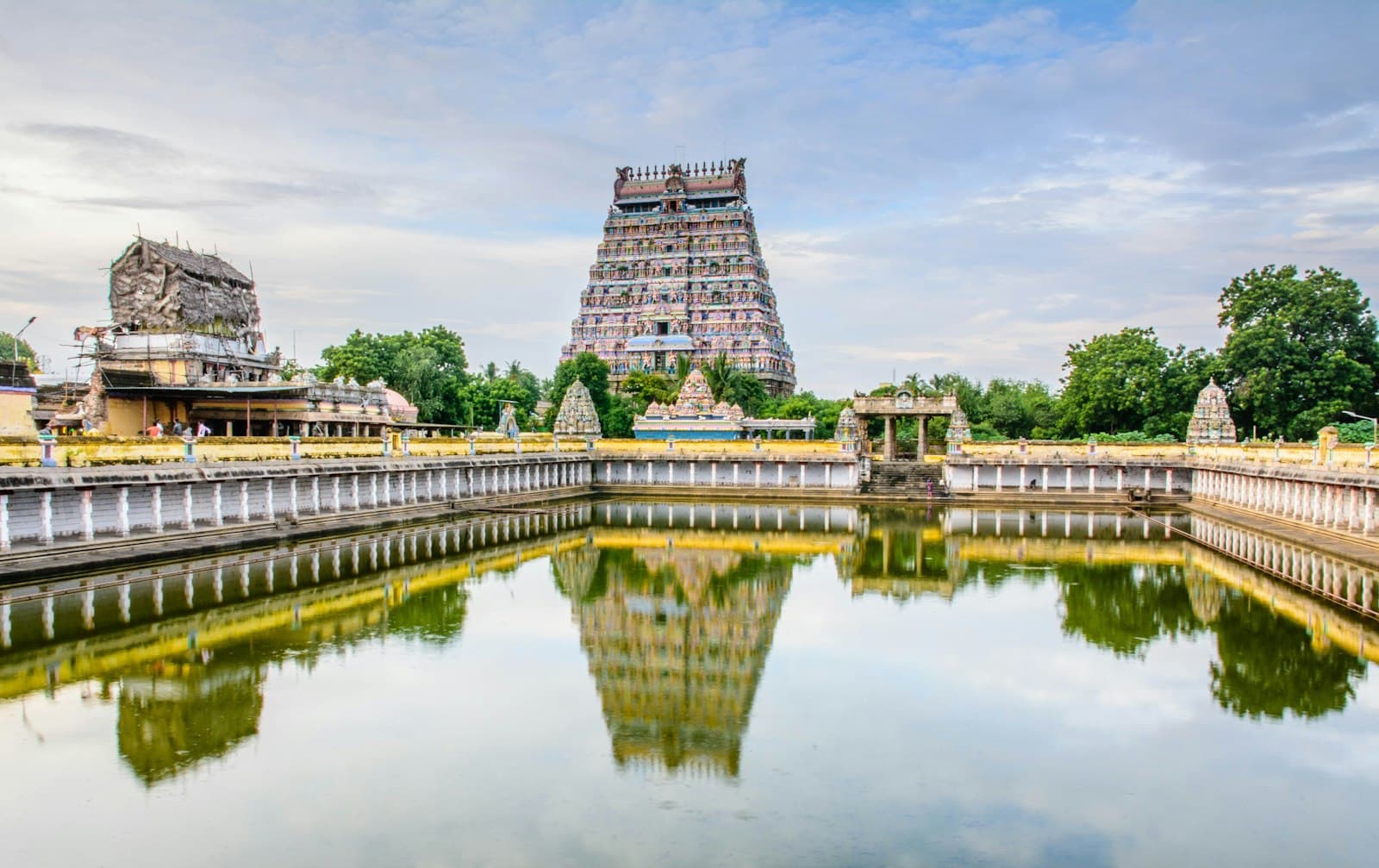
De spirituele dimensie van Chettinad is zichtbaar in zijn talrijke tempels. De Karpaga Vinayagar Tempel wordt vereerd vanwege zijn natuurlijk gevormde idool, terwijl de Kundrakudi Murugan Tempel een uitzicht vanaf de heuveltop biedt. De Dravidische tempel in Kanadukathan, met zijn majestueuze terracotta paarden, vertegenwoordigt ook een belangrijk cultureel monument. Zorg ervoor dat u de lokale markten in Karaikudi bezoekt voor specerijen, handwerk en antiek, wat een authentieke winkelervaring biedt.
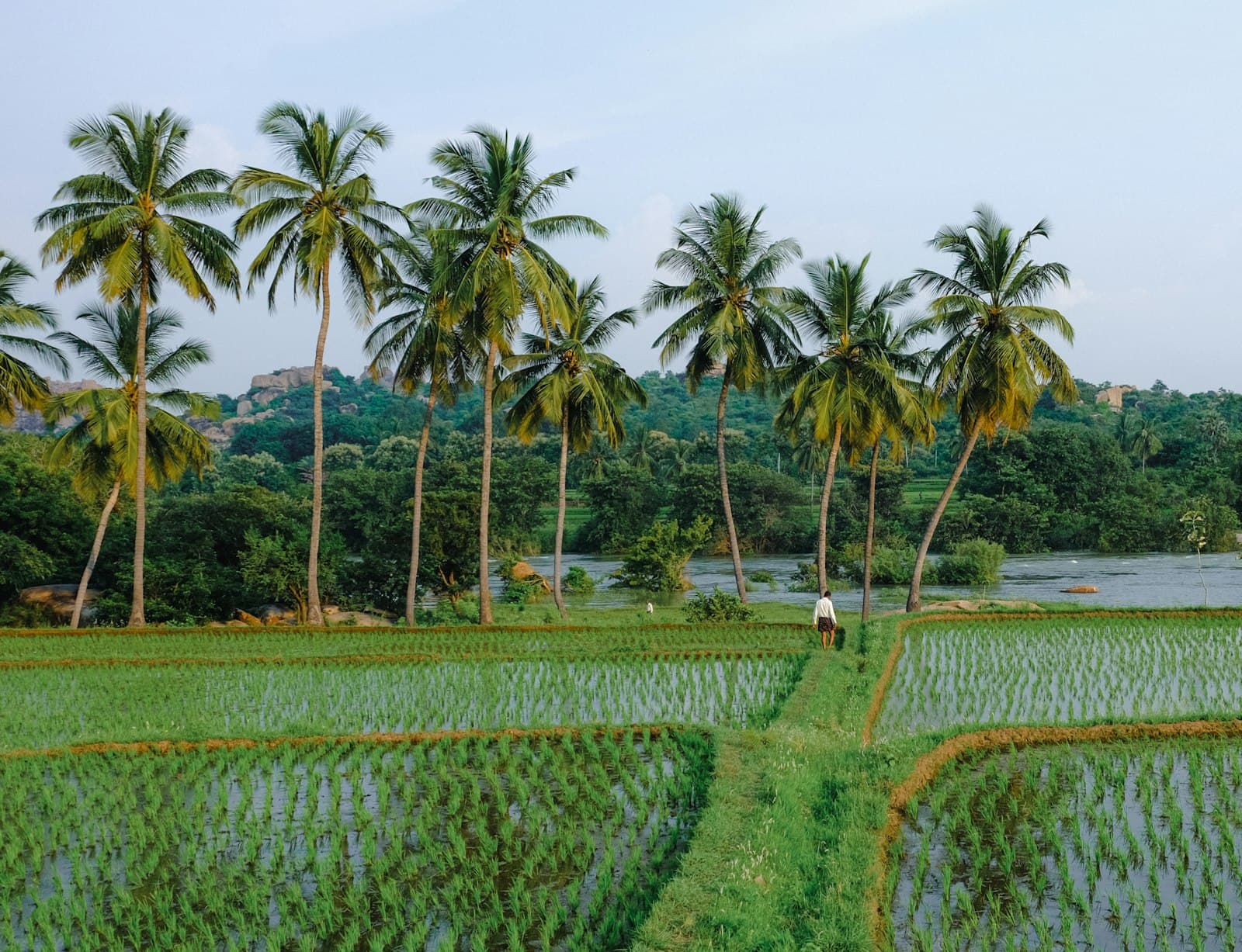
De ideale periode om Chettinad te ervaren is tijdens de koelere maanden, van november tot maart. De temperaturen zijn in deze periode comfortabeler, meestal variërend van ongeveer 20–24°C, wat aangenaam is voor verkenning en sightseeing. Het einde van het regenseizoen in november kan ook het landschap verfraaien met weelderige groene rijstvelden. Het is raadzaam om de intense zomermaanden (april-mei) en het vochtige moessonseizoen (juni-september) te vermijden voor een aangenamer bezoek.
Toegang tot Chettinad omvat meestal vliegen naar de luchthavens van Madurai of Tiruchirappalli (Trichy), gevolgd door een autoreis van twee uur. Het regelen van een privévoertuig wordt sterk aanbevolen voor comfortabel navigeren door de verspreide dorpen en herenhuizen. Accommodatiemogelijkheden omvatten boetiekhotels, erfgoedverblijven en pensions, waarvan vele omgebouwde herenhuizen zijn, wat een authentieke ervaring biedt. Houd er tijdens het verkennen rekening mee dat veel herenhuizen privébezit zijn en niet altijd toegankelijk voor het publiek; een lokale gids kan helpen bij het regelen van toegang tot sommige. Overweeg uw bezoek af te stemmen op culturele festivals zoals het Kalai Chettinad Art & Architecture Festival (april) of het Chettinad Heritage & Cultural Festival (september) voor meeslepende ervaringen.
Chettinad — Koreaans, Chinees, Hebreeuws en nog 29 talen, elke stop verteld door een moedertaalspreker. Het grootste taalaanbod van alle zelfgeleide audiotours.
Beschikbaar in: