The museum's most celebrated resident, the 'Warrior of Capestrano,' holds a secret about his identity that goes beyond his striking appearance.
Ra Boe / CC BY-SA 3.0, via Wikimedia CommonsChieti
“Chieti: Where ancient myths and Roman echoes meet Abruzzese allure.”
Chieti, as no one tells it.
Not the postcards. The stories even locals don't know — whispered in your ear, right where they happened.
This elegant 19th-century theater wasn't always known by its current name, and its original dedication reveals a connection to a powerful historical figure.
Beneath the bustling main square of Chieti, a world of ancient infrastructure is poised for public discovery.
Discover every secret of Chieti
Every address, every reveal in full — in your ear, right where it happened.
You pick your stops. You walk. The voice reveals what the others miss.
How long do you have in Chieti?
No tours available yet. Check back soon — we're preparing them.
The story of Chieti
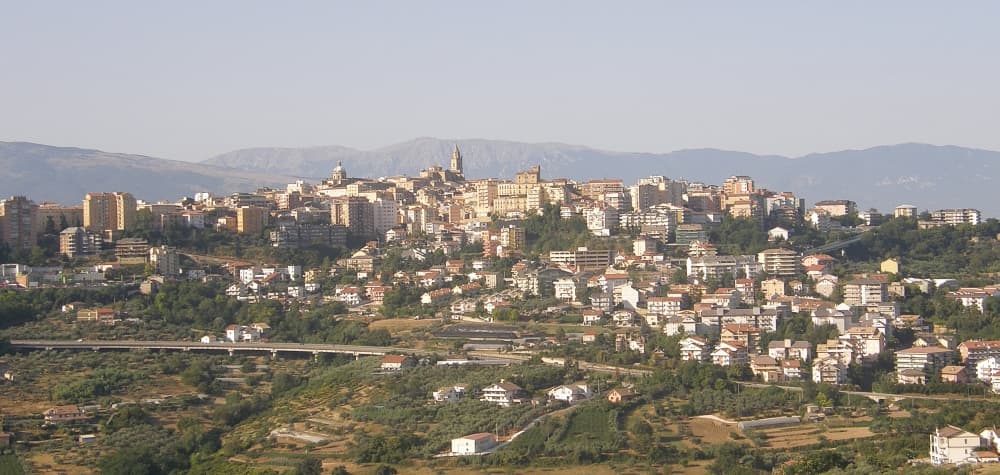
Chieti, situated on a hilltop overlooking the Pescara River and the Adriatic Sea, is one of Italy's most ancient continuously inhabited cities. Legend claims it was founded in 1181 BC by Achilles and named Teate, after his mother, Thetis, a myth proudly displayed on the city's coat of arms, which features Achilles armed with a lance and shield. This city in the Abruzzo region offers a captivating blend of ancient archaeological sites, medieval streets, and elegant 19th-century architecture, all set against the backdrop of the Majella and Gran Sasso mountains.
Divided into the historic Chieti Alta and the more modern Chieti Scalo, the city invites exploration on foot through its narrow alleys, grand buildings, and panoramic terraces that offer sweeping views of the surrounding landscape. Chieti, often called the 'Terrace of Abruzzo,' is a city for those who appreciate a slower pace, enduring history, and authentic Italian character, making it an ideal base for exploring the wider Abruzzo region, from national parks to the beautiful beaches of the Costa dei Trabocchi.
While not always on the main tourist routes, Chieti rewards visitors with its unique heritage, from its Roman ruins to its lively local culture and cuisine. It's a place where every corner seems to speak of its millennia-old past, making it a compelling destination for cultural explorers.
## From Ancient Origins to Roman Grandeur Chieti's history stretches back to prehistoric times, with archaeological finds indicating continuous human presence since around 5,000 BC, and even earlier Paleolithic tools dating back 850,000 to 400,000 years found in the surrounding territory. Before the rise of Rome, Chieti, then known as Teate, was the capital of the Marrucini, an Italic tribe with ties to the Samnites. This period is marked by significant cultural development, as evidenced by discoveries like the Warrior of Capestrano.
## Roman Municipality and Medieval Transformations After the Social War in 87 BC, Teate became a prosperous Roman municipality. During this era, the city flourished with the construction of temples, baths, an aqueduct, a forum, a 5,000-seat theater, and a 4,000-seat amphitheater. Its strategic location along the Via Tiburtina solidified its role as a regional hub and a crucial trade route connecting Rome to the Adriatic coast. Following the fall of the Western Roman Empire, Chieti faced destruction by Visigoths and Heruli, and was later rebuilt by the Ostrogothic King Theodoric in the 6th century. It then passed through various hands, including Lombard, Norman, Hohenstaufen, Angevin, and Aragonese rulers, each leaving their mark on the city's development.
## Renaissance, Plague, and Unification In the 16th century, Chieti maintained strong economic ties with Venice, even hosting a Venetian Republic consulate. This period saw a cultural and architectural blossoming, though it was tragically interrupted by a devastating plague in 1656 that decimated the population. Despite this setback, Chieti rebounded, with grand palaces like Palazzo Fasoli being built. During the Italian Reunification Movement, Chieti played a role, with King Vittorio Emanuele II passing through in 1860. The city officially became part of the newly formed Kingdom of Italy in 1861.
## Modern Era and World War II In 1925, Chieti gained an unexpected spotlight when Mussolini moved the Matteotti murder trial to the city, then a fascist stronghold. During World War II, Chieti was declared an 'Open City,' which spared it from extensive bombing and led to a significant influx of refugees from across Abruzzo, swelling its population from 3,000 to 30,000. This designation, however, also meant it housed a POW camp for British and Commonwealth officers, where conditions were notoriously harsh. Today, Chieti continues to blend its ancient past with a lively university atmosphere, offering a unique window into Italy's layered history.
Begin your exploration in Chieti Alta, the historic heart of the city, easily walkable and full of character. The Cathedral of San Giustino (Duomo), a 13th-century Romanesque-Gothic structure with a commanding bell tower and an atmospheric crypt, is a place to behold. Its interior, rebuilt and expanded over centuries, now displays a Baroque style.
Delve into the city's deep past at the National Archaeological Museum of Abruzzo (Villa Frigerj). Housed in an elegant neoclassical villa, it features artifacts from prehistoric times to the Roman Empire, including the iconic 'Warrior of Capestrano.' Nearby, the National Archaeological Museum 'La Civitella' sits on the ancient acropolis and incorporates the remains of a 1st-century AD Roman amphitheater. This museum further explores Chieti's ancient past, covering prehistoric, Marrucini, and Roman life.
Stroll along Corso Marrucino, an elegant 19th-century boulevard lined with cafes, palazzi, and shops, perfect for a leisurely wander. Experience a performance at the Teatro Marrucino, a historic neoclassical theater inaugurated in 1818, known for its richly decorated interior. Don't miss the visible remnants of Roman life, including the Roman Temples in Piazza dei Templi Romani, dedicated to Jupiter, Juno, and Minerva, and the ruins of a Roman Theater with the Gran Sasso mountains as its backdrop.
The best times to visit Chieti for general outdoor tourist activities are from mid-May to early October, with a peak in the third week of June, offering clear, rainless days and comfortable temperatures between 65°F and 80°F (18°C-27°C). Spring (mid-April to mid-June) and autumn (September to early October) provide pleasant weather with fewer tourists. Summers (June to August) are hot and sunny, with occasional thunderstorms, and temperatures can reach 38-40°C (100-104°F). While winters (December to February) are generally mild, cold winds can bring significant snowfall.
Chieti is approximately 200 kilometers (124 miles) east of Rome and about 10 kilometers (6.2 miles) from the Adriatic Sea. The closest airport is Abruzzo Airport (Pescara), about 15 minutes southwest of Chieti. From Pescara Centrale, you can take a commuter train or bus to Chieti Scalo in 15-25 minutes. The city is divided into Chieti Alta (the historic center) and Chieti Scalo (the modern commercial area). While Chieti Alta is best explored on foot, getting between Chieti Scalo and Chieti Alta is best done by driving or taking a bus, as there are sections without sidewalks.
Accommodation options range from luxury hotels to bed and breakfasts, with Chieti Alta being ideal for exploring the city center and Chieti Scalo offering convenient access to the motorway. Chieti is known for its local cuisine, including spaghetti alla chitarra and arrosticini (skewered lamb).
- What is Chieti known for?
- Chieti is known for being one of Italy's oldest continuously inhabited cities, its extensive archaeological heritage, including Roman ruins and the 'Warrior of Capestrano,' and its blend of ancient, medieval, and 19th-century architecture.
- How far is Chieti from the sea?
- Chieti is situated about 10 kilometers (6.2 miles) away from the Adriatic Sea.
- Is Chieti a walkable city?
- Chieti Alta, the historic center, is comfortably explored on foot, with its narrow streets and piazzas. However, traversing between Chieti Alta and the modern Chieti Scalo is best done by car or bus.
- What are some traditional dishes to try in Chieti?
- Local culinary specialties include *spaghetti alla chitarra*, a regional pasta, and *arrosticini*, which are skewered lamb pieces.
- Are there any museums in Chieti?
- Yes, Chieti has several museums, including the National Archaeological Museum of Abruzzo (Villa Frigerj) and the National Archaeological Museum 'La Civitella,' both showcasing the region's ancient history.
- What is the significance of the 'Warrior of Capestrano'?
- The 'Warrior of Capestrano' is a rare and iconic example of Italic art from the 6th century BC, discovered in 1934. It is housed in the National Archaeological Museum of Abruzzo and is significant for its distinct style, differing from classical Greek or Roman sculpture.