Estação Liziba
Imagine um trem não apenas viajando por baixo da terra ou sobre uma ponte, mas diretamente *através* de um prédio residencial.
História completa desbloqueada no tour
 Jay Huang / CC BY 2.0, via Wikimedia Commons
Tour de áudio autoguiado por Chongqing — rota GPS a pé, reprodução offline, narração envolvente em 32 idiomas.
“Onde os rios convergem e a cidade desafia paisagens comuns.”
Não os postais. As histórias que nem os locais conhecem — sussurradas ao seu ouvido, exatamente onde aconteceram.
Imagine um trem não apenas viajando por baixo da terra ou sobre uma ponte, mas diretamente *através* de um prédio residencial.
O prato característico da cidade é celebrado por sua intensidade picante, mas uma opção sutil existe para aqueles que buscam uma experiência mais suave.
A cidade é conhecida como "Cidade Nebulosa", um fenômeno meteorológico que também cria oportunidades distintas.
Descubra cada segredo de Chongqing
Cada endereço, cada revelação na íntegra — no seu ouvido, exatamente onde aconteceu.
Você escolhe as suas paragens. Você caminha. A voz revela o que os outros perdem.

O seu tour áudio autoguiado de Chongqing está pronto — escolha os seus pontos de interesse, selecione o seu idioma e comece no momento em que chegar.
ComprarA Lume inclui um guia de realidade aumentada. Levante o telemóvel: a câmara mostra a rua à sua frente, com uma seta luminosa sobreposta à imagem real que aponta sempre para a sua próxima paragem — sem mapa para decifrar, sem voltas erradas. Como tudo na Lume, funciona totalmente offline.
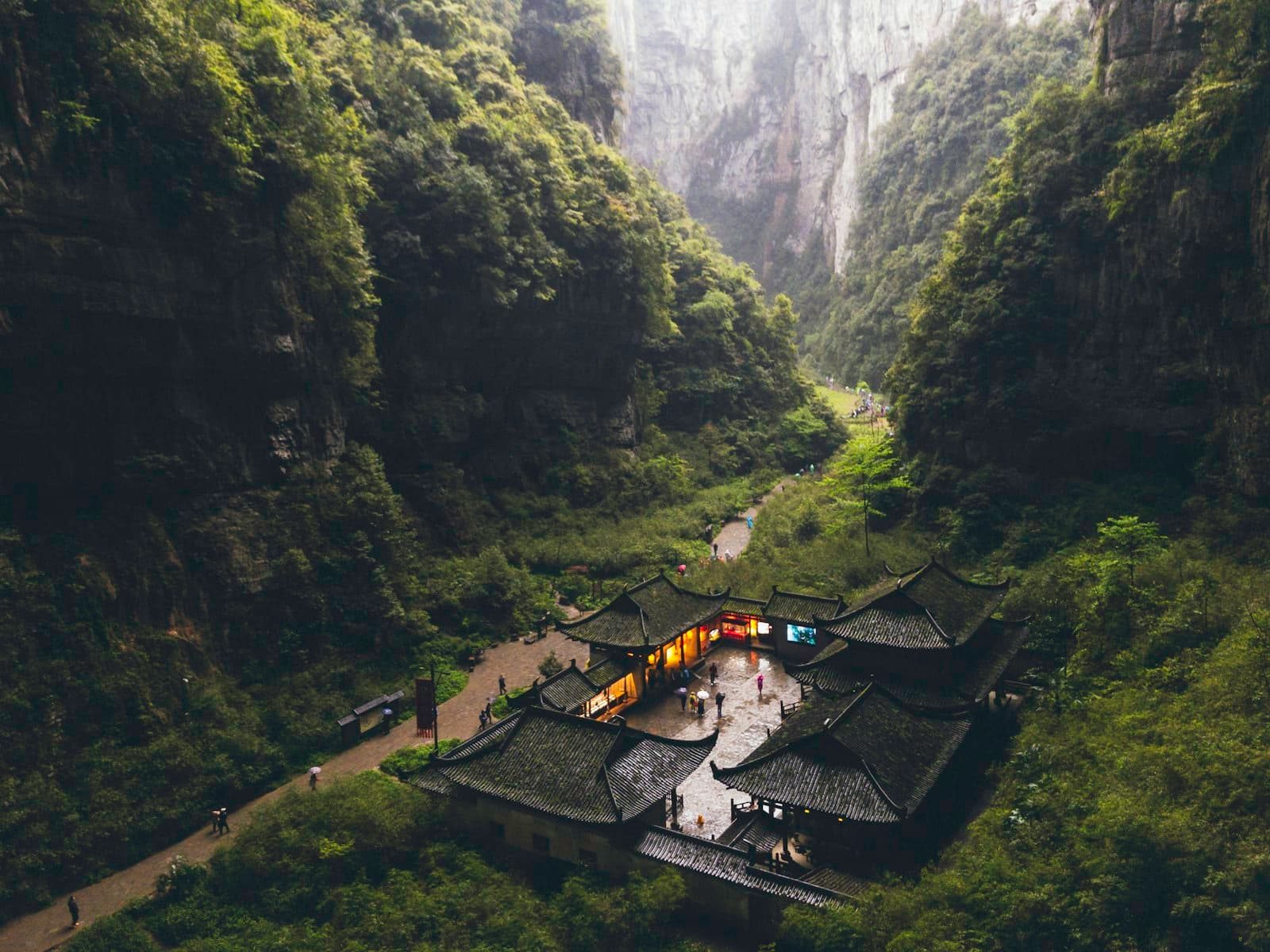
Chongqing, uma metrópole expansiva no sudoeste da China, é uma cidade que desafia consistentemente as percepções. Conhecida como a "Cidade Montanhosa" por sua topografia dramática, é um lugar onde arranha-céus ascendem pelas encostas e rios cortam a paisagem urbana. Essa geografia singular lhe rendeu apelidos como "cidade 8D", uma referência às suas ruas em vários níveis e infraestrutura que desafia a gravidade.
Na confluência dos rios Yangtze e Jialing, Chongqing é um dos quatro municípios administrados diretamente pela China, um status que destaca sua importância estratégica como centro de transporte e motor econômico no interior do país. Além de sua fachada contemporânea, Chongqing é uma cidade com um passado profundo, servindo como capital de guerra da China durante a Segunda Guerra Sino-Japonesa e possuindo uma cena culinária celebrada por seus sabores ousados e picantes.
## Do Antigo Reino Ba à Capital de Guerra A história de Chongqing remonta a mais de 3.000 anos, com evidências de atividade humana datando do Período Paleolítico Inferior, aproximadamente 2 milhões de anos atrás. No século XI a.C., a região se tornou o coração do Reino Ba, um estado feudal que estabeleceu relações com o reino de Chu, no centro do Yangtze. O Reino Ba foi eventualmente conquistado pelo estado de Qin em 316 a.C., trazendo a área para o controle de várias dinastias das planícies centrais.
O nome atual da cidade, "Chongqing", que significa "dupla celebração", origina-se de 1189 durante a Dinastia Song do Sul. O Príncipe Gong, que recebeu um título na área, foi posteriormente elevado a imperador, levando à renomeação comemorativa. Durante as dinastias Ming e Qing, Chongqing manteve sua estrutura administrativa e cresceu para se tornar um centro político e econômico vital no leste de Sichuan. Em 1890, o porto da cidade foi oficialmente aberto ao comércio britânico, marcando sua integração no comércio global.
Chongqing desempenhou um papel crucial na história moderna chinesa, servindo como capital provisória da República da China de 1937 a 1945 durante a Segunda Guerra Sino-Japonesa. Durante este período, muitas fábricas e pessoas se mudaram para Chongqing e, apesar dos pesados bombardeios japoneses, a cidade manteve o moral elevado. Após a guerra, Chongqing foi um dos últimos refúgios para o governo nacionalista Kuomintang durante a Guerra Civil Chinesa. Em 1997, Chongqing foi separada da província de Sichuan e elevada ao seu status atual de município em nível provincial diretamente sob o governo central, uma medida destinada a promover o desenvolvimento na China central e ocidental. Essa reclassificação expandiu significativamente sua área terrestre e população, solidificando seu papel como uma cidade central nacional e um centro chave no Cinturão Econômico do Rio Yangtze.
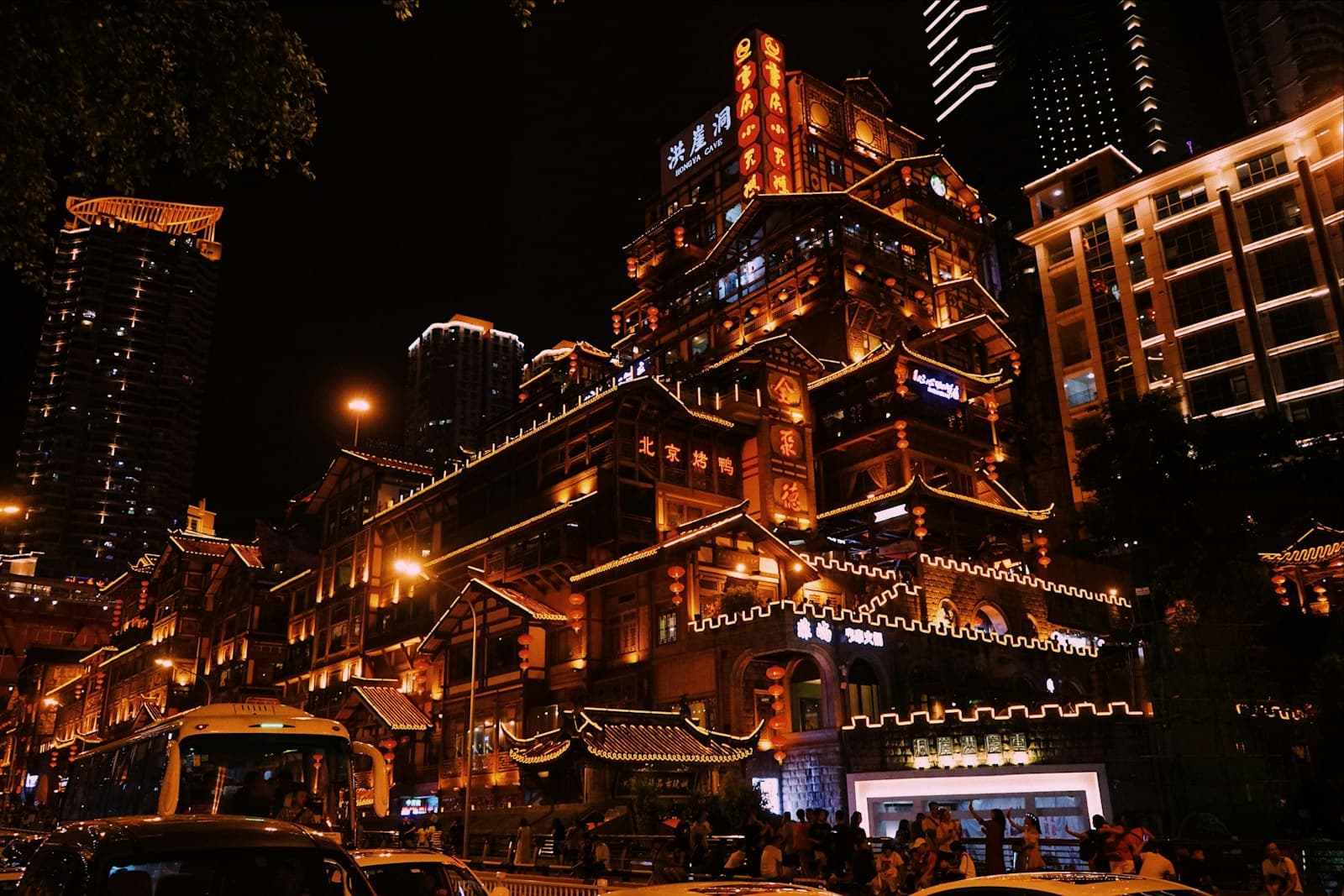
A paisagem distinta de Chongqing apresenta uma fusão de maravilhas urbanas futuristas e sítios culturais antigos. O complexo Hongya Cave, com seus edifícios suspensos em vários níveis, se transforma em um espetáculo brilhante e fantástico à noite, evocando cenas de um filme do Studio Ghibli. Para vistas panorâmicas da cidade, especialmente após o anoitecer, viaje para o Distrito de Nan'an ou para a plataforma de observação Nanshan Yi Ke Shu.
Experimente o planejamento urbano "8D" de Chongqing em primeira mão, pegando o Chongqing Rail Transit (CRT). A Estação Liziba da Linha 2, onde o monotrilho passa diretamente por um prédio residencial, é uma conquista de engenharia notável e um local popular para fotografias. O Teleférico do Rio Yangtze oferece uma perspectiva única ao transportar passageiros através do rio, servindo tanto como transporte quanto como atração cênica.
Mergulhe na história na Antiga Cidade de Ciqikou, uma área bem preservada com casas de chá tradicionais, lojas de artesanato e um vislumbre da antiga Chongqing. As Esculturas Rupestres de Dazu, um Patrimônio Cultural Mundial da UNESCO, exibem uma impressionante coleção de arte de templos em cavernas chineses dos séculos IX a XIII. Para uma compreensão mais profunda da região, o China Three Gorges Museum abriga uma vasta coleção de relíquias culturais, incluindo um modelo em grande escala das Três Gargantas. Explore a Rua Pedestre Jiefangbei, um animado distrito comercial marcado pelo icônico Monumento da Libertação do Povo.
As épocas mais agradáveis para conhecer Chongqing são durante a primavera (março a maio) e o outono (setembro a novembro). Essas estações oferecem clima temperado e confortável, ideal para explorar as atrações ao ar livre e o terreno montanhoso da cidade. A primavera traz flores vibrantes, enquanto o outono exibe os ricos tons da folhagem de outono, especialmente ao longo do Rio Yangtze. Para evitar multidões significativas de turistas e calor intenso, evite os principais feriados chineses e os meses de verão de julho e agosto, quando as temperaturas podem ser excessivamente quentes e úmidas. O inverno (dezembro a fevereiro) é mais frio e frequentemente nebuloso, oferecendo uma atmosfera mística e preços potencialmente mais baixos, tornando-o um bom momento para visitas a fontes termais.
O Aeroporto Internacional de Chongqing Jiangbei (CKG) serve como um importante centro, com conexões convenientes para o centro da cidade via táxi, linha 3 do metrô ou ônibus. O sistema de transporte público da cidade é extenso e eficiente, apresentando uma rede avançada de metrô e monotrilho que navega graciosamente pelo terreno montanhoso. Táxis e aplicativos de transporte são facilmente disponíveis e geralmente acessíveis.
Mandarim é a língua principal, e o inglês não é amplamente falado, portanto, um aplicativo de tradução é altamente recomendado. Aplicativos de pagamento móvel como Alipay e WeChat Pay são essenciais para transações em toda a cidade. Dada a paisagem montanhosa de Chongqing, sapatos confortáveis para caminhar são vitais, e esteja preparado para inúmeras escadas e mudanças de elevação. Um guarda-chuva ou capa de chuva é aconselhável, pois a cidade experimenta chuvas nebulosas frequentes. Para acesso à internet, uma VPN é necessária para acessar muitos sites internacionais.
Chongqing — coreano, chinês, hebraico e mais 29 idiomas, cada parada narrada por uma voz nativa. A maior variedade de idiomas entre os passeios de áudio autoguiados.
Disponível em: