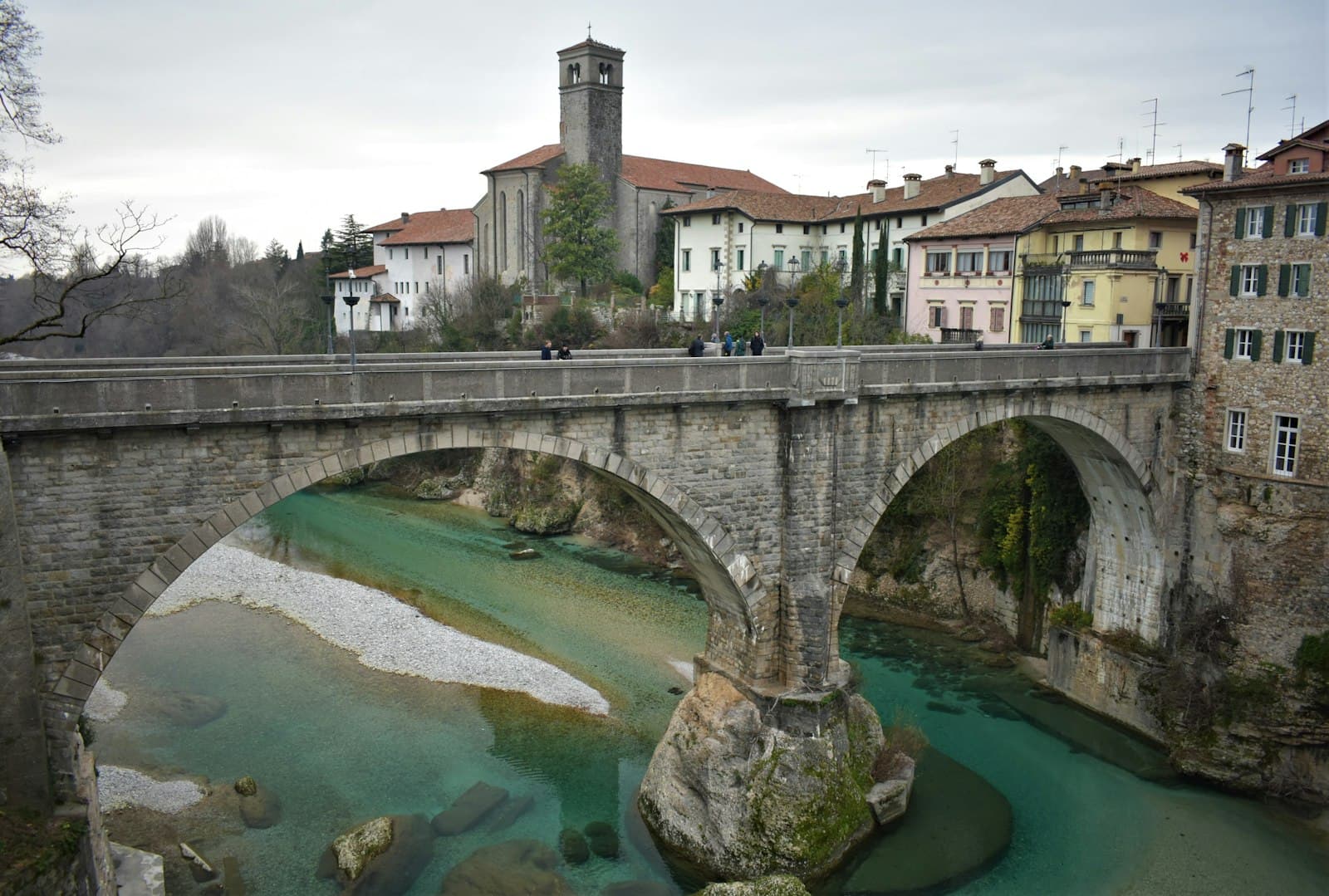
Ponte del Diavolo (Ponte do Diabo)
A ponte icônica sobre o rio Natisone tem um nome que sugere um pacto sombrio.
História completa desbloqueada no tour
 Ewgohl / CC BY-SA 4.0, via Wikimedia Commons
Tour de áudio autoguiado por Cividale del Friuli — rota GPS a pé, reprodução offline, narração envolvente em 32 idiomas.
“Onde fundações romanas encontram a arte lombarda, e lendas fluem como o Rio Natisone.”
Não os postais. As histórias que nem os locais conhecem — sussurradas ao seu ouvido, exatamente onde aconteceram.
A ponte icônica sobre o rio Natisone tem um nome que sugere um pacto sombrio.
Esta capela discreta do século VIII guarda um segredo artístico em suas paredes.
Sob a cidade jazem uma série de misteriosas câmaras escavadas na rocha.
Descubra cada segredo de Cividale del Friuli
Cada endereço, cada revelação na íntegra — no seu ouvido, exatamente onde aconteceu.
Você escolhe as suas paragens. Você caminha. A voz revela o que os outros perdem.
O seu tour áudio autoguiado de Cividale del Friuli está pronto — escolha os seus pontos de interesse, selecione o seu idioma e comece no momento em que chegar.
ComprarA Lume inclui um guia de realidade aumentada. Levante o telemóvel: a câmara mostra a rua à sua frente, com uma seta luminosa sobreposta à imagem real que aponta sempre para a sua próxima paragem — sem mapa para decifrar, sem voltas erradas. Como tudo na Lume, funciona totalmente offline.
Cividale del Friuli, frequentemente chamada apenas de Cividale, é uma pequena cidade no nordeste da Itália, situada nas colinas orientais dos Alpes, a apenas 15 quilômetros de Udine e perto da fronteira com a Eslovênia. Reconhecida como uma das "aldeias mais bonitas da Itália" (borgo più bello d'italia), Cividale oferece uma atmosfera mais tranquila e relaxada do que as cidades italianas maiores e mais famosas.
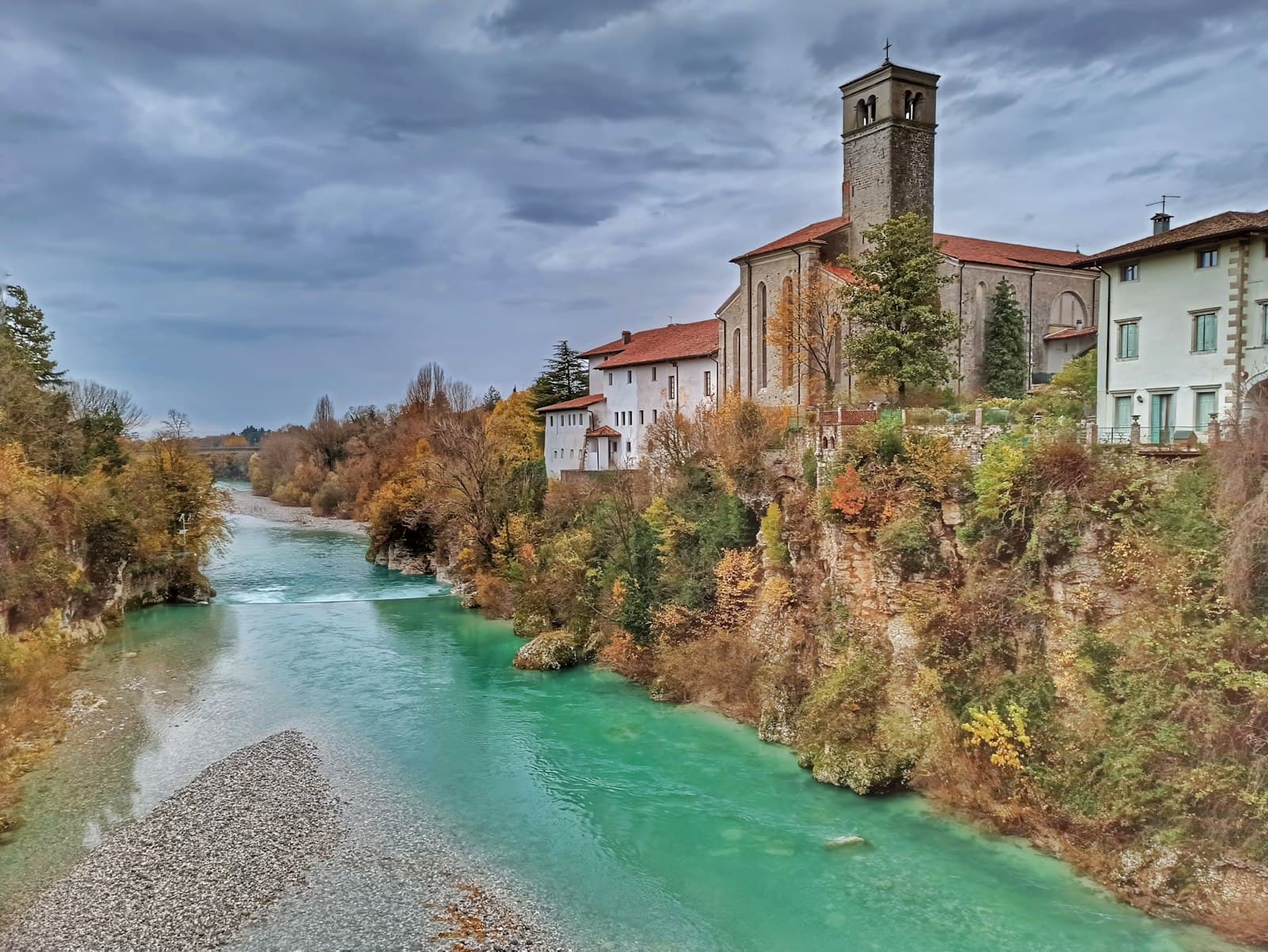
Dividida pelo rio Natisone, de cor verde-esmeralda, a cidade é uma mistura cativante de história, lendas e beleza natural. Seu centro medieval convida à exploração tranquila, onde cada viela de pedra e pátio silencioso revela uma história. Cividale é um Patrimônio Mundial da UNESCO, celebrada por sua significativa herança lombarda e fundações romanas.
## Do Fórum Romano à Capital Lombarda A história oficial de Cividale del Friuli começa em 50 a.C., quando Júlio César fundou um castrum (assentamento fortificado) neste local estratégico, nomeando-o Forum Iulii. Este nome romano evoluiu mais tarde para o nome de toda a região de Friuli. Após a queda do Império Romano, a área esteve sob domínio bizantino até a chegada dos lombardos em 568 d.C.
O Rei Alboin liderou a invasão lombarda da Itália, tornando Cividale o primeiro grande centro que ocuparam e estabelecendo-a como a capital inicial do recém-formado Reino Lombardo. Alboin então concedeu a cidade ao seu sobrinho Gisulf como capital do Ducado Lombardo de Friuli. Por vários séculos, Cividale serviu como base para a autoridade temporal e religiosa na região. Os monumentos e artefatos da cidade desta época são um testemunho de sua importância passada.
Em 776, os francos de Carlos Magno saquearam Forum Iulii, renomeando-a Civitas Austriae, um nome que eventualmente se combinou com o original para formar Cividale del Friuli. De 730 a 1238, Cividale também foi a residência dos patriarcas de Aquileia, solidificando ainda mais sua importância religiosa. A cidade mais tarde caiu para a República de Veneza em 1420 e tornou-se parte do Reino da Lombardia-Veneza após as Guerras Napoleônicas, antes de ser cedida ao Reino da Itália em 1866. Hoje, Cividale é reconhecida como Patrimônio Mundial da UNESCO, especificamente por seu inestimável passado lombardo, tornando-a um ponto de partida para explorar o legado desta população influente na Itália.
Comece sua exploração na Ponte del Diavolo (Ponte do Diabo), o marco icônico de Cividale, que oferece vistas do rio Natisone e dos Alpes Julianos circundantes. Passeie pelas Ruas da Cidade Velha, repletas de lojas de artesanato, galerias de arte e boutiques locais. O Museu Arqueológico Nacional, instalado no antigo Palácio Ducal, oferece um mergulho profundo na história lombarda com artefatos dos períodos romano, paleocristão e medieval inicial, incluindo uma coleção de 56 moedas de ouro lombardas.
Visite o Templo Lombardo (Tempietto Longobardo), uma capela do século VIII dentro do Mosteiro de Santa Maria in Valle, renomada por seus estuques e afrescos medievais iniciais bem preservados. O Museu Cristão e o Tesouro da Catedral, localizados dentro do Duomo di Santa Maria Assunta, exibem o Altar Lombardo de Ratchis e o Batistério octogonal de Calisto. Para uma experiência subterrânea única, considere o Hipogeu Celta, uma série de câmaras rochosas antigas cujo propósito original permanece um mistério.
Cividale del Friuli experimenta quatro estações distintas. Para atividades ao ar livre e passeios turísticos agradáveis, a melhor época para visitar é de final de maio a final de setembro. Durante esses meses, as temperaturas médias variam de 21°C a 28°C. A primavera e o outono oferecem clima agradável e menos multidões, tornando-os ideais para explorar. Embora dezembro seja mais frio, com temperaturas entre -1°C e 5°C, a cidade ainda oferece atrações e uma atmosfera festiva.
Cividale del Friuli está localizada na região de Friuli-Venezia Giulia, a uma hora de carro ao norte de Trieste e 15 minutos a leste de Udine. Embora o transporte público esteja disponível, dirigir é altamente recomendado para economizar tempo, especialmente para explorar cidades vizinhas. O centro histórico é em grande parte para pedestres, então explorar a pé é a melhor maneira de descobrir seu caráter. Considere ficar em um bed and breakfast local ou agriturismo para uma experiência autêntica. A culinária local em Friuli é mais substanciosa do que a culinária italiana típica, com influências da Eslovênia e da Áustria. Não deixe de experimentar o frico, um bolinho frito de batatas amassadas e queijo. Para viagens de um dia, considere as próximas Udine ou San Daniele del Friuli, conhecida por seu presunto.
Cividale del Friuli — coreano, chinês, hebraico e mais 29 idiomas, cada parada narrada por uma voz nativa. A maior variedade de idiomas entre os passeios de áudio autoguiados.
Disponível em: