Los humildes comienzos de la Guía Michelin
Antes de convertirse en el árbitro de la alta cocina, la Guía Michelin tuvo un comienzo bastante práctico, y casi desastroso.
La historia completa se desbloquea en el tour
 Photo: Vincent Guzman / Unsplash
Tour de audio autoguiado de Clermont-Ferrand — ruta GPS a pie, reproducción offline, narración en 32 idiomas.
“Donde los antiguos volcanes se encuentran con la innovación moderna.”
No las postales. Las historias que ni los locales conocen — al oído, justo donde ocurrieron.
Antes de convertirse en el árbitro de la alta cocina, la Guía Michelin tuvo un comienzo bastante práctico, y casi desastroso.
La llamativa Catedral de Notre-Dame-de-l'Assomption de la ciudad no es oscura por la edad o la suciedad.
La plaza principal de Clermont-Ferrand esconde un secreto bajo su bulliciosa superficie.
Descubre todos los secretos de Clermont-Ferrand
Cada dirección, cada revelación al completo — a tu oído, justo donde ocurrió.
Eliges tus paradas. Caminas. La voz te revela lo que los demás ignoran.
Tu tour de audioguía por Clermont-Ferrand te espera — elige tus lugares, tu idioma y empieza al llegar.
ComprarLume incluye una guía de realidad aumentada. Levanta el móvil y su cámara muestra la calle que tienes delante, con una flecha luminosa sobre la imagen real que siempre apunta a tu próxima parada — sin mapas que descifrar, sin giros equivocados. Como todo en Lume, funciona completamente sin conexión.
Clermont-Ferrand, la histórica capital de Auvernia, ofrece una experiencia francesa distintiva, definida por su dramático paisaje volcánico y un profundo patrimonio industrial. Situada en el corazón del Macizo Central, la ciudad está rodeada por la Chaîne des Puys, una cadena de 80 volcanes dormidos declarada Patrimonio de la Humanidad por la UNESCO, con el icónico Puy de Dôme elevándose prominentemente a solo 10 kilómetros de distancia. Este telón de fondo geológico proporciona una estética única, con muchas de las estructuras de la ciudad, incluida su gran catedral, construidas con piedra volcánica oscura.
La ciudad presenta una mezcla de historia antigua y dinamismo moderno. Es la sede mundial de la compañía de neumáticos Michelin, una empresa que ha moldeado profundamente su economía y perfil internacional. Clermont-Ferrand también pulsa con energía cultural, ganándose el apodo de 'el Liverpool de Francia' debido a su animada escena artística, numerosos festivales de música, teatro y cine, incluido el reconocido Festival Internacional de Cortometrajes. Con una importante población estudiantil, la ciudad mantiene una atmósfera juvenil y acogedora, lo que la convierte en un destino atractivo para aquellos que buscan una faceta diferente de Francia.
Los orígenes de Clermont-Ferrand se remontan a la antigüedad, cuando los galos establecieron un asentamiento llamado Nemossos al borde de la fértil llanura de Limagne. Este era el corazón de la poderosa tribu arverna, famosa por su resistencia contra la expansión romana. Tras la conquista romana en el siglo I a.C., Nemossos evolucionó a Augustonemetum, convirtiéndose en un vital centro administrativo y religioso en la Galia central. Un templo romano de Mercurio se alzaba una vez en la cima del Puy de Dôme.
Durante la Edad Media, el área se desarrolló como dos ciudades vecinas distintas: la episcopal Clermont y Montferrand. Clermont, la ciudad de los obispos, adquirió una importancia eclesiástica significativa, destacando por albergar el Concilio de Clermont en 1095, donde el Papa Urbano II lanzó la Primera Cruzada. En contraste, Montferrand fue fundada en 1120 por los Condes de Auvernia como un contrapeso secular, una ciudad para comerciantes y aristocracia.
La unificación formal de Clermont y Montferrand fue decretada por el rey Luis XIII con el 'Edicto de Troyes' en 1630, aunque la integración real tardó mucho más y fue confirmada por Luis XV en 1731. Desde finales del siglo XIX en adelante, Clermont-Ferrand se transformó en un importante centro industrial. Esto se debió en gran parte al establecimiento de la compañía de neumáticos Michelin por los hermanos André y Édouard Michelin en 1889. El crecimiento de Michelin moldeó profundamente la economía moderna y el perfil internacional de la ciudad, con la construcción de fábricas y jardines ayudando a unificar las comunidades antes separadas. Hoy, Clermont-Ferrand sigue siendo la única sede de una empresa del CAC 40 no ubicada en París.
Comience su exploración en la Catedral Notre-Dame-de-l'Assomption, una llamativa catedral gótica construida con piedra volcánica oscura. Sus dos agujas dominan el horizonte, ofreciendo amplias vistas sobre la llanura de Limagne. Cerca, la Basílica Notre-Dame-du-Port, una basílica románica del siglo XII, está reconocida como Patrimonio de la Humanidad por la UNESCO y muestra una arquitectura románica auvernesa ejemplar.
La activa Place de Jaude sirve como plaza central de la ciudad, rodeada de tiendas, cafeterías y monumentos culturales. Aquí encontrará la imponente estatua ecuestre de Vercingétorix, el jefe galo que derrotó célebremente a Julio César en el 52 a.C. cerca de Gergovia, justo a las afueras de la ciudad. Esta estatua fue esculpida por Frédéric Auguste Bartholdi, también conocido por crear la Estatua de la Libertad.
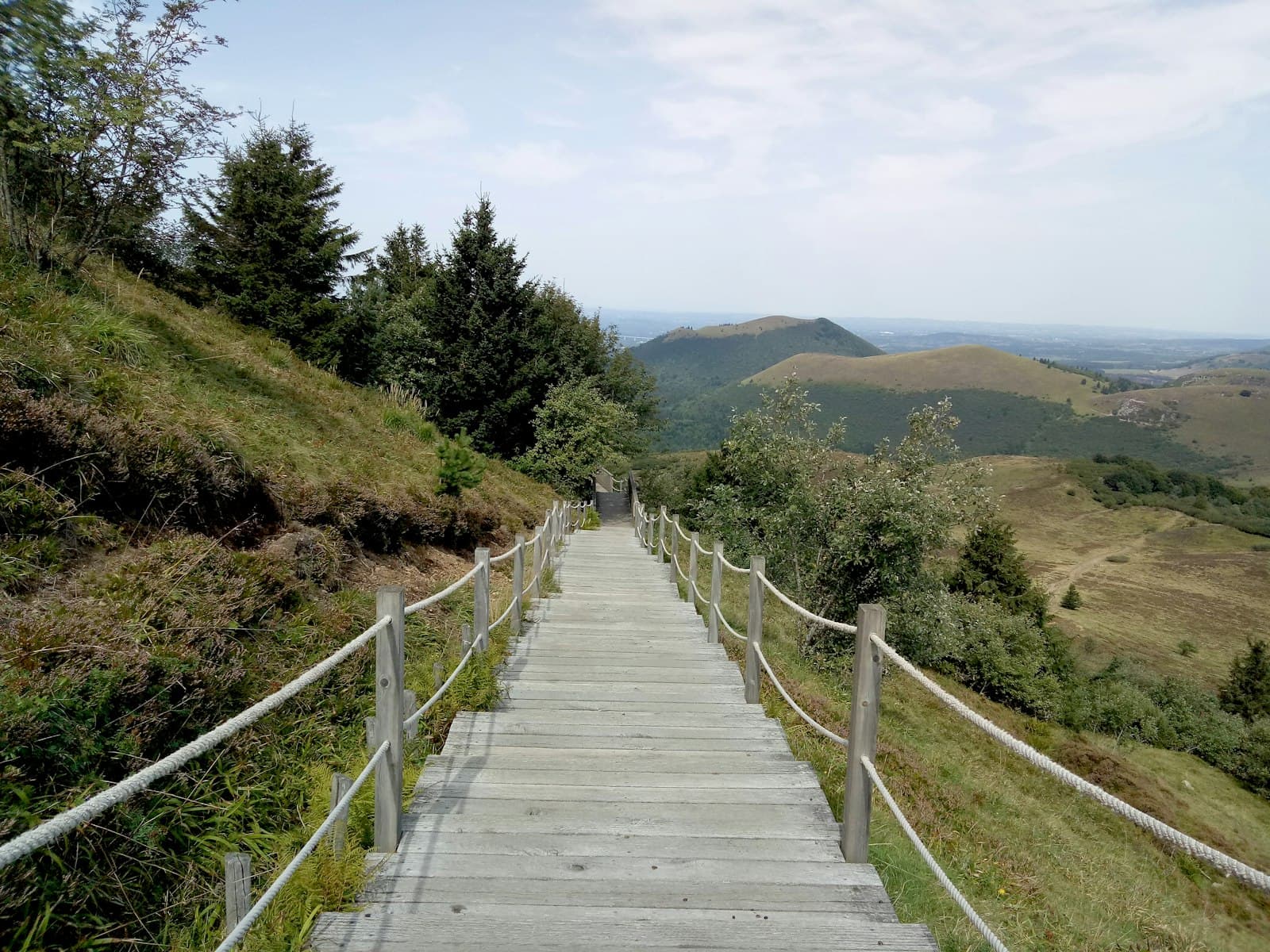
Para echar un vistazo al corazón industrial de la ciudad, visite L'Aventure Michelin, el museo oficial de la compañía Michelin. Ofrece un viaje inmersivo a través de la historia y las innovaciones de Michelin, presentando los primeros neumáticos desmontables, vehículos de prueba y prototipos futuristas. Justo a las afueras de la ciudad, el Puy de Dôme, un volcán dormido y el pico más alto de la Chaîne des Puys, es accesible en un tren de cremallera eléctrico, el Panoramique des Dômes, o por senderos, ofreciendo amplias vistas de la cordillera volcánica. El Jardin Lecoq ofrece un refrescante espacio verde con diversas plantaciones, un estanque y un portal reubicado del lugar de nacimiento de Blaise Pascal.
Clermont-Ferrand es un destino para todo el año, con cada estación ofreciendo un atractivo diferente. Para actividades de clima cálido y explorar los parques naturales y senderos, de finales de junio a principios de septiembre es ideal, con temperaturas generalmente agradables y cielos más despejados. Julio es típicamente el mes más cálido, con una máxima promedio de 25 °C (77 °F). La primavera y el verano traen un clima suave y paisajes florecientes, mientras que el otoño ofrece una experiencia más tranquila con un follaje vívido. Para los entusiastas del cine, febrero es un punto culminante, ya que el Festival Internacional de Cortometrajes da vida a la ciudad. El invierno proporciona una atmósfera acogedora y la oportunidad de disfrutar de los mercados navideños, con picos nevados en la Chaîne des Puys ideales para raquetas de nieve y esquí de fondo.
Clermont-Ferrand es una ciudad transitable a pie, con muchas atracciones clave a 30 minutos a pie. El transporte público es eficiente, con una red de tranvía y autobús que cubre la ciudad. Un billete sencillo cuesta 1,60 € y es válido durante una hora, o puede comprar 10 billetes por 15,00 €. La red de autobuses T2C, incluida la línea P36 al Panoramique des Dômes, es incluso gratuita los fines de semana. El aeropuerto de Clermont-Ferrand Auvergne se encuentra a 7 km del centro de la ciudad, con vuelos diarios desde París. Para viajar en tren, hay conexiones directas disponibles desde las principales ciudades francesas como París (aproximadamente 3,5 horas), Lyon, Burdeos y Marsella. Considere el ClermontPass para 48 o 72 horas, que ofrece acceso gratuito a atracciones como el Panoramique des Dômes, L'Aventure Michelin y museos locales, junto con descuentos en otros sitios y minoristas.
Clermont-Ferrand en coreano, en chino o en hebreo — y 29 idiomas más, cada parada narrada por una voz nativa. La mayor variedad de idiomas de cualquier audioguía autoguiada.
Disponible en: