Castelo de Clifden
As ruínas evocativas do Castelo de Clifden falam da ambição de seu fundador, que se estende além de sua fachada Revival Gótico.
História completa desbloqueada no tour
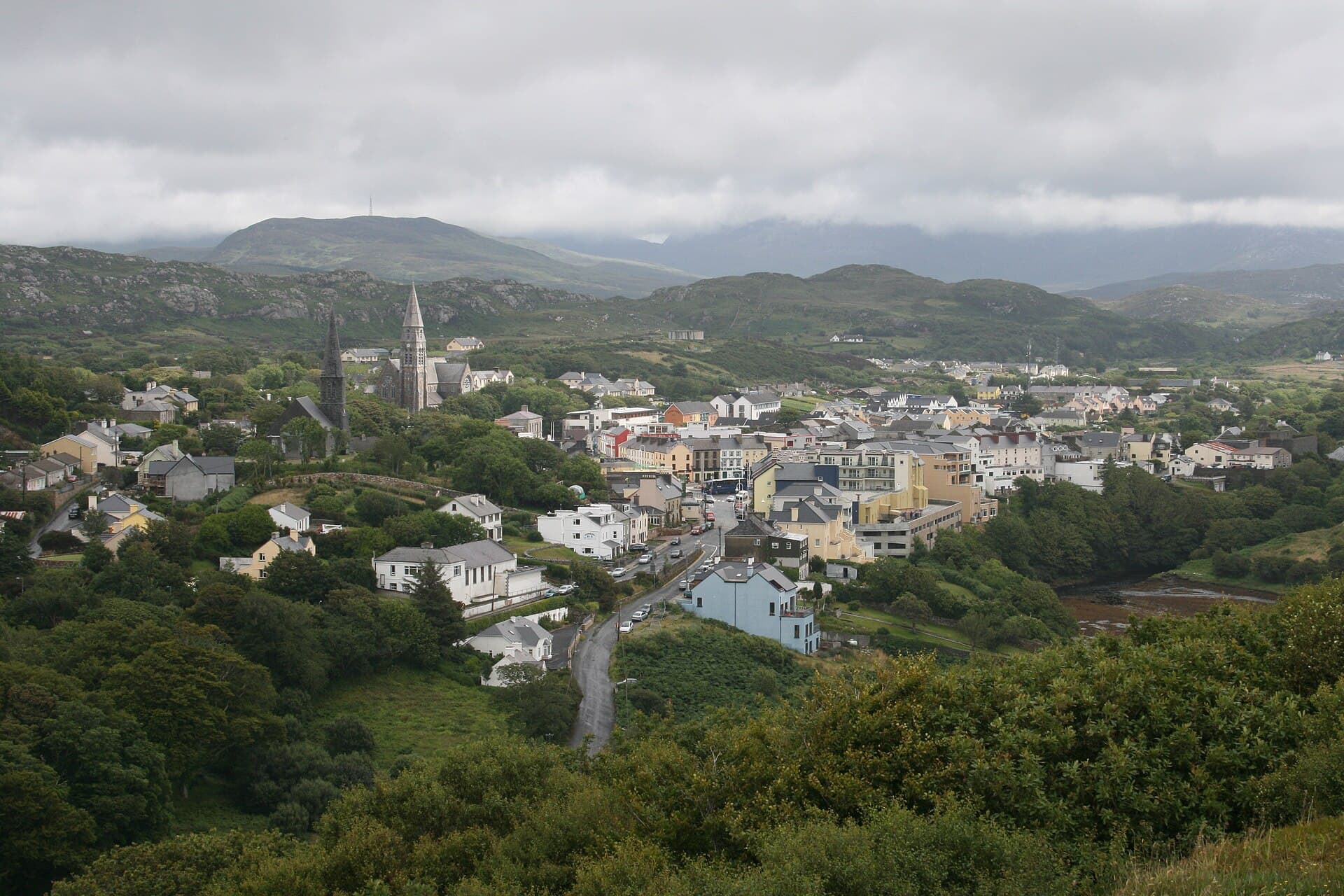 Bert Kaufmann / Public domain, via Wikimedia Commons
Tour de áudio autoguiado por Clifden — rota GPS a pé, reprodução offline, narração envolvente em 32 idiomas.
“Onde o Atlântico respira história na pedra e no céu.”
Não os postais. As histórias que nem os locais conhecem — sussurradas ao seu ouvido, exatamente onde aconteceram.
As ruínas evocativas do Castelo de Clifden falam da ambição de seu fundador, que se estende além de sua fachada Revival Gótico.
Este pântano aparentemente tranquilo guarda o local de um evento monumental na história da aviação, embora o pouso em si estivesse longe de ser gracioso.
A Casa de Trabalho de Clifden, um testemunho sombrio da Grande Fome, não foi apenas um último recurso, mas também desempenhou um papel surpreendente na evolução posterior da cidade.
Descubra cada segredo de Clifden
Cada endereço, cada revelação na íntegra — no seu ouvido, exatamente onde aconteceu.
Você escolhe as suas paragens. Você caminha. A voz revela o que os outros perdem.

O seu tour áudio autoguiado de Clifden está pronto — escolha os seus pontos de interesse, selecione o seu idioma e comece no momento em que chegar.
ComprarA Lume inclui um guia de realidade aumentada. Levante o telemóvel: a câmara mostra a rua à sua frente, com uma seta luminosa sobreposta à imagem real que aponta sempre para a sua próxima paragem — sem mapa para decifrar, sem voltas erradas. Como tudo na Lume, funciona totalmente offline.
Clifden, frequentemente reconhecida como a 'Capital de Connemara', é uma cidade costeira no Condado de Galway, Irlanda, onde o rio Owenglin deságua na Baía de Clifden. É um lugar onde a beleza indomada da costa atlântica encontra uma paisagem cultural vibrante, oferecendo uma mistura de cenários dramáticos, intrigas históricas e o espírito convivial da Irlanda. A cidade em si forma uma ferradura de fachadas de lojas coloridas, pubs tradicionais e casas em estilo georgiano, tudo contra o pano de fundo majestoso das montanhas Twelve Bens.
Clifden não é meramente um ponto de passagem; é um destino que incentiva a exploração profunda e deixa uma impressão duradoura. De suas origens como uma cidade meticulosamente planejada no início do século XIX ao seu papel atual como centro de artes e música, Clifden personifica um espírito resiliente. Os viajantes chegam para experimentar o pulso bruto da natureza, passear entre estruturas antigas e mergulhar no calor da cultura irlandesa, muitas vezes acompanhados por música tradicional que flui das portas locais.
A narrativa de Clifden não começa nos tempos antigos, mas em 1812, quando John D'Arcy, um proprietário de terras de Galway, buscou estabelecer um centro comercial e cívico neste canto distante de sua propriedade. Aos 27 anos, D'Arcy vislumbrou um porto próspero que traria prosperidade à borda oeste de Connemara, uma região então definida por seu isolamento e população esparsa. Pelos anos 1830, sua ambição havia echado raízes, e Clifden floresceu em um porto movimentado, exportando peixe, lã, mármore e gado. O projeto da cidade, um plano oval com três vias principais, uma praça de mercado e estruturas cívicas essenciais como uma prisão e um tribunal, reflete esse planejamento deliberado.
A metade do século XIX trouxe imenso sofrimento com a Grande Fome (1845–1852), que devastou a região e afetou profundamente Clifden. A cidade, como muitas em toda a Irlanda, foi diminuída pela fome e emigração. A União de Leis Pobres de Clifden, estabelecida em 1840, viu sua casa de trabalho sobrecarregada, em um ponto abrigando quase 2.000 pessoas, excedendo em muito sua capacidade pretendida. As fortunas da família D'Arcy declinaram, levando à venda de sua propriedade, incluindo o Castelo de Clifden. Apesar desses profundos desafios, Clifden demonstrou notável resiliência. A cidade tornou-se o terminus da linha ferroviária Galway-Clifden em 1895, um desenvolvimento que, embora nem sempre lucrativo, ajudou a conectar Connemara ao resto do mundo e impulsionou a economia local através da pesca.
No início do século XX, Clifden ganhou reconhecimento internacional com a abertura da Estação de Rádio Marconi em 1907 em Derrygimlagh Bog. Esta estação pioneira estabeleceu o primeiro serviço de rádio-telégrafo transatlântico permanente do mundo, ligando a Irlanda à Nova Escócia. Foi perto desta própria estação em 1919 que John Alcock e Arthur Whitten Brown fizeram seu pouso forçado histórico, completando o primeiro voo transatlântico sem escalas. No entanto, o início dos anos 1920 trouxe mais agitação. Durante a Guerra da Independência, Clifden experimentou violência, incluindo o incêndio de casas e o tiroteio de civis. A própria Estação Marconi foi danificada por forças republicanas em julho de 1922 e subsequentemente fechada. Na Guerra Civil, uma batalha de dez horas se desenrolou nas ruas de Clifden. Em tempos mais recentes, Clifden tem se concentrado no desenvolvimento de sua economia, em grande parte impulsionada pelo turismo, e se tornou reconhecida por sua vibrante cena de artes e música, incluindo o festival anual Clifden Arts Festival.
Comece sua exploração com um passeio de carro ou bicicleta pela Sky Road, um circuito de 16 quilômetros que oferece vistas panorâmicas da Baía de Clifden, do Atlântico e das montanhas Twelve Bens. Opte pela Upper Sky Road para as vistas mais amplas. Ao longo desta rota, você pode visitar as ruínas evocativas do Castelo de Clifden, construído pelo fundador da cidade, John D'Arcy, em estilo Revival Gótico. O castelo é acessível por um caminho pedestre da Sky Road.
Ao sul de Clifden, explore o Derrigimlagh Bog, uma paisagem distinta que guarda marcadores históricos significativos. Aqui, você encontrará o Memorial Alcock e Brown, comemorando o primeiro voo transatlântico sem escalas, e os remanescentes da Estação de Rádio Marconi, uma maravilha da comunicação do início do século XX. Um caminho circular o guia por esta área. Para um gostinho da cultura local, passeie pelo centro da cidade de Clifden, com seus edifícios coloridos e pubs animados, muitos oferecendo música tradicional irlandesa. A cidade também serve como porta de entrada para o Parque Nacional de Connemara, onde você pode caminhar pela Diamond Hill, e para a serena Abadia de Kylemore, um mosteiro beneditino com uma igreja neo-gótica e um jardim murado vitoriano.
Para atividades de clima quente e turismo geral ao ar livre, o momento ideal para visitar Clifden se estende de início de julho a início de setembro, com um pico na primeira semana de agosto. Durante esses meses de verão, você pode esperar dias mais longos e temperaturas mais quentes, embora também seja o período mais movimentado, levando a mais pessoas e custos de acomodação potencialmente mais altos. As temporadas intermediárias de primavera (abril-maio) e outono (setembro-outubro) também oferecem clima agradável, menos pessoas e taxas de acomodação razoáveis, tornando-as boas alternativas para exploração ao ar livre. Os meses de inverno são mais frios e menos movimentados, com algumas atrações possivelmente fechadas.
Clifden fica a aproximadamente 77 quilômetros a oeste de Galway City e é facilmente acessível pela estrada N59. A Citylink oferece serviços regulares de ônibus conectando Galway City e Clifden. Uma vez em Clifden, o centro da cidade é acessível a pé. Para explorar as áreas circundantes, como a Sky Road, um carro é recomendado devido às estradas estreitas e à ausência de calçadas em algumas seções, embora o ciclismo também seja popular, com várias lojas de aluguel de bicicletas disponíveis. Ao visitar o Castelo de Clifden, observe que é uma caminhada de 10-15 minutos de uma pequena área de estacionamento na beira da estrada, e calçados resistentes e à prova d'água são aconselháveis devido a caminhos potencialmente lamacentos e irregulares. O clima em Connemara pode ser imprevisível, portanto, vestir-se em camadas e carregar uma jaqueta impermeável é sempre uma abordagem sensata.
Clifden — coreano, chinês, hebraico e mais 29 idiomas, cada parada narrada por uma voz nativa. A maior variedade de idiomas entre os passeios de áudio autoguiados.
Disponível em: