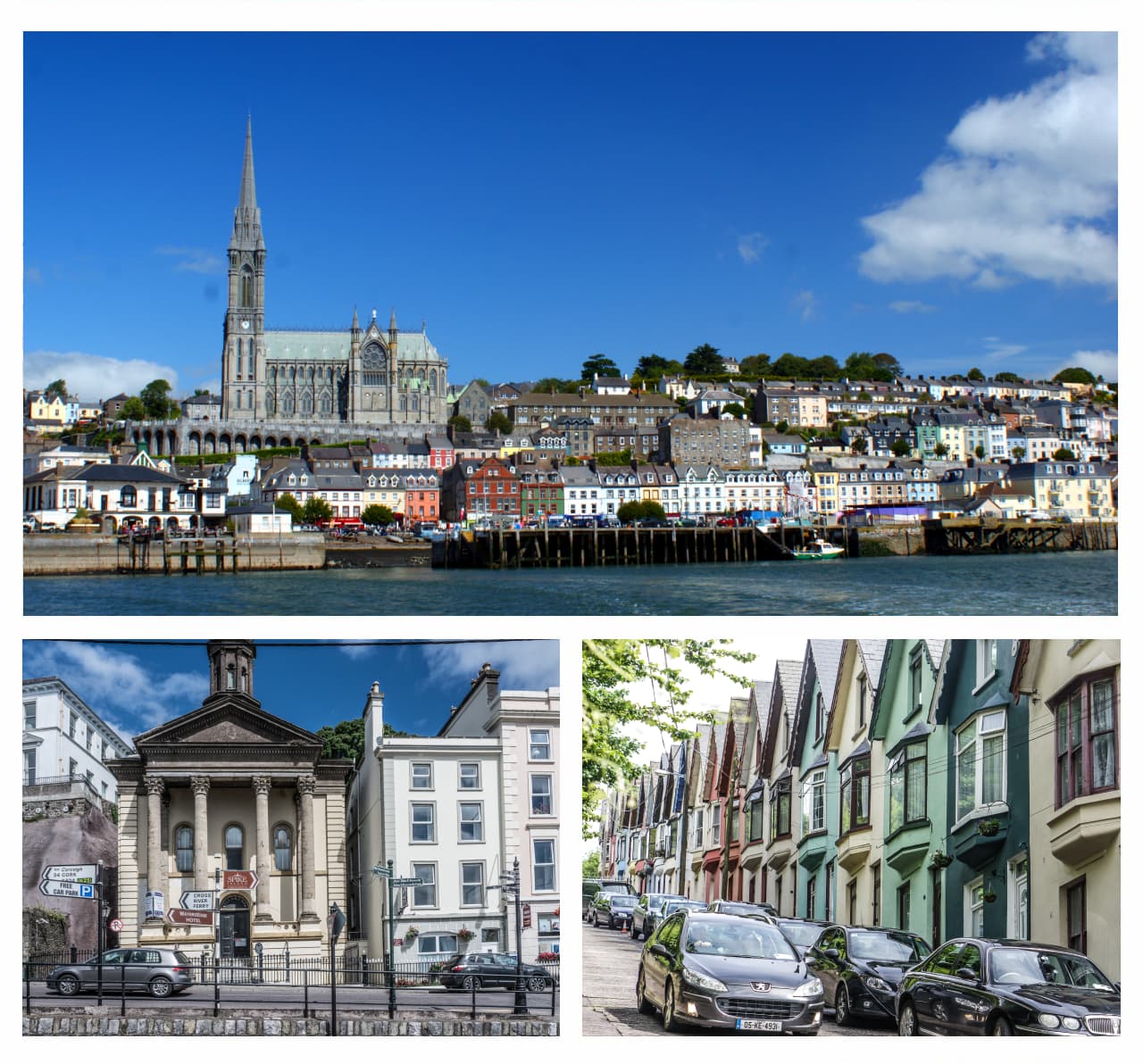
Cobh, IrelandKondephy, William Murphy / CC BY-SA 4.0, via Wikimedia Commons
IE

Cobh

Where journeys began and stories linger.

The secrets of Cobh

Cobh, as no one tells it.

Not the postcards. The stories even locals don't know — whispered in your ear, right where they happened.

3 secrets below. Many more wait inside the tour.
St. Colman's Cathedral

The towering spire of St. Colman's Cathedral stands as an iconic landmark, but what unexpected sounds might it release?

Full story unlocks in the tour
The Deck of Cards houses

These brightly painted houses, stacked on a hillside, offer a captivating sight for photographers, yet local humor suggests a playful concern for their stability.

Full story unlocks in the tour
Spike Island

This island in Cork Harbour carries a long and often somber history, once earning a chilling moniker.

Full story unlocks in the tour
The full tour

Discover every secret of Cobh

Every address, every reveal in full — in your ear, right where it happened.

Get the key to Cobh

You pick your stops. You walk. The voice reveals what the others miss.

Choose your time

How long do you have in Cobh?

No tours available yet. Check back soon — we're preparing them.

About Cobh

The story of Cobh

Cobh, a colorful seaport town on Great Island within Cork Harbour, is a place where history breathes. Its brightly painted buildings climb the hillside, crowned by the grand St. Colman's Cathedral, creating a memorable scene for those arriving by sea. Known as Queenstown from 1849 until 1920, Cobh holds a significant, often poignant, position in Ireland's narrative, particularly concerning maritime events and emigration.

This appealing town, pronounced 'Cove,' served as the departure point for millions of Irish emigrants seeking new lives across the Atlantic. It is also famously connected to two of the most significant maritime tragedies of the 20th century: the RMS Titanic and the Lusitania. Today, Cobh balances its solemn past with a lively present, inviting visitors to explore its heritage, enjoy its scenic harbor, and experience its unique character.

History

## A Gateway to the New World and a Port of Tears Cobh's history is deeply intertwined with the sea and the movement of people. Originally known as 'Cove' in 1750, it was renamed Queenstown in 1849 to commemorate a visit by Queen Victoria. The town reverted to its Irish name, Cobh, in 1921 with the establishment of the Irish Free State.

From 1848 to 1950, Cobh was the single most important port of emigration in Ireland. An estimated 2.5 million of the six million Irish people who emigrated to North America during this period departed from Cobh. This mass exodus, often driven by famine and poverty, led to Cobh being called 'the saddest place in all of Ireland.' The Cobh Heritage Centre, housed in the former Victorian Railway Station, vividly recounts these stories, including those of 'coffin ships' and convict transportation to places like Australia and Barbados.

Cobh's maritime significance extends beyond emigration. It was the departure point for the Sirius, the first steamship to cross the Atlantic in 1838. Notably, on April 11, 1912, Cobh (then Queenstown) was the last port of call for the RMS Titanic on its ill-fated maiden voyage. 123 passengers boarded the ship here, many of them Irish emigrants hoping for a new life in America. Just three years later, in 1915, survivors of the Lusitania, torpedoed off the Cork coast, were brought to Cobh, and 150 victims are interred in the Old Church Cemetery just north of the town.

The town's strategic location in Cork Harbour also led to its development as a British naval port, with many of its present-day buildings dating from this period. Spike Island, a short ferry ride from Cobh, has a history spanning over 1,300 years, serving as a monastery, a fortress, and a prison. It was once the largest prison in the world during the Great Famine. After the establishment of the Irish Free State, Spike Island remained a British Royal Navy stronghold until 1938, before becoming an Irish naval base and later a prison again until 2004.

What to see

Begin your exploration at the Cobh Heritage Centre, located in the beautifully restored Victorian railway station. It offers an immersive experience into the town's emigration and maritime past, including the stories of the Titanic and Lusitania. A short stroll leads to the Titanic Experience Cobh, housed in the original White Star Line ticket office, where you can retrace the steps of the 123 passengers who boarded the Titanic here.

Dominating the skyline is St. Colman's Cathedral, a neo-Gothic masterpiece that took 47 years to build and was completed in 1919. Its spire rises to 91.4 meters, making it the tallest church in Ireland. From the cathedral, you can capture a classic photograph of the 'Deck of Cards' houses, a row of bright, terraced homes descending the hillside towards the harbor.

For a deeper dive into history, take a ferry to Spike Island, often called 'Ireland's Alcatraz.' This former monastery, fortress, and prison offers tours exploring its 1,300 years of history, including Fort Mitchel and its austere cells. Do not miss the statue of Annie Moore near the Cobh Heritage Centre, commemorating the first immigrant to be processed at Ellis Island.

When to visit

The ideal time to visit Cobh for pleasant weather and outdoor activities is from late June to early September, with a peak in late July. During these summer months, temperatures are comfortable, ranging from 10°C (50°F) to 15°C (59°F), and there are extended daylight hours. May also offers mild weather and fewer crowds, marking the beginning of the festival season. Spring and autumn provide mild conditions suitable for exploring, while winter is long, cold, and wet.

Practical

Cobh is easily reached from Cork City, a 30-minute drive or train journey from Kent Station. If arriving by air, Cork Airport is also about a 30-minute drive. Parking is generally available in Cobh, though it can be busy on weekends. The town is quite walkable, but be aware that some attractions are on hills or involve stairs. Information on accessibility routes is usually available at major sites. Cobh is Ireland's only dedicated cruise terminal, so anticipate cruise ship activity. Many local shops offer crafts, maritime-themed gifts, and artisan foods.

Good to know
What is Cobh most known for?
Cobh is most known for being the last port of call for the RMS Titanic before its tragic maiden voyage in 1912. It was also a major emigration port for millions of Irish people between 1848 and 1950.
How do you pronounce Cobh?
Cobh is pronounced 'Cove'.
What is the 'Deck of Cards' in Cobh?
The 'Deck of Cards' refers to a row of brightly painted Victorian houses on West View, built on a steep hill, which create a distinctive visual effect.
Can you visit Spike Island from Cobh?
Yes, you can take a 15-minute ferry ride from Kennedy Pier in Cobh to Spike Island.
What is the Cobh Heritage Centre?
The Cobh Heritage Centre, located in the former Victorian railway station, tells the story of Irish emigration, the Great Famine, and the town's connections to the Titanic and Lusitania.
Is St. Colman's Cathedral worth visiting?
Yes, St. Colman's Cathedral is a significant neo-Gothic building and the tallest church in Ireland, offering impressive architecture and panoramic views of Cork Harbour.
Cobh
From€9.00
No booking · activate anytime · 12h to walk it
Get the key to Cobh