Terrains du Château de Colchester
Une parcelle d'herbe spécifique près du Château de Colchester serait marquée de façon permanente par un moment dramatique de l'histoire anglaise.
L'histoire complète se débloque dans le tour
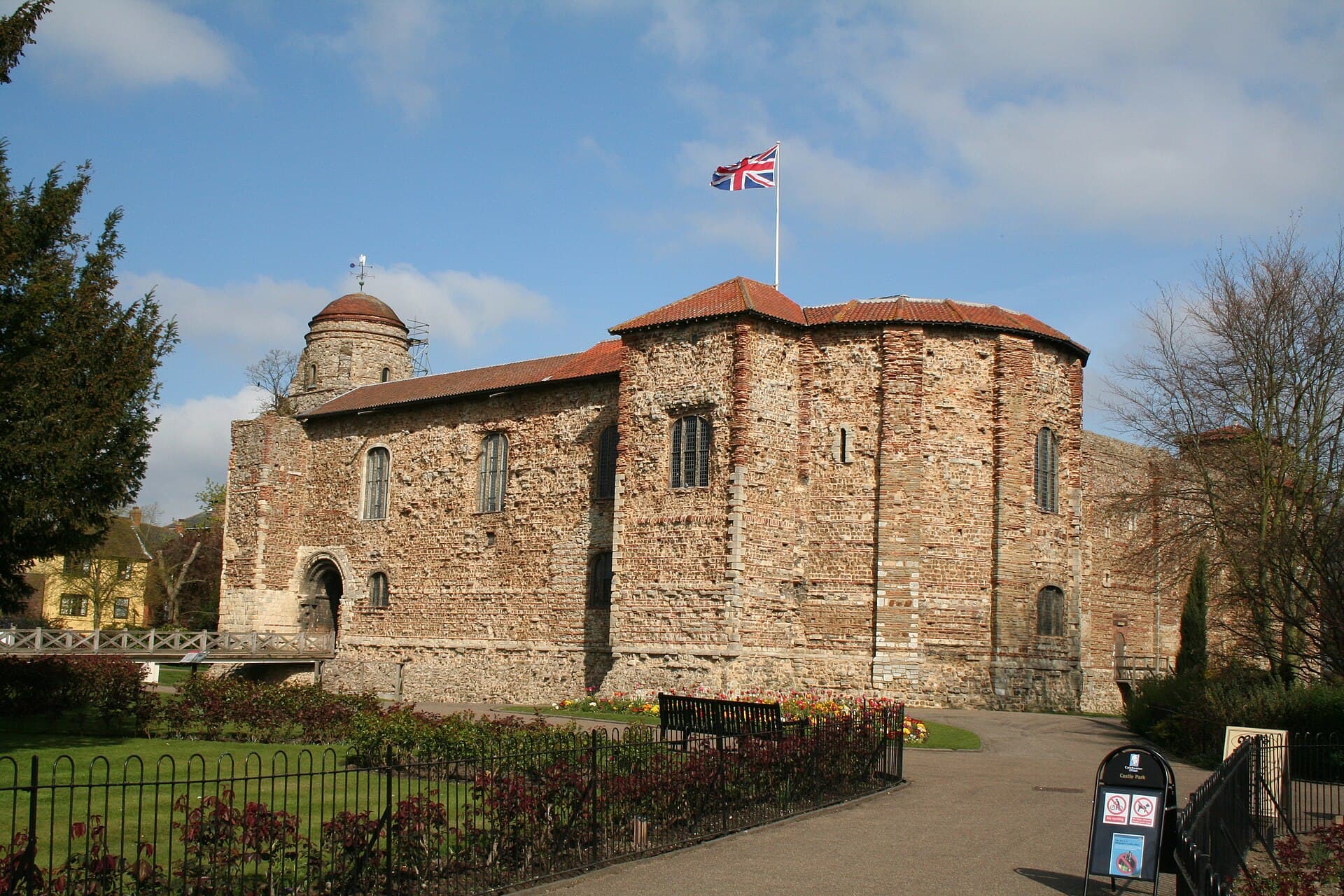 Dr Neil Clifton / CC BY-SA 2.0, via Wikimedia Commons
Visite audio autoguidée de Colchester — parcours GPS à pied, lecture hors ligne, narration en 32 langues.
“Là où les échos romains rencontrent l'ambition normande, et l'histoire respire à chaque coin de rue.”
Pas les cartes postales. Les histoires que même les habitants ignorent — soufflées à l'oreille, là où elles se sont passées.
Une parcelle d'herbe spécifique près du Château de Colchester serait marquée de façon permanente par un moment dramatique de l'histoire anglaise.
L'éminente tour d'eau victorienne de Colchester a gagné son surnom affectueux, quoique légèrement moqueur, d'une source inattendue : un célèbre résident du zoo de Londres.
Un hymne britannique de guerre universellement reconnu fut écrit dans l'un des lieux les plus inattendus de Colchester.
Découvrez tous les secrets de Colchester
Chaque adresse, chaque révélation en entier — dans ton oreille, là où elle s'est passée.
Tu choisis tes lieux. Tu marches. La voix te révèle ce que les autres ignorent.


Votre visite audioguidée de Colchester vous attend — choisissez vos lieux, votre langue, et lancez-vous dès votre arrivée.
AcheterLume intègre un guide en réalité augmentée. Levez votre téléphone : sa caméra montre la rue devant vous, avec une flèche lumineuse posée sur l'image réelle qui pointe toujours vers votre prochain arrêt — aucune carte à déchiffrer, aucun mauvais virage. Comme tout dans Lume, ça fonctionne entièrement hors-ligne.
Colchester, revendiquant le titre de Première Ville de Grande-Bretagne, est une destination où les couches d'histoire sont visibles à chaque tournant. De ses origines en tant que forteresse celtique de Camulodunon à son rôle pivot de première capitale de la Grande-Bretagne romaine, la ville offre un profond voyage à travers le temps. Aujourd'hui, Colchester mélange harmonieusement son passé antique avec la vie contemporaine, invitant les visiteurs à explorer des millénaires de patrimoine.
Promenez-vous le long des plus anciennes murailles romaines de Grande-Bretagne, admirez le plus grand donjon normand d'Europe et découvrez les échos de la rébellion de Boudica. Au-delà de ses monuments, Colchester révèle son caractère dans des quartiers charmants comme le Quartier Hollandais, avec ses bâtiments distinctifs de l'époque Tudor, et dans sa scène culturelle animée. Que vous soyez un passionné d'histoire ou simplement à la recherche d'une expérience urbaine unique, Colchester offre un récit captivant de l'histoire durable de l'Angleterre.
L'histoire de Colchester commence bien avant les Romains, en tant que site de Camulodunon, une importante forteresse celtique de la tribu des Trinovantes, mentionnée par Pline l'Ancien en 79 de notre ère. Cet emplacement stratégique en fit la cible principale de l'invasion romaine en 43 après J.-C. Les Romains y établirent une forteresse légionnaire, qui, en 49 après J.-C., devint une colonia (une colonie civile pour les soldats retraités) et fut officiellement nommée Colonia Victricensis. Elle fut désignée comme la première capitale de la province romaine de Britannia.
Cependant, cette prospérité romaine initiale fut de courte durée. En 60-61 après J.-C., la reine Boudica des Iceni mena une rébellion majeure, rasant Camulodunum, y compris le grand Temple de Claude. La ville fut reconstruite, et des murs défensifs, d'environ 3 000 mètres de long, furent construits entre 65 et 80 après J.-C., dont environ un mile de ces murs est encore debout aujourd'hui. La capitale de la Grande-Bretagne romaine fut ensuite déplacée à Londinium.
Après la Conquête normande en 1066, Guillaume le Conquérant ordonna la construction du Château de Colchester, débutant vers 1076. Cet immense donjon, le plus grand donjon normand d'Europe, fut construit directement sur les fondations du temple romain de Claude en ruines, incorporant ingénieusement le podium romain dans sa base. Pendant la période médiévale, Colchester était la plus grande ville de l'Essex et un important centre de commerce de la laine, attirant des tisserands flamands au XIVe siècle, ce qui conduisit au développement du quartier hollandais distinctif.
La guerre civile anglaise apporta un conflit important à Colchester, culminant en un siège de onze semaines en 1648, au cours duquel la ville subit des dommages considérables, et ses murs romains furent percés. À l'époque victorienne, Colchester connut une prospérité renouvelée. Les XVIIIe et XIXe siècles virent la croissance industrielle, l'expansion ferroviaire et d'importants développements architecturaux. Un exemple notable est la tour d'eau Jumbo, achevée en 1883, une impressionnante prouesse d'ingénierie victorienne conçue pour fournir de l'eau propre à la population croissante.
Commencez votre exploration au Château de Colchester, le plus grand donjon normand d'Europe, construit sur les fondations du Temple romain de Claude. Le château abrite un musée avec de nombreux artefacts romains, dont le Trésor de Fenwick, et propose des visites de ses voûtes romaines. Adjacent au château se trouve Castle Park, un vaste espace vert avec des jardins et des sentiers de promenade, offrant des vues sur des monuments historiques.
Promenez-vous le long des Murailles romaines bien conservées, les plus anciennes de Grande-Bretagne, et découvrez l'impressionnante Porte de Balkerne, la plus grande porte romaine subsistante. Plongez plus profondément dans l'histoire romaine au Roman Circus Centre, où vous pouvez explorer le tracé de la seule piste de course de chars romaine connue en Grande-Bretagne. Flânez dans le Quartier hollandais, caractérisé par ses bâtiments colorés de l'époque Tudor, héritage des tisserands flamands qui s'y sont installés. Les ruines atmosphériques du Prieuré de St Botolph, le premier monastère augustin d'Angleterre, offrent un aperçu de la vie religieuse médiévale. Pour une vue panoramique de la ville, recherchez la Tour d'eau Jumbo, un remarquable monument victorien.
La meilleure période pour visiter Colchester afin de profiter d'un temps agréable et d'activités de plein air s'étend de fin juin à début septembre. Pendant ces mois d'été, les températures maximales moyennes atteignent environ 22°C (72°F), créant des conditions confortables pour explorer les sites historiques et les parcs de la ville. Mai, juin et septembre offrent également un temps agréable avec légèrement moins de touristes. Bien que la pluie survienne tout au long de l'année, les mois d'été ont tendance à avoir moins de précipitations.
Colchester est bien desservie par les transports en commun. Des services ferroviaires réguliers relient la gare de London Liverpool Street à la gare de Colchester North, à environ 20 minutes à pied du centre-ville, et à la gare de Colchester Town, située directement dans le centre-ville. Les bus opèrent de manière extensive dans la ville, avec la gare routière principale sur Osborne Street. Un service de Park & Ride est disponible à la sortie 28 de l'A12, offrant des services fréquents vers le centre-ville. Pour ceux qui arrivent en voiture, diverses options de stationnement sont disponibles dans et autour du centre-ville. Le Centre d'Information Touristique de Colchester, situé au Hollytrees Museum dans Castle Park, propose des cartes, des brochures et des conseils sur les attractions locales et les transports, et est accessible aux utilisateurs de fauteuils roulants.
Colchester en coréen, en chinois ou en hébreu — et dans 29 autres langues, chaque étape narrée par une voix native. La plus large gamme de langues de tous les audioguides autoguidés.
Disponible en :