Ohio Statehouse
Bevor er der 16. Präsident der Vereinigten Staaten wurde, erhielt Abraham Lincoln in Columbus eine entscheidende Nachricht.
Die ganze Geschichte wird in der Tour freigeschaltet
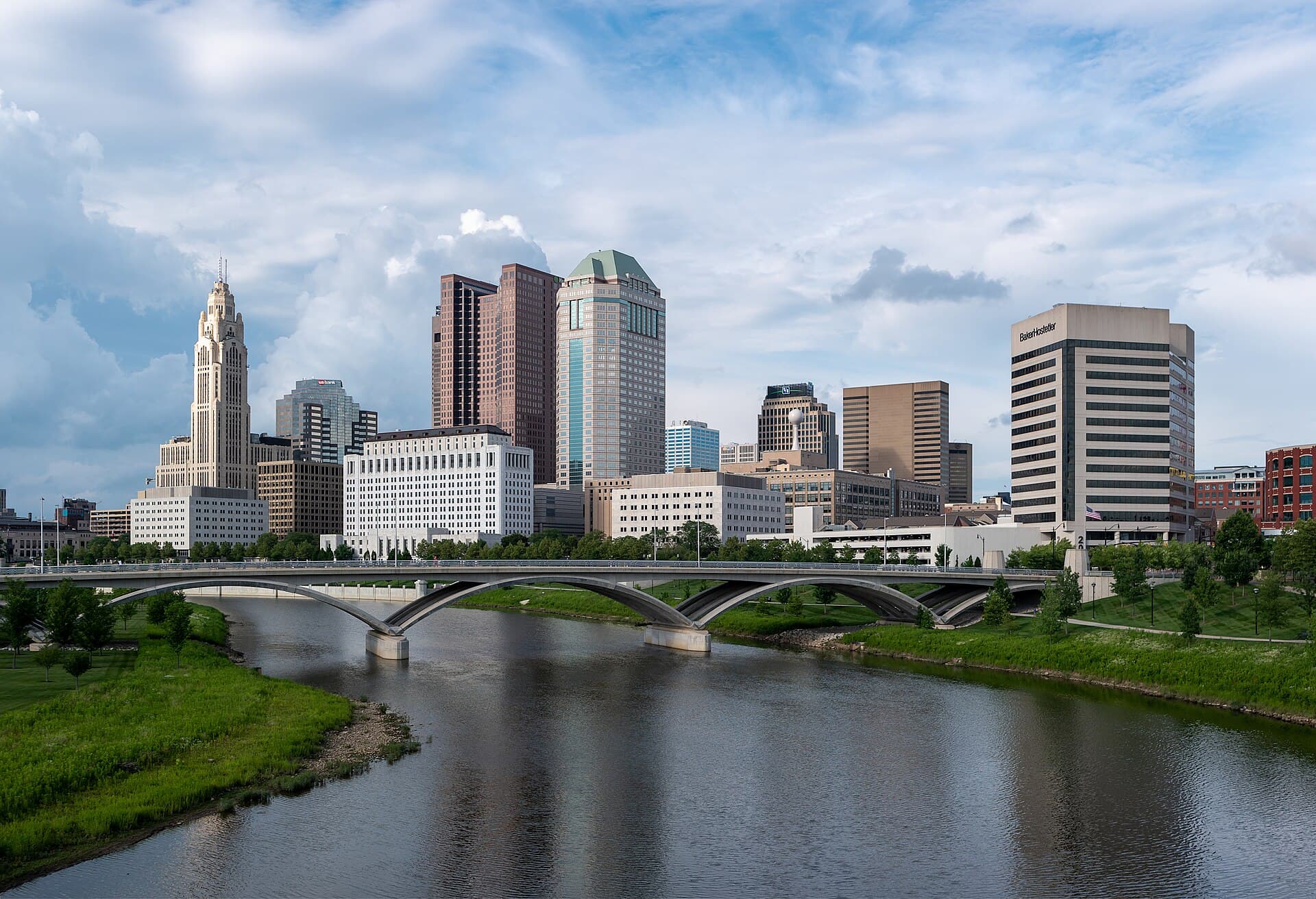 Paul Wasneski / Public domain, via Wikimedia Commons
Selbstgeführte Audio-Walking-Tour durch Columbus — GPS-Route, Offline-Wiedergabe, erzählerische Narration in 32 Sprachen.
“Columbus: Wo das Unerwartete sich entfaltet.”
Nicht die Postkarten. Die Geschichten, die selbst Einheimische nicht kennen – dir ins Ohr geflüstert, genau dort, wo sie geschahen.
Bevor er der 16. Präsident der Vereinigten Staaten wurde, erhielt Abraham Lincoln in Columbus eine entscheidende Nachricht.
Etwas außerhalb der Stadt ehrt eine skurrile Kunstinstallation eine Grundnahrungsmittelpflanze in überraschend großem Maßstab.
Neben historischen Artefakten bietet ein eher ungewöhnliches Exemplar Einblicke in seltene Vorkommnisse der Natur.
Entdecke jedes Geheimnis von Columbus
Jede Adresse, jede Enthüllung vollständig – in deinem Ohr, genau dort, wo es geschah.
Du wählst deine Stationen. Du gehst. Die Stimme enthüllt, was andere übersehen.


Deine selbstgeführte Audio-Tour durch Columbus ist bereit – wähle deine Sehenswürdigkeiten, deine Sprache und starte, sobald du ankommst.
KaufenLume enthält einen integrierten Augmented-Reality-Guide. Halten Sie Ihr Handy hoch: Die Kamera zeigt die Straße vor Ihnen, mit einem leuchtenden Pfeil über dem echten Bild, der immer auf Ihren nächsten Stopp zeigt — keine Karte zum Rätseln, keine falschen Abzweigungen. Wie alles bei Lume funktioniert es komplett offline.
Columbus, Ohio, die Hauptstadt und größte Stadt des Bundesstaates, präsentiert sich als dynamisches urbanes Zentrum, das den Charakter des Mittleren Westens mit einem zukunftsorientierten Geist verbindet. Mit über 930.000 Einwohnern ist sie die 15. größte Stadt der Vereinigten Staaten. Bemerkenswert ist, dass sie die einzige Großstadt im Norden ist, die zwischen 2010 und 2017 um über 10 % gewachsen ist. Die zentrale Lage der Stadt in Ohio und ihre Nähe zu fast der Hälfte der US-Bevölkerung haben sie historisch zu einem bedeutenden Knotenpunkt gemacht.
Über ihre Statistiken hinaus bietet Columbus eine vielfältige Palette an Erlebnissen, von einer blühenden Kunst- und Kulinariklandschaft bis hin zu weitläufigen Grünflächen. Es ist eine Stadt, die sich ständig weiterentwickelt, Innovationen aufgreift und gleichzeitig ihre beständige Vergangenheit ehrt. Besucher können eine einladende Atmosphäre erwarten, da Columbus seit 2013 durchweg hohe Bewertungen im Municipal Equality Index der Human Rights Campaign erhält, ein Beweis für seine Inklusivität. Diese Kombination aus Wachstum, Vielfalt und kulturellem Angebot macht Columbus zu einem überzeugenden Reiseziel.
## Von der Grenze zur Hauptstadt Die Ursprünge von Columbus reichen bis zu Siedlungen der amerikanischen Ureinwohner entlang des Scioto River zurück. Die erste europäische Siedlung in der Gegend, Franklinton, wurde 1797 gegründet. Die Stadt Columbus selbst wurde 1812 am Zusammenfluss des Scioto und Olentangy River gegründet, speziell auf den 'High Banks gegenüber von Franklinton an der Gabelung des Scioto, bekannt als Wolf's Ridge', einem Gebiet, das damals dichter Wald zur Jagd war. Sie erhielt ihren Namen zu Ehren von Christoph Kolumbus und wurde aufgrund ihrer zentralen Lage strategisch als Hauptstadt des Bundesstaates geplant. Die Staatsregierung zog 1816 offiziell von Chillicothe nach Columbus um, und die Stadt wurde im selben Jahr als Borough eingemeindet.
Im Laufe des 19. Jahrhunderts erlebte Columbus ein stetiges Wachstum, das durch seine Entwicklung zu einem Transport- und Industriezentrum angekurbelt wurde. Die Eröffnung eines Zubringerzweigs des Ohio and Erie Canal im Jahr 1831 und die Ankunft des Cumberland (National) Road im Jahr 1836 beflügelten seine Expansion erheblich. Die erste Eisenbahn erreichte die Stadt 1850 und beschleunigte ihre Entwicklung weiter. Bis 1834, mit einer Bevölkerung von 3.500 Einwohnern, wurde Columbus offiziell als Stadt eingetragen. Deutsche Einwanderer spielten eine bedeutende Rolle im frühen Wachstum der Stadt, gründeten zahlreiche Brauereien und trugen zum kulturellen Gefüge bei, insbesondere in Gegenden wie dem German Village, wo bis 1865 ein Drittel der Bevölkerung von Columbus deutsch war.
Während des Amerikanischen Bürgerkriegs diente Columbus als wichtiges Aufmarschgebiet für Unionsstreitkräfte, und Camp Chase, eine große Einrichtung für konföderierte Kriegsgefangene, wurde auf der Westseite der Stadt errichtet. Nach dem Krieg expandierte die lokale Wirtschaft weiter, und Columbus wurde zu einem wichtigen Hersteller von Pferdefuhrwerken. Die Ohio State University, eine bedeutende Institution, wurde 1870 gegründet und nahm 1873 den Lehrbetrieb auf. Das 20. Jahrhundert, insbesondere nach 1940, brachte ein beispielloses industrielles Wachstum, teilweise aufgrund eines großen Flugzeugwerks und der Anziehungskraft zahlreicher nationaler Firmenniederlassungen. Columbus' anhaltende Expansion wird größtenteils seiner Politik der Annexion benachbarter Gebiete zugeschrieben, was zu einer Verfünffachung seiner Fläche und einer fast Verdoppelung seiner Bevölkerung zwischen 1950 und 2000 führte. Bis 1990 war es die größte Stadt Ohios.
Columbus bietet eine vielfältige Auswahl an Attraktionen. Erkunden Sie das historische German Village mit seinen kopfsteingepflasterten Straßen und der unverwechselbaren Architektur und stöbern Sie in den 32 Räumen von The Book Loft, einer der größten unabhängigen Buchhandlungen des Landes. Spazieren Sie entlang des Scioto Mile, einer malerischen Parkanlage am Scioto River mit Wander- und Radwegen, interaktiven Brunnen und Blick auf die Skyline der Stadt. Der Short North Arts District, bekannt als das 'Herz und die Seele' von Columbus, beherbergt eine eklektische Sammlung von Kunstgalerien, Boutiquen und lebendigen Wandgemälden, darunter das 'Short North Gothic Mural'. Für kulinarische Erlebnisse besuchen Sie den North Market, eine 145 Jahre alte Markthalle mit unabhängigen Händlern, Bauern und vielfältigen Essensständen.
Familien können den Columbus Zoo and Aquarium genießen, der durchweg zu den besten des Landes zählt, sowie die interaktiven Exponate im COSI (Center of Science and Industry), dem größten Wissenschaftsmuseum Ohios. Kunstliebhaber können das Columbus Museum of Art erkunden, das amerikanische und europäische Kunstwerke zeigt. Für Outdoor-Aktivitäten bietet das Scioto Audubon Center Möglichkeiten zur Vogelbeobachtung, Promenaden und eine Kletterwand. Die Stadt veranstaltet auch das ganze Jahr über verschiedene Festivals und Veranstaltungen, die zu ihrer dynamischen Atmosphäre beitragen.
Columbus hat vier ausgeprägte Jahreszeiten. Die angenehmsten Besuchszeiten sind im Frühling (Ende April bis Anfang Juni) und im Herbst (September bis Oktober). Während dieser 'Zwischensaisons' sind die Temperaturen mild, die Luftfeuchtigkeit niedrig und die Parks und von Bäumen gesäumten Viertel der Stadt erscheinen besonders einladend, wobei die Herbstfärbung ein spektakuläres Schauspiel bietet. Mai und Oktober werden oft als ideal hervorgehoben, da sie angenehmes Wetter und eine Reihe von Veranstaltungen bieten. Sommer (Juni bis August) sind warm und feucht, wobei Juli der heißeste Monat ist mit durchschnittlichen Höchsttemperaturen von 29-31°C. Winter (Dezember bis März) sind kalt, mit durchschnittlichen Tageshöchsttemperaturen unter 8°C und Tiefstwerten um -4°C im Januar. Die Niederschläge sind das ganze Jahr über relativ gleichmäßig verteilt, wobei Mai und Juni typischerweise die höchsten Niederschlagsmengen aufweisen.
Der John Glenn Columbus International Airport (CMH) ist der wichtigste Flughafen und liegt etwa 10 km östlich der Innenstadt. Er bietet tägliche Nonstop-Flüge zu 31 Flughäfen. Die Central Ohio Transit Authority (COTA) bietet einen umfassenden öffentlichen Busverkehr im gesamten Großraum Columbus, einschließlich regulärer Linien, Expressdienste und einem AirConnect-Service, der die Innenstadt direkt mit dem Flughafen verbindet. COTA betreibt 41 Linien mit einer Flotte von 440 Bussen und bedient jährlich rund 19 Millionen Passagiere. Tages- und Monatskarten sind erhältlich. Für alternative Transportmittel bietet die Stadt auch Bikeshare-Dienste wie CoGo, betrieben von Lyft, und Elektroroller von Unternehmen wie Bird, Spin und Lime an. Fahrdienste wie Lyft sind ebenfalls leicht verfügbar. Columbus ist größtenteils eine begehbare Stadt, insbesondere in der Innenstadt und in beliebten Vierteln wie dem Short North und dem German Village.
Columbus — Koreanisch, Chinesisch, Hebräisch und 29 weitere Sprachen, jede Station von einer muttersprachlichen Stimme erzählt. Die größte Sprachauswahl aller selbstgeführten Audiotouren.
Verfügbar auf: